
Position sensor
a technology of resonant frequency and stylus, which is applied in the direction of instruments, cathode-ray tube indicators, power supplies for data processing, etc., can solve the problems of insufficient single measurement of the resonant frequency of the stylus to determine whether it is clicked or unclicked, requires user cooperation, and difficult prediction, etc., to achieve the effect of small nib-click distan
Patent Information
- Authority / Receiving Office
- US · United States
- Patent Type
- Applications(United States)
- Current Assignee / Owner
- Publication Date
- 2009-07-23
- Estimated Expiration
- Not applicable · inactive patent
Smart Images
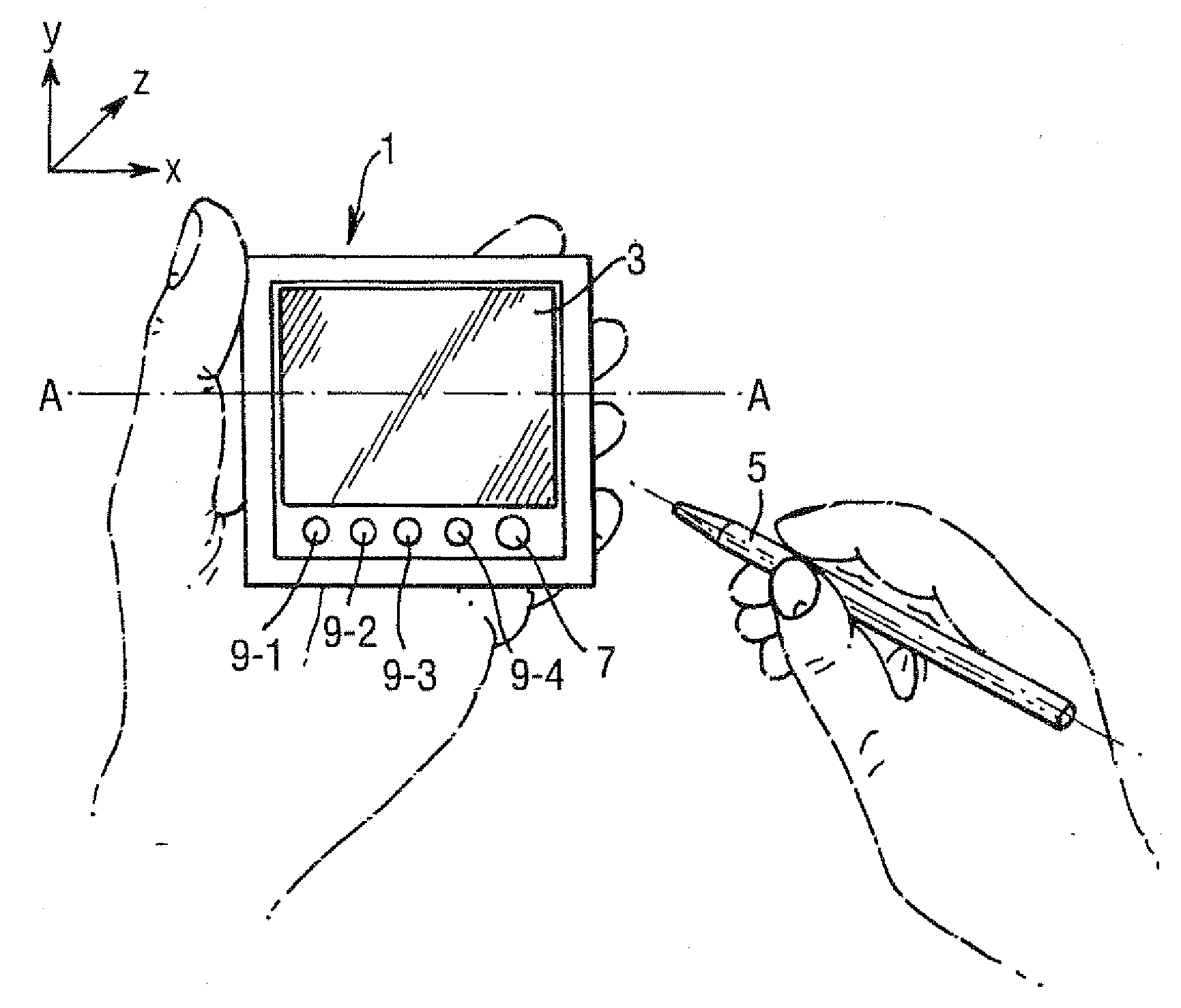
Figure 1 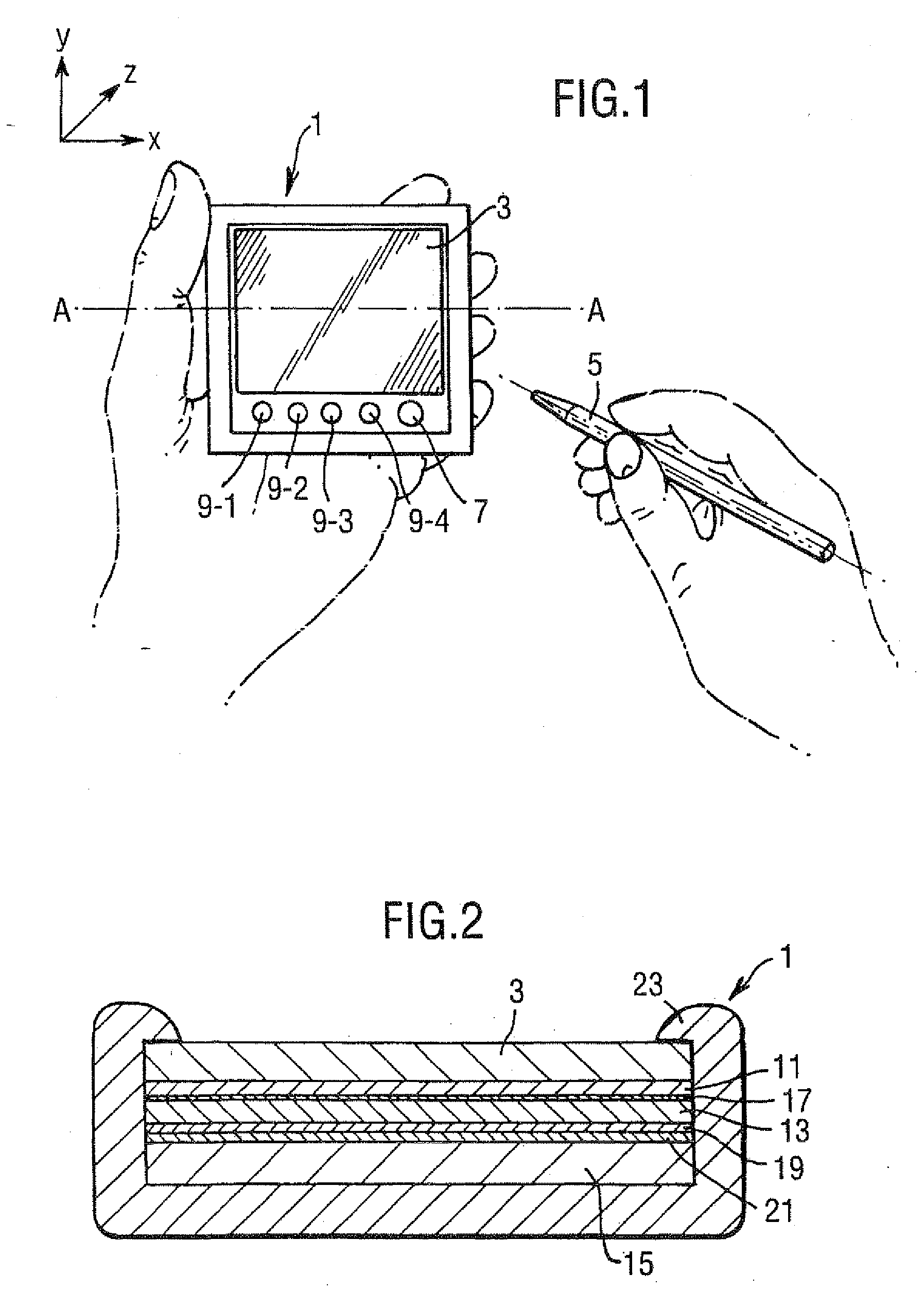
Figure 2 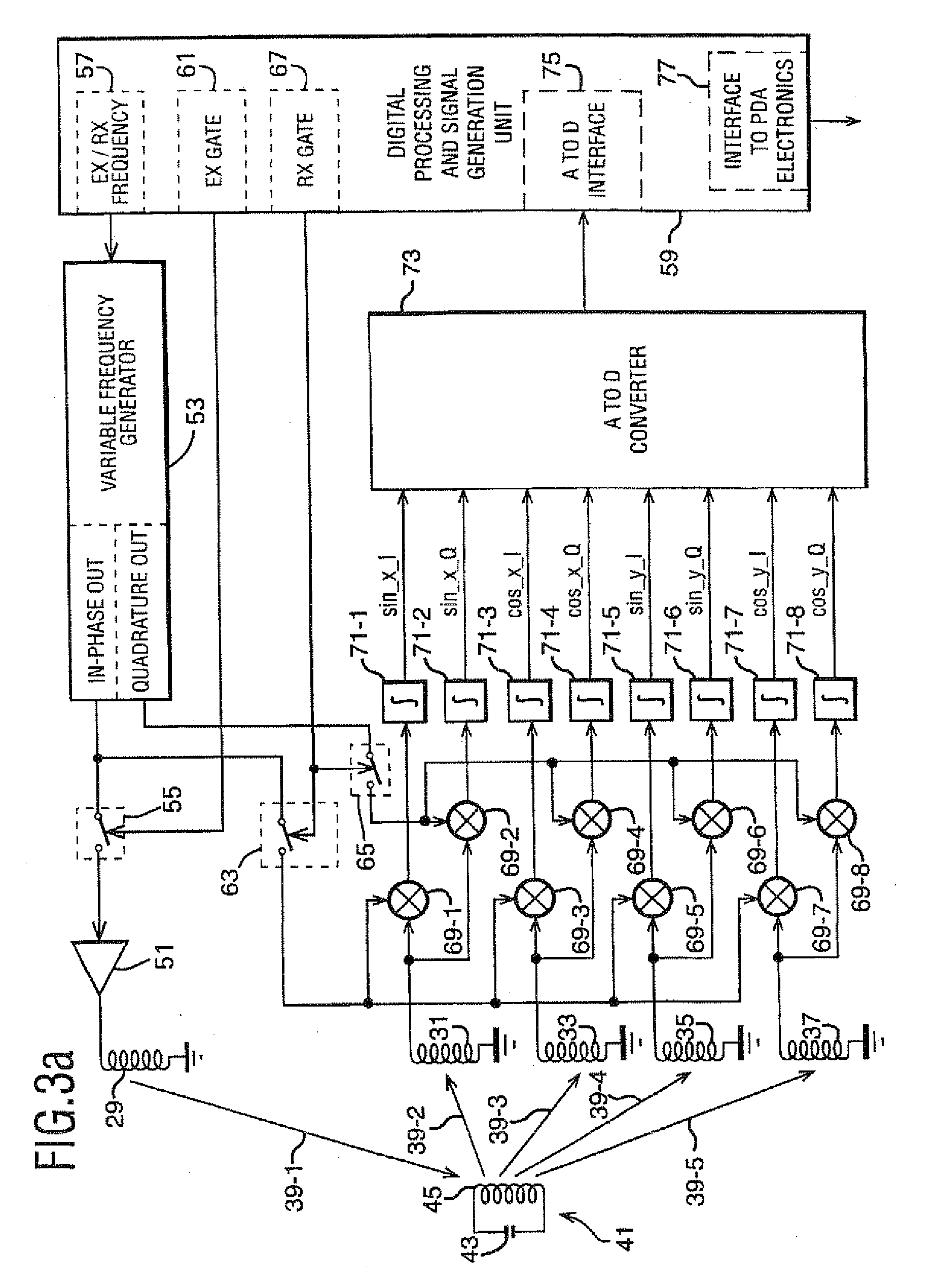
Figure 3
Abstract
Description
RELATED APPLICATIONS
[0001] This is a division of U.S. Ser. No. 10 / 478,354 filed May 6, 2004 (now U.S. Pat. No. ______ issued ______, 2009), which was a U.S. national phase of International Application No. PCT / GB02 / 02387 filed May 21, 2002, which designated the U.S., the entire contents of all of which are hereby incorporated by reference.BACKGROUND
[0002] 1. Technical Field
[0003] The present invention relates to a position sensor and to parts therefor. The invention has particular, although not exclusive, relevance to stylus input computer and communication devices, particularly small, low-cost devices, such as personal digital assistants (PDAS), mobile telephones, web browsers and combinations of these. The invention has particular relevance where those computer and communication devices are battery-powered.
[0004] 2. Related Art
[0005] Several pen or stylus sensing systems for computer input exist. For example, U.S. Pat. No. 4,878,553 and the applicants' earlier International Application ...
Examples
Embodiment Construction
Overview of Digitizing System
[0050]FIG. 1 shows a hand-held battery-powered personal digital assistant (PDA) 1 which employs an x-y digitizing system (not shown) which is located beneath a liquid crystal display 3 of the PDA 1. The x-y digitizing system is operable to detect the presence and x-y position of a resonant stylus 5 relative to the LCD 3. The position signals output from the digitizing system are used by the PDA 1 to control information that is displayed on the LCD 3 and to control the operating function of the PDA 1. As shown, the PDA 1 also includes a number of push buttons beneath the LCD 3, including an on-off button 7 and a number of control buttons 9-1 to 9-4 which are used to control different functions of the PDA 1.
[0051]FIG. 2 shows a cross-sectional view on A-A of the PDA 1 shown in FIG. 1. As shown, the PDA 1 includes a liquid crystal display 3 which, in this embodiment, is between 1.5 mm and 3 mm thick. Beneath the LCD 3, there is an electroluminescent backlig...