
Anti-aging and wrinkle treatment methods using nanoemulsion compositions
Patent Information
- Authority / Receiving Office
- US · United States
- Current Assignee / Owner
- Publication Date
- 2012-03-15
- Estimated Expiration
- Not applicable · inactive patent
Smart Images
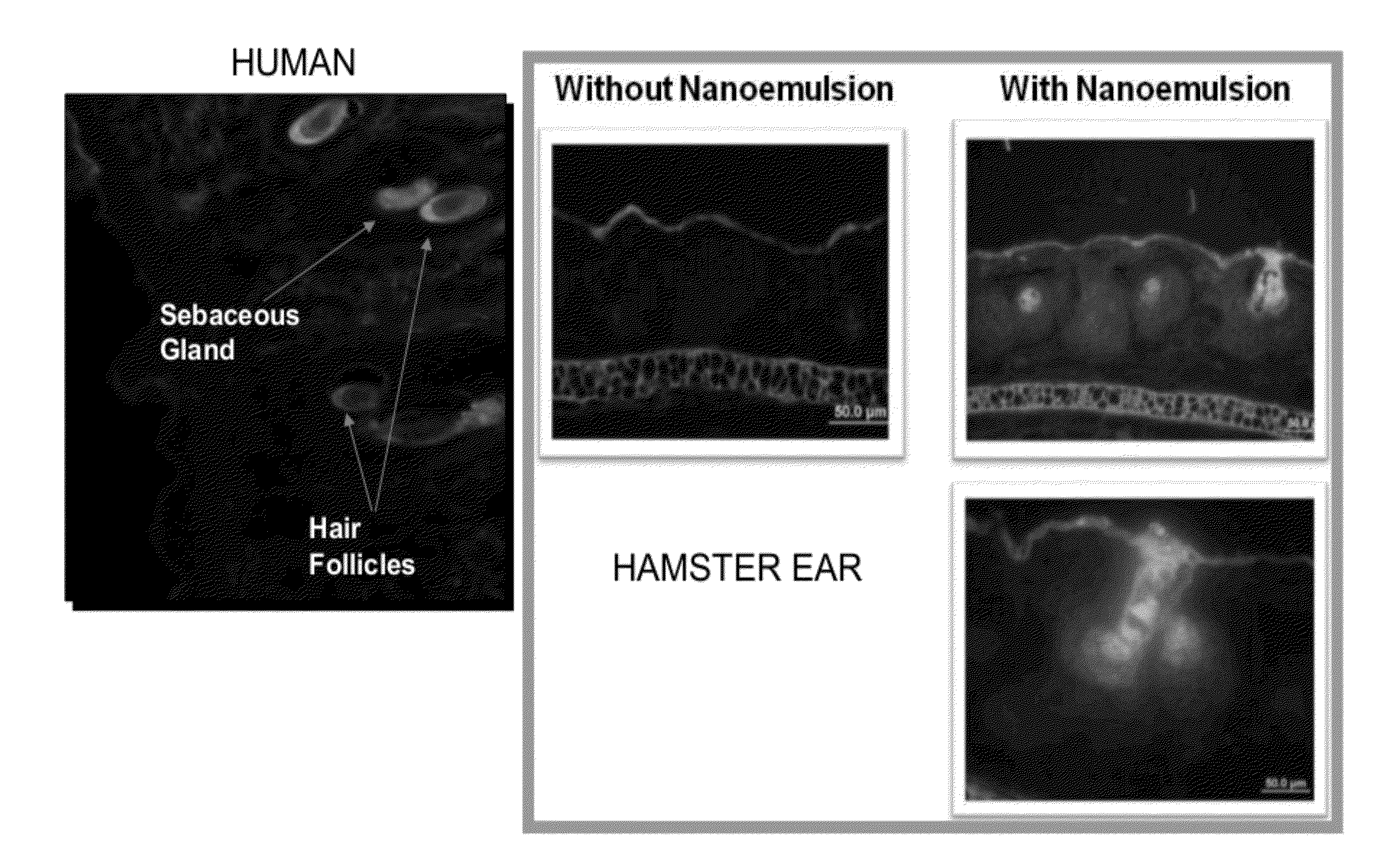
Figure 1 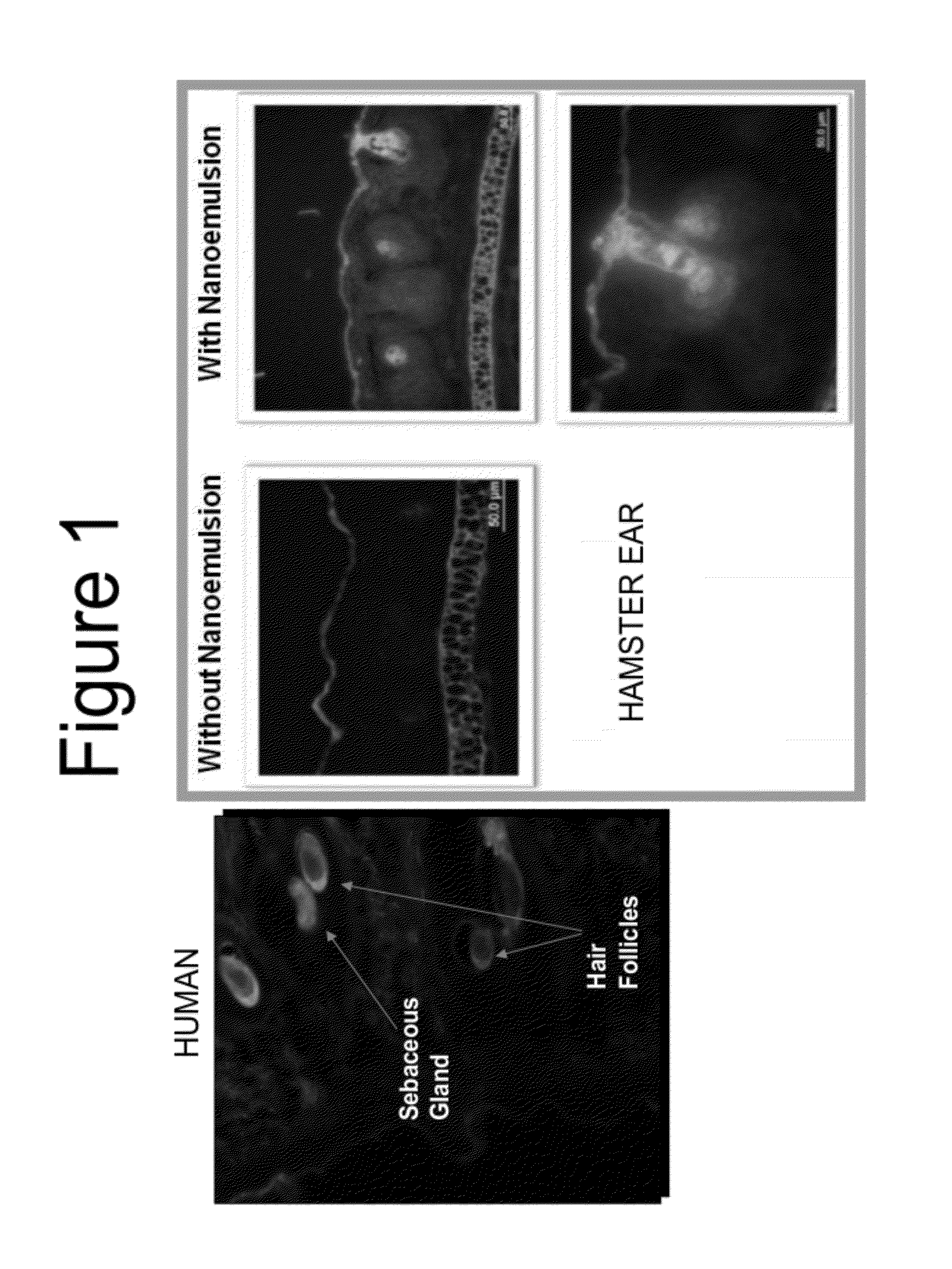
Figure 2 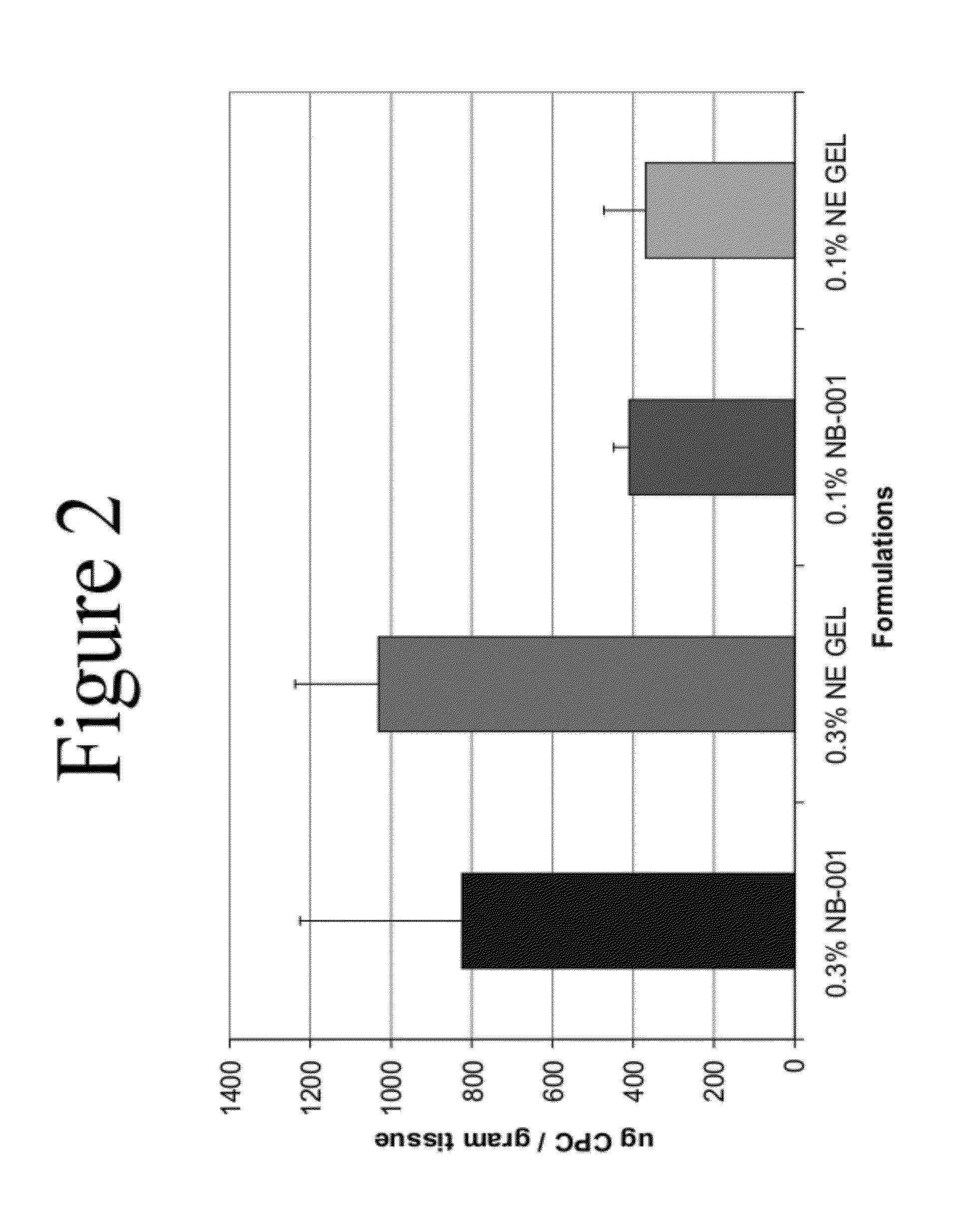
Figure 3
Abstract
Description
CROSS-REFERENCE TO RELATED APPLICATION
[0001] This application claims benefit of U.S. provisional Application No. 61 / 381,833, filed on Sep. 10, 2010, the disclosure of which is incorporated herein by reference.FIELD OF THE INVENTION
[0002] The present disclosure relates to methods for preventing and / or treating wrinkles and signs of aging skin. The method comprises topically or subcutaneously administering to a subject in need thereof a nanoemulsion composition having anti-wrinkle and anti-aging properties.BACKGROUND OF THE INVENTIONA. Background Regarding Wrinkles and Aging Skin
[0003] Wrinkles are a natural part of aging. As a person ages, skin gets thinner, drier and less elastic. And it becomes less able to protect itself from damage. As a result, wrinkles, lines and creases form in the skin. Some wrinkles can become deep crevices or furrows and may be especially noticeable around the eyes, mouth and neck. McCullough J L, et al., “Prevention and treatment of skin aging,”Annals of the ...
Examples
example 1
Preparation of Nanoemulsions
[0169]Exemplary emulsions are produced by mixing a water-immiscible oil phase into an aqueous phase with a proprietary manufacturing method. The two phases (aqueous phase and oil phase) are combined together and processed to yield an emulsion. The emulsion is further processed to achieve the desired particle size. For the gel formulation, a thickening agent, such as Klucel can be added to the nanoemulsion. For example, Klucel is dissolved in water or any aqueous solvent and added to the nanoemulsion to achieve the desired concentration.
[0170]Exemplary nanoemulsions (“NB-00X”) shown in Table 1 comprised, in an aqueous medium, soybean oil, Tween 20® as a nonionic surfactant, ethanol, cetylpyridinium chloride (CPC) as a cationic surfactant, EDTA, and water, and optionally, a thickening agent for the gel formulation.
TABLE 2Compositions of the Nanoemulsions (NB-00X) and Nanoemulsion Gels (NB-Gel).The percentages are wt / wt, unless otherwise noted.Soybean oilTwe...
example 2
Skin Permeation Studies
[0176]The purpose of this example was to evaluate the in vitro absorption into the epidermis and dermis of nanoemulsions according to the invention. Pig skin was used as an animal model.
[0178]The in vitro skin model has proven to be a valuable tool for the study of percutaneous absorption of topically applied compounds. The model uses excised skin mounted in specially designed diffusion chambers that allow the skin to be maintained at a temperature and humidity that match typical in vivo conditions. Franz, T J, “Percutaneous absorption: on the relevance of in vitro data,”J. Invest. Dermatol., 64:190-195 (1975). A finite dose of formulation is applied to the epidermis, and outer surface of the skin and compound absorption is measured by monitoring its rate of appearance in the receptor solution bathing the dermal surface of the skin. Data defining total absorption, rate of absorption, as well as skin content can be accurately determi...
example 3
Skin Permeation Studies With Nanoemulsion+Second Active Ingredient
[0192]The purpose of this example was to evaluate the in vitro absorption of a second active ingredient from the nanoemulsion into the epidermis and dermis according to the invention. Two different active ingredients were evaluated following incorporation into the nanoemulsion: benzoyl peroxide or adapalene.
[0193]The nanoemulsion test formulations contained 0.3% (w / w) NB-001 with 0.1% (w / w) Adapalene or 0.3% (w / w) NB-00X with either 0.5% (w / w) BPO or 2.5% (w / w) BPO. Control formulations tested were commercially available products; Persa-Gel-10 (10% benzoyl peroxide; Johnson & Johnson), 0.1% Differin Lotion (0.1% Adapelene; Galderma) and 0.3% Differin Gel (0.3% Adapalene gel; Galderma).
[0194]A. In Vitro Skin Model
[0195]The in vitro skin model has proven to be a valuable tool for the study of percutaneous absorption of topically applied compounds. The model uses excised skin mounted in specially designed diffusion chamb...