
Cleaning Compositions With Amphoteric Polycarboxylate Polymers
Patent Information
- Authority / Receiving Office
- US · United States
- Current Assignee / Owner
- Publication Date
- 2012-09-13
- Estimated Expiration
- Not applicable · inactive patent
Smart Images
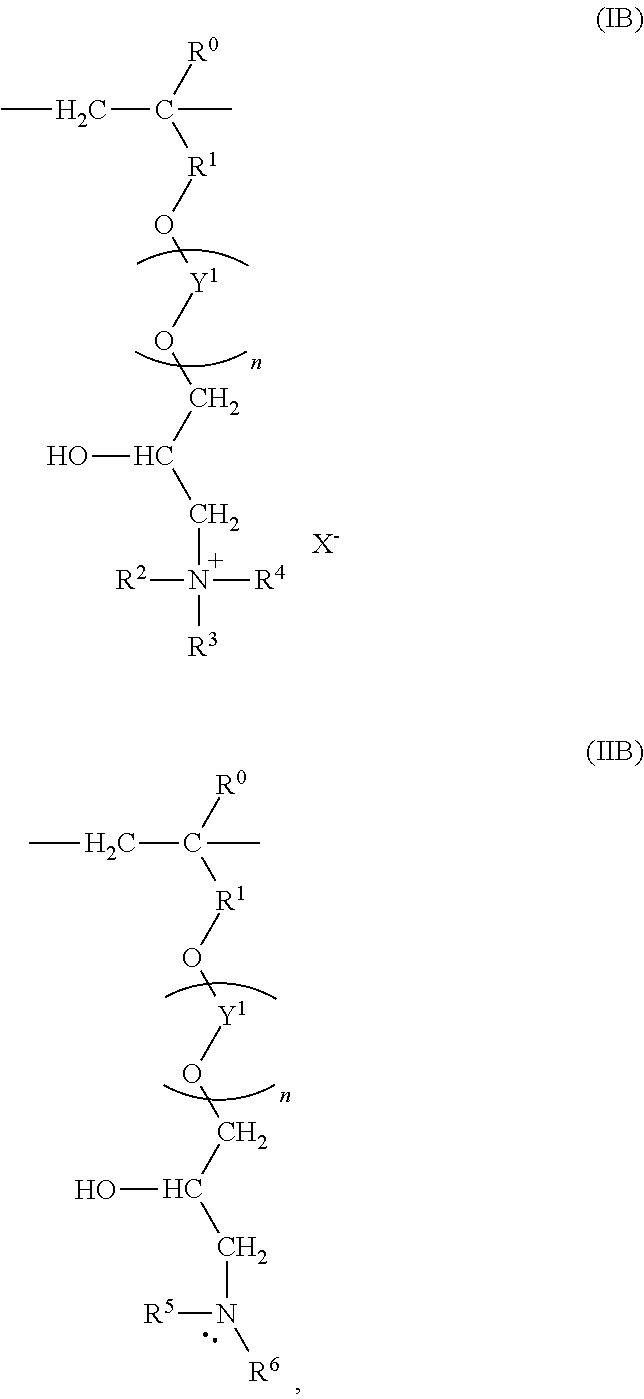
Figure 1 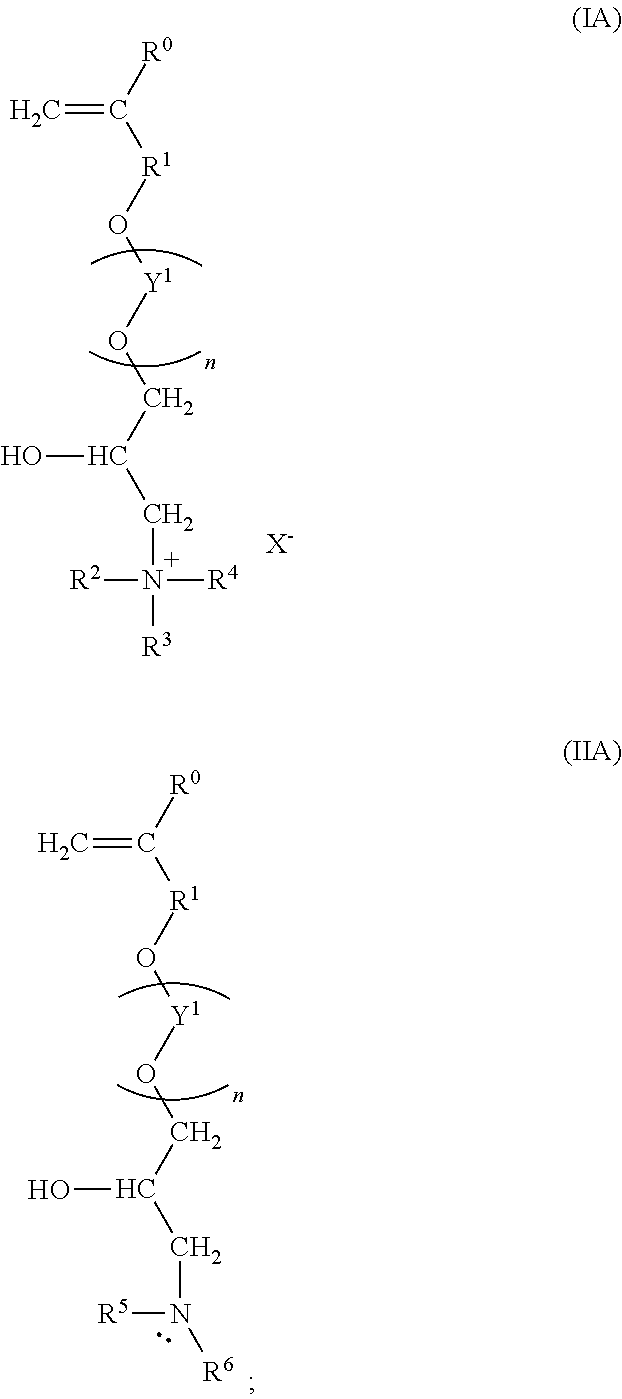
Figure 2 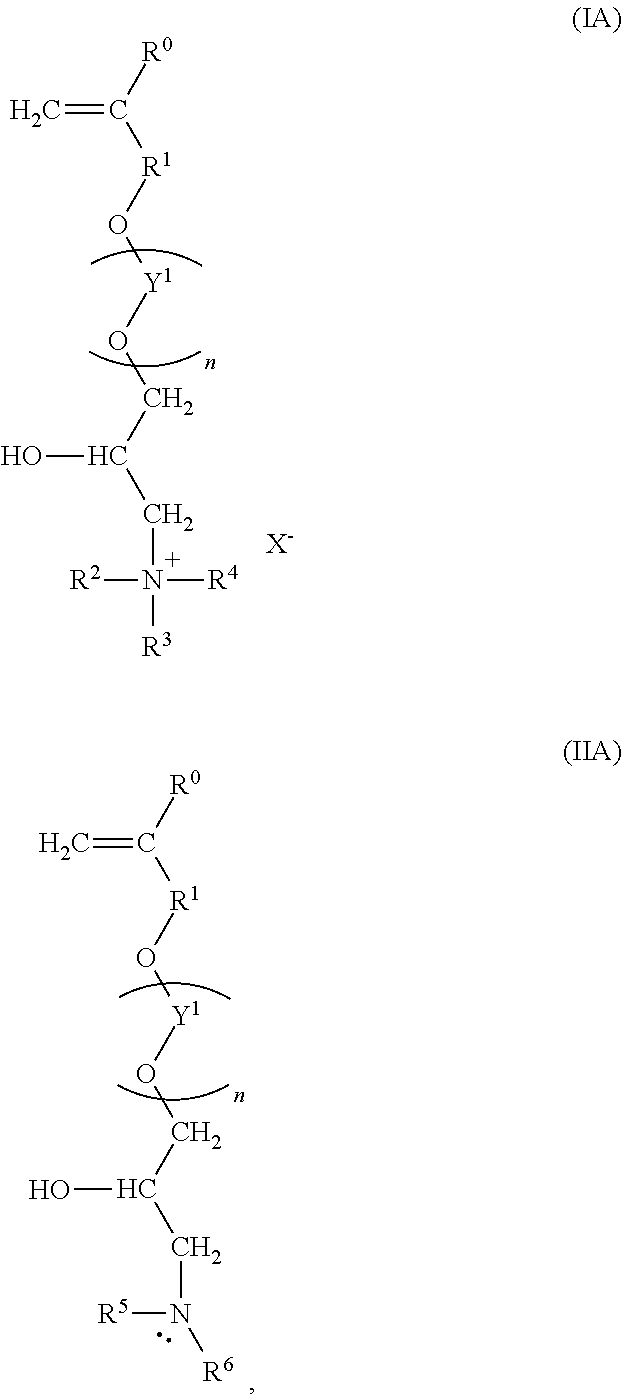
Figure 3
Abstract
Description
TECHNICAL FIELD
[0001] Embodiments described herein relate to cleaning compositions, including especially fabric and home care cleaning compositions, and including especially laundry cleaning compositions. More specifically, embodiments described herein relate to cleaning compositions comprising amphoteric polycarboxylate polymers.BACKGROUND
[0002] The required level of performance of detergent additives has been rising with growing concern of consumers for environmental problems. For example, many consumers have been changing their washing machines to drum washing machines to reduce water consumption and drainage. In washing treatment under water-saving conditions, soil redeposition on clothes is a more serious problem compared to under conditions in which a large amount of water is used.
[0003] Therefore, the required level of anti-soil redeposition ability of detergent additives is higher than before. For drum washing machines, which use less water, liquid detergents are likely to be c...
Examples
synthesis example 1
[0121]In a 1-L 4-neck flask, IPN 10 (400 g), epichlorohydrin (351.4 g), and 48% by mass aqueous solution of sodium hydroxide (hereinafter, also referred to as 48% NaOH) (94.9 g) are reacted under stirring for six hours at a controlled temperature of 50° C. Thereafter, the generated salt is removed and epichlorohydrin and water are removed from the remaining organic phase such that a reaction solution (451.2 g) containing an intermediate (IPEG 10) (324.9 g) and IPN 10 (64.1 g) is provided. Subsequently, the reaction solution (451.2 g) containing IPEG 10 (324.9 g) and 30% by mass aqueous solution of trimethylamine chloride (268.7 g) are reacted in the 1-L 4-neck flask for eight hours at a controlled temperature of 50° C. such that a reaction solution (hereinafter, referred to as monomer composition (1)) (719.9 g) containing cationized IPN 10 (hereinafter, also referred to as IPEC 10) (336.4 g) and IPN 10 (63.8 g) is provided.
synthesis example 2
[0122]In a 1-L 4-neck flask, IPN 25 (500 g), epichlorohydrin (233.7 g), and NaOH in the pellet form (25.3 g) are reacted under stirring for 16 hours at a controlled temperature of 50° C. Thereafter, the generated salt is removed, and epichlorohydrin and water are removed from the remaining organic phase, such that a reaction solution (499.4 g) containing an intermediate (IPEG 25) (389.1 g) and IPN 25 (43.5 g) is provided. Subsequently, the reaction solution (499.4 g) containing IPEG 25 (389.1 g) and 30% by mass aqueous solution of trimethylamine chloride (143.6 g) are reacted in the 1-L 4-neck flask for 12 hours at a controlled temperature of 50° C. such that a reaction solution (hereinafter, referred to as monomer composition (2)) (643.0 g) containing cationized IPN 25 (hereinafter, also referred to as IPEC 25) (376.7 g) and IPN 25 (41.3 g) is provided.
synthesis example 3
[0123]In a 200-mL 4-neck flask, IPN 50 (100 g), epichlorohydrin (25.0 g), and NaOH in the pellet form (2.6 g) are reacted under stirring for 16 hours at a controlled temperature of 50° C. Thereafter, the generated salt is removed and epichlorohydrin and water are removed from the remaining organic phase such that a reaction solution (102.3 g) containing an intermediate (IPEG 50) (71.7 g) and IPN 50 (10.0 g) is provided. Subsequently, the reaction solution (102.3 g) containing IPEG 50 (71.7 g) and 30% by mass aqueous solution of trimethylamine chloride (12.6 g) are reacted in the 200-mL 4-neck flask for 12 hours at a controlled temperature of 50° C. such that a reaction solution (hereinafter, referred to as monomer composition (3)) (114.9 g) containing cationized IPN 50 (hereinafter, also referred to as IPEC 50) (67.2 g) and IPN 50 (9.8 g) is provided.