
Sequencing library, preparation method and use thereof
a technology of a library and a sequencer, applied in the field of sequence libraries, can solve the problems of affecting research, affecting the accuracy of research, and 1% of errors, so as to achieve the effect of eliminating errors and determining ultra-accuracy
Patent Information
- Authority / Receiving Office
- US · United States
- Patent Type
- Applications(United States)
- Current Assignee / Owner
- Publication Date
- 2016-12-15
Smart Images
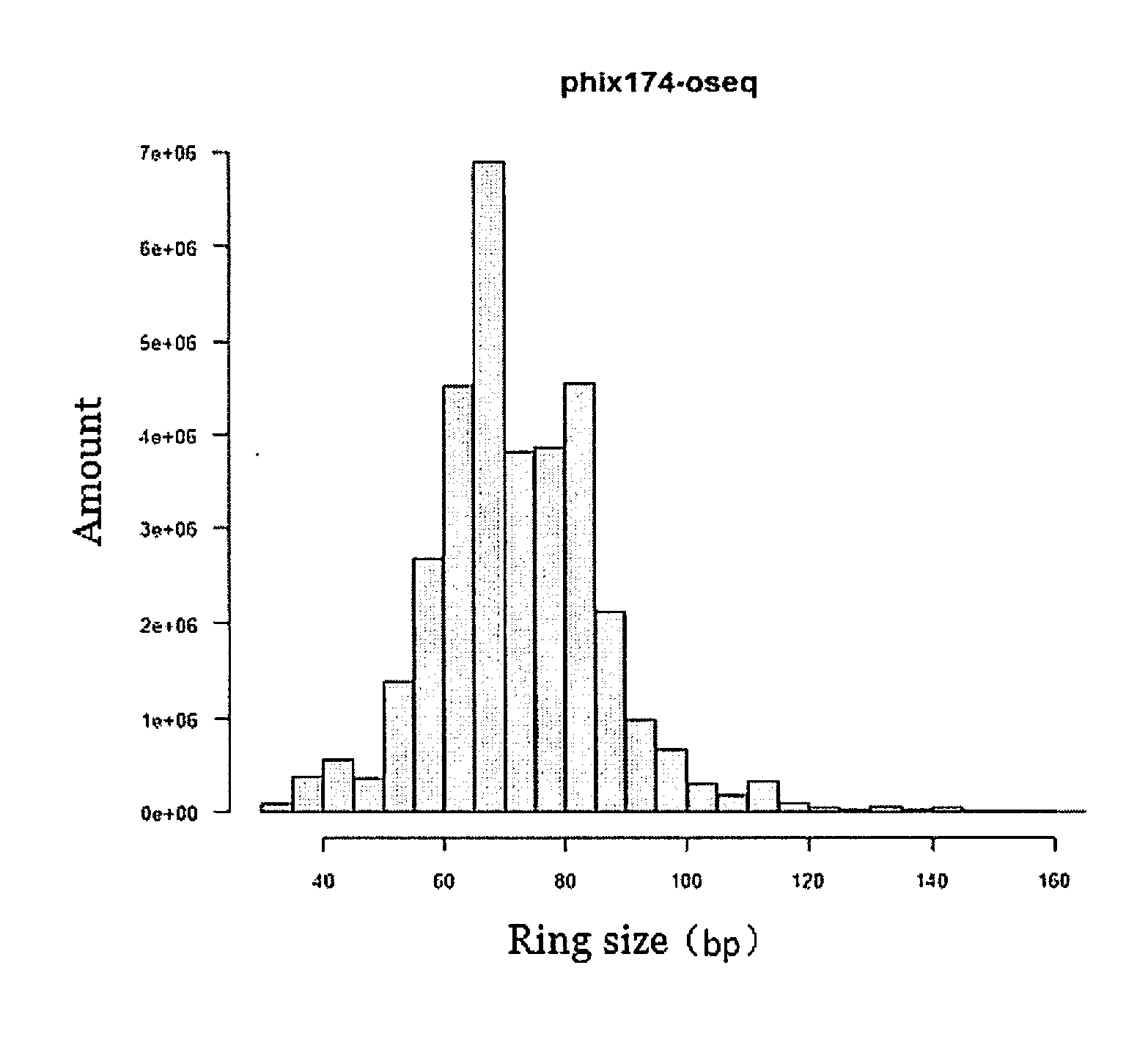
Figure 1 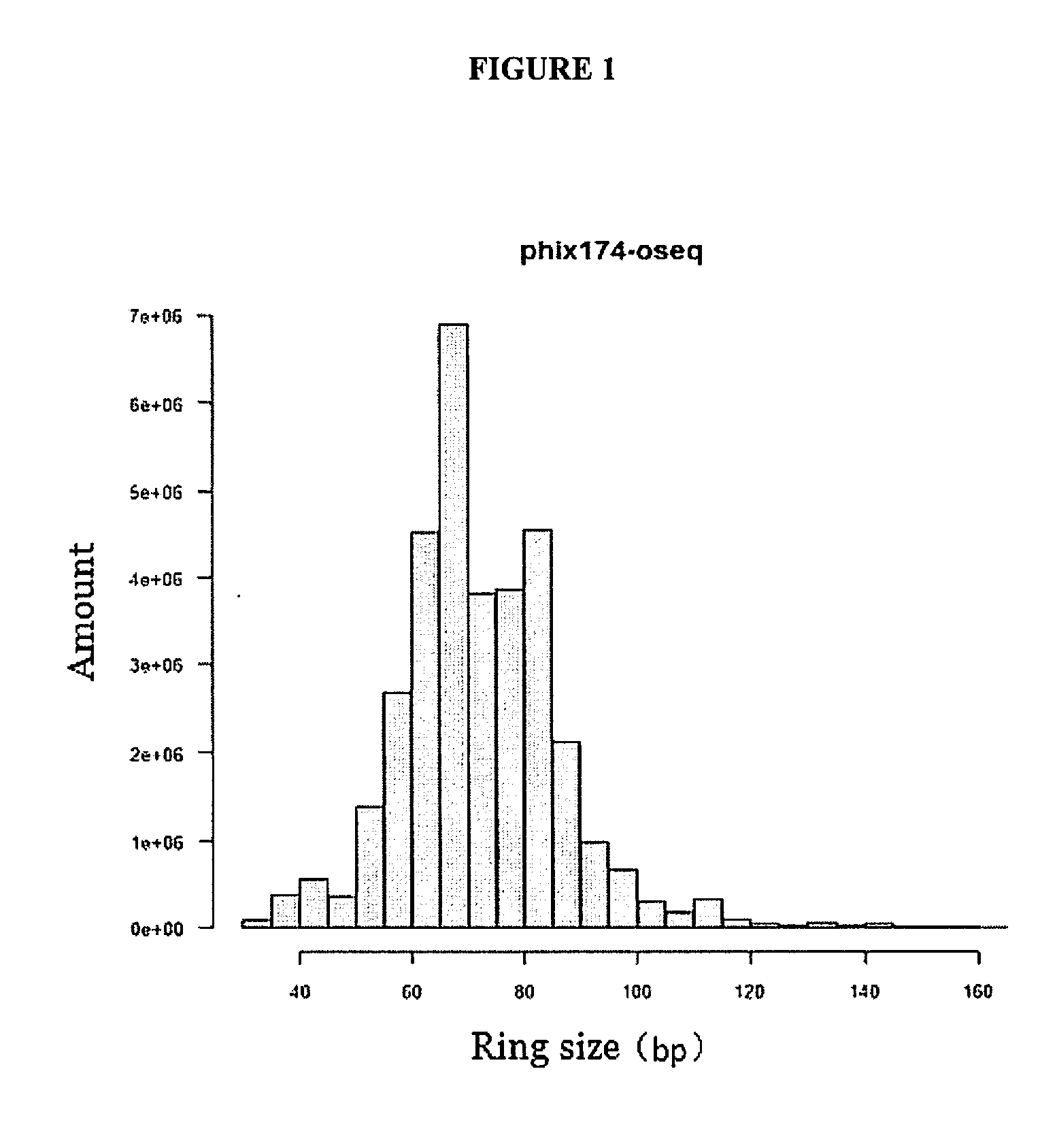
Figure 2
Abstract
Description
TECHNICAL FIELD
[0001] The present invention relates to a sequencing library, and a preparation method and use thereof.BACKGROUND ART
[0002] The development of the second-generation sequencing technology promotes the revolutionary development of biology and biomedical research. However, about 1% bases are not correctly sequenced due to natural characteristics of high-throughput sequencing. Although 1% error rate is tolerable in some applications, these 1% base errors may cover up lots of real information and hinder researches in many situations, for example, determining whether a tissue or organ of a normal individual has potential carcinogenic mutation sites, determining heterogenicity of DNA composition and latent small clone colonies in cancer cell colonies, tracing origin and division pattern of a cell by using a DNA mutation as label in the cell, accurately obtaining genotype of a highly-hybridized cancer colony, calculating rate of mutation generation during division of cancer cel...
Examples
example 2
Construction of Equidirectional Alternating Concatemer Library for Human Exon Sequence to be Tested and Tag Sequence According to Scheme I (Illumina Sequencing Platform)
[0203]1) DNA Fragmentation
[0204]The used instruments and reagents were as those of Example 1. Ultrasonic breaker was used to break 1 μg of purified human peripheral blood genome DNA into 300 bp (Intensity: 4, Duty Cycle: 10%, Cycles per Burst: 200, Temperature: 4° C., time: 60 s, number of cycles: 2), the breaking system was in an amount of 50 μl.
[0205]4% Agarose gel electrophoresis (80V, 70 min; 1×TAE), cutting gel and recovering 80˜130 bp fragments, brief recovering steps: 6 times volume of buffer QG sol, adding with same volume of isopropanol, mixing and being separated by chromatography, eluted with buffer QG, eluted with buffer PE, dried by airing, eluted with 56 μl ddH2O. See details in specification of QIAGEN MinElute Gel Extraction Kit.
[0206]2) End-Filling
[0207]Reagents: see also those in Example 1.
[0208]Frag...
example 3
Construction of Equidirectional Alternating Concatemer Library for Peripheral Blood Free DNA Sequence to be Tested and Tag Sequence According to Scheme I (Illumina Sequencing Platform)
[0342]1) Extracting Peripheral Blood Free DNA and Determining Fragment Size Thereof
[0343]Instruments and reagents:
[0344]QIAGEN: QIAamp Circulating Nucleic Acid Kit, catalog #: 55114
[0345]Agilent: 2100 bioanalyzer
[0346]2 ml of blood plasma was collected, QIAamp Circulating Nucleic Acid Kit of QIAGEN was used to extract DNA (cell-free circulating DNA) in the plasma, and elution was performed by using 20 μl ddH2O (the extraction method could be seen in the specification of the kit). 2100 bioanalyzer of Agilent was used to determine the size distribution of the extracted fragments. It could be seen in the results that the free DNA fragments of normal human subjects had a size centered around 172 bp, a distribution range of about (130 bp-230 bp), and a concentration of 0.354 ng / μl, while the free DNA fragme...
example 4
Construction of Equidirectional Alternating Concatemer Library for Sequence to be Tested and Tag Sequence According to Scheme II (Illumina Sequencing Platform)
[0433]Steps:
[0434]1) DNA Fragmentation
[0435]Instruments and reagents: see those in Example 1.
[0436]Ultrasonic breaker was used to break 1 μg of the purified Drosophila melanogaster genome DNA into 150-200 bp (Intensity: 5, Duty Cycle: 10%, Cycles per Burst: 200, Temperature: 4° C., time: 60 s, number of cycles: 5), the breaking system was in an amount of 50 μl.
[0437]4% agarose gel electrophoresis (80V, 70 min; 1×TAE), cutting gel and recovering 60-90 bp fragments, brief recovering steps: 6 times volume of buffer QG sol, adding with same volume of isopropanol, mixing homogeneously and then being separated by chromatography, eluted with buffer QG, eluted with buffer PE, dried by airing, eluted with 56 μl ddH2O. See details in specification of QIAGEN MinElute Gel Extraction Kit.
[0438]2) End-Filling
[0439]Reagents: see those in Exa...