
Grounding of a shaft
a shaft and grounding technology, applied in the field of transmission, can solve the problems of increasing the problem of microampere current, increasing the problem, and damage to the bearing, so as to reduce the friction between the third component and the surface, improve the wear behavior, and increase the transfer resistance between the first and third components.
Patent Information
- Authority / Receiving Office
- US · United States
- Patent Type
- Applications(United States)
- Current Assignee / Owner
- Publication Date
- 2017-12-28
- Estimated Expiration
- Not applicable · inactive patent
Smart Images
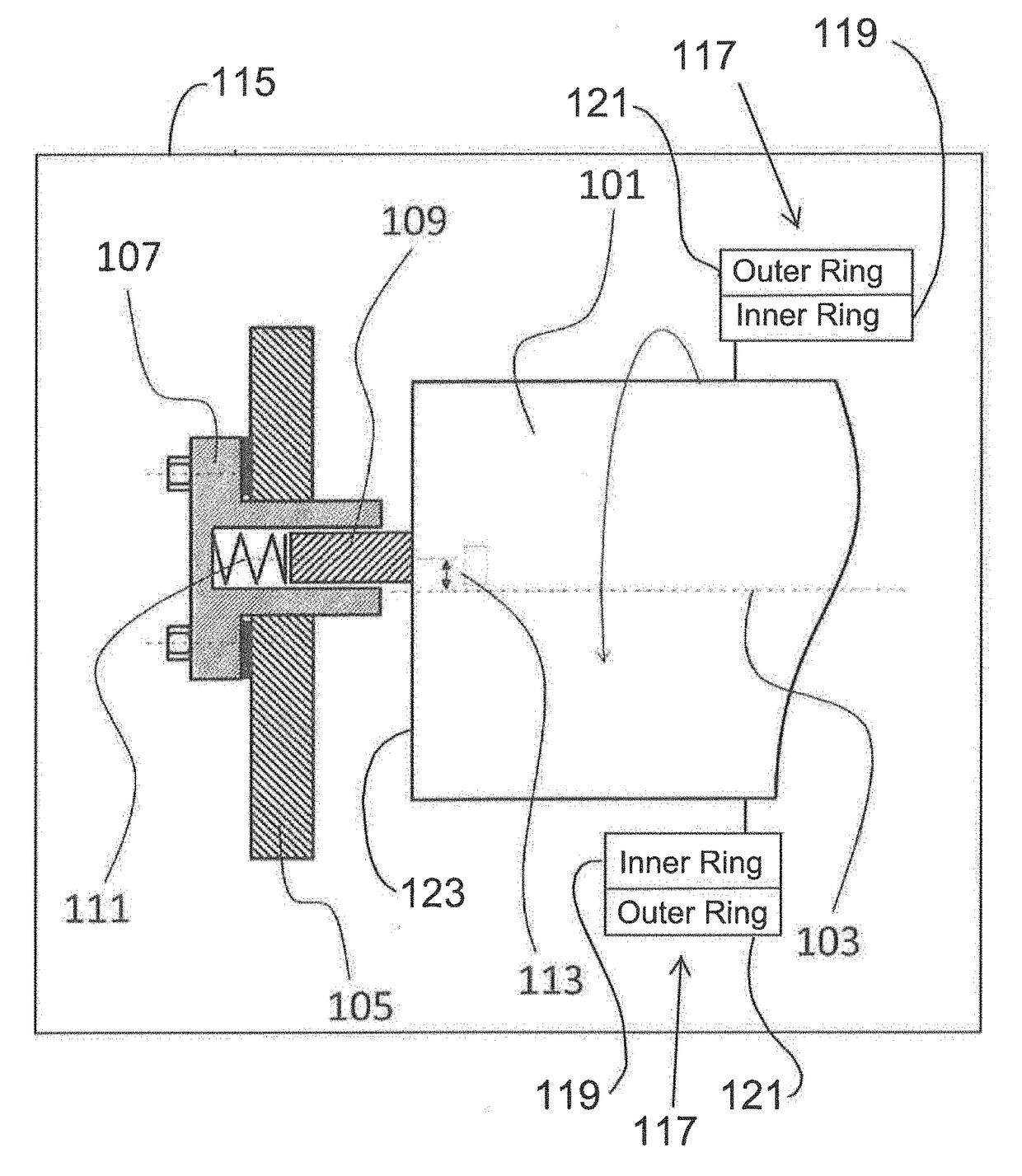
Figure 1 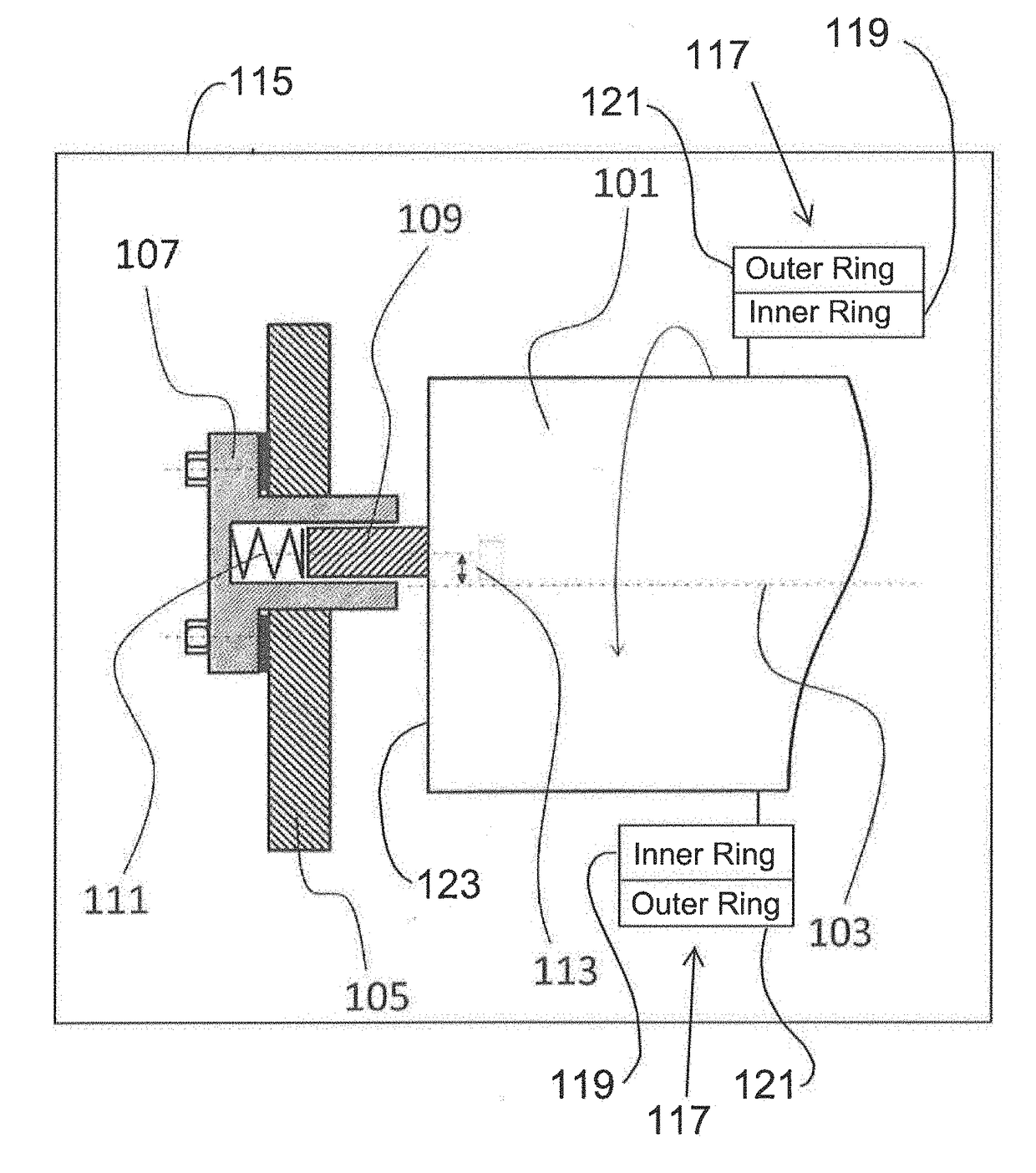
Figure 2
Abstract
Description
[0001] This application claims priority from German patent application serial no. 10 2016 211 616.9 filed Jun. 28, 2016.FIELD OF THE INVENTION
[0002] The invention concerns a transmission.BACKGROUND OF THE INVENTION
[0003] Electric currents can give rise to decarburiza ion and sparking in bearings. The result is damage to the bearing, which can ultimately lead to failure.
[0004] To avoid the flow of current in a bearing, various solutions are known from the prior art which are designed to achieve potential equalization. These include carbon brushes, shaft grounding rings and telescopic brushes. Such means are suitable for avoiding currents in the range of a few milliamperes to several amperes.
[0005] However, more recent research has yielded the knowledge that even very small currents, i.e. currents in the microampere range, can cause damage to bearings. Such currents seem to be responsible for the production of so-termed White Etching Cracks (WEC).
[0006] The means described earlier are not s...
Examples
Embodiment Construction
[0025]The shaft 101 of a transmission 115 has two end-faces with only one end-face 123 being shown in the FIGURE. The shaft 101 is mounted so that it can rotate about a rotational axis 103. The shaft 101 shown in the FIGURE is electrically connected to at least part of a bearing 117, such as a roller bearing. In particular, by virtue of the bearing 117, the shaft 101 can rotate—for example in the housing 105. This entails fixing the shaft 101 in an inner ring 119 and an outer ring 121 of the bearing 117. Also shown in the FIGURE is a transmission housing 105. To the transmission housing 105 are attached means 107 for grounding the shaft 101. The means 107 are electrically connected to the transmission housing 105. Furthermore, the means 107 comprise an electrically conductive pin 109. This is loaded by a spring 111 and pressed against the shaft 101, so that an electrically conductive connection is formed between the shaft 101 and the transmission housing 105.
[0026]The means 107 with...