
Commensal fungi and components thereof for use in modulating immune responses
Patent Information
- Authority / Receiving Office
- US · United States
- Current Assignee / Owner
- Publication Date
- 2019-06-20
- Estimated Expiration
- Not applicable · inactive patent
Smart Images
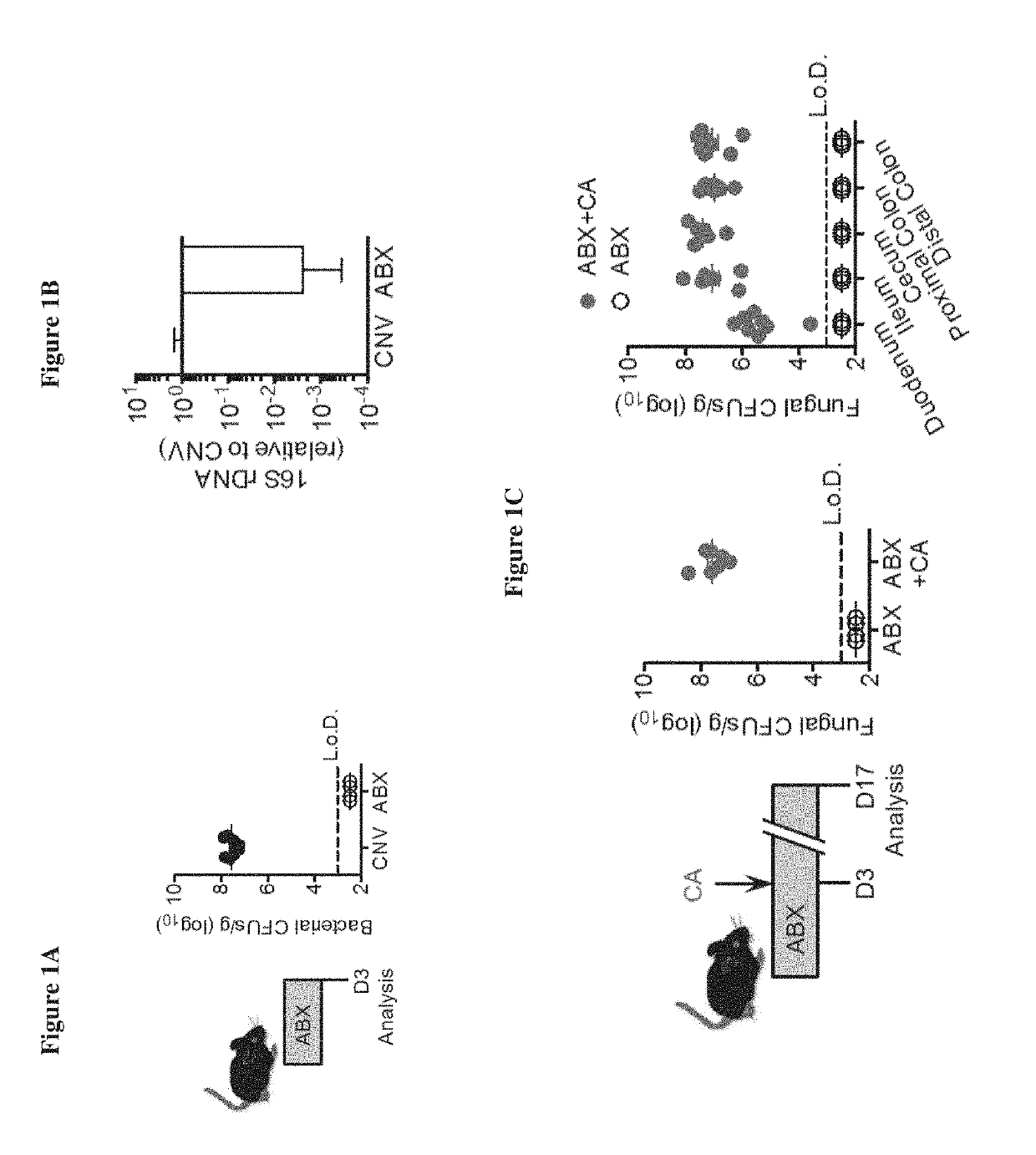
Figure 1 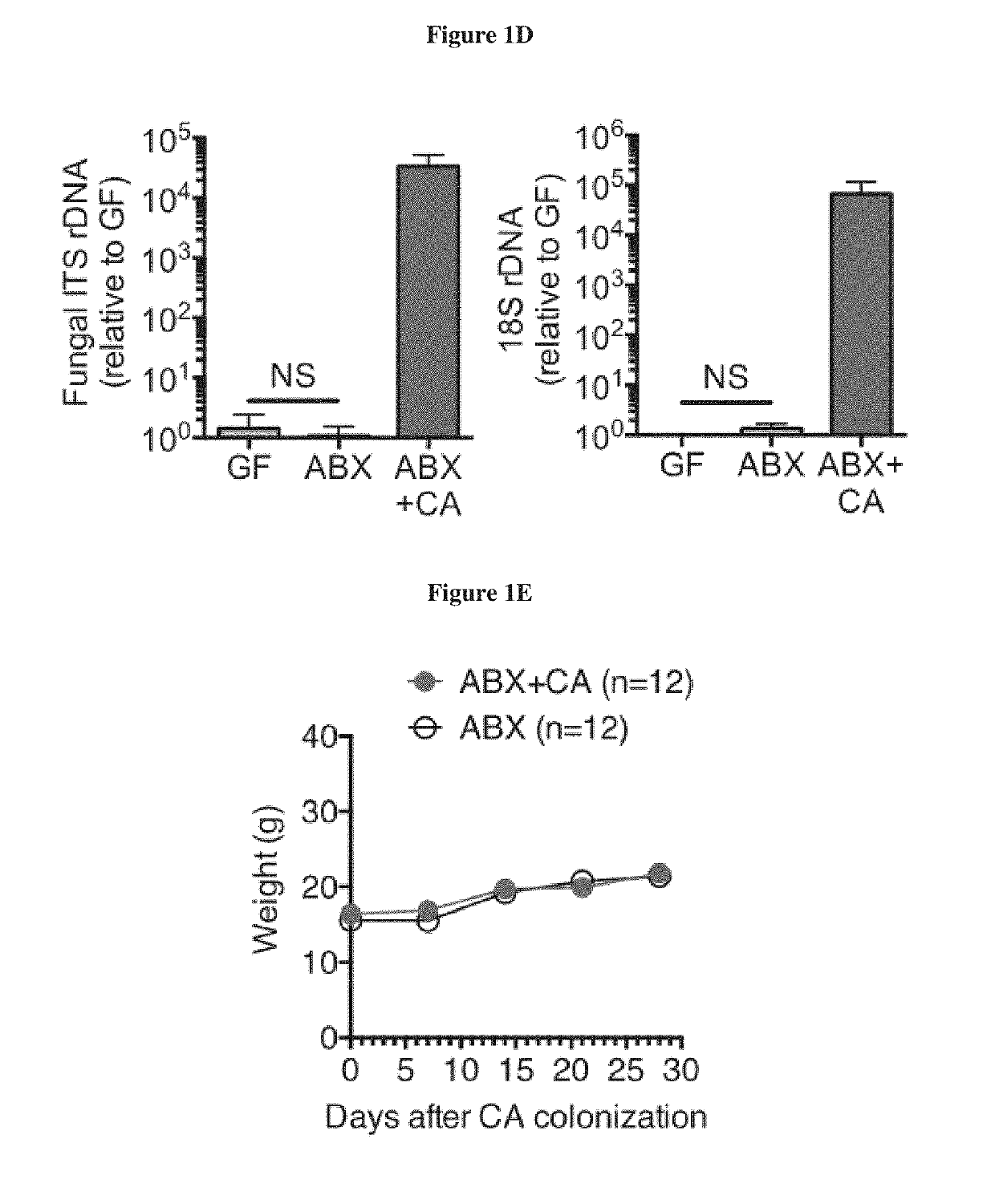
Figure 2 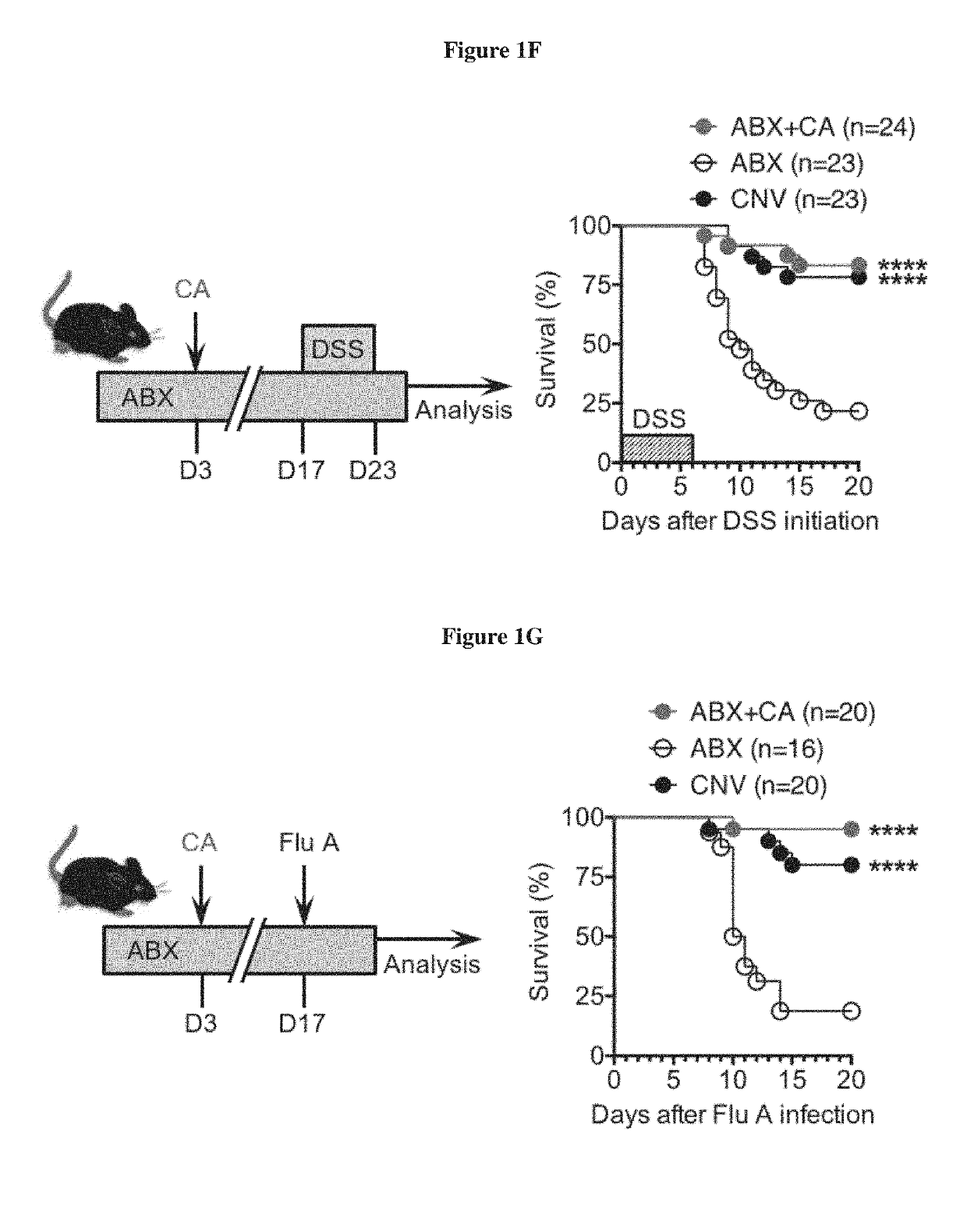
Figure 3
Abstract
Description
CROSS-REFERENCE TO RELATED APPLICATIONS
[0001] This application claims the benefit under 35 U.S.C. § 119(e) of U.S. provisional application No. 62 / 608,116, filed Dec. 20, 2017, the contents of which are incorporated by reference herein in their entirety.GOVERNMENT RIGHTS
[0002] This invention was made with government support under NIH R21-AI123089 and NIH R21-AI128932, awarded by the National Institutes of Health. The government has certain rights in the invention.BACKGROUND OF THE INVENTION
[0003] Commensal intestinal microbes collectively play beneficial roles in calibrating immunological responsiveness to improve the outcomes of inflammatory disorders and infections (Chung and Kasper, Current opinion in immunology 22:455-460 (2010); Hooper et al., Science 336:1268-1273 (2012); Round and Mazmanian, Nat Rev Immunol 9:313-323 (2009)). This symbiotic relationship between enteric commensal microbes and the mammalian host has primarily been probed by analyzing intestinal bacteria. For exampl...
Examples
example 1
Fungi Recapitulate the Protective Benefits of Intestinal Bacteria
[0068]Commensal intestinal microbes are collectively beneficial in preventing local tissue injury and augmenting systemic antimicrobial immunity. However, given the near-exclusive focus on bacterial species in establishing these protective benefits, the contributions of other types of commensal microbes remain poorly defined. Here it is shown that commensal fungi can functionally replace intestinal bacteria, by conferring protection against injury to mucosal tissues and positively calibrating the responsiveness of circulating immune cells. Susceptibility to colitis and influenza A virus infection that occur upon commensal bacteria eradication are efficiently overturned by monocolonization with either C. albicans or S. cerevisiae. It is further shown that the protective benefits of commensal fungi are mediated by mannans, a highly conserved component of fungal cell walls, since intestinal stimulation with this moiety al...