
Andrias davidianus cartilage preparation
a technology of andrias davidianus and cartilage, which is applied in the direction of anti-neurotoxic agents, peptide/protein ingredients, immunological disorders, etc., can solve the problems of unsustainable use of shark cartilage, and achieves high edible and medicinal value, great potential for development and utilization, and high value.
Patent Information
- Authority / Receiving Office
- US · United States
- Current Assignee / Owner
- Publication Date
- 2021-02-18
Smart Images
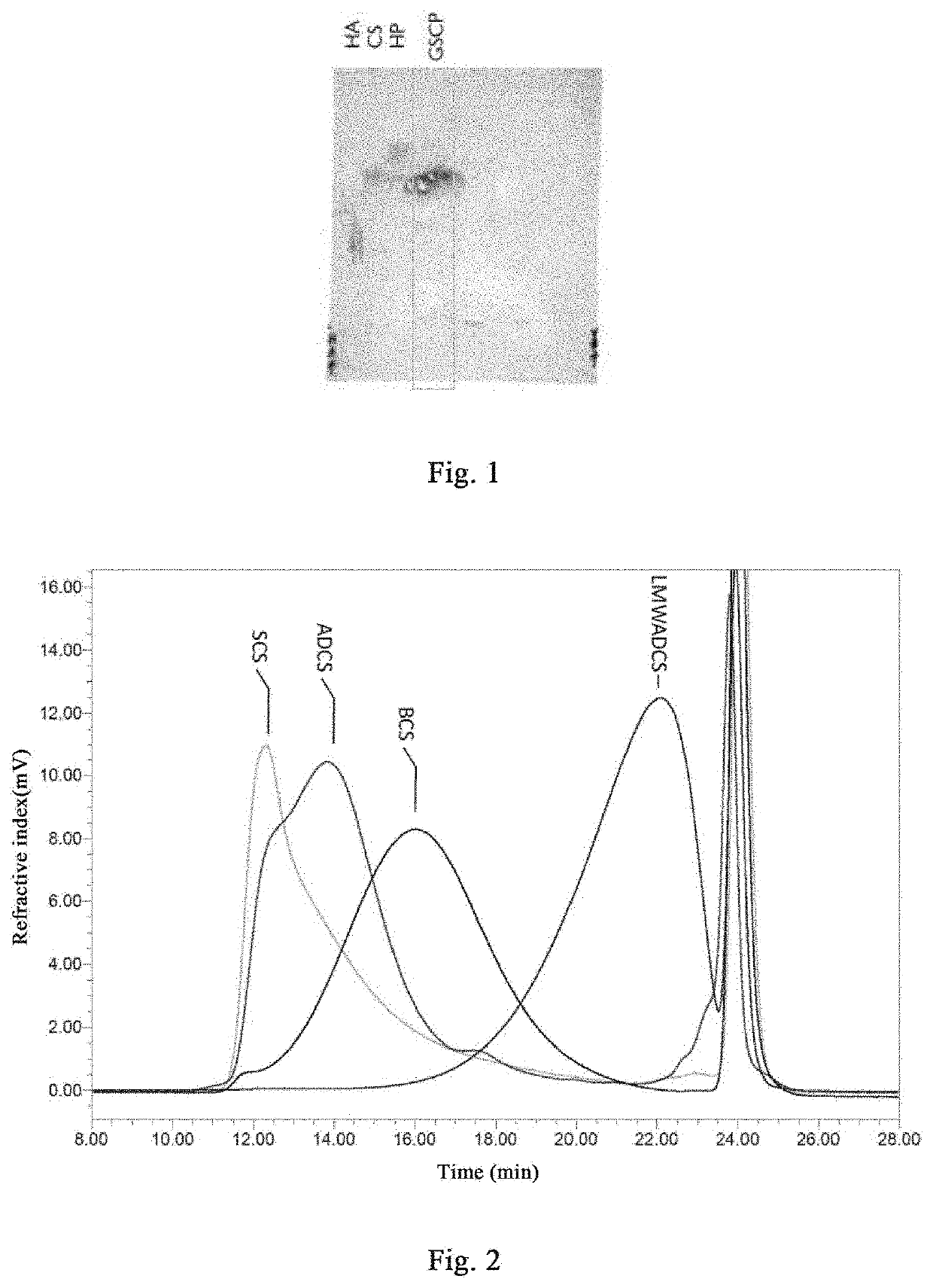
Figure 1 
Figure 2 
Figure 3
Abstract
Description
TECHNICAL FIELD
[0001] The invention relates to an Andrias davidianus cartilage preparation and use thereof.BACKGROUND ART
[0002] Cartilage is rich in glycoproteins, peptides, small-molecule proteins, and polysaccharides. Studies have found that cartilage extracts from certain animals have good anti-tumor, anti-angiogenesis, immune regulation, and anti-arthritis activities. Among them, researches on shark cartilage preparation (SCP) are particularly abundant, and SCP is widely popular as a nutritional supplement worldwide. However, with the development of the shark cartilage market, the amount of shark fishing has increased. In recent decades, the number of shark populations in nature has dropped sharply, and some types of sharks have been included in the endangered species list. The use of shark cartilage is therefore unsustainable.
[0003] Currently, the cartilage preparations on the market are mainly derived from shark cartilage. With the development of the shark cartilage market, the a...
Examples
example 3
Glycosaminoglycan Composition of GSCP Component Obtained in Example 1 by Cellulose Acetate Membrane Electrophoresis
[0144]Cellulose acetate membrane (7 cm*9 cm) is thoroughly soaked in electrode buffer solution (0.1 mol / L pyridine, 0.47 mol / L formic acid, pH 3.0) for 30 minutes, then taking it out to remove and absorb the excess buffer solution. Samples are applied at one end of the cellulose acetate film by using a sampler (10 mg / ml GSCP), taking 2 mg / ml hyaluronic acid, chondroitin sulfate, and heparin samples as controls; running electrophoresis on a DYCP-38C horizontal electrophoresis instrument at a constant current of 6 mA for 30 minutes, staining in a staining solution (0.5% alcian blue, 2% acetic acid) for 30 minutes, and rinsing repeatedly with rinsing solution (2% acetic acid) 3-5 times for 20 minutes each time, then the rinsed cellulose acetate membrane is observed under visible light, and the results are shown in FIG. 1. FIG. 1 shows that the GSCP sample has a higher cont...
example 6
-Lowering Activity of the Enzymatic Extract (GSCP) and the Alcohol-Soluble Component (GSCP2)
[0201]Analysis 1:
[0202]The oxidation of xanthine is catalyzed by XOD (xanthine oxidase) to generate uric acid and superoxide anions, and it is one of the main sources of reactive oxygen species. XOD is also one of the key enzymes for nucleotide metabolism, and is mainly distributed in mammals' heart, lung, liver and other tissues. The XOD enzyme activity inhibition model may be used to screen and evaluate potential uric acid lowering drugs.
[0203]Reagents: XOD enzyme (Sigma, derived from milk), XOD enzyme activity detection kit (purchased from Nanjing Jiancheng Bioengineering Institute).
[0204]The oxidation of xanthine is catalyzed by Xanthine oxidase (XOD) to generate uric acid with specific absorption at 295 nm. The enzymatic activity may be characterized by spectrophotometric determination of the product. The XOD enzyme activity detection is performed according to the instructions of the XOD...