
Use of activity bins to increase the performance of disk arrays
a technology of activity bins and disk arrays, applied in the direction of fault response, digital transmission, instruments, etc., can solve the problems of increasing the initial cost of a raid array, affecting the performance of the array,
Patent Information
- Authority / Receiving Office
- US · United States
- Patent Type
- Patents(United States)
- Current Assignee / Owner
- Publication Date
- 2004-08-10
- Estimated Expiration
- Not applicable · inactive patent
Smart Images
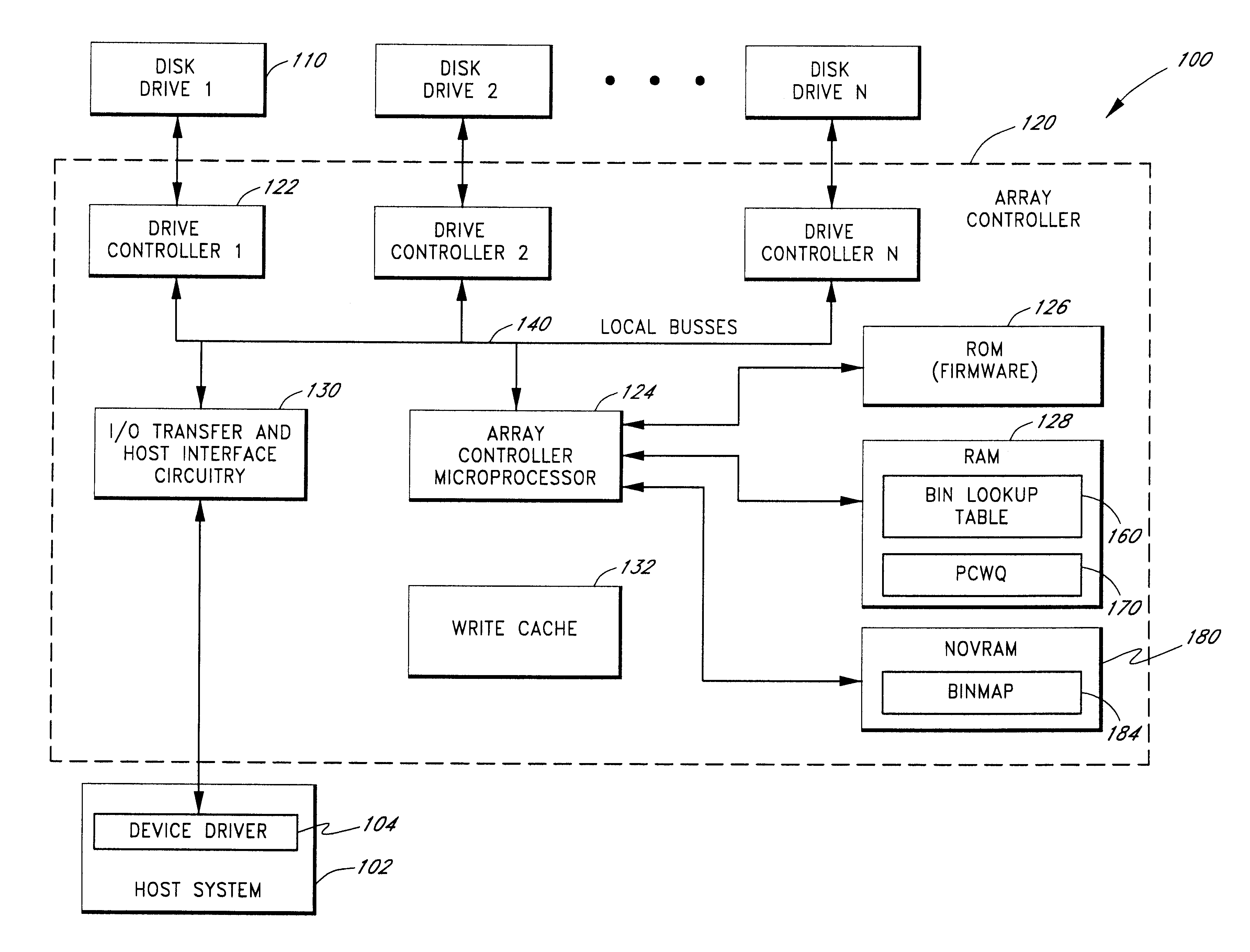
Figure 1 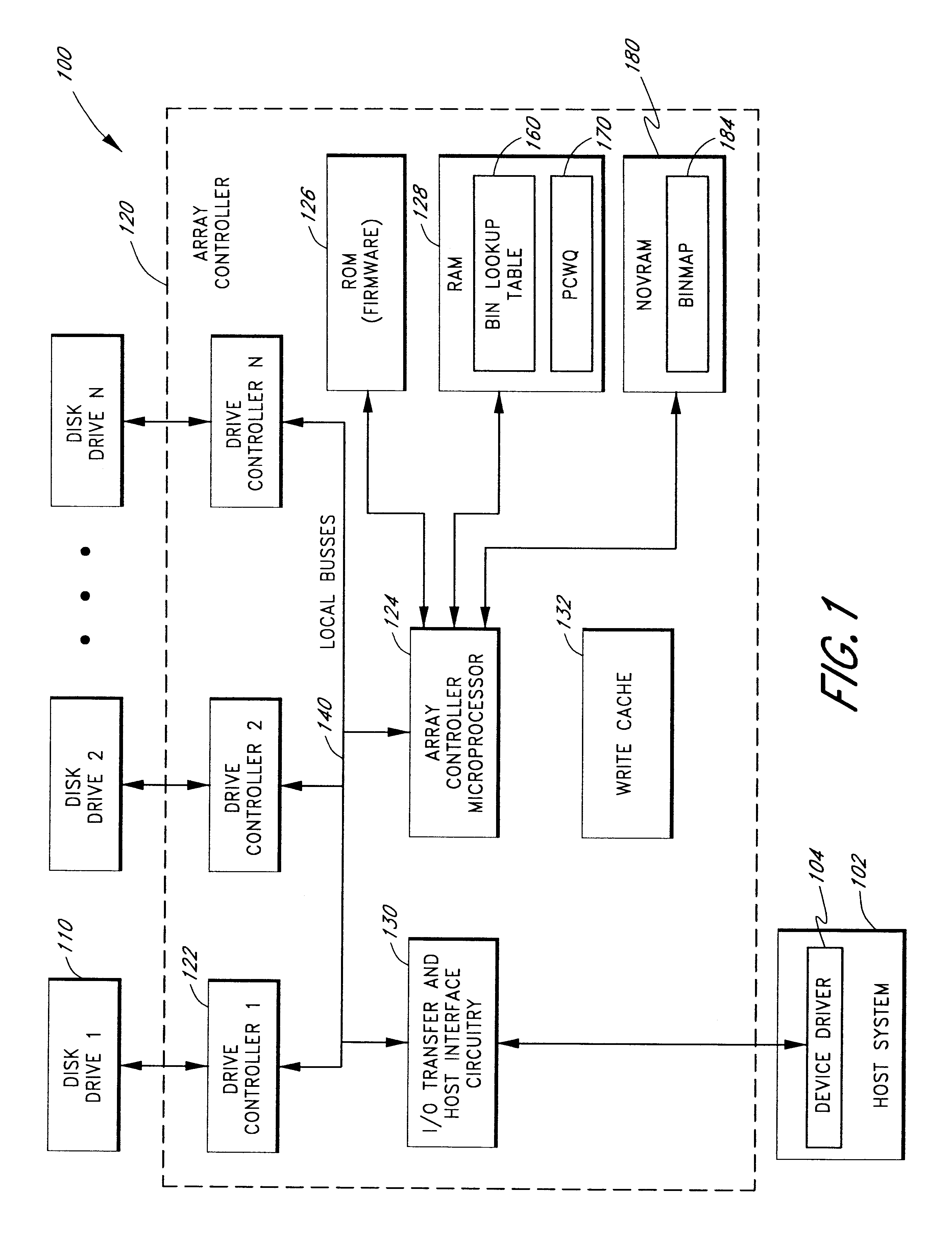
Figure 2 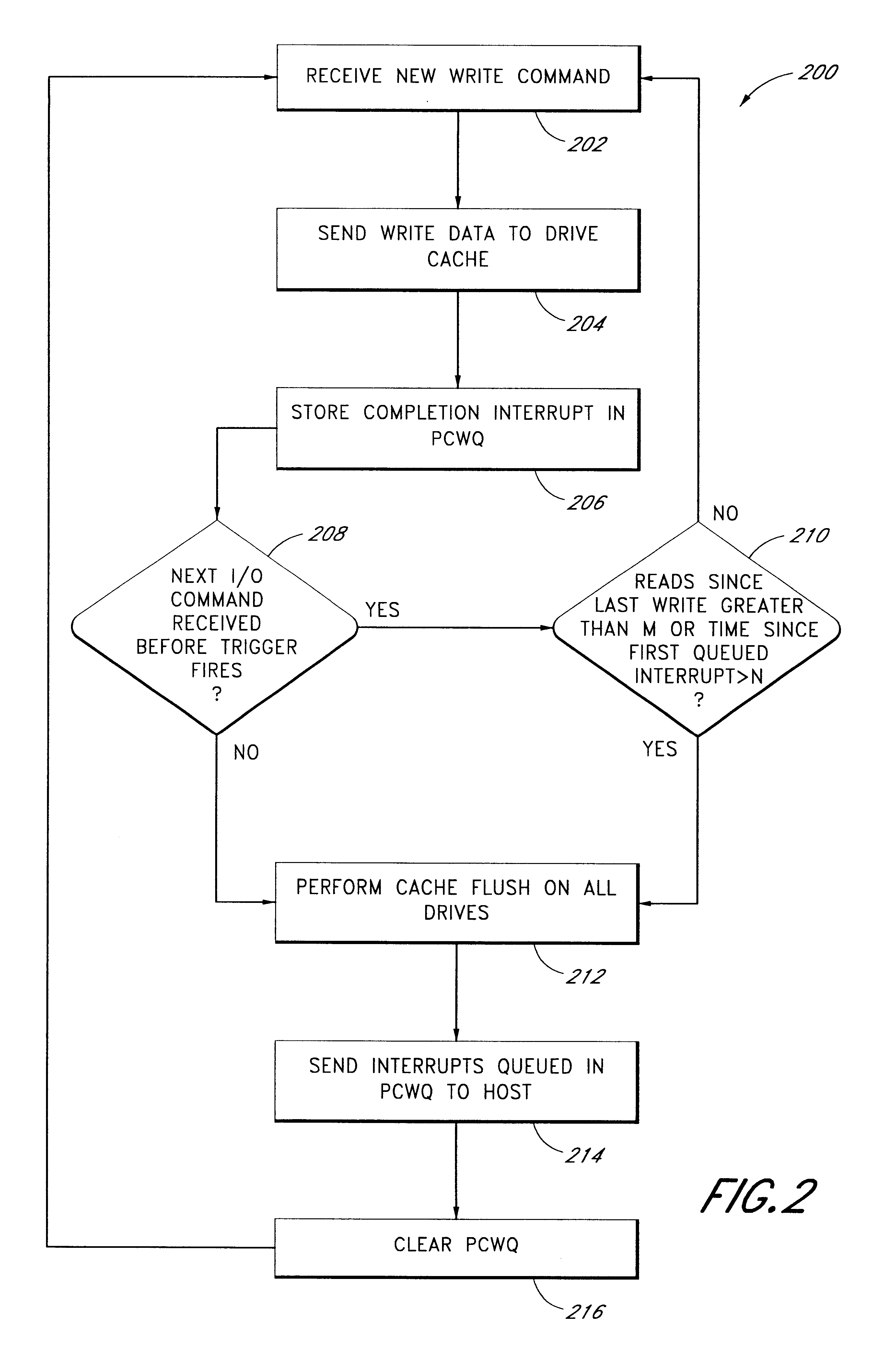
Figure 3
Abstract
Description
1. Field of the InventionThe present invention relates generally to Redundant Arrays of Inexpensive Disks and more particularly, the invention relates to technology for increasing the performance of these disk arrays.2. Description of the Related ArtDisk arrays provide vast amounts of storage as well as flexibility in speed and reliability. These arrays are often configured to operate as Redundant Arrays of Inexpensive Disks, otherwise known as RAID arrays, to provide added speed and reliability. Existing RAID arrays, however, suffer from various deficiencies.In order to assure reliability in the event of unexpected power failures, high-performance RAID arrays generally require a battery backup or uninterruptable power supply (UPS). Existing systems are typically configured such that the host is informed that a write has been completed once the write data has been written to a write cache of a disk drive or an array controller. The danger is that power can be lost after the data has...
Examples
example implementation
D. Example Implementation
FIG. 2 illustrates a method 200 for implementing deferred flushes in accordance with one embodiment. The method 200 is preferably performed by the array controller 120 based upon firmware code stored in the ROM 126. Alternatively, the method 200 can be performed based upon application specific logic circuitry. The method 200 can also be performed partially or wholly by the device driver 104 of the host system 102.
At a step 202, the array controller 120 receives a new write command from the host 102. In one embodiment, the write command is received from the device driver 104 by the host interface 130.
At a step 204, the array controller sends the write data to one or more of the drive caches. In one embodiment, each drive controller 122 has a cache for the respective drive. A write command generally involves writing data to each of the drives in the array and therefore write data is sent to each drive controller 122 to be cached. In some RAID configurations, h...