
Sealing foil and associated lamp having this foil
a technology of sealing foil and associated lamps, which is applied in the manufacture/treatment of superconductor devices, liquid/solution decomposition chemical coatings, coatings, etc., can solve the problems of high scrap levels during resistance welding and increase the wear of resistance welding electrodes, and achieve high scrap rate and reliable and simple way.
Patent Information
- Authority / Receiving Office
- US · United States
- Patent Type
- Patents(United States)
- Current Assignee / Owner
- Publication Date
- 2005-11-29
- Estimated Expiration
- Not applicable · inactive patent
Smart Images
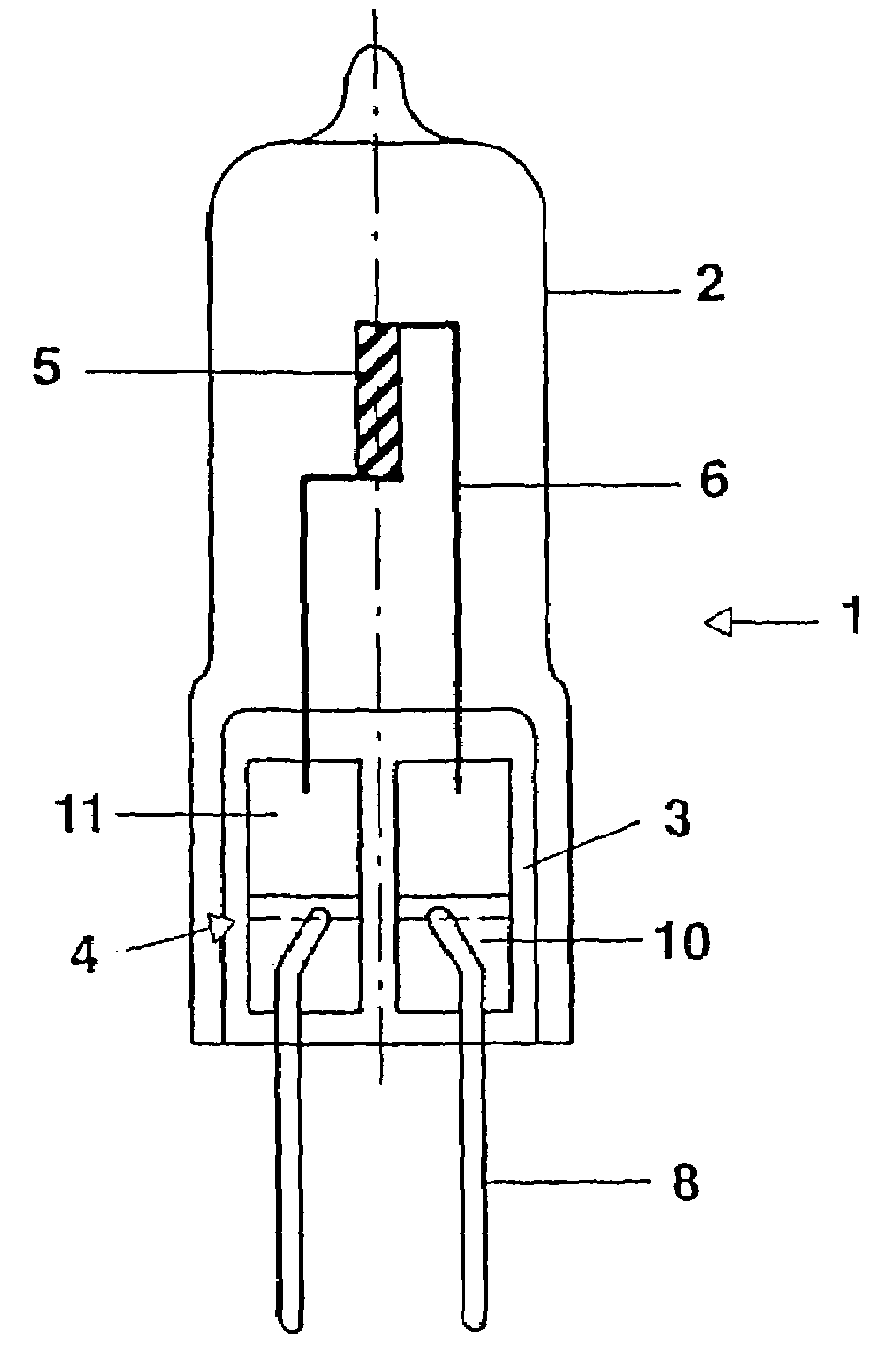
Figure 1 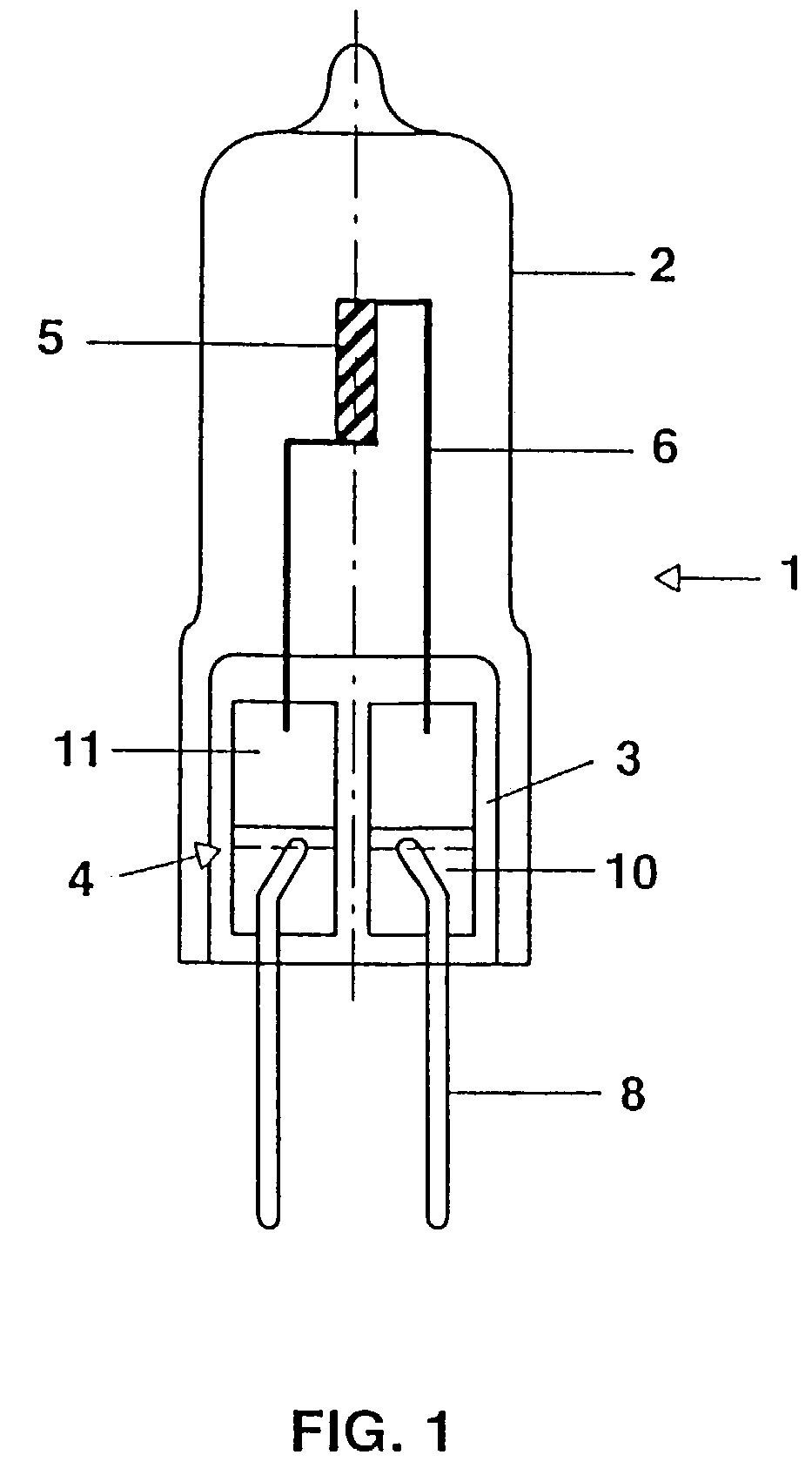
Figure 2 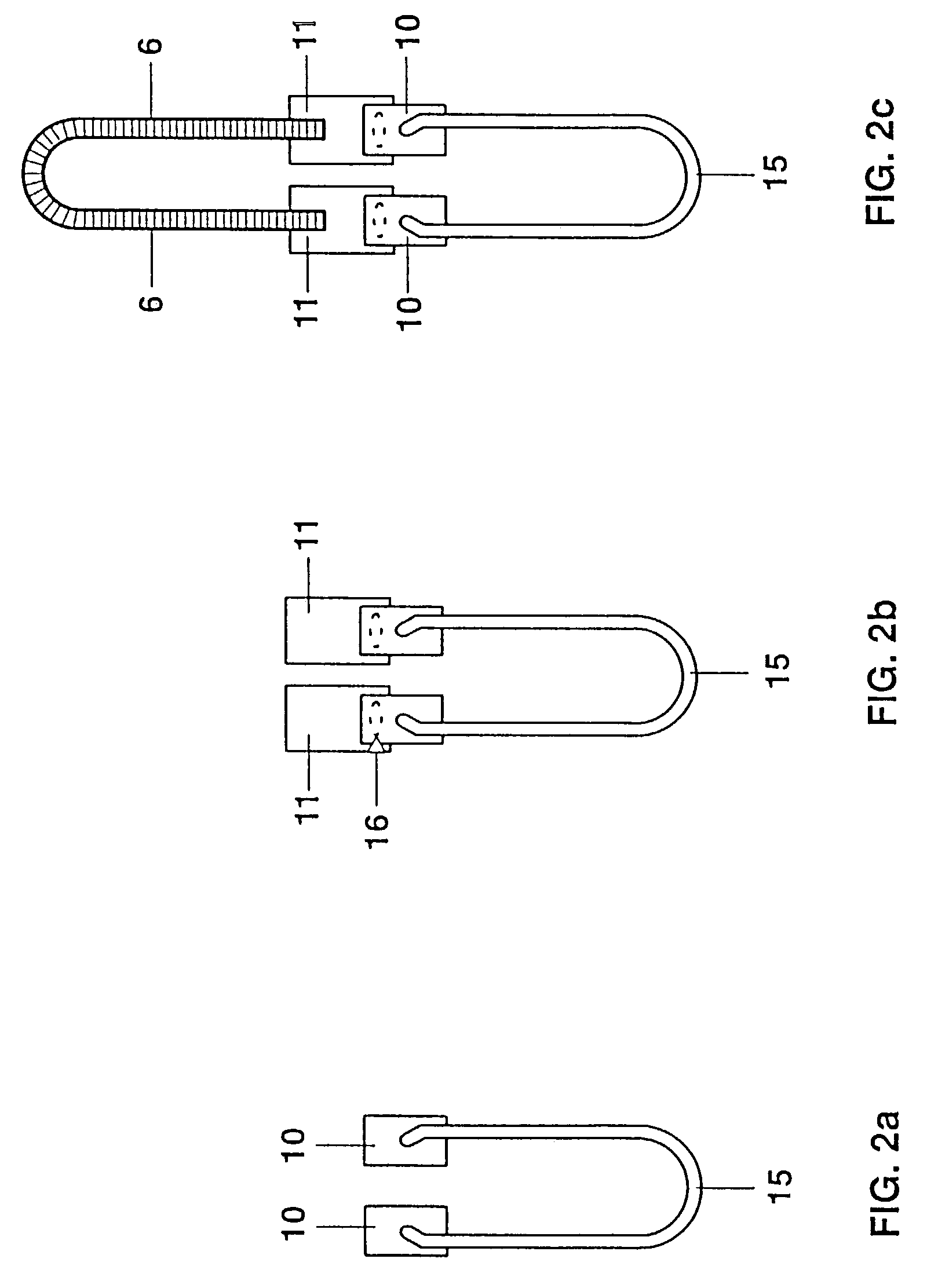
Figure 3
Abstract
Description
TECHNICAL FIELD
[0001] The invention relates to a sealing foil and associated lamp having this foil in accordance with the preamble of claim 1. It deals in particular with molybdenum foils which are used in pinches as are customary for sealing incandescent lamps and discharge lamps.BACKGROUND ART
[0002] U.S. Pat. No. 5,021,711 has already disclosed a sealing foil and associated lamp having this foil. To provide better protection against oxidation, the foil is provided with a protective layer of Al, Cr, Si, Ti or Ta. The thickness is 5 to 100 nm.
[0003] A similar technique is known from CA -A 1135781, in which layers of Ta, Nb, V, Cr, Ti, Y, La, Hf or Sc are used for the same purpose. The layer thickness is 10 to 200 nm.
[0004] In practice, partial chromium-plating is generally used to protect the molybdenum foils from oxidation in the region of the foil-pin welded joint. In this very laborious procedure, the welded joints produced between pin and foil by resistance welding are manually plac...
Examples
Embodiment Construction
[0022]The exemplary embodiment shown in FIG. 1 is a halogen incandescent lamp 1 (12V for 100 W output) with a lamp bulb 2 made from quartz glass, which is closed off in a gas-tight manner with the aid of a pinch seal 3. Two molybdenum foil stacks 4 are embedded in the pinch seal of the lamp bulb. Inside the lamp bulb there is a double-coiled luminous body 5, of which the single-coiled ends act as inner supply conductors 6. The inner supply conductors are each welded to a molybdenum foil stack 4 embedded in the pinch seal. Two outer supply conductors 8, which are each connected to one of the two molybdenum foil stacks, project out of the pinch seal 3.
[0023]The two molybdenum foil stacks 4 embedded in the pinch seal each comprises two foils 10, 11. The inner sealing foil 11 is coated with a 60 nm thick eutectic Mo—Ru alloy on one side, specifically the side to which the inner supply conductor 6 is secured. The outer welding foil 10 is coated on both sides with pure Ru with a layer thi...