
Apparatus for stimulating a muscle of a subject
a technology for stimulating muscles and apparatuses, applied in electrotherapy, physical therapy, artificial respiration, etc., can solve the problems of ineffective stimulation of muscles by electrical pulse signals, inducing relatively significant calorie usage, and inducing cardiovascular training effects in subjects
Patent Information
- Authority / Receiving Office
- US · United States
- Current Assignee / Owner
- Publication Date
- 2007-08-14
- Estimated Expiration
- Not applicable · inactive patent
Smart Images
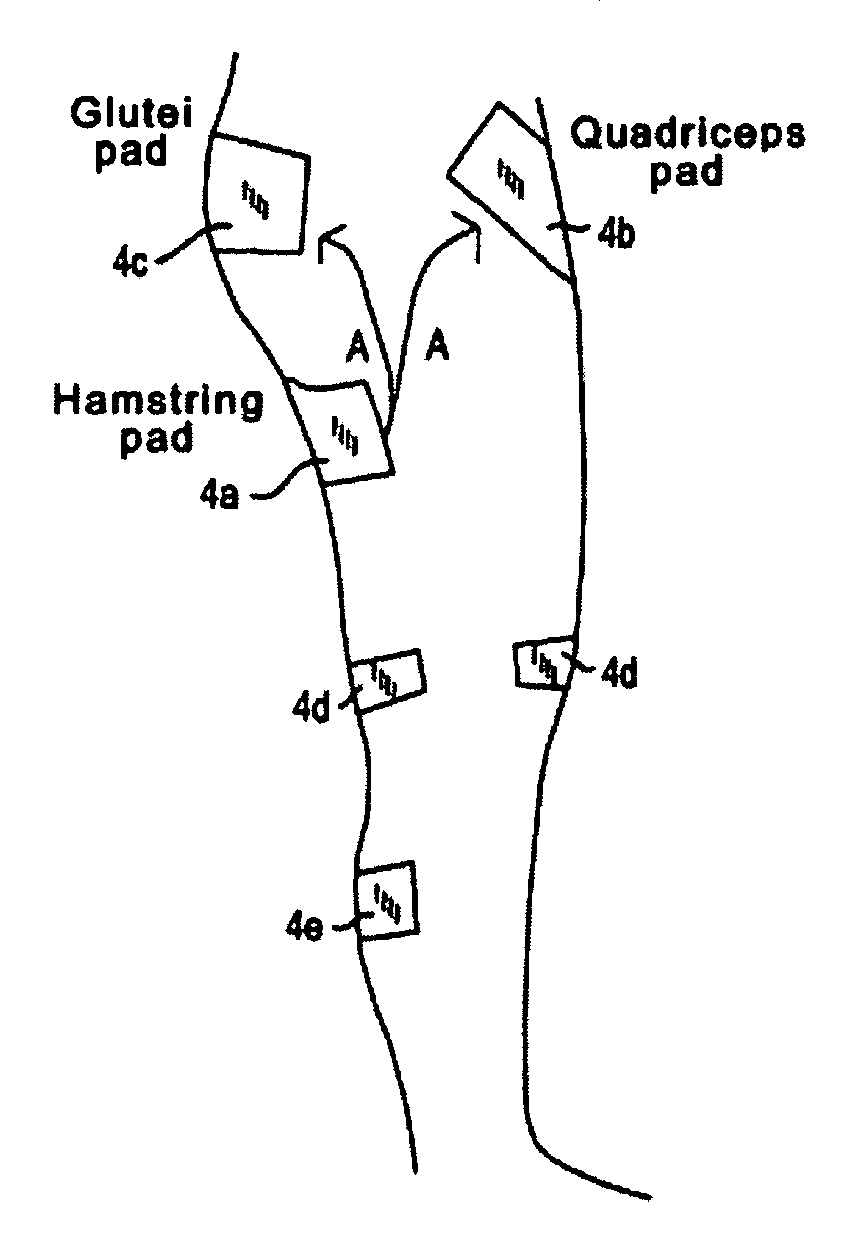
Figure 1 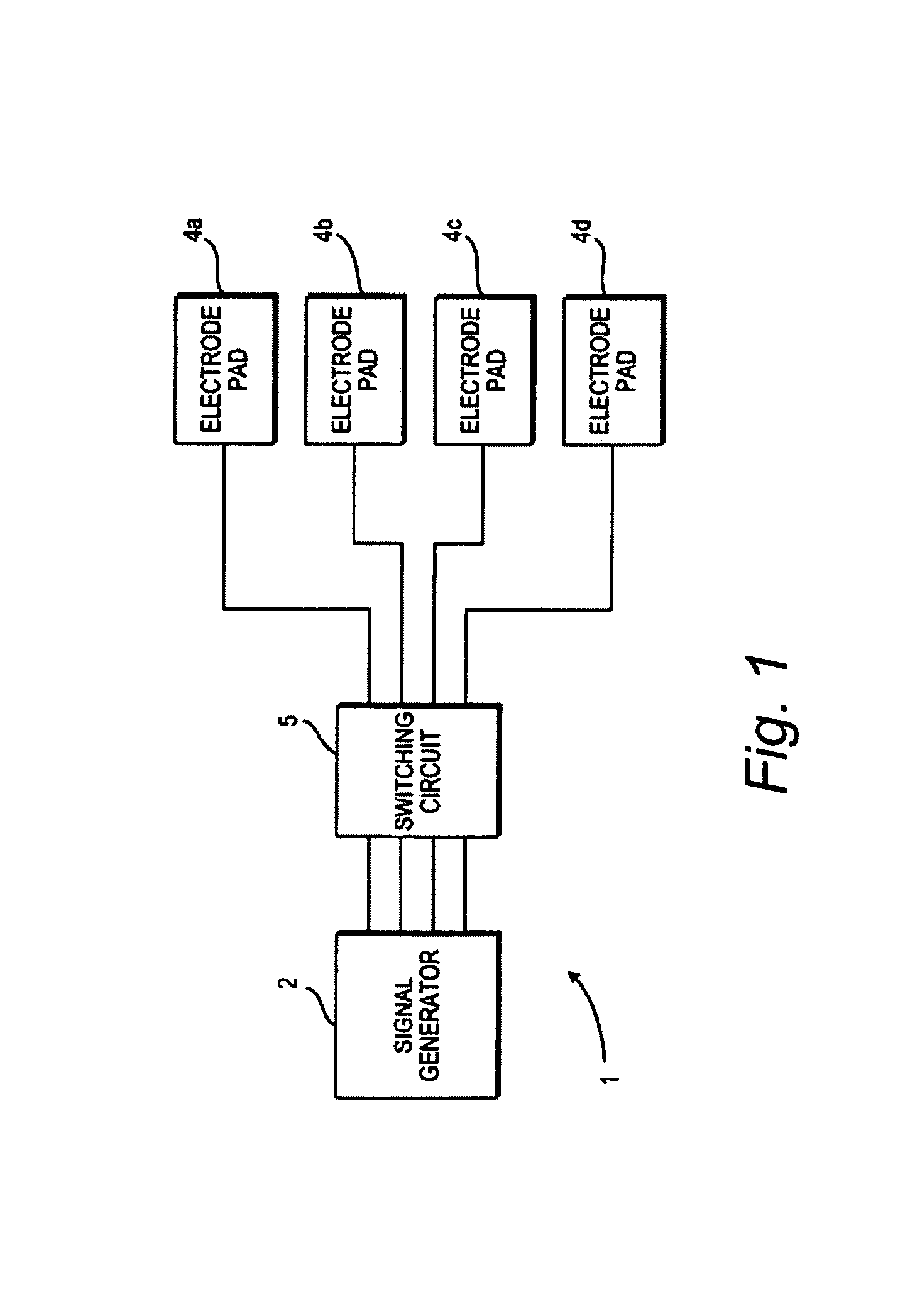
Figure 2 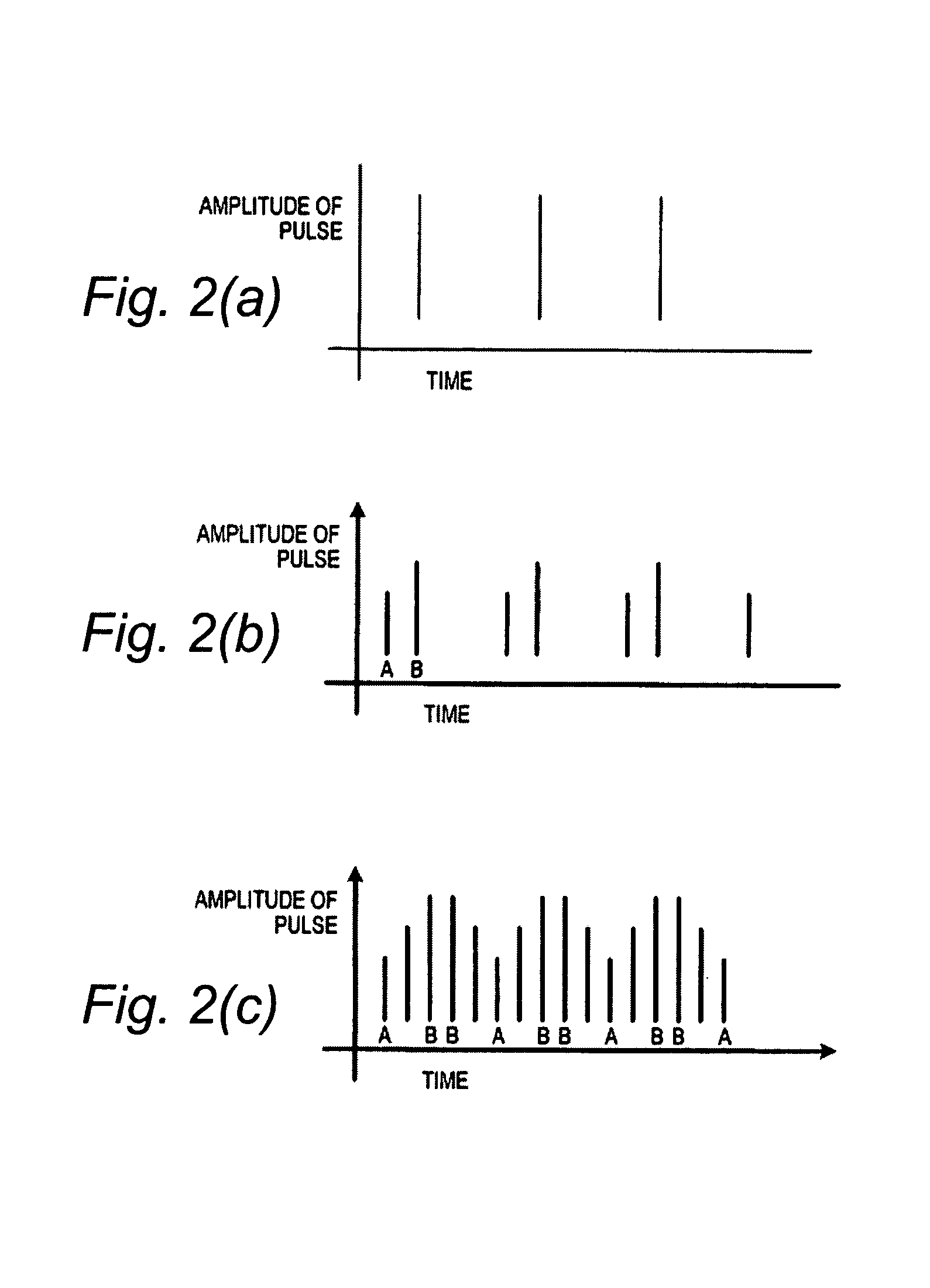
Figure 3
Abstract
Description
BACKGROUND OF THE INVENTION
[0001] The present invention relates to apparatus for stimulating a muscle of a subject, and in particular, to such apparatus for inducing cardiovascular training effects in a subject and for inducing relatively significant calorie usage that may bring about weight loss in the subject over time. The invention also relates to a method for stimulating a muscle in a subject for inducing cardiovascular training effects in a subject, and for inducing relatively significant calorie usage that may bring about weight loss in the subject. As a subject's weight change is a function of caloric intake as compared with caloric expenditure over time, the invention allows for a significant increase in caloric expenditure.SUMMARY OF THE INVENTION
[0002] According to the invention there is provided apparatus and method for stimulating a muscle of a subject for inducing cardiovascular training effects in a subject, and for inducing relatively significant calorie usage that may...
Examples
examples
[0073]A trial was carried out on nine subjects, namely, subjects aa, bb, ee, ff, hh, jj, kk, pp and rr employing the features of the invention described above. Results from these tests are set out in Tables 1 to 3. In the trial apparatus 1 described with reference to FIGS. 1 to 3b was used. Each subject was subjected to an average of twenty two sessions of muscle stimulation, and each session lasted for a time period of approximately one hour. In general, the pulse signals were applied to the subjects through electrode pads as shown in FIGS. 3a and 3b.
[0074]The pulse signal selected throughout the trials was the pulse signal illustrated in FIG. 2(b). The time period between the adjacent current amplitude pulses A and B of the pulse signal was one thirtieth of a second, while the bursts of the respective pulses A and B repeated every one fifth of a second. Thus, the frequency of the bursts of pulses was 5 Hz while the frequency of the pulses was 30 Hz. The current amplitude of the f...