
Diabetes gene
a technology of diabetes and gene, applied in the field of human genetics, can solve the problems of early morbidity and mortality as a result of diabetes, and achieve the effects of reducing or preventing gene expression, preventing or treating diabetes, and reducing disease symptoms
Patent Information
- Authority / Receiving Office
- US · United States
- Patent Type
- Patents(United States)
- Current Assignee / Owner
- Publication Date
- 2008-05-20
- Estimated Expiration
- Not applicable · inactive patent
Smart Images
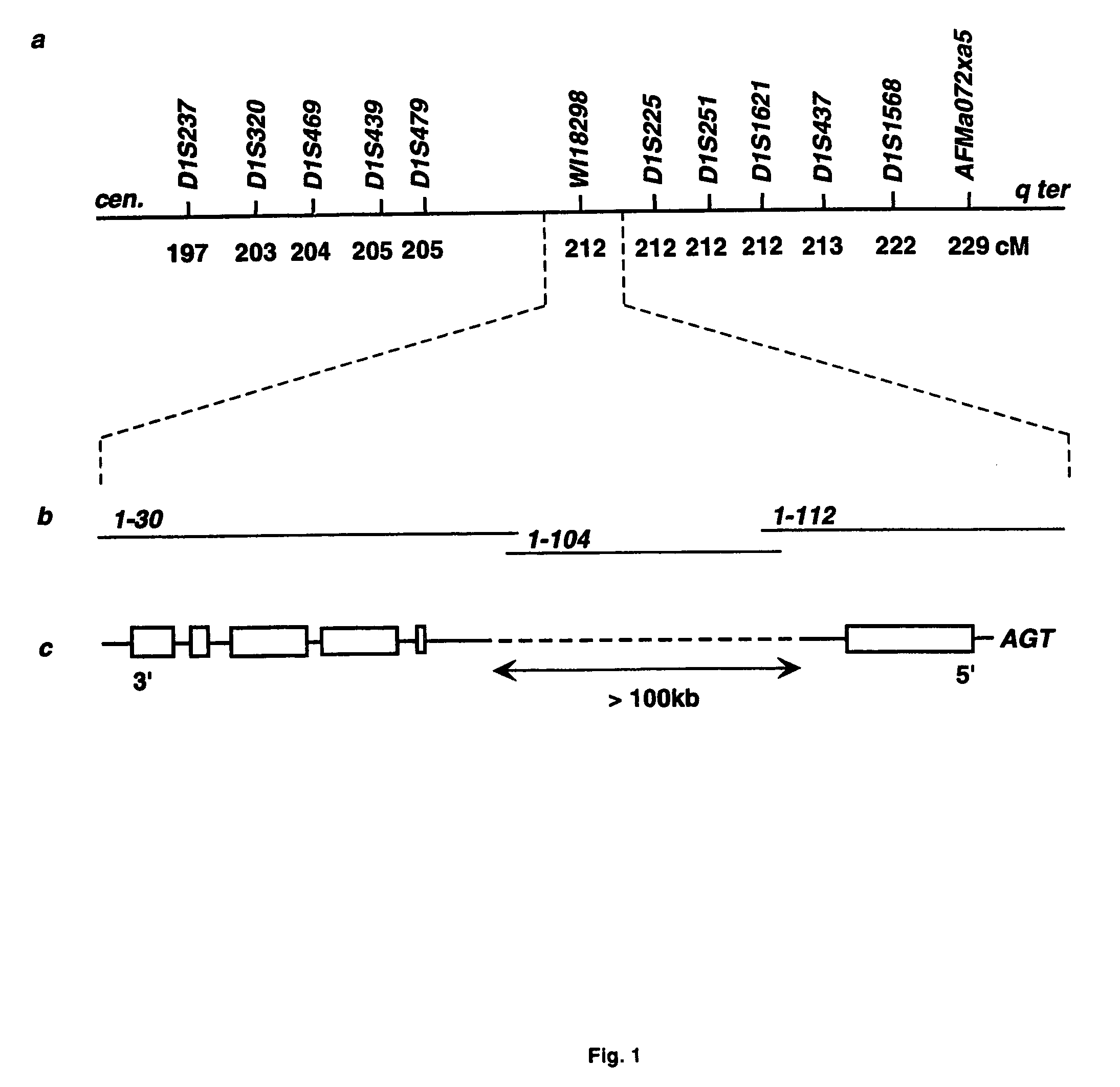
Figure 1 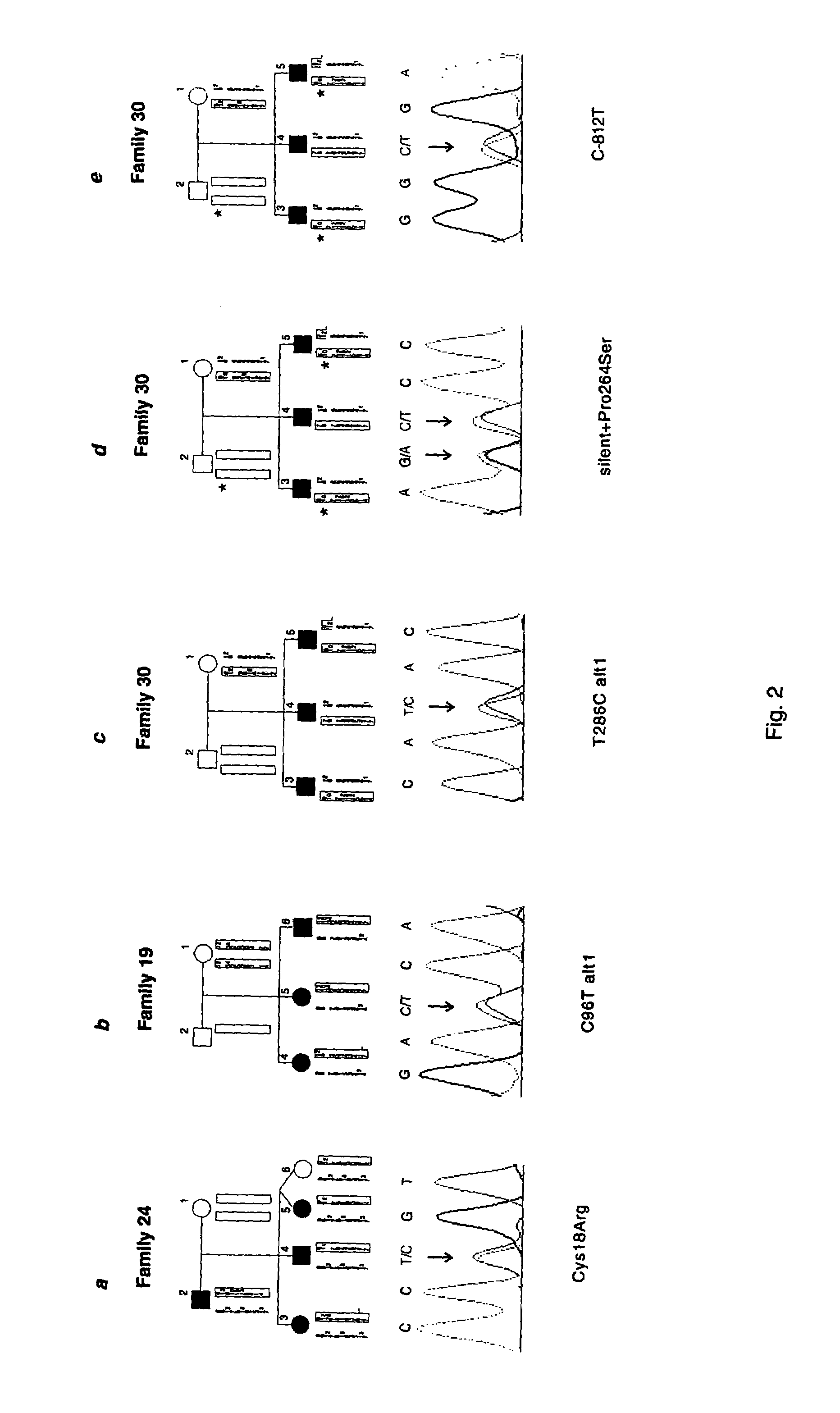
Figure 2 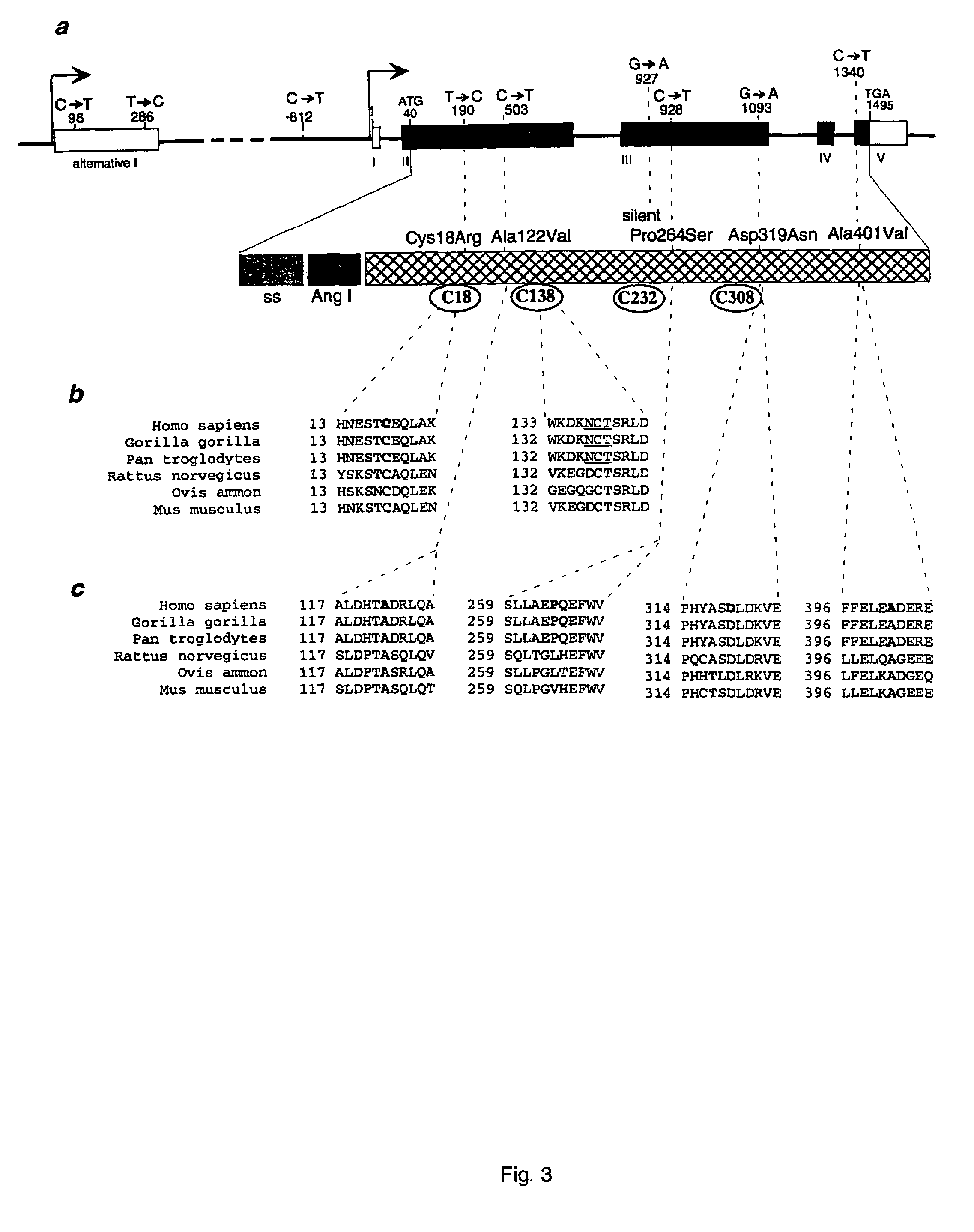
Figure 3
Abstract
Description
CROSS-REFERENCE TO RELATED APPLICATIONS
[0001] The present application is a division of U.S. patent application Ser. No. 09 / 573,425 filed May 16, 2000, now U.S. Pat. No. 6,902,888 which is related to U.S. provisional patent applications Ser. No. 60 / 135,423 filed 21 May 1999 and Ser. No. 60 / 174,700 filed 6 Jan. 2000, each incorporated herein by reference.BACKGROUND OF THE INVENTION
[0002] The present invention relates generally to the field of human genetics. Specifically, the present invention relates to methods and materials used to isolate and detect human diabetes mellitus predisposing gene, specifically the angiotensinogen (AGT) gene, some mutant alleles of which cause susceptibility to insulin-dependent diabetes melitus (IDDM). More specifically, the invention relates to germline mutations in the AGT gene and their use in the diagnosis of predisposition to IDDM. The invention also relates to the prophylaxis and / or therapy of diabetes associated with a mutation in the AGT gene. The ...
Examples
example 1
Methods
[0115]Subjects genotyping, and haplotype analyses. The families used in this study are part of a collection of IDDM families at the Human Biological Data Interchange (HBDI), Philadelphia, Pa. Genomic DNA samples were ordered from the HBDI Repository located at the Coriell Institute for Medical Research in Camden, N.J. In the initial part of this study samples were ordered for individuals from 38 nuclear families with 3 siblings affected with IDDM. After identification of sequence variants in this first set of families, an additional 308 unrelated individuals with IDDM were obtained from HBDI. The initial control set of 120 samples were the grandparents of the Utah families included in the Centre d'Etude du Polymorphisme Humain (CEPH) database. Unrelated spouses from other Utah families were used as additional controls. No information on the presence or absence of diabetes in these samples was available. Genotypes using fluorescently labelled primers were determined for 11 sim...
example 2
Association of AGT Gene and IDDM
[0118]To investigate whether mutations in AGT are responsible for the reported linkage of type 1 diabetes to the chromosomal region 1q42-43, we carried out a three stage analysis. Initially we obtained a set of 38 nuclear families, each with three children affected with type 1 diabetes from the Human Biological Data Interchange. These were screened to identify potentially deleterious mutations. We then screened independent sets of 308 unrelated cases and 1003 controls to determine whether the identified mutations were more common in cases than controls. Finally we screened all 308 cases and 631 of the 1003 controls to determine whether rare polymorphisms, potential causal mutations, were more common in cases than controls. In order to select from the 38 initial families those that could potentially segregate a mutation among all affected members, each family was genotyped using 11 microsatellite markers spanning a 32 cM region surrounding the AGT locu...
example 3
Identification of Additional Polymorphisms
[0124]If the AGT polymorphisms identified in Example B are truly predisposing mutations, they should be detected in other type 1 diabetic individuals and should be rare or absent in controls. To identify additional mutations, a set of DNA samples from 308 unrelated type 1 diabetic individuals was screened for sequence variants in AGT. These cases were selected from 308 additional families in the Human Biological Data Interchange. A set of control samples was screened in the same way for statistical comparison (see Example 1 and Table 2). The Cys18Arg mutation was observed three times in the new case set. It segregated with the disease in family 164, but not in families 214 and 344 (Table 2). The Cys18Arg mutation was observed in only 1 of 1003 control samples, indicating that it is enriched in the disease set (3 of 308 vs. 1 of 1003, p=0.03).
[0125]
TABLE 2AGT Polymorphisms in Type 1 DiabeticsNucleotideChange in AGTSegregationObservationsObser...