
Method of screening insulin content enhancer
a technology of enhancer and enhancer, which is applied in the field of screening tools, can solve the problems of no assay suitable for a screening of substances capable of increasing insulin content, and achieve the effects of promoting insulin production, preventing and/or treating diabetes, and increasing insulin conten
Patent Information
- Authority / Receiving Office
- US · United States
- Patent Type
- Applications(United States)
- Current Assignee / Owner
- Publication Date
- 2005-09-01
- Estimated Expiration
- Not applicable · inactive patent
Smart Images
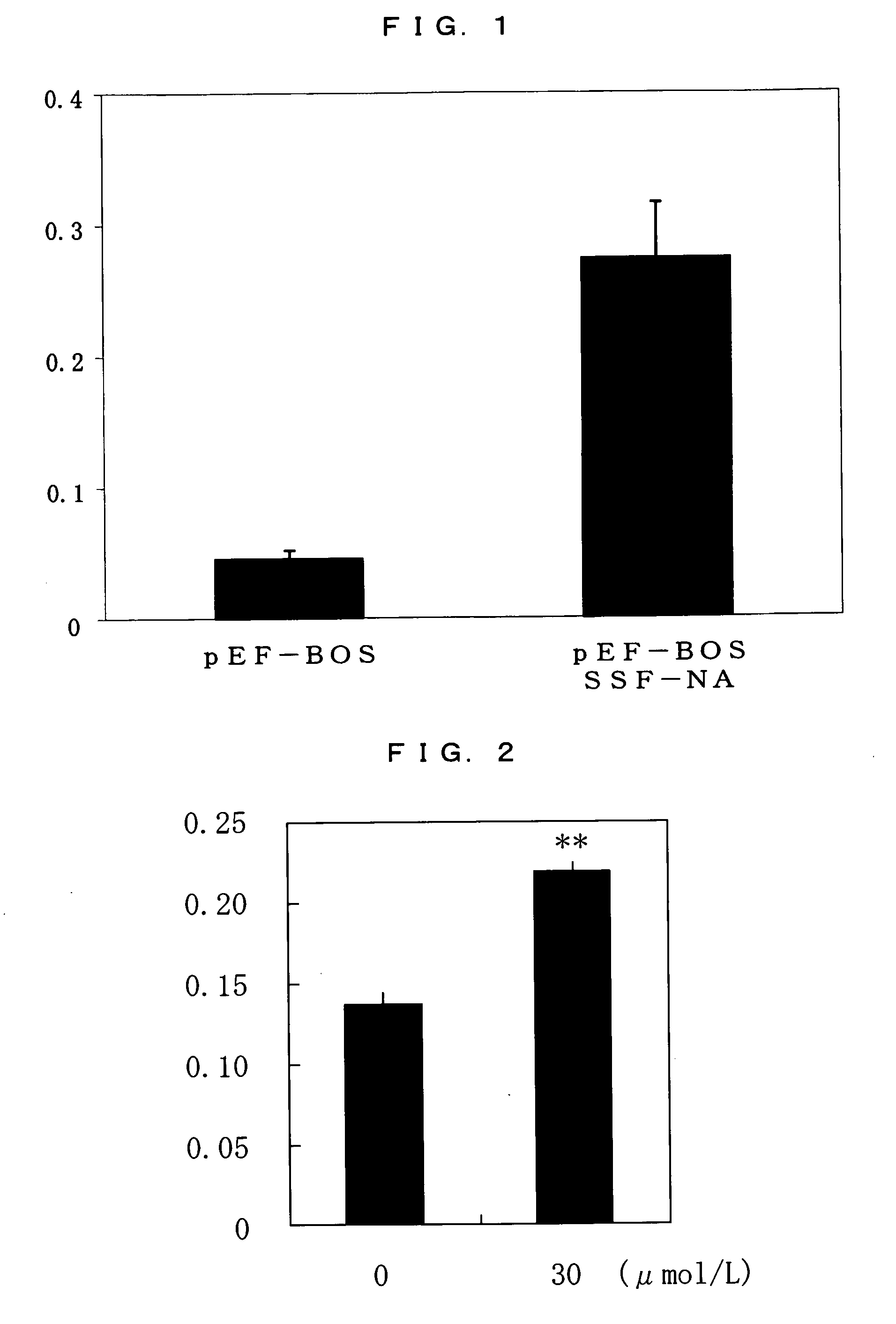
Figure 1 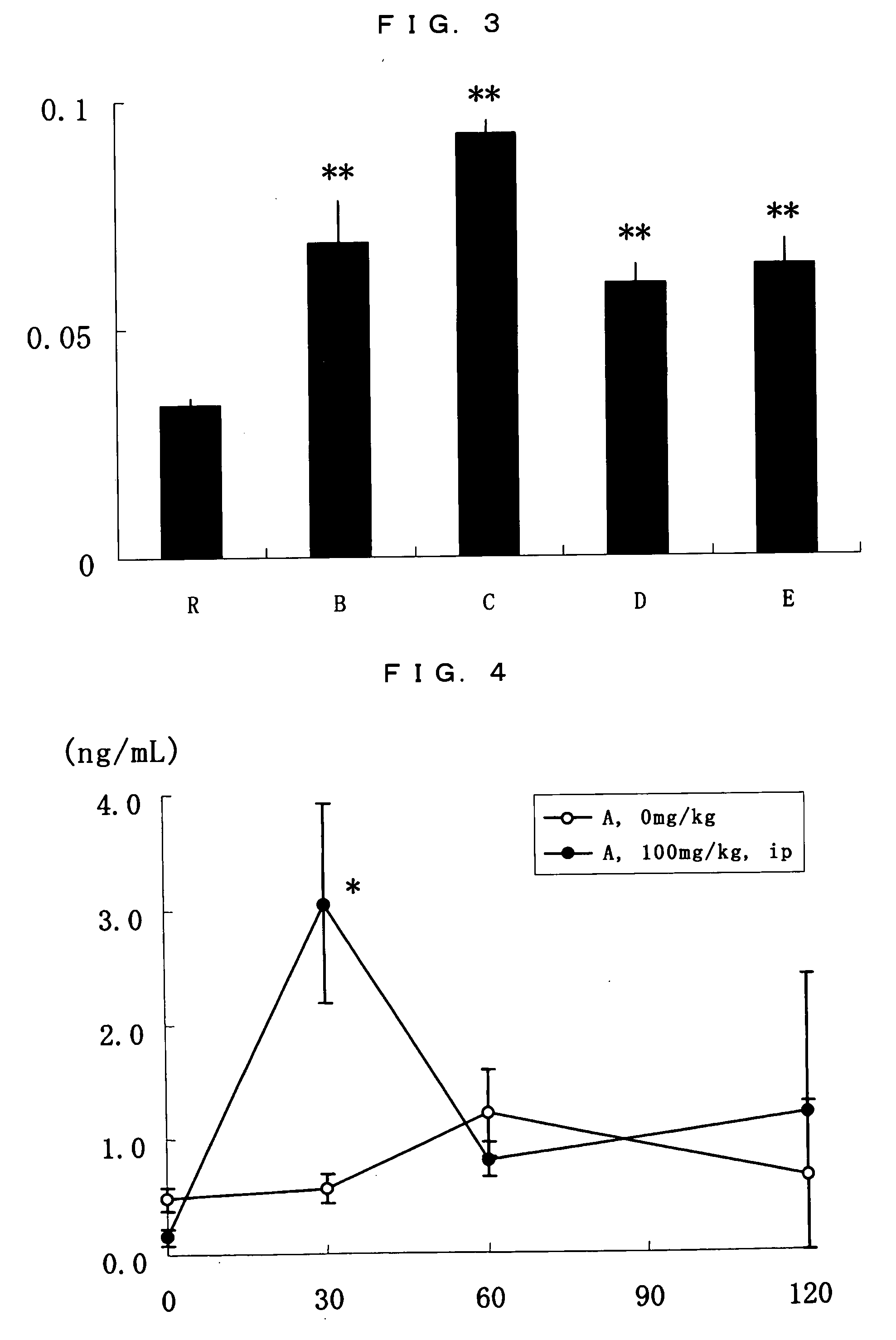
Figure 2 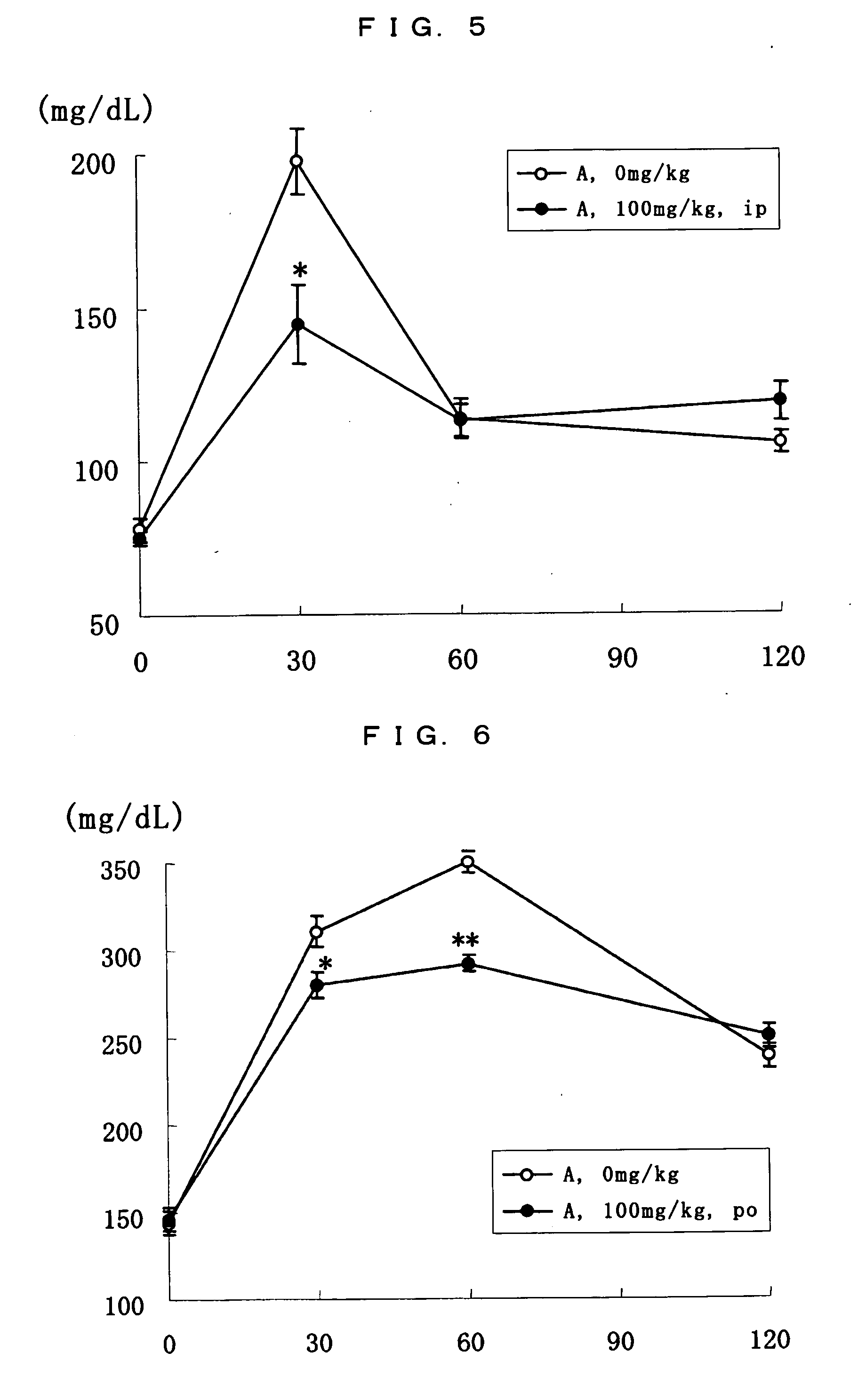
Figure 3
Abstract
Description
TECHNICAL FIELD
[0001] This invention relates to a screening tool, and a screening method, for an agent for increasing insulin content, on the basis of a promotion of insulin production, and a novel agent for increasing insulin content. BACKGROUND ART
[0002] Diabetes is defined as diseases which are characterized by chronic hyperglycemia caused by a deficiency of insulin action, and are accompanied by various characteristic metabolic disorders (non-patent reference 1). Diabetes is classified into two types, an “insulin dependent diabetes mellitus (type I)” characterized by a deficiency of insulin caused by a destructive lesion of pancreatic β cells, and a “noninsulin dependent diabetes mellitus (type II)” with a decreased sensibility to insulin and a decreased secretion of insulin.
[0003] In type II, which accounts for approximately 90% of patients suffering from diabetes, it is considered that chronic hyperglycemia causes a decrease in the action of pancreatic β cells, i.e., a decr...
Examples
example 1
Preparation of Expression Vector Comprising Polypeptide Consisting of Amino Acid Sequence of SEQ ID NO: 2
[0123] In accordance with the procedure described in Example 1 of International Publication WO02 / 44362, a DNA having the base sequence of SEQ ID NO: 1 was obtained, and was introduced into plasmid pEF-BOS (hereinafter referred to as plasmid pEF-BOS-NA). Then, to express the polypeptide consisting of the amino acid sequence of SEQ ID NO: 2, a pEF-BOS signal sequence flag plasmid into which the full-length DNA encoding the polypeptide consisting of the amino acid sequence of SEQ ID NO: 2 was prepared (hereinafter referred to as plasmid pEF-BOS SSF-NA). This was because the expression vector capable of adding a signal sequence to the N-terminus of the desired polypeptide was used to express the desired polypeptide at a high frequency on a cell membrane.
example 2
Construction of Human Insulin Promoter Reporter Plasmid
[0124] The base sequence of the 5′ expression regulatory region of human insulin gene was identified (Nature, 284, 26-32, 1980), and plural cis elements known as a transcription factor binding site, commonly exist in the 5′ expression regulatory region of mouse or rat insulin gene, as well as that of the human insulin gene (Diabetes, 44, 1002-1004, 1995). A polymerase chain reaction (PCR) was performed using a region comprising the cis elements common to these species and considered enough to exhibit a promoter activity, so that the HindIII site and the NcoI site were generated at the 5′ and 3′ sides thereof, respectively, and the amplified fragment was cloned to plasmid pCR2.1-Topo (Cat. No. K455001, TA cloning system; Invitrogen). As the region, the region between −342 and +37 was used in the present example [“+1” denotes the putative transcription initiation point shown in Proc. Natl. Acad. Sci. U.S.A., 95, 11572-11577, 1998...
example 3
Change of Insulin Promoter Reporter Activity by Overexpression of Polypeptide Consisting of Amino Acid Sequence of SEQ ID NO: 2
[0128] It is known that cAMP is a second messenger of the polypeptide consisting of the amino acid sequence of SEQ ID NO: 2 (see Example 4 in International Publication WO02 / 44362). In the present example, effects of overexpression of the polypeptide on an insulin promoter activity were examined.
[0129] Mouse pancreatic β cell line NIT1 cells (4×10⁴ cells / well; ATCC: CRL-2055) were seeded on 96-well plate, and cultured in an F-12 medium containing 10% fetal calf serum (FCS) overnight. Then, a transfection reagent (FuGENE6; Boeringer Mannheim) was used to transfect the cells with plasmid InsPro (1 ng) prepared in Example 2 and plasmid pEF-BOS SSF-NA (10 ng). In this connection, as a control, transfection with plasmid InsPro and plasmid pEF-BOS (control vector) was carried out. After the transfection, the cells were cultured for 24 hours, and the medium was as...