
Methods of expanding and redifferentiating islet beta cells
a technology of islet beta cells and growth factors, which is applied in the field of expanding and redifferentiating islet beta cells, can solve the problems of difficult expansion of postmitotic islet cells in tissue culture, inability to prevent long-term complications of the disease, and inability to expand postmitotic islet cells, etc., to achieve the effect of increasing the insulin content of adult islet beta cells
Patent Information
- Authority / Receiving Office
- US · United States
- Patent Type
- Applications(United States)
- Current Assignee / Owner
- Publication Date
- 2012-05-17
- Estimated Expiration
- Not applicable · inactive patent
Smart Images
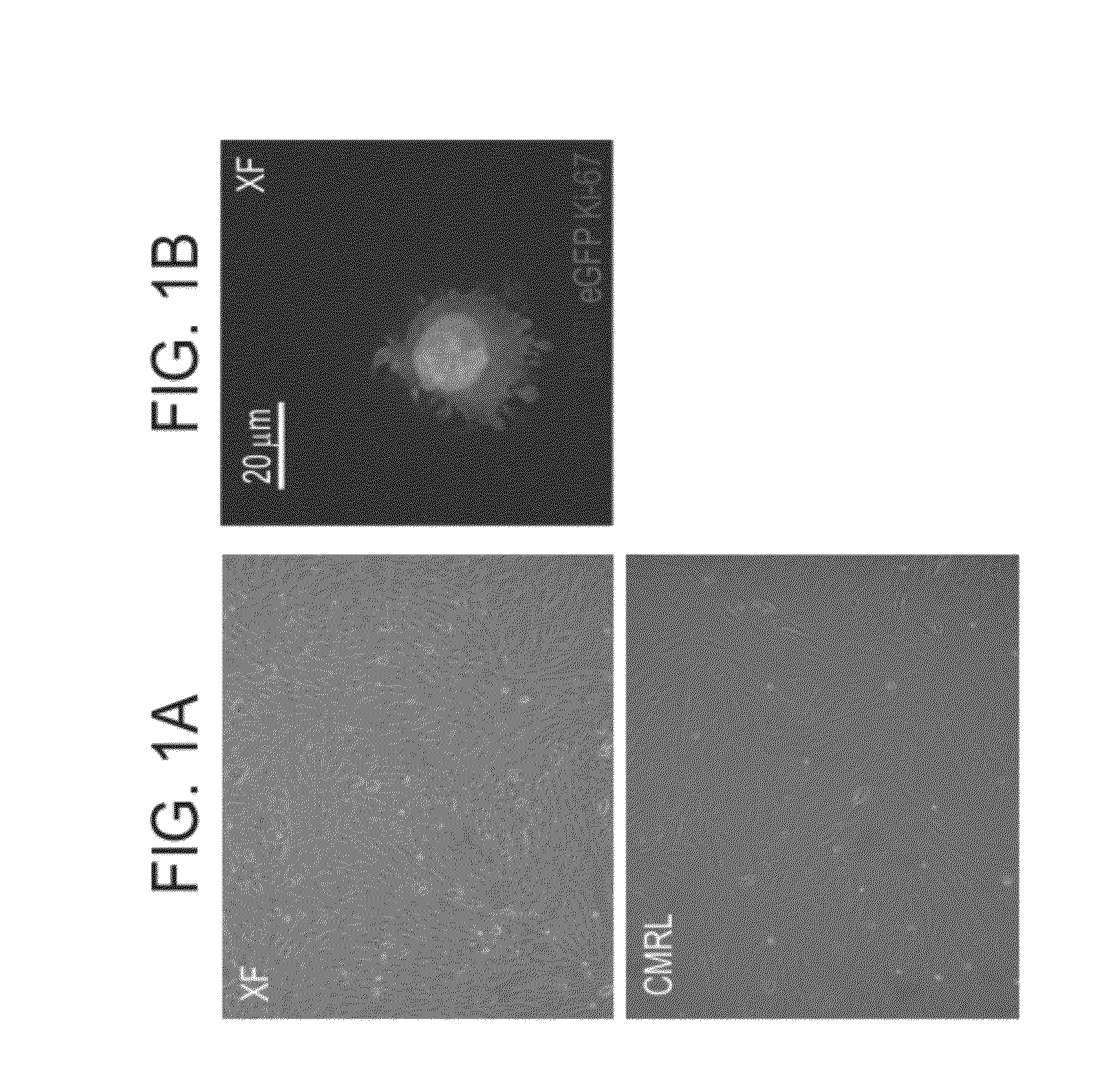
Figure 1 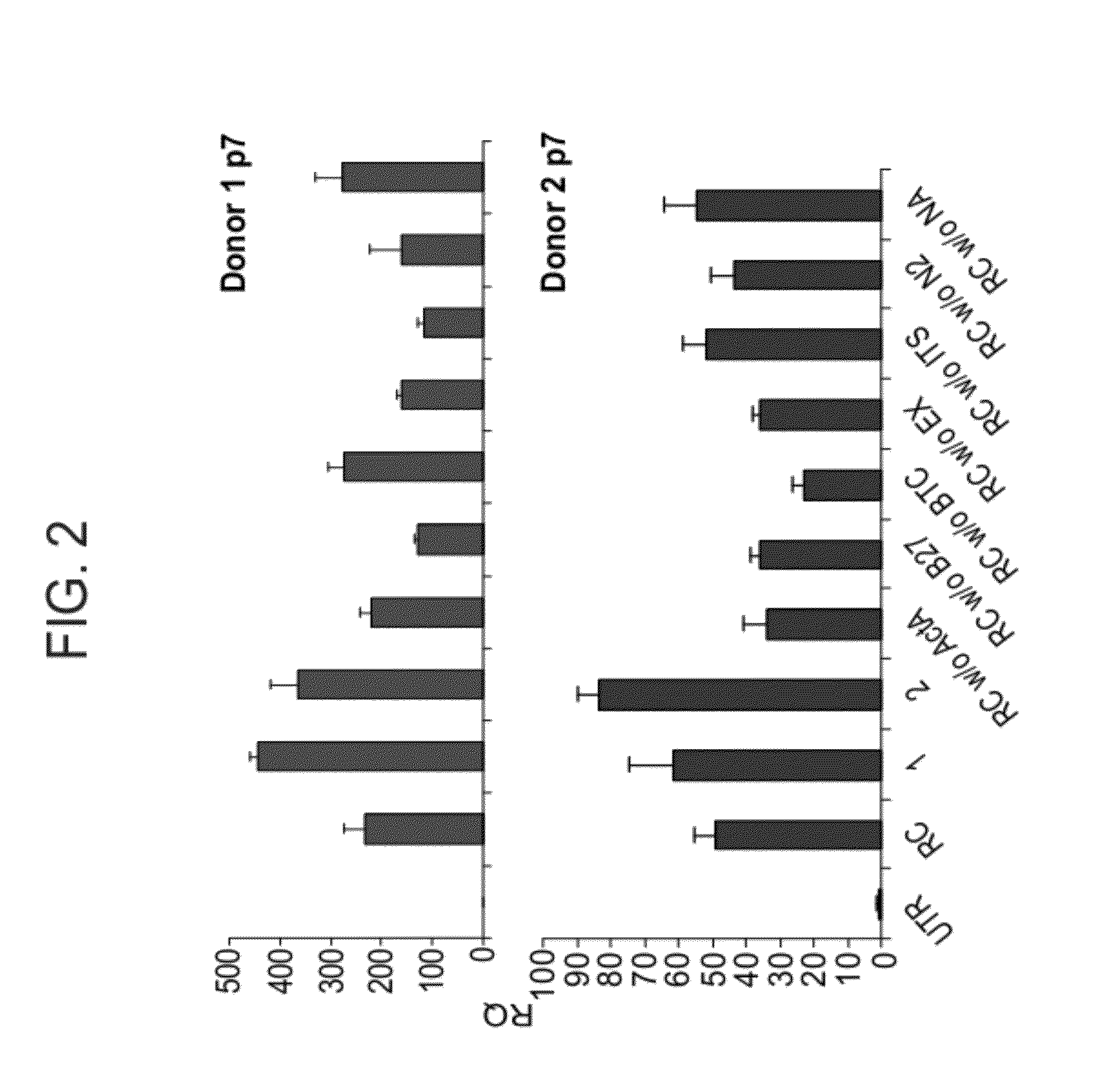
Figure 2 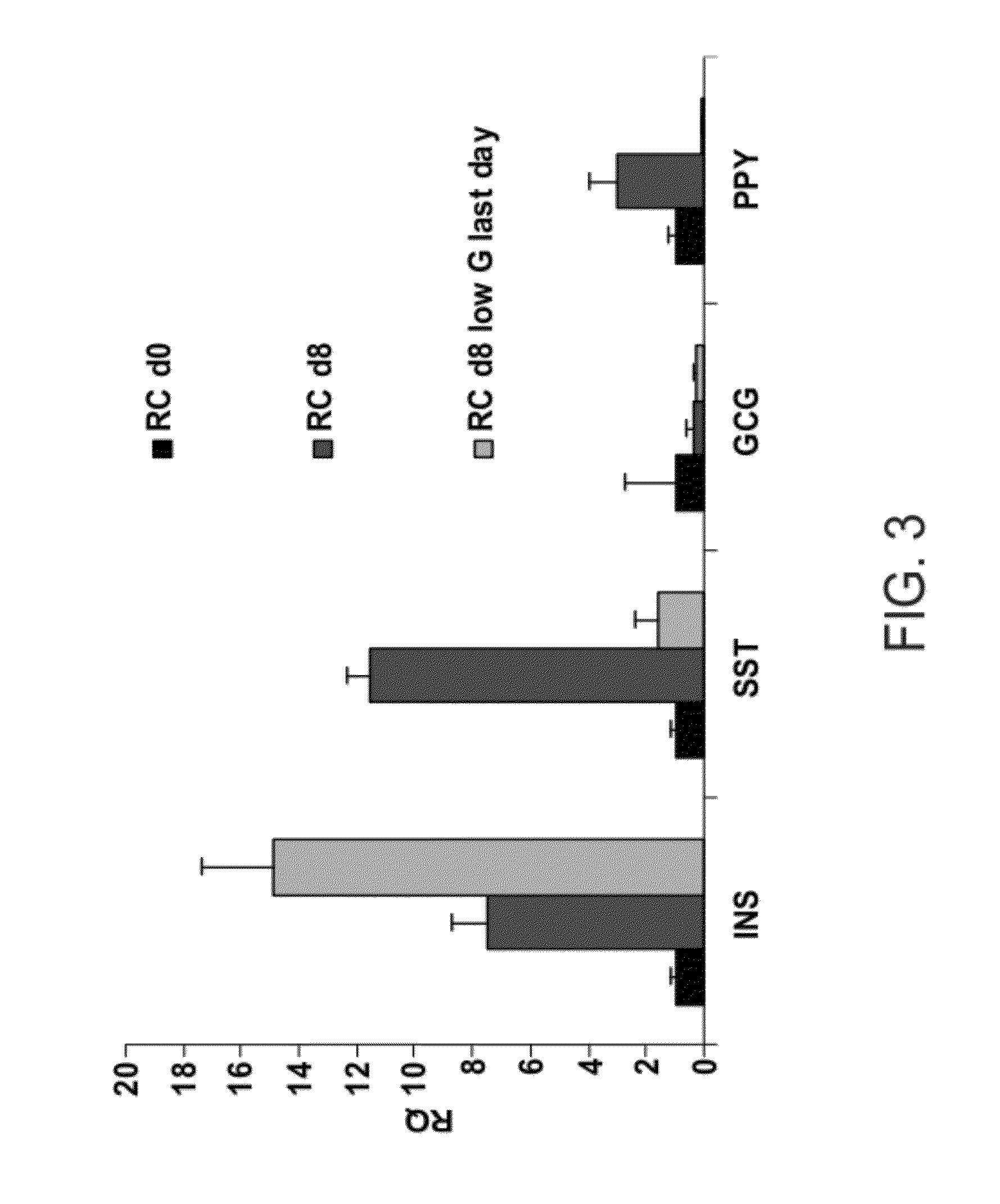
Figure 3
Abstract
Description
RELATED APPLICATIONS
[0001] This application is a Continuation-In-Part (CIP) of PCT Patent Application No. PCT / IL2011 / 000738 having International filing date of Sep. 15, 2011, which claims the benefit of priority of U.S. Provisional Patent Application No. 61 / 487,782 filed on May 19, 2011, and 61 / 382,956 filed on Sep. 15, 2010. The contents of the above applications are all incorporated herein by reference.FIELD AND BACKGROUND OF THE INVENTION
[0002] Type I diabetes is caused by the autoimmune destruction of the pancreatic islet insulin-producing beta cells. Insulin administration does not prevent the long-term complications of the disease, since the optimal insulin dosage is difficult to adjust.
[0003] Replacement of the damaged cells with regulated insulin-producing cells is considered the ultimate cure for type 1 diabetes. Pancreas transplantation has been successful but is severely limited by the shortage of donors. With the development of new islet isolation and immunosuppression proc...
Examples
example 1
Expanded Beta Cells as a Source of Insulin
[0217]Materials and Methods
[0218]Expansion in xeno-free conditions: Adult human islet cells were plated in plates coated with MesenCult XF attachment substrate (Stem Cell Technology, Canada) and expanded in MesenCult XF medium (Stem Cell Technology, Canada).
[0219]Redifferentiation in a soluble factor cocktail: The redifferentiation protocol was based on cell clustering in serum-free medium (SFM) in ultra low-attachment plates, and exposure to a cocktail of soluble factors in 2 steps:
Step 1: 6-day incubation in CMRL 1066 medium containing 25 mM glucose and supplemented with 1% BSA fraction V, 100 U / ml penicillin, 100 μg / ml streptomycin, ITS (insulin, transferrin, selenium), N2 supplement, B27 supplement, 10 mM nicotinamide, 8 nM exendin-4, and 8 nM activin A.
Step 2: 2-day incubation in CMRL 1066 medium containing 5.6 mM glucose and supplemented with 1% BSA fraction V, 100 U / ml penicillin, 100 μg / ml streptomycin, ITS, N2 supplement, B27 supple...
example 3
[0261]Synergistic Effect of HES-1 Inhibition and Soluble Factors on Re-Differentiation of Expanded Pancreatic Beta Cells
[0262]HES1 inhibition and redifferentiation conditions—HES1 shRNAs (accession numbers TRCN 18993) and a nontarget shRNA, both cloned in the pLKO.1 lentivirus vector, containing a puromycin-resistance gene, were obtained from the RNAi Consortium (Sigma-Aldrich). Virus was produced in 293T cells as previously described (Russ et al., (2009) PLoS One 4, e6417). Cells were infected at MOI 2.5:1 in growth medium containing 8 μg / ml polybrene overnight. The medium was then replaced with regular culture medium.
[0263]For redifferentiation experiments, expanded human islet cells or purified beta cell derived (BCD) cells at passages 5-7 were infected with HES1 shRNA or nontarget shRNA viruses. Two to four days following infection, cells were trypsinized, pelleted, and resuspended in either regular growth medium, SFM [CMRL 1066 containing 5.6 mM D-glucose and supplemented with ...
example 2
REFERENCES FOR EXAMPLE 2
[0274]1. Hayek A, Beattie G M, Cirulli V, Lopez A D, Ricordi C, Rubin J S. Growth factor / matrix-induced proliferation of human adult beta-cells. Diabetes 1995. 44:1458-1460.[0275]2. Gershengorn M C, Hardikar A A, Wei C, Geras-Raaka E, Marcus-Samuels B, Raaka B M. Epithelial-to-mesenchymal transition generates proliferative human islet precursor cells, Science 2004. 306:2261-2264.[0276]3. Lechner A, Nolan A L, Blacken R A, Habener J F. Redifferentiation of insulin-secreting cells after in vitro expansion of adult human pancreatic islet tissue. Biochem Biophys Res Commun 2005. 327:581-588.[0277]4. Ouziel-Yahalom L, Zalzman M, Anker-Kitai L, Knoller S, Bar Y, Glandt M, Herold K, Efrat S. Expansion and redifferentiation of adult human pancreatic islet cells. Biochem Biophys Res Commun 2006. 341:291-298.[0278]5. Parnaud G, Bosco D, Berney T Pattou F, Kerr-Conte J, Donath M Y, Bruun C, Mandrup-Poulsen T, Billestrup N, Halban P A. Proliferation of sorted human and r...