
Transdifferentiated cell populations and methods of use thereof
a technology of transdifferentiated cells and populations, applied in the field of transdifferentiated cell populations, can solve the problems of limited efficiency of direct reprogramming, a major obstacle, etc., and achieve the effects of increasing insulin content, increasing endogenous nkx6.1, and increasing glucagon conten
Patent Information
- Authority / Receiving Office
- US · United States
- Patent Type
- Applications(United States)
- Current Assignee / Owner
- Publication Date
- 2020-05-07
Smart Images
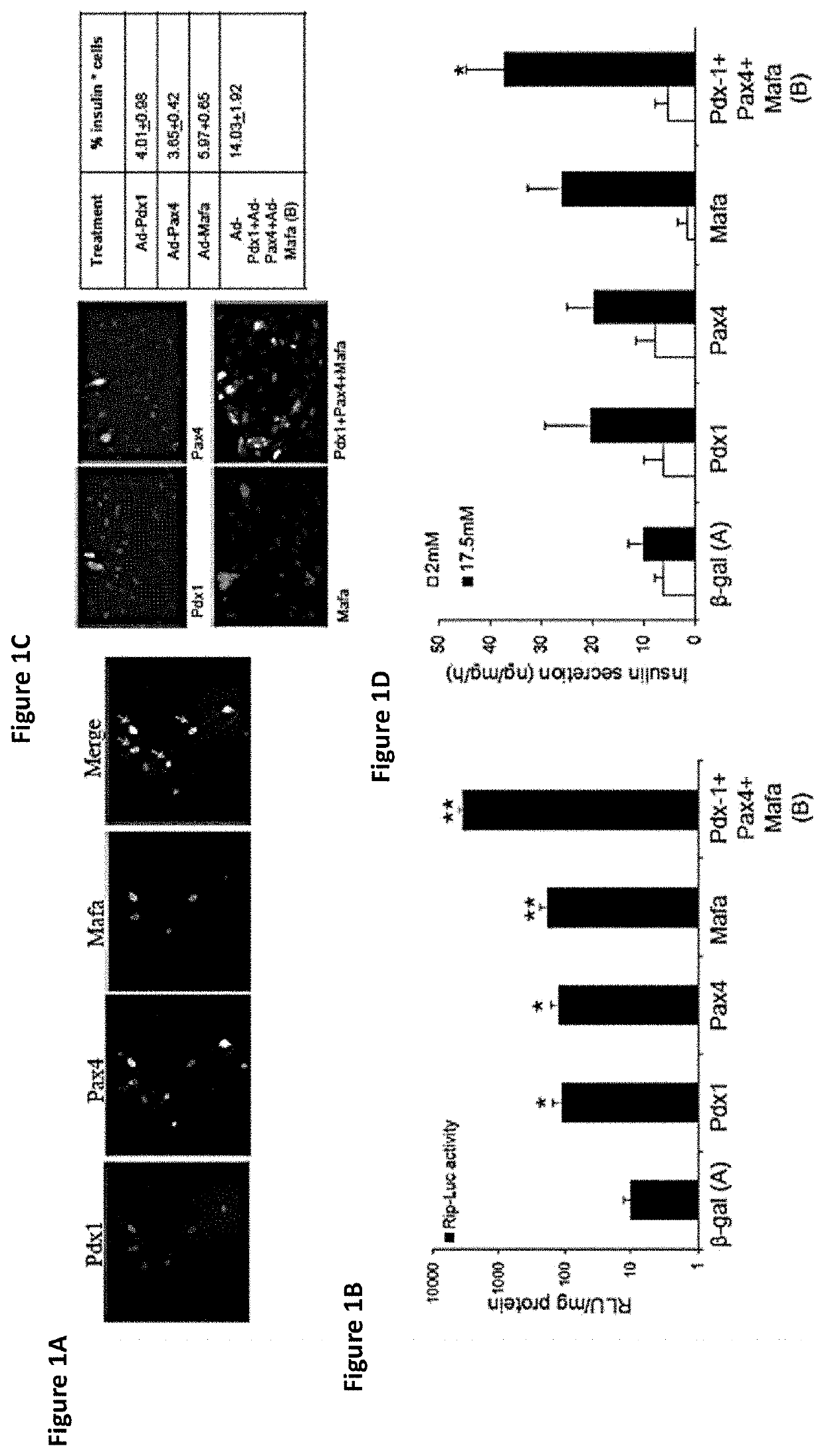
Figure 1 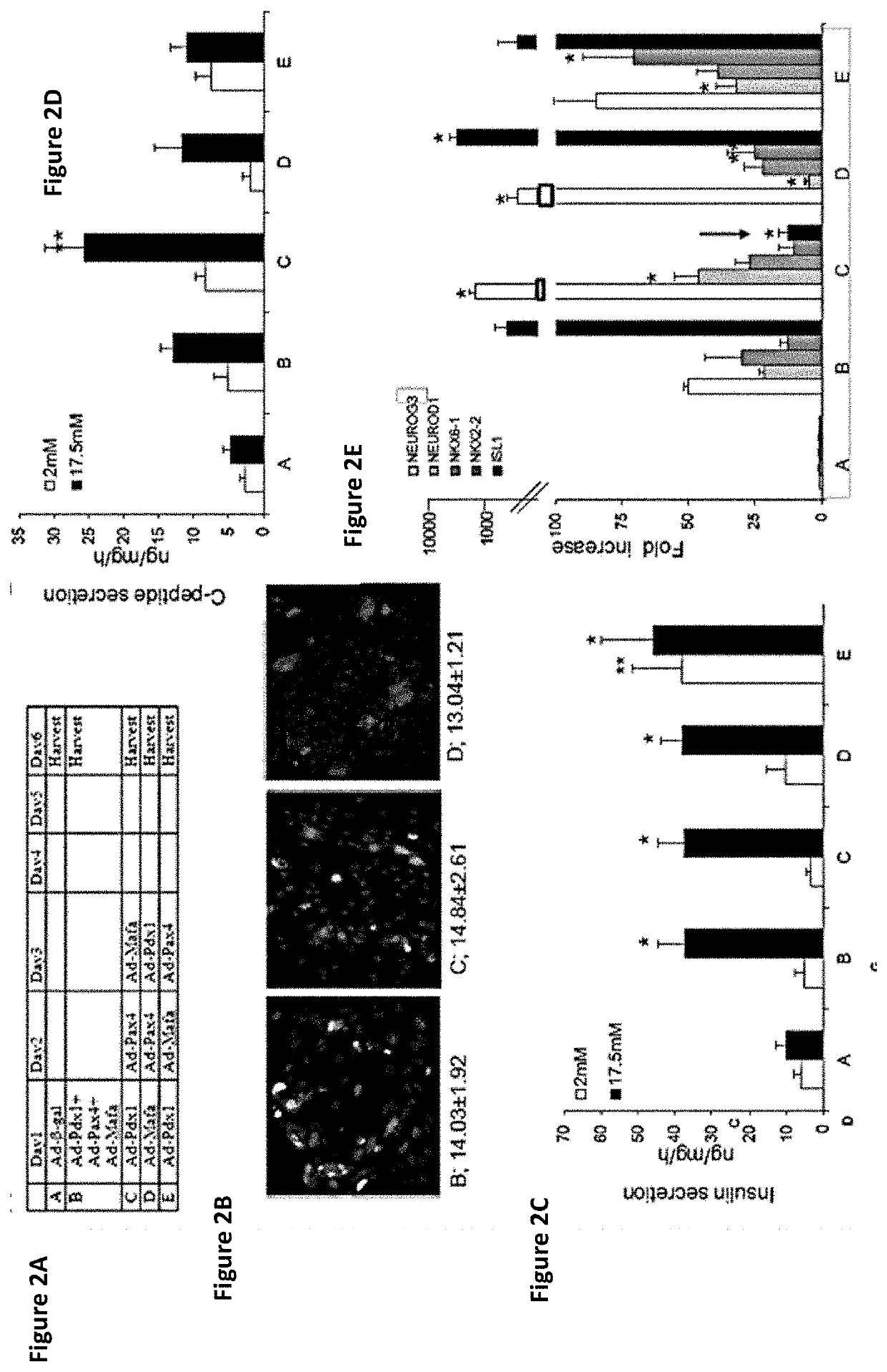
Figure 2 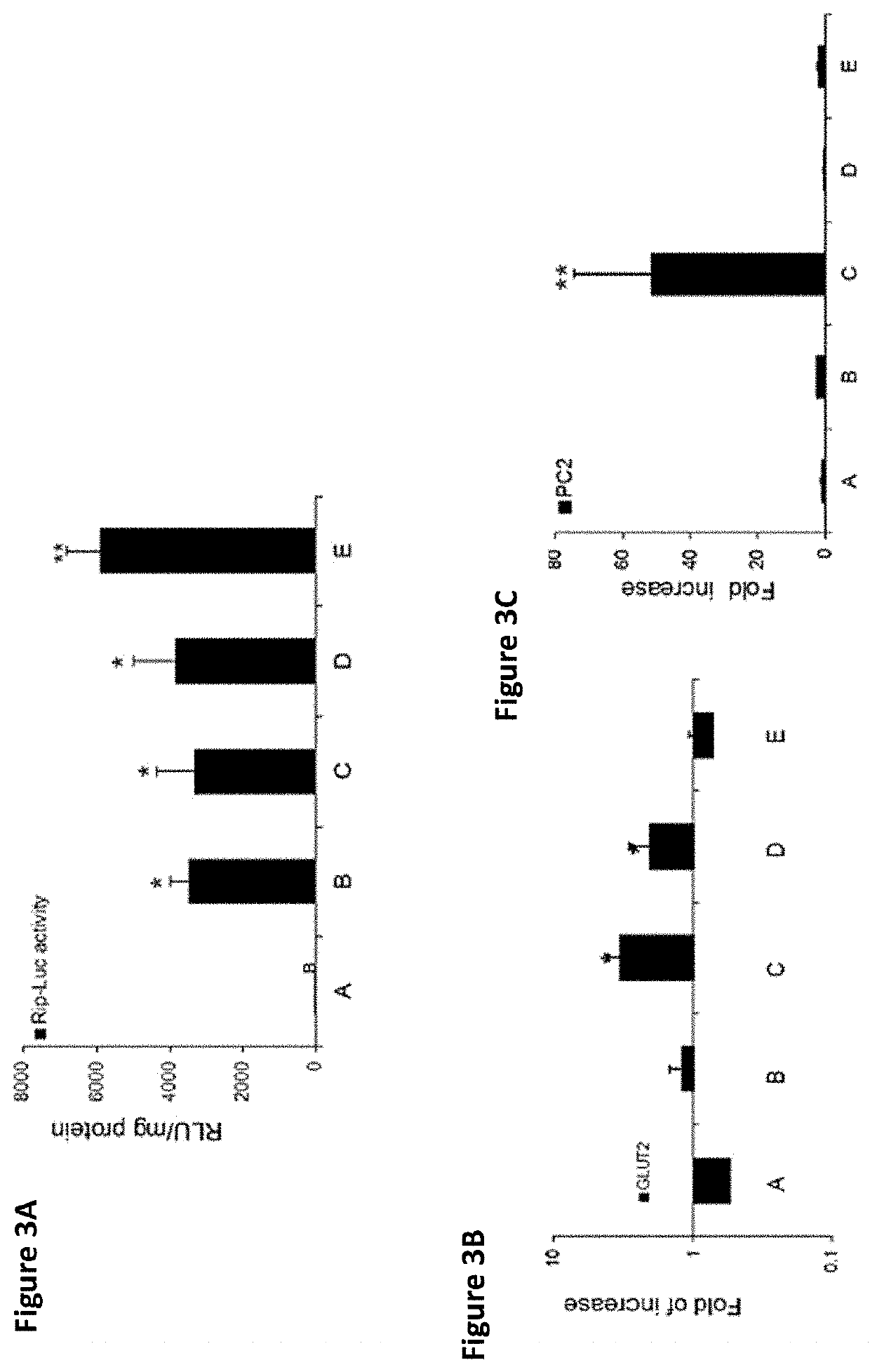
Figure 3
Abstract
Description
CROSS-REFERENCE TO RELATED APPLICATION
[0001] This application is a National Phase Application of PCT International Application No. PCT / IL2018 / 050496, International Filing Date May 8, 2018, claiming the benefit of U.S. Provisional Application No. 62 / 610,300, filed Dec. 26, 2017 and U.S. Provisional Application No. 62 / 502,796, filed May 8, 2017, which are hereby incorporated by reference.FIELD OF THE DISCLOSURE
[0002] The invention relates to methods for manufacturing transdifferentiated populations of non-pancreatic human insulin producing cells, and methods for enriching populations of non-pancreatic β-cells for cells comprising an enriched capacity for transcription factor-induced transdifferentiation into a pancreatic β-cell phenotype and function.BACKGROUND
[0003] Ectopic expression of pancreatic transcription factors (pTFs) induces direct reprogramming of adult liver cells into pancreatic-like, glucose-regulated insulin producing cells (IPCs). In primary cultures of human liver cells...
Examples
example 1
n and Segregation into the Different Hormones Producing Cells of Transdifferentiated Cells is Temporally Controlled in an Hierarchical Manner
[0358]In this example, the impact of temporally controlling the ectopic pancreatic transcription factors (pTFs) expression was investigated to determine whether increased transdifferentiation efficiency by combined ectopic expression of the three pTFs is also temporally controlled as suggested above (FIGS. 1A-1D). In support of temporal control having a role in pancreas transdifferentiation, the three pTFs Pdx-1, Pax4, and MafA display distinct temporal expression and function during pancreas organogenesis.
[0359]The three pTFs PDX-1, Pax4, and MafA were introduced sequentially or in concert to primary cultures of adult human liver cells using recombinant adenoviruses. Adenovirus-mediated ectopic gene expression peaks 17 hours post infection. Therefore, the pTFs were sequentially administered during three consecutive days, allowing the manifesta...
example 2
x4 and Mafa Hierarchical Administration Induces Glucagon and Somatostatin Expression
[0362]Transdifferentiation along the endocrine pancreatic lineage results in the activation of expression of numerous pancreatic hormones. The extent with which these hormone expression levels are affected by the temporal manipulation of the pTFs was also investigated. Gene expression of pancreatic hormones glucagon (GCG) (FIGS. 4A and 4B), somatostatin (SST) (FIGS. 4A, 4D, and 4E) or cells specific transcription factors (FIG. 4C) were determined by quantitative real-time PCR analysis after the indicated treatments.
[0363]The transcription of both glucagon (GCG) and somatostatin (SST) genes was induced by each of the individually expressed pTFs, mainly by Pdx-1 and MafA and to a lower extent by Pax4 (FIG. 4A). A further increase in glucagon gene transcription occurred only upon the direct hierarchical administration of pTFs (FIG. 5, see treatment C of Table 1). Pdx-1 and MafA exerted their effects on ...
example 3
ation of Cell Populations with Transdifferentiation Capacity In Vivo
[0367]Cell populations with transdifferentiation capacity were identified in vivo in mice. Ectopic expression of the Pdx-1 gene was achieved in mice livers. Despite the uniform expression of the ectopic Pdx-1 gene in about 40-50% of the cells of the liver (FIG. 8A) insulin-producing cells (IPCs) in Pdx-1-treated mice in vivo were primarily located close to central veins (FIG. 8B), which is characterized by active Wnt signaling and the expression of glutamine synthetase (GS) (FIG. 8C). The co-localization of GS expression and insulin activation by Pdx-1 also indicated that those cells that can activate the GSRE have a predisposition for increased transdifferentiation capacity. Therefore, cell populations predisposed for transdifferentiation can also be identified by GSRE activation or active Wnt-signaling pathway.