
Vertical speed and flight path command module for displacement collective utilizing tactile cueing and tactile feedback
a technology of displacement and command module, applied in vehicle position/course/altitude control, process and machine control, instruments, etc., can solve the problems of complicated single axis input, limited method benefit of handling qualities, and difficulty in implementing a collective controller with vertical augmentation. achieve the effect of reducing pilot workload, increasing situation awareness, and increasing handling qualities
Patent Information
- Authority / Receiving Office
- US · United States
- Patent Type
- Patents(United States)
- Current Assignee / Owner
- Publication Date
- 2011-04-19
Smart Images
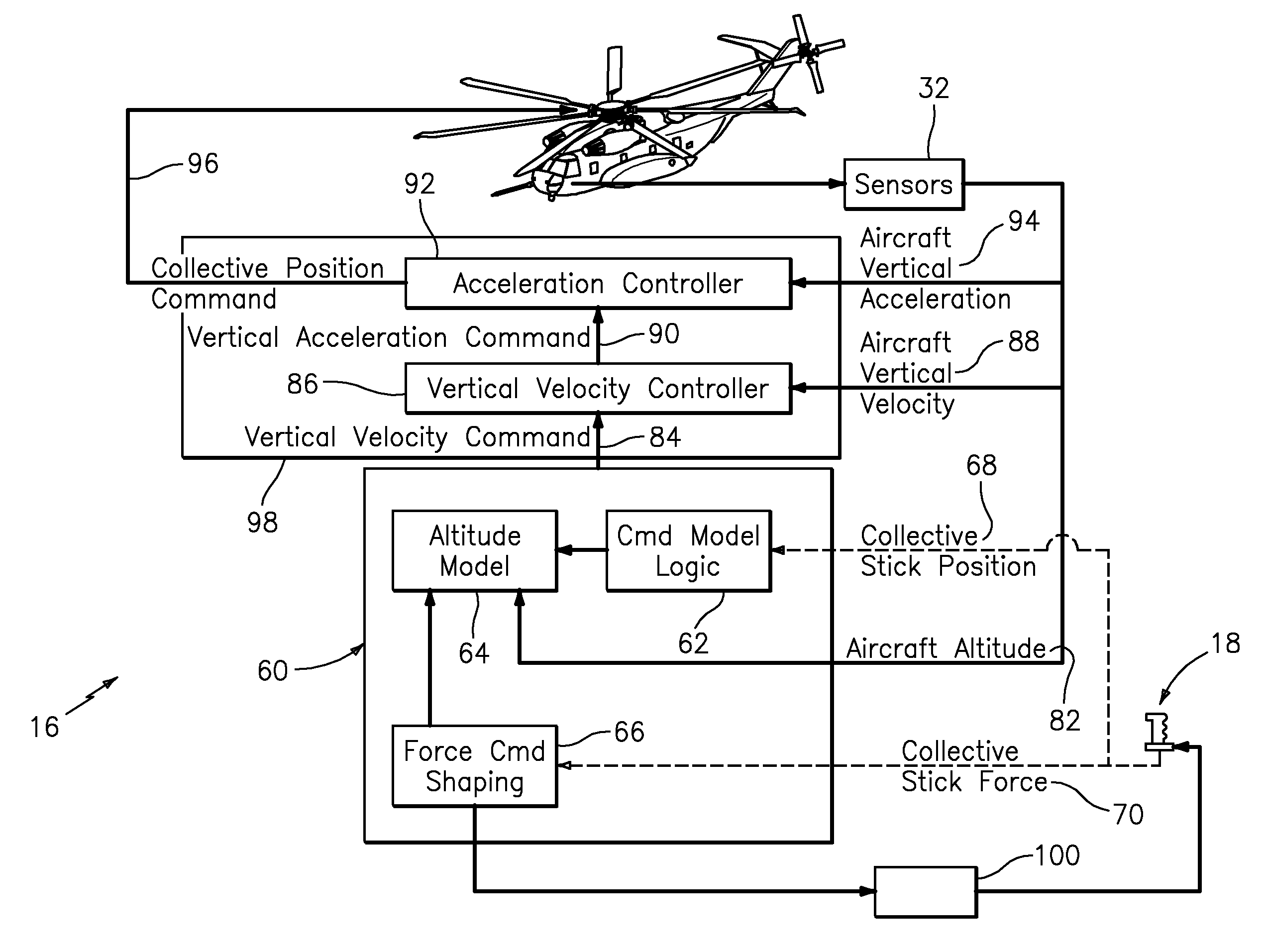
Figure 1 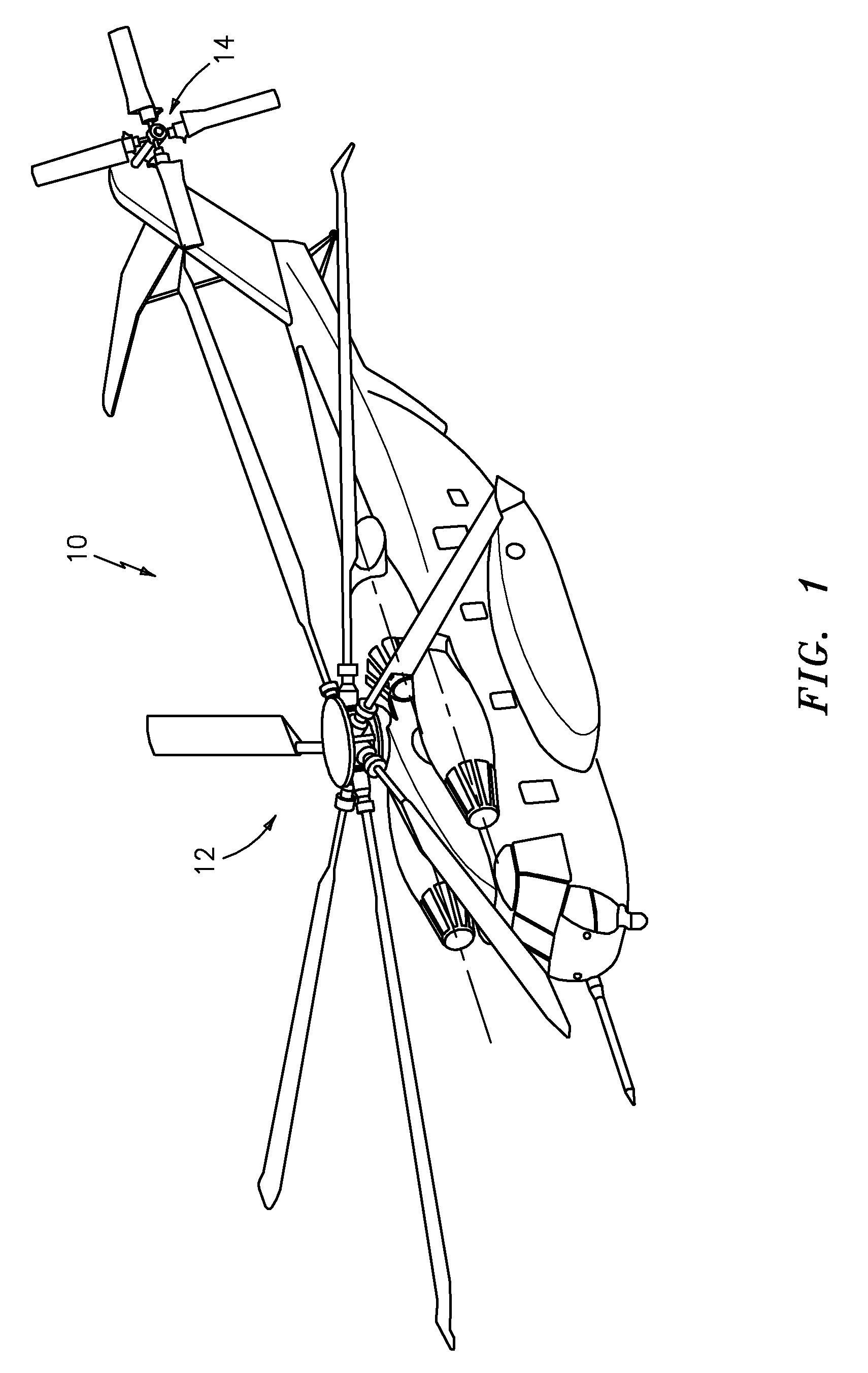
Figure 2 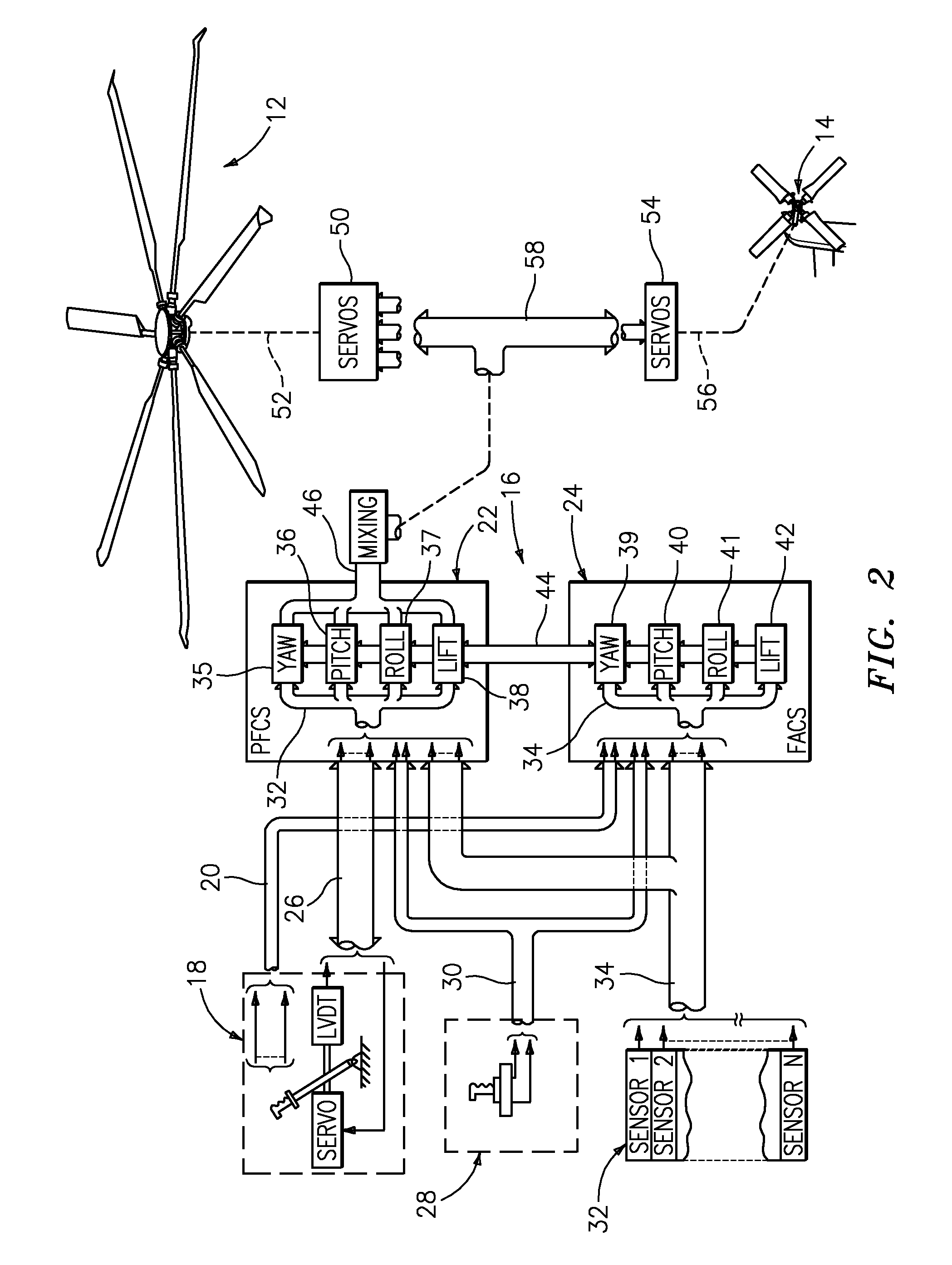
Figure 3
Abstract
Description
[0001] This invention was made with government support under Contract No.: W58RGZ-06-D-0045 awarded by the Department of the Army. The government therefore has certain rights in this invention.BACKGROUND OF THE INVENTION
[0002] The present invention relates to flight control systems for rotary-wing aircraft with force feedback (active) collective systems, and more particularly to a flight control system which provides a low pilot-workload collective control system.
[0003] Demand for low pilot-workload helicopters continues to increase. With the establishment of ADS-33 as the dominant handling qualities specification, the rotorcraft industry has been pursuing various methods to provide advanced flight control features. One primary method of compliance with ADS-33 is employment of a Fly-By-Wire (FBW) flight control system to decouple pilot inputs and aircraft dynamics.
[0004] Several ADS-33 requirements relate to high vertical stability and precise command of vertical velocity. Unlike cyclic...
Examples
Embodiment Construction
[0029]FIG. 1 illustrates a general perspective view of a helicopter embodiment 10 of a rotary wing aircraft for use with the present invention. The helicopter includes a main rotor assembly 12 and tail rotor assembly 14. Although a particular helicopter configuration is illustrated and described in the disclosed embodiment, other configurations and / or machines, such as high speed compound rotary wing aircraft with supplemental translational thrust systems, dual contra-rotating, coaxial rotor system aircraft, turbo-props, tilt-rotors and tilt-wing aircraft, will also benefit from the present invention.
[0030]Referring to FIG. 2, the flight control system 16 includes a model following control system which shapes the pilot's controller and displacement commands through an inverse vehicle model to produce the desired aircraft response. The system includes a Primary Flight Control System (PFCS) 22 and an Flight Augmentation and Cueing System (FACS) 24. The PFCS and FACS each receive the f...