

Radiotherapeutic apparatus
a radiation therapy and apparatus technology, applied in the field of radiotherapy apparatus, can solve the problems of inability to treat the patient, inability to meet the patient's needs, and inability to meet the patient's needs, and achieve the effect of long aperture length and efficient radiation delivery
Patent Information
- Authority / Receiving Office
- US · United States
- Patent Type
- Patents(United States)
- Current Assignee / Owner
- Publication Date
- 2011-11-15
Smart Images
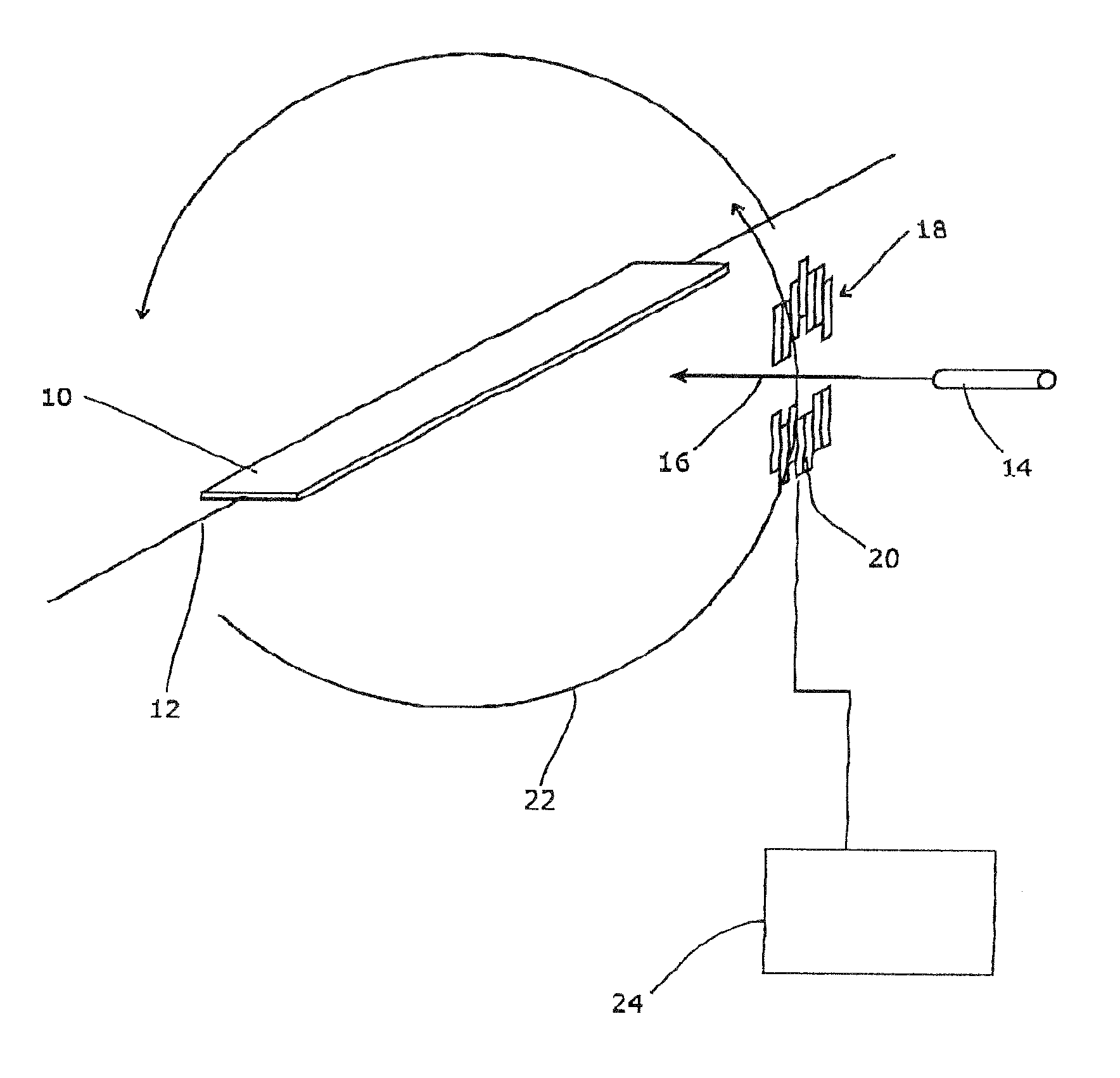
Figure 1 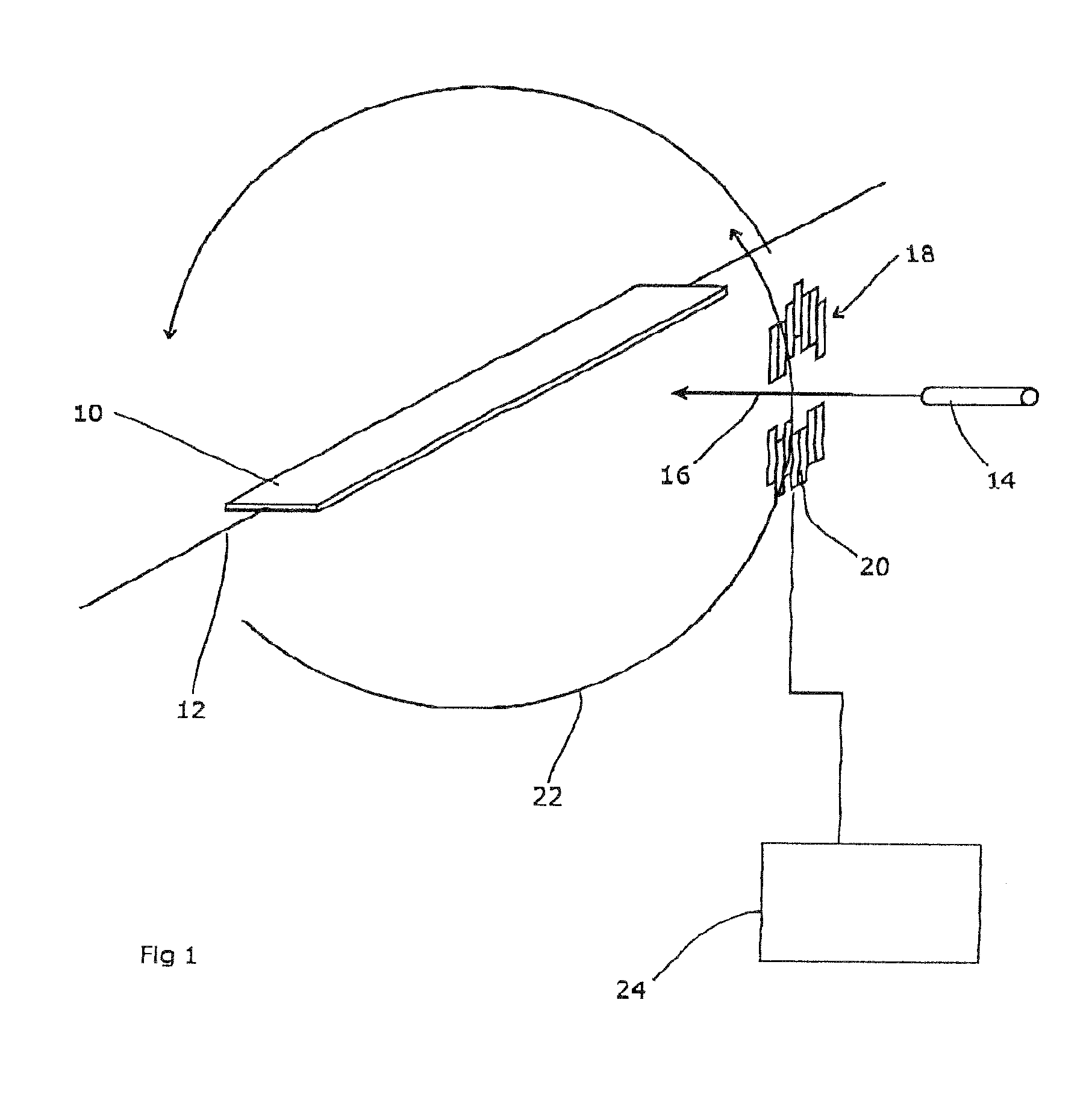
Figure 2
Abstract
Description
RELATED APPLICATIONS
[0001] This application is a 35 U.S.C. 371 national stage filing of International Application No. PCT / GB2006 / 000725, filed 1 Mar. 2006, which claims priority to Great Britain Patent Application No. 0504897.0 filed on 10 Mar. 2005 in Great Britain. The contents of the aforementioned applications are hereby incorporated by reference.FIELD OF THE INVENTION
[0002] The present invention relates to a radiotherapeutic apparatus.BACKGROUND ART
[0003] It is known that exposure of human or animal tissue to ionising radiation will kill the cells thus exposed. This finds application in the treatment of pathological cells. In order to treat tumours deep within the body of the patient, the radiation must however penetrate the healthy tissue in order to irradiate and destroy the pathological cells. In conventional radiation therapy, large volumes of healthy tissue can thus be exposed to harmful doses of radiation, resulting in prolonged recovery periods for the patient. It is, there...
Examples
Embodiment Construction
[0026]FIG. 1 shows, in outline, the apparatus used by the present invention. A patient support 10 is provided that is moveable along a longitudinal axis 12. A source of radiation 14 is also provided, on a mount (not shown) that allows it to be rotated around the longitudinal axis 12. Thus, the longitudinal axis of the patient support and the rotational axis of the radiation source are aligned. The source is directed towards the axis 12, such that its beam 16 intersects with the axis.
[0027]A multi-leaf collimator (MLC) 18 is provided for the radiation source 14. The leaves 20 of the MLC are oriented perpendicular to the beam 16 and to the axis 12. Accordingly, the leaves are in line with the tangential direction of the source 14 along its rotary path. This therefore collimates the radiation beam from a cone to what can be considered as a plurality of fan beams whose included angle is continuously variable. A computational means 24 is also provided for calculating leaf positions for t...