
Cartesian human morpho-informatic system
a morpho-informatics and cartesian technology, applied in the field of 3d cartesian coordinate systems, can solve the problems of large workload in medicinal diagnostics, inefficiency, and inability to accurately identify human morphology, and achieve efficient and accurate scanning protocols, reduce unnecessary radiation exposure, and reduce the number of scans a person.
Patent Information
- Authority / Receiving Office
- US · United States
- Patent Type
- Patents(United States)
- Current Assignee / Owner
- Publication Date
- 2012-12-11
- Estimated Expiration
- Not applicable · inactive patent
Smart Images
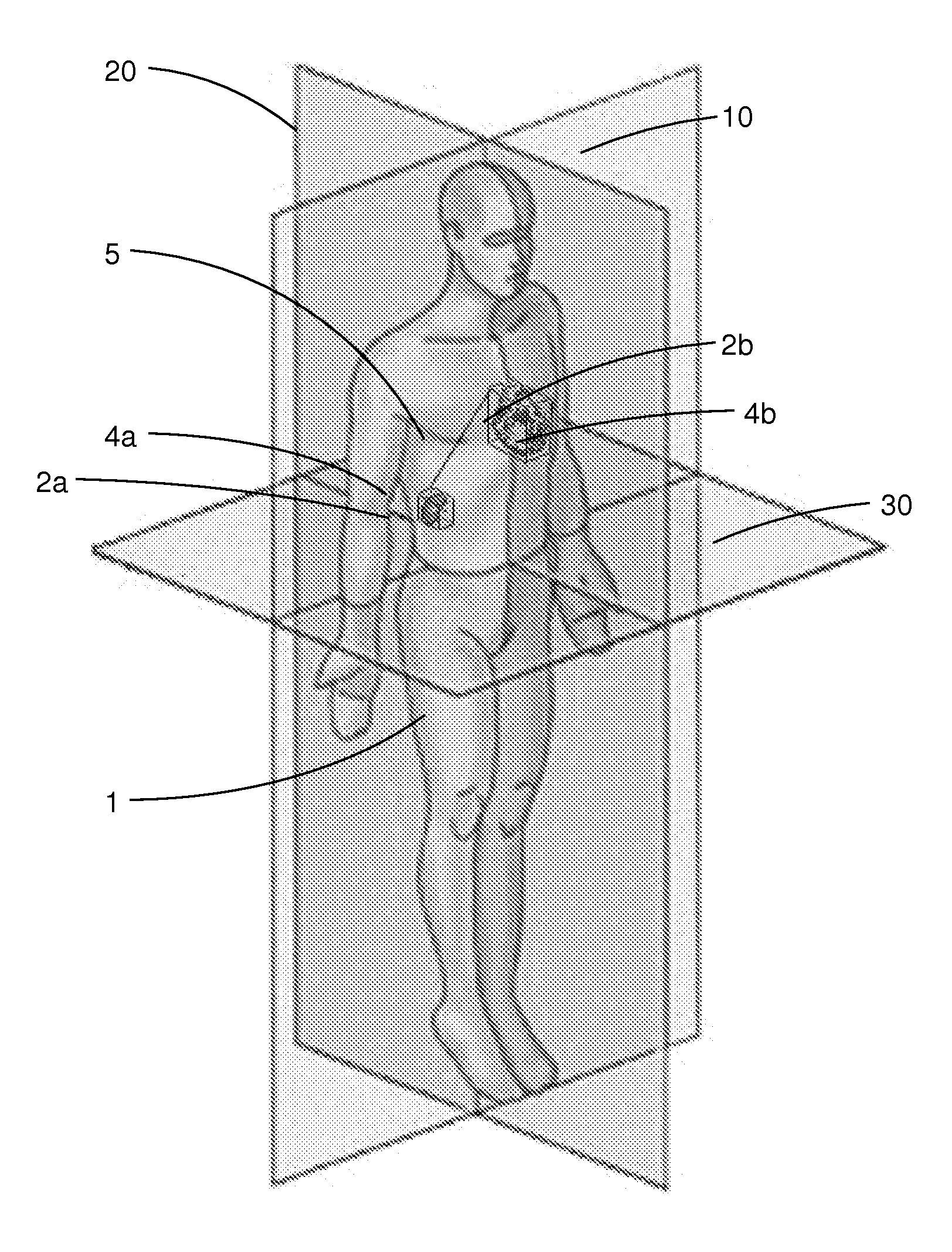
Figure 1 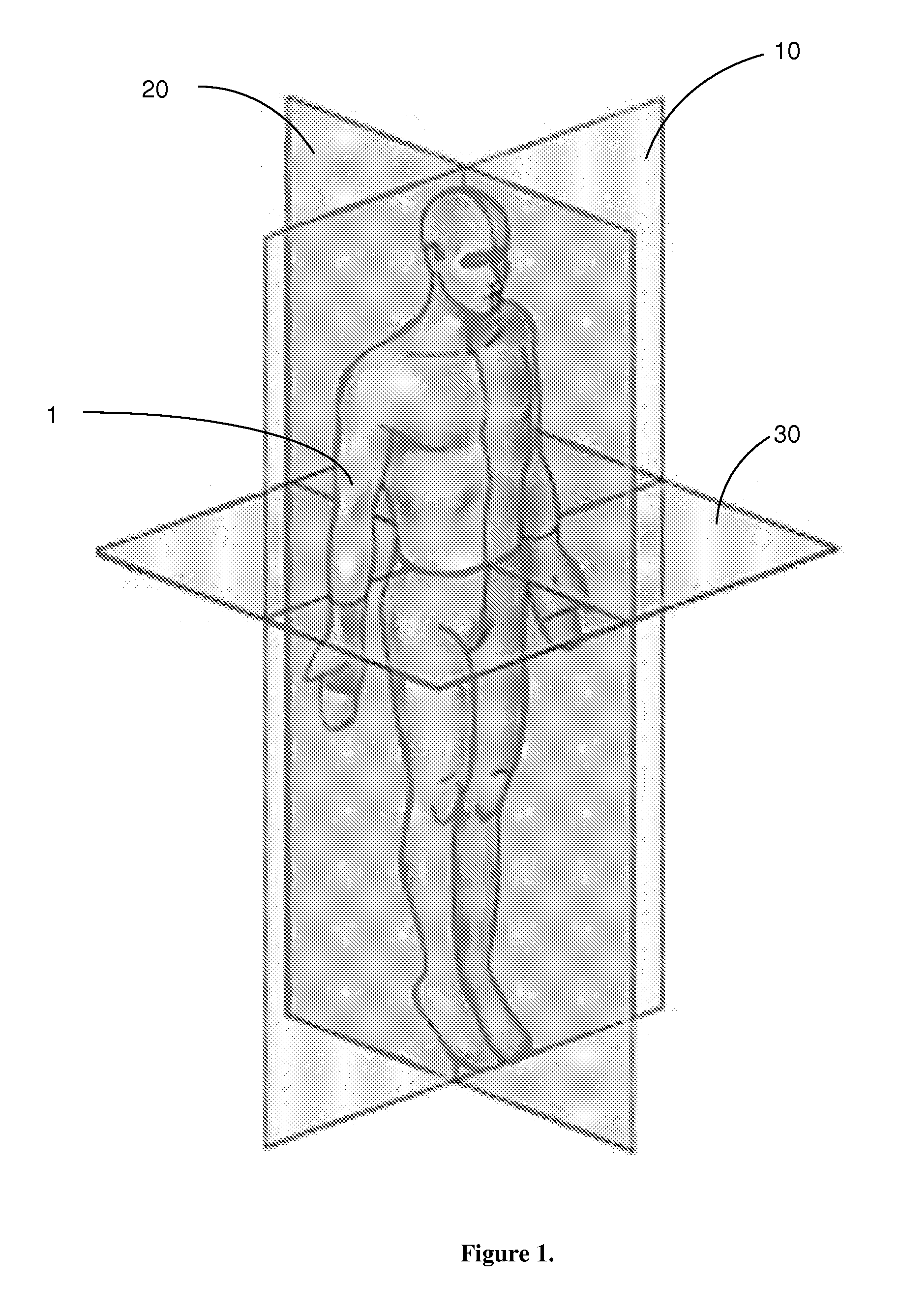
Figure 2 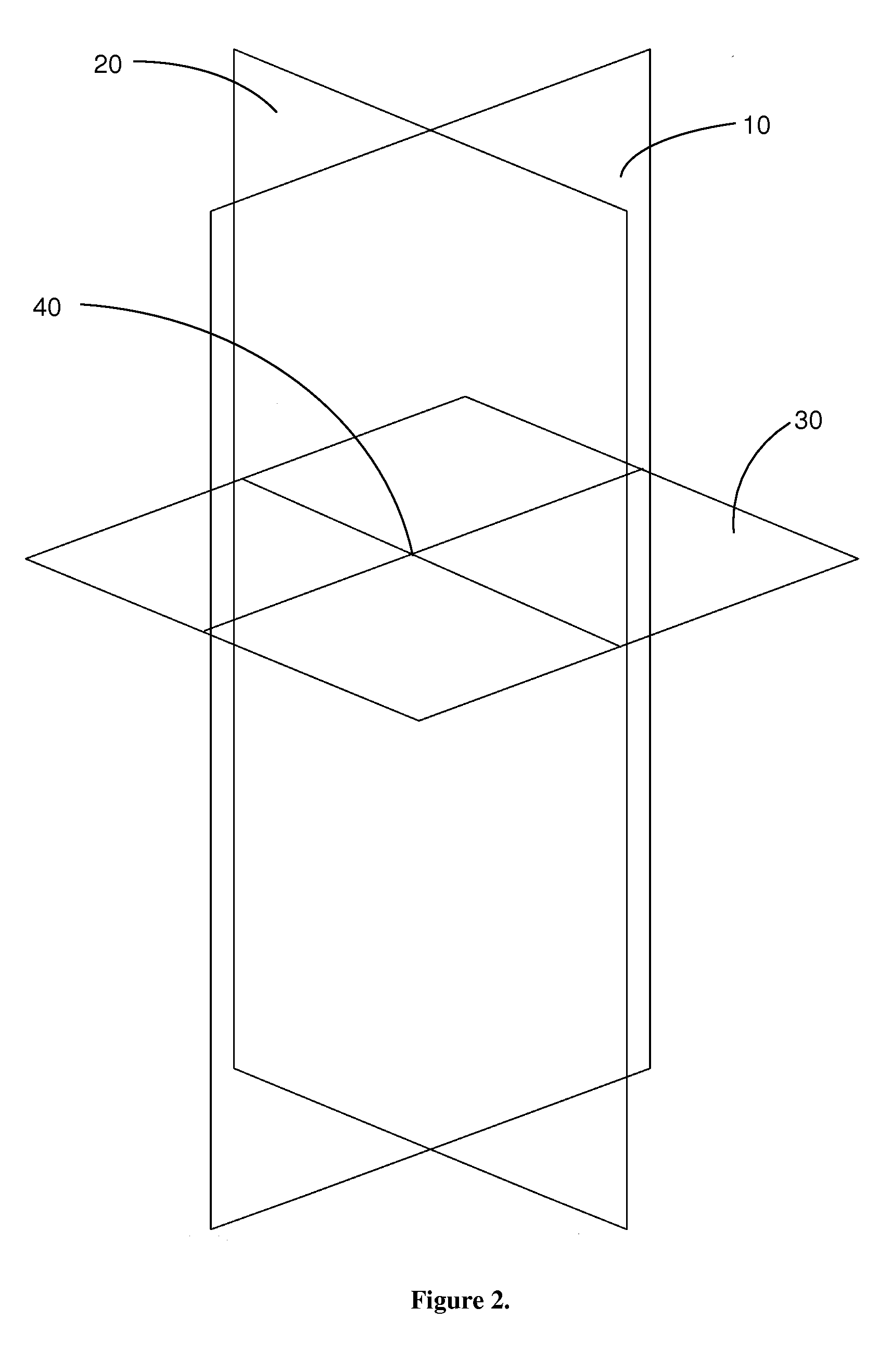
Figure 3
Abstract
Description
CROSS REFERENCE TO RELATED APPLICATIONS
[0001] This application is a continuation in part of co-pending U.S. patent application Ser. No. 11 / 428,926, filed Jul. 6, 2006. This application is also a non-provisional application of currently pending U.S. Provisional Patent Application 60 / 949,395, filed Jul. 12, 2007.FIELD OF INVENTION
[0002] This invention relates to a 3D Cartesian coordinate system for use with human spatial morpho-informatics.BACKGROUND OF THE INVENTION
[0003] Human anatomy has traditionally been a descriptive rather than an objective science. Except for measurement protocols for skeletal morphology developed by physical anthropologists, there has been very little data developed to define human morphology. For descriptive purposes classic anatomists have describe the human body as being placed in the “anatomical position”. When in anatomical position the body is standing erect with the arms at the sides with the palms of the hands facing forward. The feet are flat on the gro...
Examples
example
[0039]The present invention's ability to quantitatively describe the location of a structure in or on the human body is illustrated in the following example. Arbitrarily-chosen coordinates are utilized to define the location from intersection point 40 (0, 0, 0). As seen in FIG. 3, Sagittal plane 20 (X-axis) is defined from 50 (uppermost limit) to −50 (the lowermost limit); Transverse plane 30 (Y-axis) defined as 20 (right-most lateral limit) and −20 (the left-lateral-most limit); and Coronal plane 10 (Z-axis) defined as 10 (anterior-most limit) and −10 (the posterior-most limit). Body 1 is defined by body bounding box 3. Anatomical structure 2 is defined by structure bounding box 4. The points of the bounding box are determined on the coordinate system. In this example, the location of structure 2 would have a coordinate of (approximately) 10, 10, 10 (X, Y, Z). In this example, structure 2 is located approximately ⅕ of the distance upward on the coronal plane (X-axis) from the trans...