
Oblique blended wing body aircraft
a blended, aircraft technology, applied in the field of flying objects, can solve the problems of difficult integration of the engine into the wing, large surface area, and high friction drag of the skin, and achieve the effect of low compressibility drag and low wetted area
Patent Information
- Authority / Receiving Office
- US · United States
- Patent Type
- Patents(United States)
- Current Assignee / Owner
- Publication Date
- 2013-04-02
Smart Images
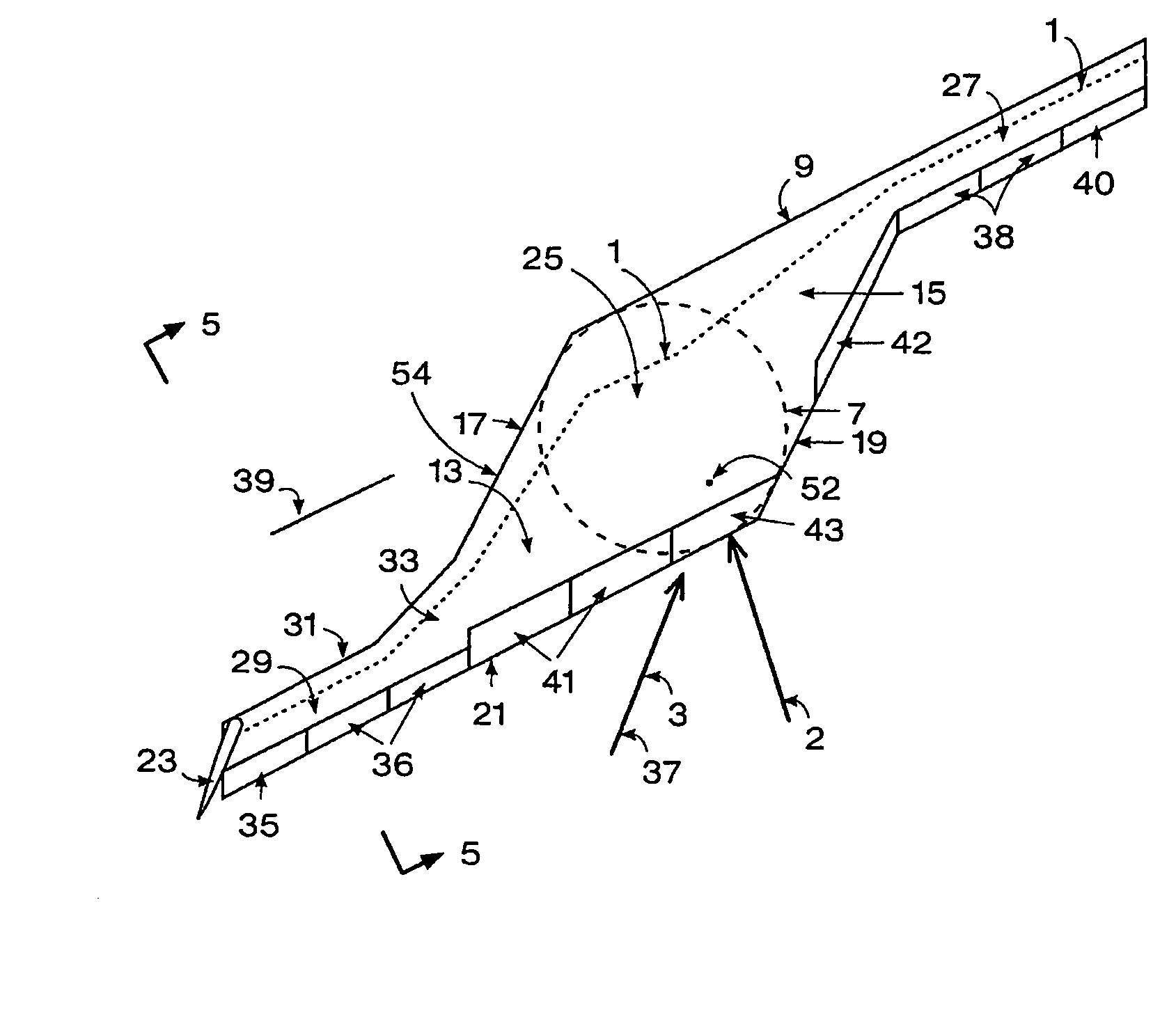
Figure 1 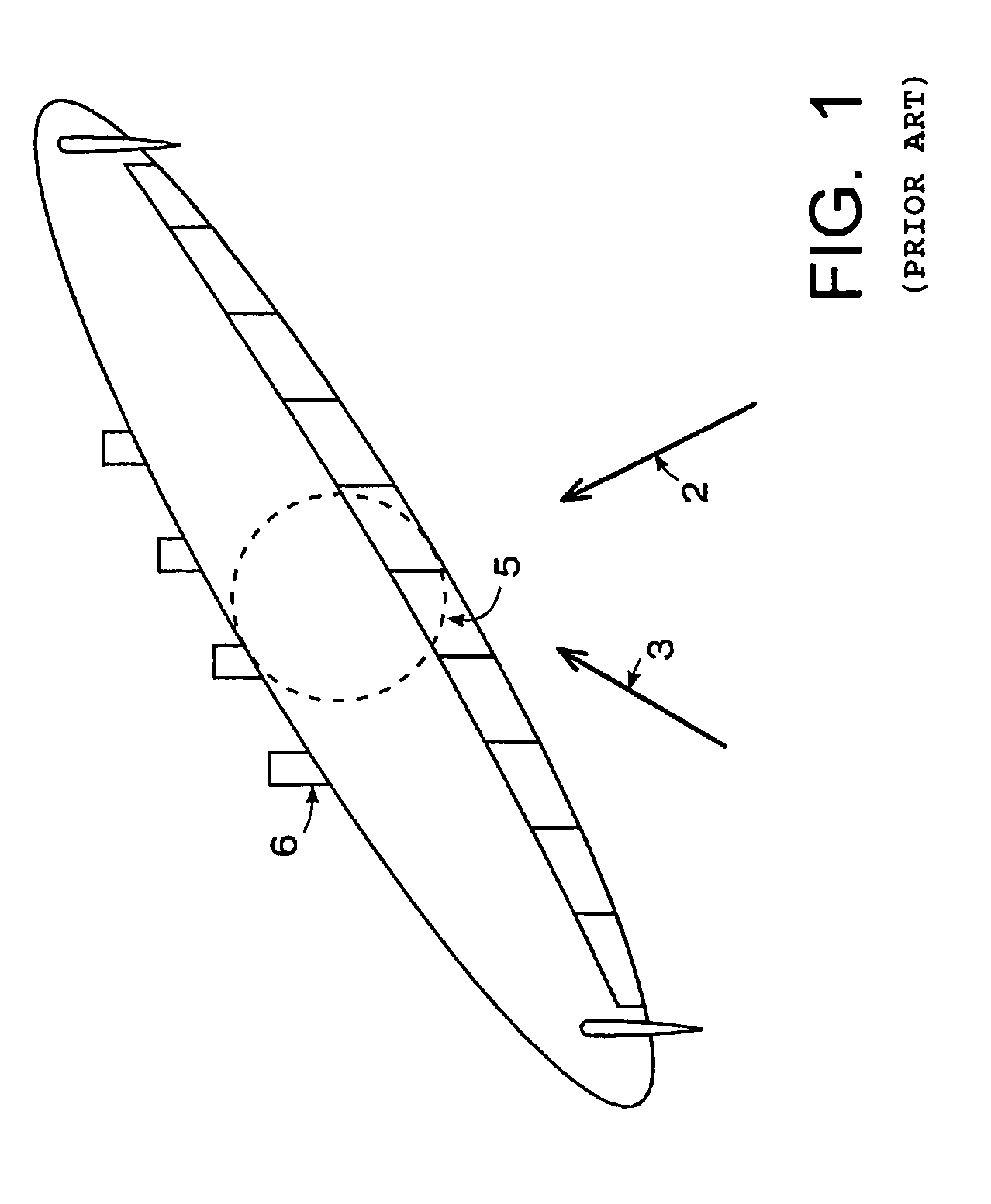
Figure 2 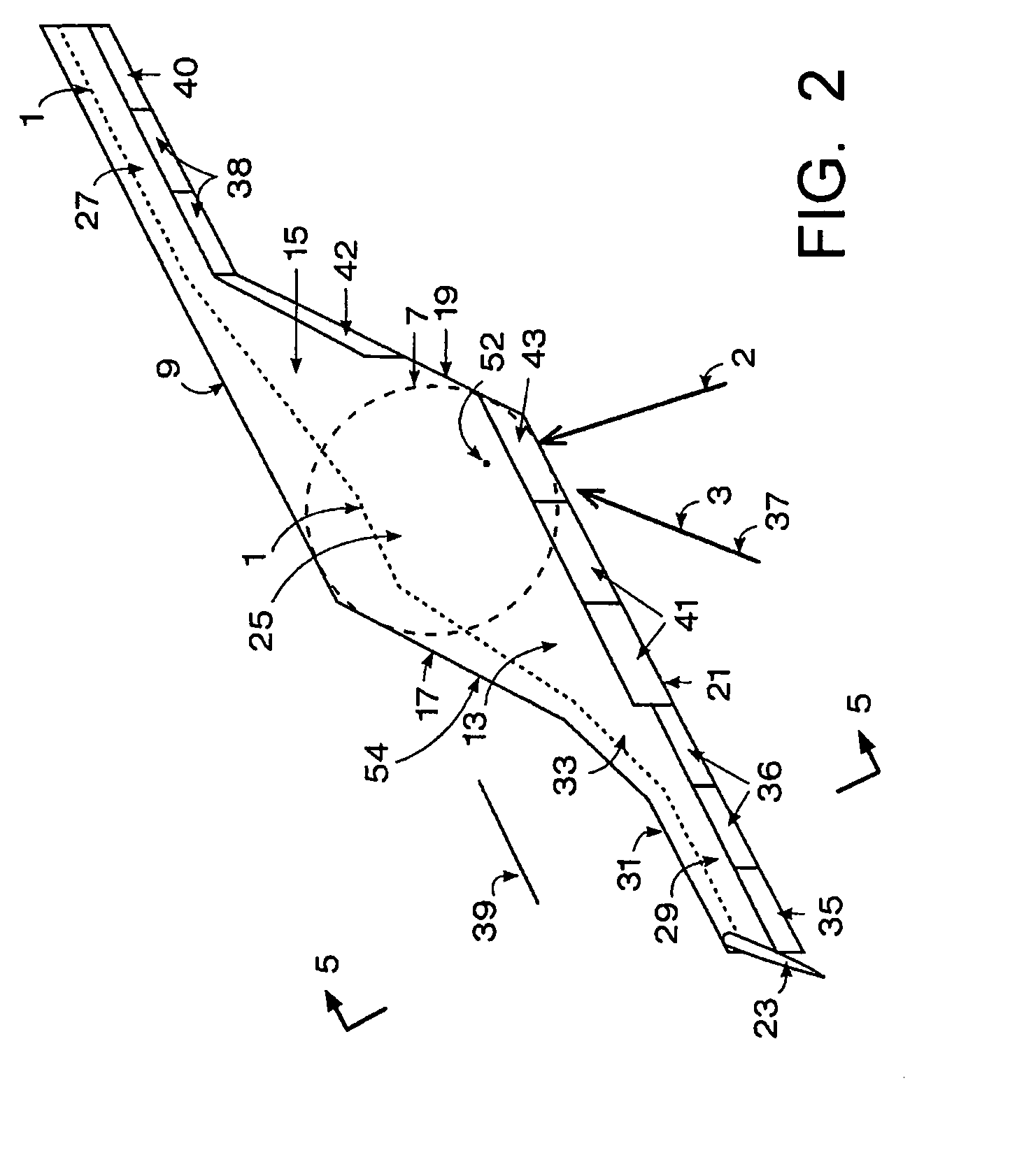
Figure 3
Abstract
Description
RELATED APPLICATIONS
[0001] This application is the U.S. National Stage under 35 U.S.C. §371 of International Application No. PCT / US08 / 074,795, filed 29 Aug. 2008, which in turn claims priority to U.S. Provisional Patent Application Ser. No. 60 / 935,758, filed Aug. 29, 2007, both of which are hereby incorporated by reference.TECHNICAL FIELD
[0002] The present invention relates to flying objects designed to fly fast enough that compressibility drag becomes significant.BACKGROUND ART
[0003] In the past people have proposed blended wing body aircraft like the B-2 bomber and people have also proposed all flying Oblique Wings as shown in FIG. 1 with an elliptical or near elliptical planform.
[0004] Blended Wing Body aircraft like the B-2 achieve lower drag than a pure flying wing by minimizing the surface area exposed to the airflow. They do this by having a center body that is as close as practical to circular in planform but usually with a pointed nose on the front to reduce compressibility dra...
Examples
Embodiment Construction
[0015]Referring to FIG. 2, a center airfoil section, called herein the “center body”25, is designed by starting off with a circle 7 as shown in dashed lines at the center of the aircraft planform. Tapering transition areas 15 and 13 are added on either side of the circle to form left and right sides of the center body 25 and a forward swept wing 27 and an aft swept wing 29 are then attached to the center body 25 as shown in FIG. 2 plan view. The center body 25 is itself a wing segment with airfoil cross-sections. The forward swept wing 27 preferably has a leading edge 9 that is an extension of the leading edge of the center body's forward swept transition area 15. The aft swept wing 29 has its aerodynamic center behind the pitch axis 39 so it is helpful in stabilizing the vehicle in pitch about the pitch axis 39. The pitch axis 39 for this configuration is defined parallel to the quarter chord of the forward swept wing but passing through the vehicle center of gravity as shown in FI...