
Variable exponent averaging detector and dynamic range controller
a detector and variable exponent technology, applied in the direction of digital/coded signal control, instruments, computation using denominational number representation, etc., can solve the problems of poor separation of static and dynamic control, limited method to control the dynamic response of automatic gain control (“agc”), and little or no artistic ability, so as to improve the determination of average signal level
Patent Information
- Authority / Receiving Office
- US · United States
- Patent Type
- Patents(United States)
- Current Assignee / Owner
- Publication Date
- 2013-08-13
Smart Images
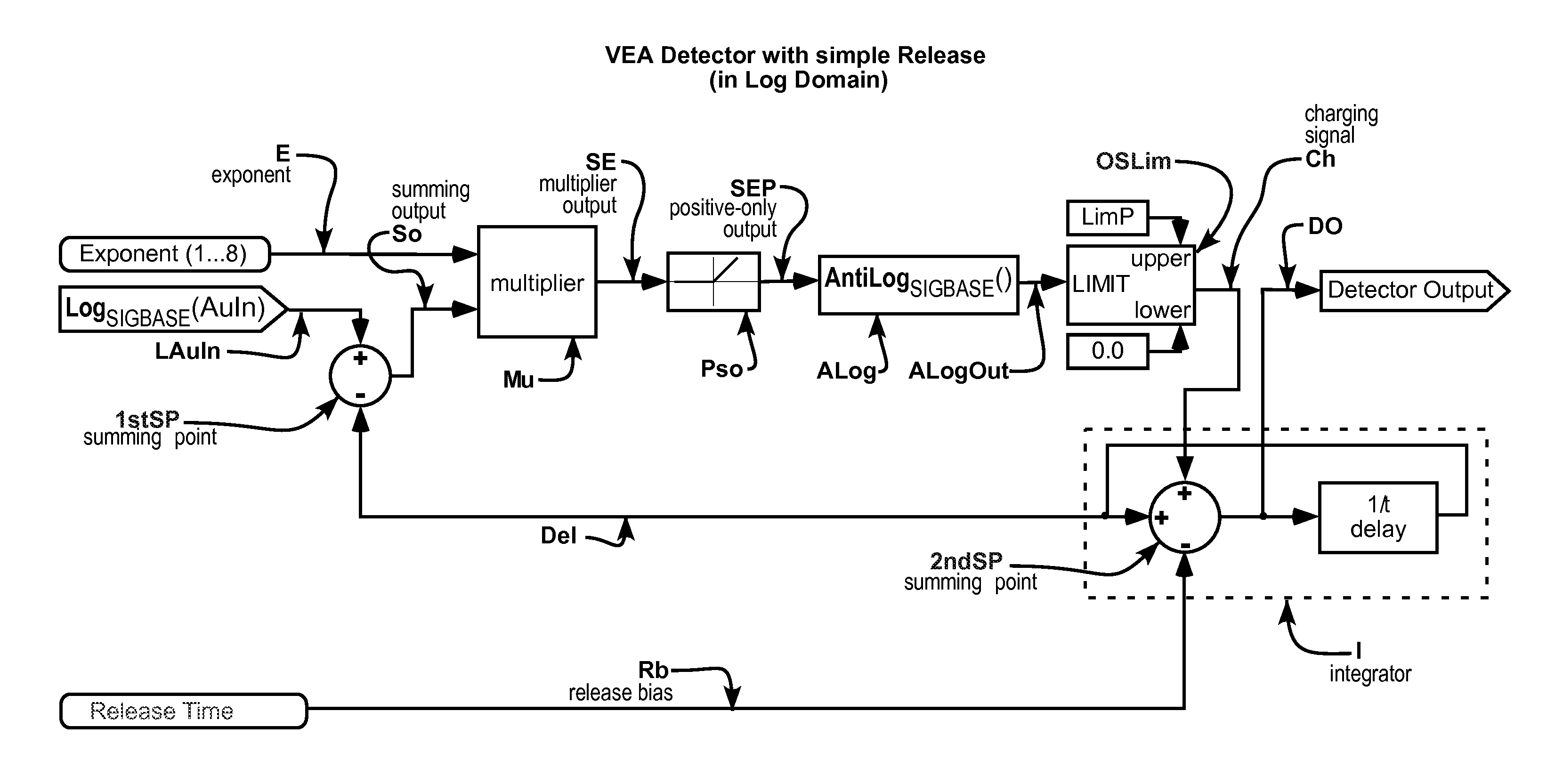
Figure 1 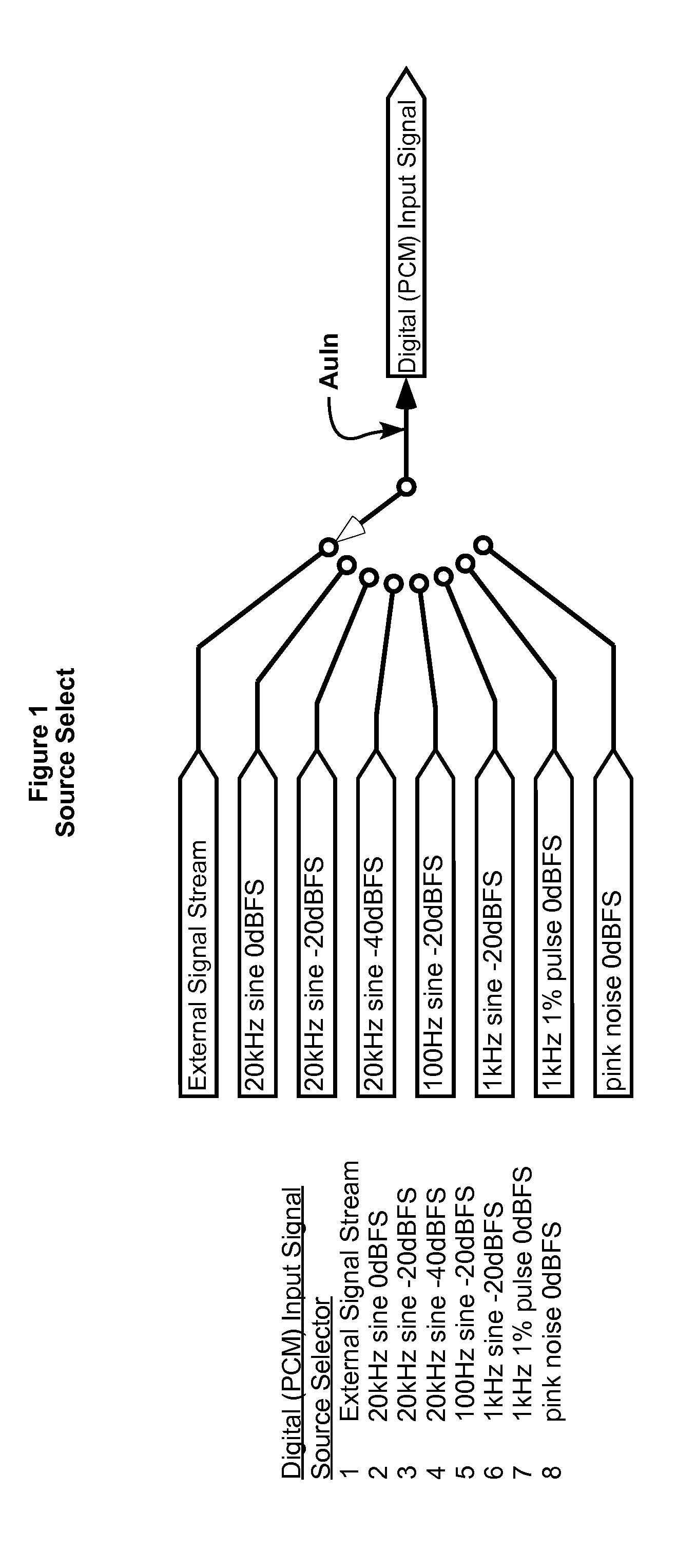
Figure 2 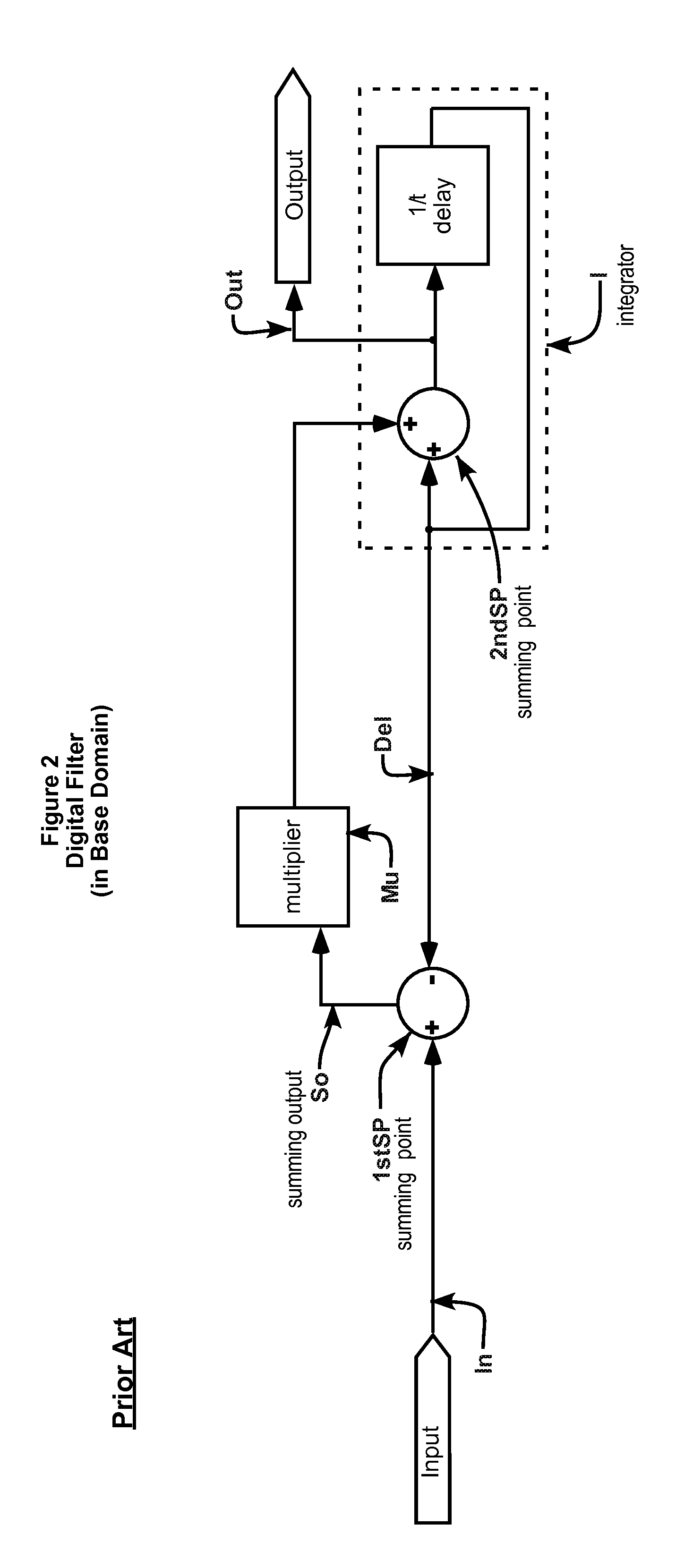
Figure 3
Abstract
Description
BACKGROUND OF THE INVENTION
[0001] 1. Technical Field
[0002] The VEA Detector and Dynamic Range Controller of the invention concern the accurate measurement of constant or non-constant, periodic or aperiodic, signals and the use of such measurements to control the upstream and / or downstream processing of program signals, including without limitation audio, video, and power signals.
[0003] 2. Related Art
[0004] In the field of program signal processing, for example, audio signal processing, “average” or “peak” signal level detectors in prior art dynamic range controllers detect input level changes by means of non-linear or time-variant filters imposed upon the envelope of the signal. Typically, first order filters have been used. Any such filter with unity gain at DC leaves the static performance of a dynamic range controller unchanged thereby allowing the non-linear processing of that filter to control dynamic signal changes independently.
[0005] Unfortunately, methods to control the dynamic ...
Examples
Embodiment Construction
[0051]The Variable Exponent Averaging (“VEA”) Detector and Variable Exponent Averaging Dynamic Range Controller (“VEA DRC”) of the invention provide a means of separating control over DC, static, and dynamic action of a dynamic range controller. A “VEA Processor” has one or more VEA Detectors, and optionally includes a Control Processor. A VEA Processor always has at least one VEA Detector. If a VEA Processor has two or more VEA Detectors or Detector subsystems, then it may also have a Control Processor to prioritize or otherwise integrate or select the outputs of the two or more VEA Detectors and Detector subsystems. A VEA Processor controls a digitally controlled amplifier (“DCA”) or other digital processor (e.g., comparator, pattern discriminator, etc.). The combination of a VEA Processor and a DCA is a VEA DRC. For ease of reference, the combination of a VEA Processor and other digital processor to which a VEA Processor provides a Control Value is also called a VEA DRC, although...