
Fuel additives to maintain optimum injector performance
a technology of fuel additives and injectors, which is applied in the direction of fuels, machines/engines, mechanical equipment, etc., can solve the problems of unsatisfactory diesel fuel application effectiveness of gasoline dispersants, unsatisfactory cleaning surface effect, and often unsatisfactory dispersant deposits in diesel fuel compositions. achieve the effect of improving fuel economy, reducing the amount of deposits, and improving power performan
Patent Information
- Authority / Receiving Office
- US · United States
- Patent Type
- Patents(United States)
- Current Assignee / Owner
- Publication Date
- 2016-12-20
Smart Images
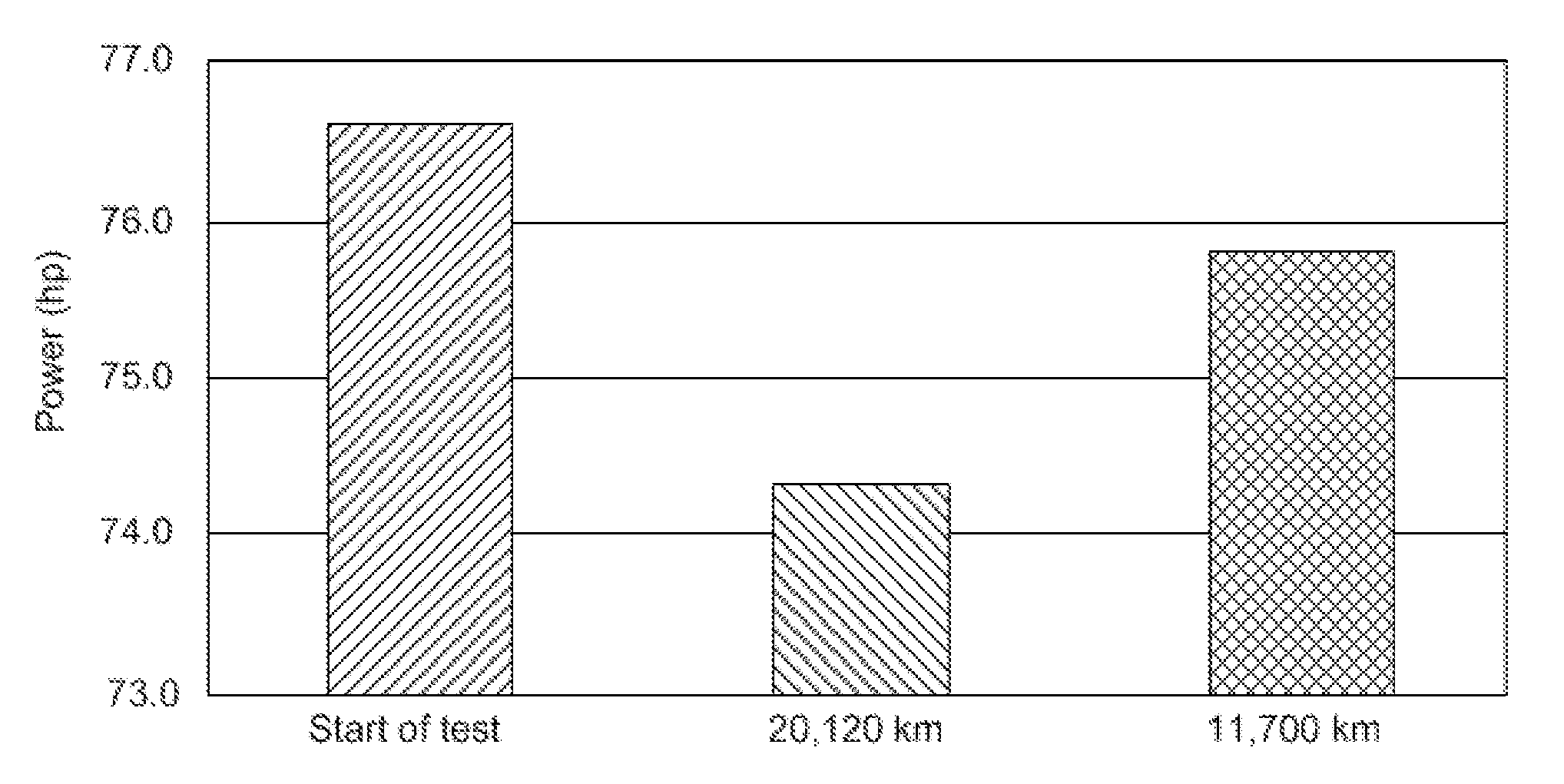
Figure 1 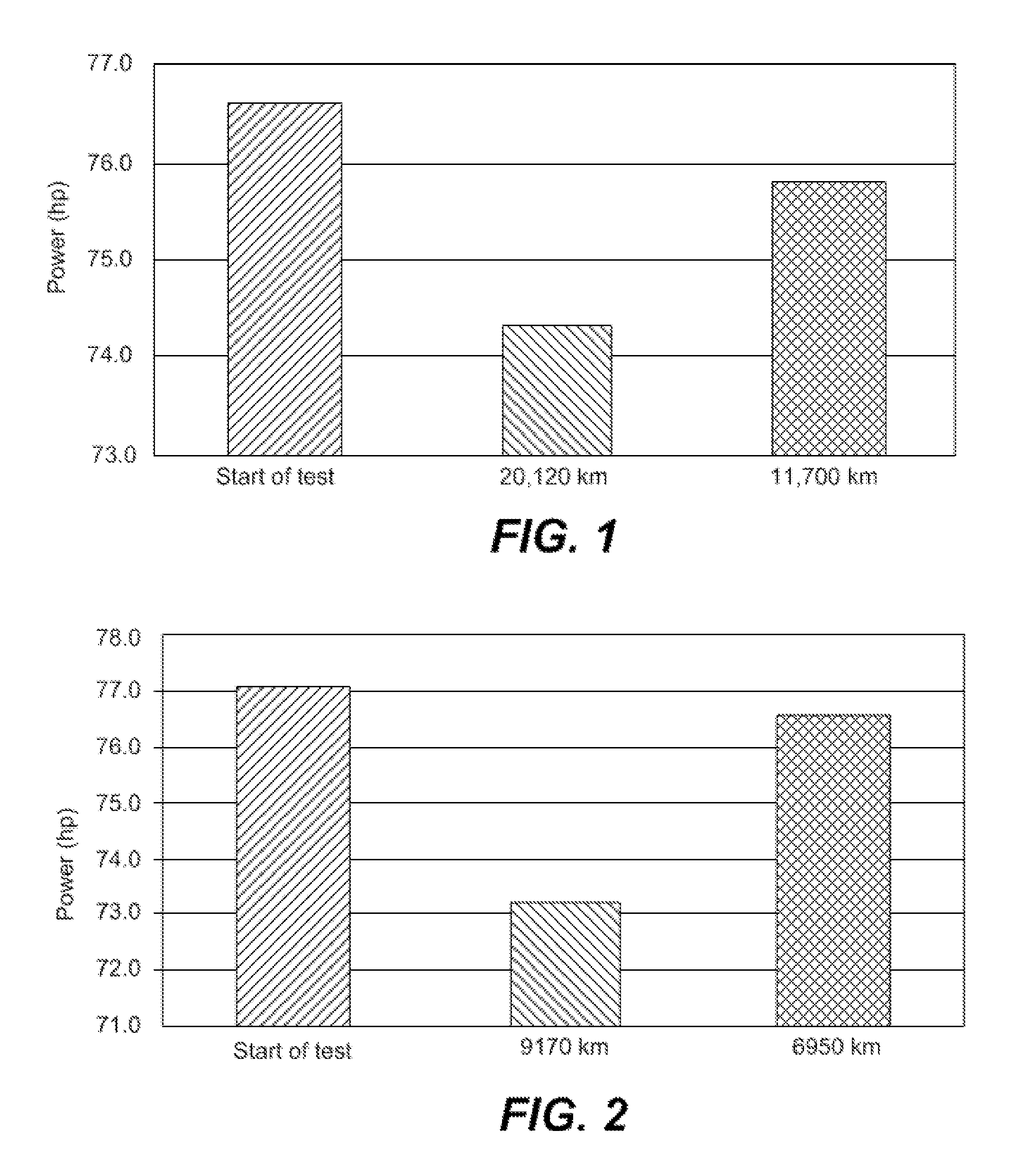
Figure 2 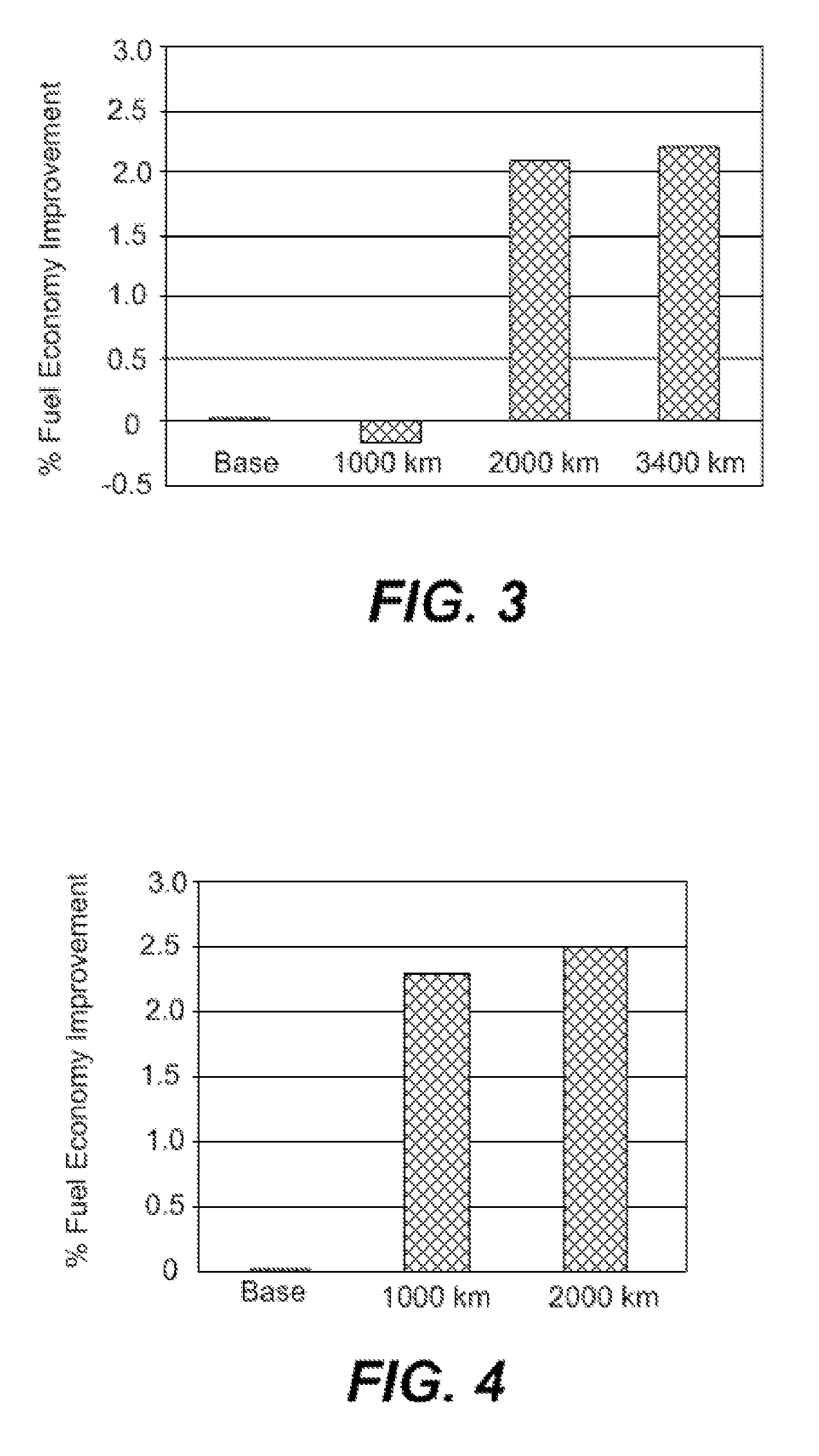
Figure 3
Abstract
Description
TECHNICAL FIELD
[0001] The disclosure is directed to certain diesel fuel additives and to diesel fuels and diesel fuel additive packages that include the additive. In particular the disclosure is directed a diesel fuel additive that is effective to enhance the performance a diesel engine with respect to fuel economy and power output.BACKGROUND AND SUMMARY
[0002] It has long been desired to maximize fuel economy, power and driveability in diesel fuel powered vehicles while enhancing acceleration, reducing emissions, and preventing hesitation. While it is known to enhance gasoline powered engine performance by employing dispersants to keep valves and fuel injectors clean, such gasoline dispersants are not necessarily effective in diesel fuel applications. The reasons for this unpredictability lie in the many differences between how diesel engines and gasoline engines operate and the chemical differences between diesel fuel and gasoline.
[0003] Over the years, dispersant compositions for die...
Examples
example 1
[0073]Using the foregoing procedure, tests were run using a base fuel and the base fuel additized with the additive package of Table 2 and the results are shown in FIGS. 1 and 2. In the figures, Volkswagon Jettsa combusting diesel fuel additized with 407.1 ppm by weight of the composition of Table 2 (FIG. 1) and at 814.2 ppm by weight of the composition of Table 2 (FIG. 2) was used. At the lower concentration of the additive package in the fuel, the power recovery after 7270 miles was about 67%. At the higher concentration of the additive package in the fuel, the power recovery was about 87% after 4319 miles. Accordingly, the additive package of the disclosure was effective in restoring most of the power loss exhibited by a fuel devoid of the additive package after a relatively short use of the additized fuel.
example 2
[0074]In the following tests, the ability of the additive clean up used fuel injectors for a light duty diesel engine was demonstrated. Tests were run with additized fuel using high mileage Mercedes Vito Vans to determine the fuel economy improvement that is provided by the additive package according to Table 2. In FIG. 3, the fuel containing 407.1 ppm by weight of the additive and in FIG. 4, the fuel contained 814.2 ppm by weight of the additive. The higher treat rate of additive provided quicker fuel economy improvement. Overall fuel economy improvement was 2.2 percent in FIG. 3 after 3400 km and 2.5 percent in FIG. 4 after 2000 km.
example 3
[0075]In the following tests, the ability of the additive to clean up used fuel injectors for a light duty diesel engine is demonstrated. According to the test, fuel injectors used for 75,000 km were installed in light duty diesel vehicles and the NEDC fuel economy for the vehicles was determined at the start of the test and after about 700 miles (1100 km) to 750 miles (1200 km). The results are shown in FIG. 5 for fuel containing 407.1 ppm by weight of the additive package of Table 2 and in FIG. 6 for fuel containing 814.2 ppm by weight of the additive package of Table 2. As shown in FIG. 5, at the lower treat rate there was a 4.5% improvement in fuel economy after 750 miles (1200 km) compared to the fuel economy at the start of the test. With the higher treat rate (FIG. 6), there was a 4.9% improvement in fuel economy after 700 miles (1100 km) compared to the fuel economy at the start of the test.