
Fuel additive for improved performance in direct fuel injected engines
a technology of direct fuel injection and additives, which is applied in the direction of fuel additives, liquid carbonaceous fuels, petroleum industry, etc., can solve the problems that mannich dispersants used in port fuel injected gasoline engines cannot provide suitable improvement in direct fuel injection gasoline engines, and the dispersants that could have been used for direct fuel injection engines are not necessarily effective for cleaning up direct fuel injection engines. achieve the effects of enhancing acceleration, reducing emissions, and maximizing fuel economy
Patent Information
- Authority / Receiving Office
- US · United States
- Patent Type
- Patents(United States)
- Current Assignee / Owner
- Publication Date
- 2016-10-04
Smart Images
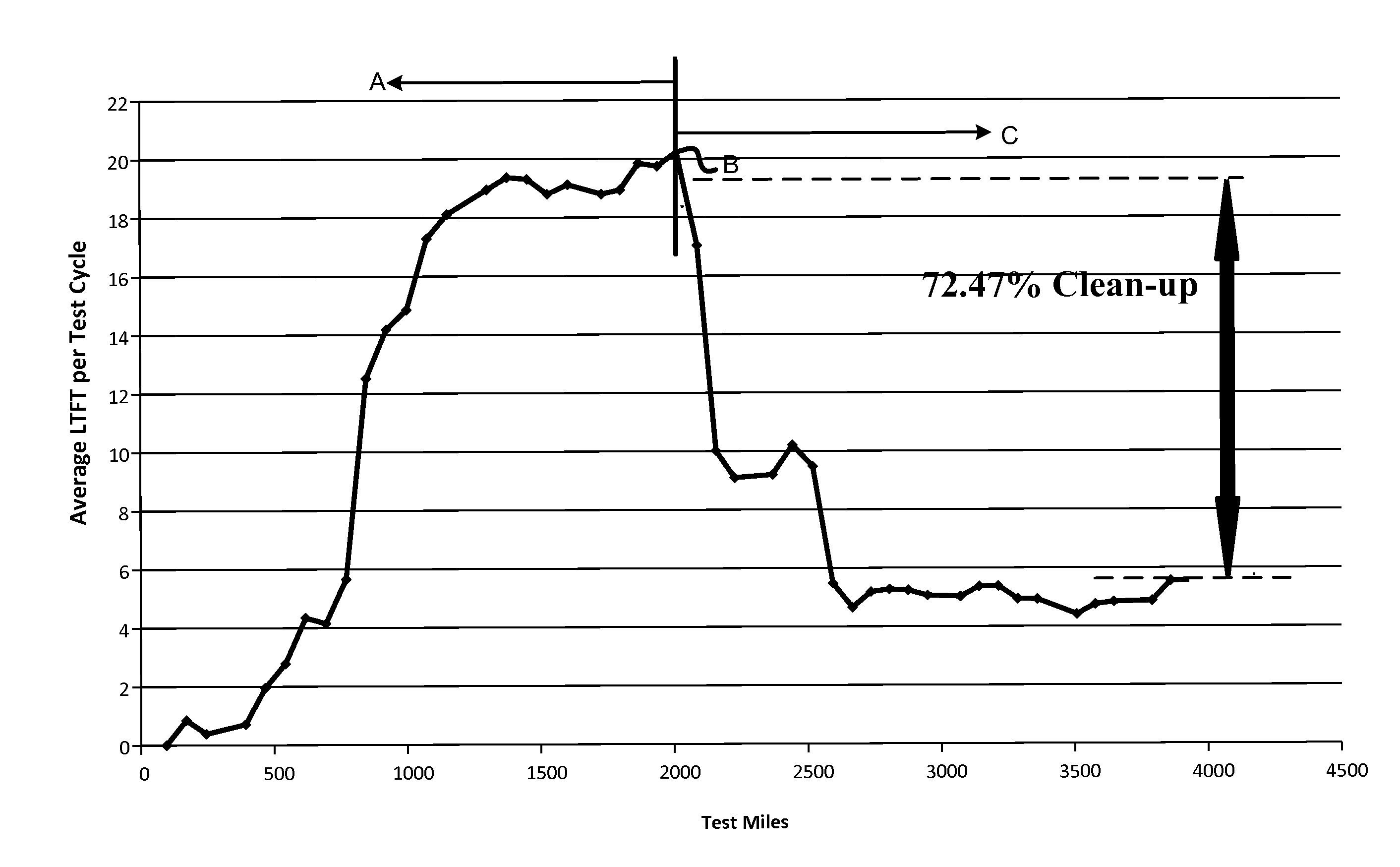
Figure 1 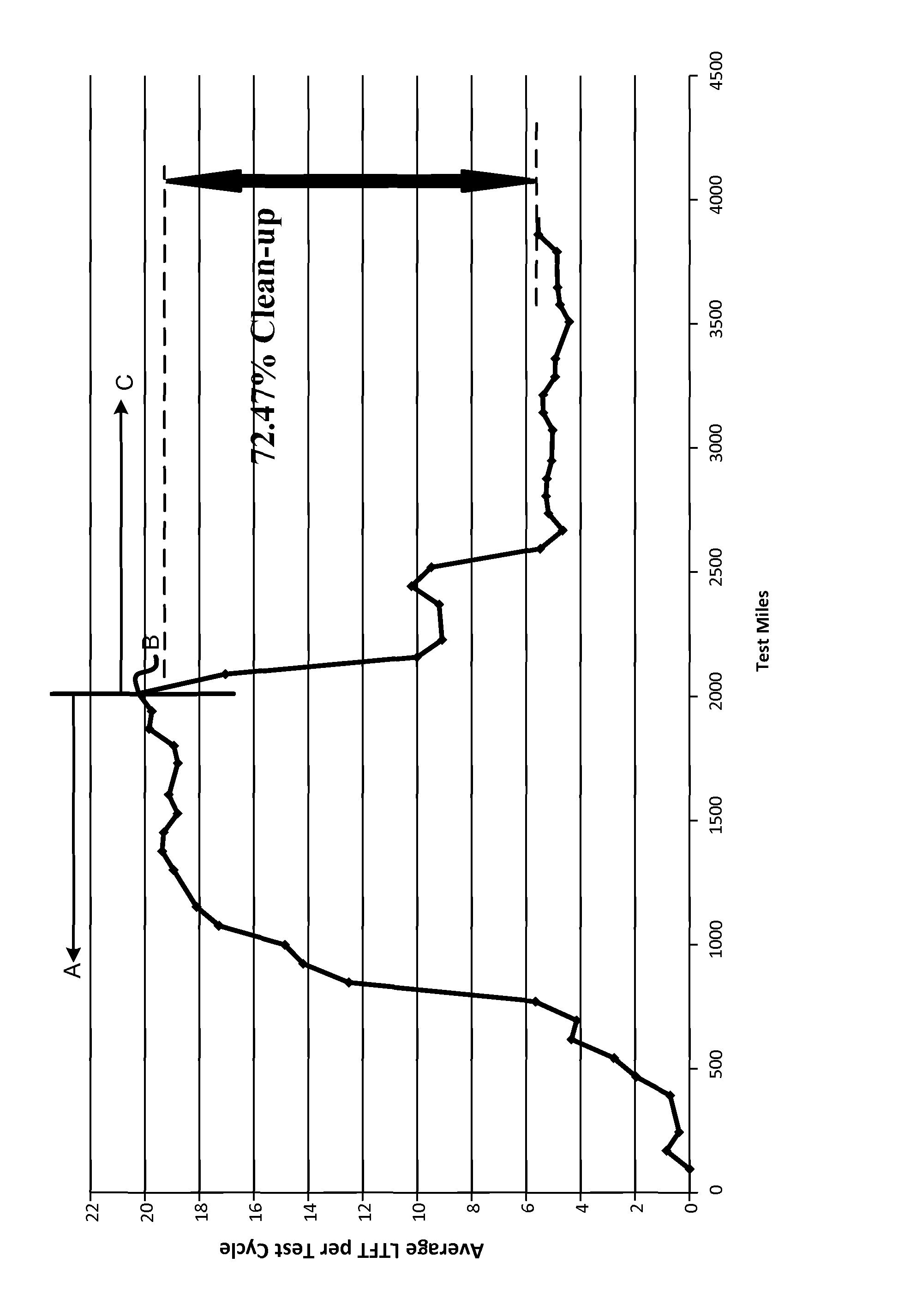
Figure 2 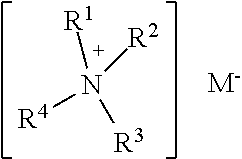
Figure 3
Abstract
Description
TECHNICAL FIELD
[0001] The disclosure is directed to fuel additives and to additive and additive concentrates that include the additive that are useful for improving the performance of direct fuel injected gasoline engines (DIG).BACKGROUND AND SUMMARY
[0002] It has long been desired to maximize fuel economy, power and driveability in gasoline powered vehicles while enhancing acceleration, reducing emissions, and preventing hesitation. While it is known to enhance gasoline powered engine performance by employing dispersants to keep valves and fuel injectors clean in port fuel injection engines, such gasoline dispersants are not necessarily effective for cleaning up direct fuel injected engines. The reasons for this unpredictability may lie in the many mechanical and operational differences between the direct and port fuel injected engines and the fuels suitable for such engines.
[0003] With the current use of direct fuel injected gasoline engines, dispersants that previously could have bee...
Examples
##ventive example 1
Inventive Example 1
(C8)3NMe
[0072]Trioctylmethylammonium chloride (70 grams) was mixed with 130 grams of heptane. The mixture was extracted five times with 70 grams of sodium acetate (about 16% wt. in water). Volatiles from the resulting organic layer were removed under reduced pressure to give a quat acetate. FTIR showed strong peaks at 1578 and 1389 cm−1, characteristic of a carboxylate salt.
##ventive example 2
Inventive Example 2
(C12)2NMe2
[0073]A commercial quaternary ammonium product 2C12NMe2+NO2− was vacuum distilled to remove volatiles to give the desired product.
##ventive example 3
Inventive Example 3
C18NMe2-E6
[0074]A mixture of C18—N-Me2 (118 g), 39 grams of 1,2-epoxyhexane, 26 grams of acetic acid, and 76 grams of 2-ethylhexanol were heated slowly to 90° C. under inert atmosphere. The mixture was heated at 90° C. for 1.5 hours. Volatiles were then removed under reduced pressure to give desired product.