
Fuel additive for improved performance in fuel injected engines
a technology of additives and fuel injection engines, applied in the direction of fuels, machines/engines, mechanical equipment, etc., can solve the problems of reducing or completely bocking fuel flow, reducing fuel economy, and reducing fuel economy, so as to achieve maximum fuel economy, power and driveability in vehicles, the effect of enhancing acceleration
Patent Information
- Authority / Receiving Office
- US · United States
- Patent Type
- Applications(United States)
- Current Assignee / Owner
- Publication Date
- 2013-12-19
Smart Images
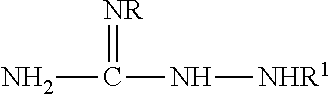
Figure 1 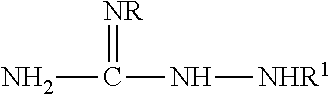
Figure 2 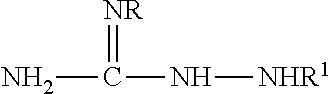
Figure 3
Abstract
Description
RELATED APPLICATION
[0001] This application is a continuation of application Ser. No. 13 / 495,471, filed Jun. 13, 2012, now pending.TECHNICAL FIELD
[0002] The disclosure is directed to fuel additives and to additive and additive concentrates that include the additive that are useful for improving the performance of fuel injected engines. In particular the disclosure is directed to a synergistic fuel additive that is effective to enhance the performance of fuel injectors for internal combustion engines.BACKGROUND AND SUMMARY
[0003] It has long been desired to maximize fuel economy, power and driveability in vehicles while enhancing acceleration, reducing emissions, and preventing hesitation. While it is known to enhance gasoline powered engine performance by employing dispersants to keep valves and fuel injectors clean in port fuel injection engines, such gasoline dispersants are not necessarily effective fuel injected diesel engines and may not be as effective in low sulfur fuels. The reas...
Examples
example 1
Component (a) Example 1
[0056]A mixture of oleyl amidopropyl dimethylamine (OD, 366 grams) and sodium chloroacetate (SCA, 113 grams) was heated in a mixture of isopropanol (125 mL) and water (51 grams) at 80° C. for 5.5 hours. Isopropanol (600 mL) and 2-ethylhexanol (125 grams) were added and the mixture was concentrated by heating to remove water. The resultant mixture was filtered through CELITE 512 filter medium to give product as a yellow oil.
example 2
Component (a) Example 2
[0057]The reaction product was made similar to Component (a) Example 1 with the exception that OD was replaced with oleyl dimethylamine. The reaction product was mixed with an aromatic solvent and 2-ethylhexanol to provide a yellow liquid.
example 3
Component (b) Example 3
[0058]A flask was charged with 950 molecular weight polybutenyl succinic anhydride (553 grams), aromatic solvent 150 (210 grams), aminoguanidine bicarbonate (AGBC) (79.5 grams, 1 equivalent), and toluene (145 grams). The reaction mixture was heated up to 145° C. and held for about 2 hours. No more water was removed through azeotrope distillation. A sample was removed and diluted with about an equal weight of heptane. The resulting mixture was filtered through CELITE 512 filter medium and concentrated by a rotary evaporator to give desired product as a brownish oil. An FTIR spectrum of the product showed peaks at 1724, 1689, 1637, 1588 cm−1 with the peak at 1637 cm−1 being the smallest.