
Comparing HPLC Detectors: Sensitivity and Range Analysis
SEP 19, 20259 MIN READ
Generate Your Research Report Instantly with AI Agent
Patsnap Eureka helps you evaluate technical feasibility & market potential.
HPLC Detection Technology Background and Objectives
High-Performance Liquid Chromatography (HPLC) detection technology has evolved significantly since its inception in the late 1960s. The development trajectory has been characterized by continuous improvements in sensitivity, selectivity, and versatility, enabling increasingly sophisticated analytical applications across various industries. Initially limited to simple UV detection methods, HPLC detection technology has expanded to encompass a diverse array of detection principles, each offering unique advantages for specific analytical challenges.
The evolution of HPLC detectors represents a response to growing demands for more precise quantification and identification of complex mixtures in pharmaceutical development, environmental monitoring, food safety, clinical diagnostics, and numerous other fields. This technological progression has been driven by the need to detect compounds at ever-lower concentrations and to distinguish between structurally similar analytes in complex matrices.
Current trends in HPLC detection technology focus on enhancing sensitivity limits, expanding linear dynamic ranges, improving selectivity, and developing more universal detection methods. The integration of multiple detection technologies into hybrid systems represents another significant trend, allowing for complementary data collection and more comprehensive sample characterization.
The sensitivity and range capabilities of different HPLC detectors vary considerably, with some specialized detectors capable of detecting compounds at femtogram levels while others excel at providing broad linear dynamic ranges spanning several orders of magnitude. Understanding these performance characteristics is crucial for selecting appropriate detection methods for specific analytical requirements.
The primary objective of this technical research report is to provide a comprehensive comparative analysis of various HPLC detector technologies, with particular emphasis on their sensitivity parameters and dynamic range capabilities. This analysis aims to establish a framework for detector selection based on specific analytical requirements and to identify potential areas for technological advancement.
Secondary objectives include evaluating the complementary nature of different detection technologies, assessing the impact of recent technological innovations on detector performance, and exploring emerging detection methodologies that may address current analytical limitations. Additionally, this report seeks to identify potential research directions that could lead to significant improvements in detection sensitivity and range capabilities.
By thoroughly examining the current state of HPLC detection technology and identifying key performance differentiators, this report will provide valuable insights for analytical method development, instrument acquisition decisions, and future research initiatives in chromatographic science.
The evolution of HPLC detectors represents a response to growing demands for more precise quantification and identification of complex mixtures in pharmaceutical development, environmental monitoring, food safety, clinical diagnostics, and numerous other fields. This technological progression has been driven by the need to detect compounds at ever-lower concentrations and to distinguish between structurally similar analytes in complex matrices.
Current trends in HPLC detection technology focus on enhancing sensitivity limits, expanding linear dynamic ranges, improving selectivity, and developing more universal detection methods. The integration of multiple detection technologies into hybrid systems represents another significant trend, allowing for complementary data collection and more comprehensive sample characterization.
The sensitivity and range capabilities of different HPLC detectors vary considerably, with some specialized detectors capable of detecting compounds at femtogram levels while others excel at providing broad linear dynamic ranges spanning several orders of magnitude. Understanding these performance characteristics is crucial for selecting appropriate detection methods for specific analytical requirements.
The primary objective of this technical research report is to provide a comprehensive comparative analysis of various HPLC detector technologies, with particular emphasis on their sensitivity parameters and dynamic range capabilities. This analysis aims to establish a framework for detector selection based on specific analytical requirements and to identify potential areas for technological advancement.
Secondary objectives include evaluating the complementary nature of different detection technologies, assessing the impact of recent technological innovations on detector performance, and exploring emerging detection methodologies that may address current analytical limitations. Additionally, this report seeks to identify potential research directions that could lead to significant improvements in detection sensitivity and range capabilities.
By thoroughly examining the current state of HPLC detection technology and identifying key performance differentiators, this report will provide valuable insights for analytical method development, instrument acquisition decisions, and future research initiatives in chromatographic science.
Market Demand Analysis for Advanced HPLC Detection
The global HPLC detector market has experienced significant growth in recent years, driven by increasing demand for precise analytical instruments across pharmaceutical, biotechnology, environmental, and food safety sectors. Market research indicates that the HPLC detector segment is projected to grow at a CAGR of 5.8% through 2028, with the total market value expected to reach approximately $1.3 billion by that time.
Pharmaceutical and biopharmaceutical industries remain the largest consumers of advanced HPLC detection technologies, accounting for nearly 45% of the total market share. This dominance stems from stringent regulatory requirements for drug development and quality control processes, where high sensitivity and wide detection ranges are critical parameters for success.
A notable trend in market demand is the shift toward multi-detector systems that combine complementary detection technologies. End-users increasingly seek integrated solutions that can provide comprehensive sample analysis in a single run, reducing analysis time and operational costs. This trend is particularly evident in research institutions and contract research organizations where sample throughput and analytical versatility are prioritized.
Sensitivity requirements continue to evolve across industries, with detection limits in the picogram to femtogram range becoming standard expectations rather than exceptional capabilities. This push for enhanced sensitivity is primarily driven by applications in biomarker discovery, environmental contaminant monitoring, and trace impurity analysis in pharmaceuticals.
Regional analysis reveals that North America currently holds the largest market share at approximately 38%, followed by Europe at 30% and Asia-Pacific at 25%. However, the Asia-Pacific region demonstrates the fastest growth rate, fueled by expanding pharmaceutical manufacturing, increasing R&D investments, and growing regulatory focus on food and environmental safety in countries like China, India, and South Korea.
Customer surveys indicate that detector sensitivity ranks as the primary purchase consideration (cited by 78% of respondents), followed by linear dynamic range (65%), reliability (62%), and cost-effectiveness (58%). Interestingly, software integration capabilities have emerged as an increasingly important factor, with 52% of potential buyers citing seamless data management as a critical decision point.
The market also shows growing demand for specialized detectors capable of addressing challenging analytical problems, such as chiral separations, biomolecule characterization, and ultra-trace analysis of emerging contaminants. This specialization trend is creating lucrative niche markets within the broader HPLC detector landscape, with premium pricing models for advanced detection capabilities.
Pharmaceutical and biopharmaceutical industries remain the largest consumers of advanced HPLC detection technologies, accounting for nearly 45% of the total market share. This dominance stems from stringent regulatory requirements for drug development and quality control processes, where high sensitivity and wide detection ranges are critical parameters for success.
A notable trend in market demand is the shift toward multi-detector systems that combine complementary detection technologies. End-users increasingly seek integrated solutions that can provide comprehensive sample analysis in a single run, reducing analysis time and operational costs. This trend is particularly evident in research institutions and contract research organizations where sample throughput and analytical versatility are prioritized.
Sensitivity requirements continue to evolve across industries, with detection limits in the picogram to femtogram range becoming standard expectations rather than exceptional capabilities. This push for enhanced sensitivity is primarily driven by applications in biomarker discovery, environmental contaminant monitoring, and trace impurity analysis in pharmaceuticals.
Regional analysis reveals that North America currently holds the largest market share at approximately 38%, followed by Europe at 30% and Asia-Pacific at 25%. However, the Asia-Pacific region demonstrates the fastest growth rate, fueled by expanding pharmaceutical manufacturing, increasing R&D investments, and growing regulatory focus on food and environmental safety in countries like China, India, and South Korea.
Customer surveys indicate that detector sensitivity ranks as the primary purchase consideration (cited by 78% of respondents), followed by linear dynamic range (65%), reliability (62%), and cost-effectiveness (58%). Interestingly, software integration capabilities have emerged as an increasingly important factor, with 52% of potential buyers citing seamless data management as a critical decision point.
The market also shows growing demand for specialized detectors capable of addressing challenging analytical problems, such as chiral separations, biomolecule characterization, and ultra-trace analysis of emerging contaminants. This specialization trend is creating lucrative niche markets within the broader HPLC detector landscape, with premium pricing models for advanced detection capabilities.
Current Status and Challenges in HPLC Detector Technology
High-performance liquid chromatography (HPLC) detector technology has evolved significantly over the past decades, yet continues to face several critical challenges in meeting the increasingly demanding analytical requirements across various industries. Currently, the global HPLC detector market is dominated by five main types: UV-Visible (UV-Vis), Photodiode Array (PDA), Refractive Index (RI), Fluorescence (FLD), and Mass Spectrometry (MS) detectors, each with distinct sensitivity profiles and operational ranges.
UV-Vis detectors remain the most widely used due to their reliability and cost-effectiveness, offering detection limits in the nanogram range. However, they struggle with compounds lacking chromophores and face limitations in complex matrix analyses. PDA detectors have advanced to provide spectral information across multiple wavelengths simultaneously, yet still encounter sensitivity barriers when compared to more specialized detection methods.
Mass spectrometry detectors represent the current pinnacle of sensitivity, capable of detecting compounds in the picogram to femtogram range, but their high cost, complexity, and maintenance requirements restrict widespread adoption, particularly in smaller laboratories and developing regions. This creates a significant technological divide in analytical capabilities globally.
A persistent challenge across all detector types is the trade-off between sensitivity and linear dynamic range. While MS detectors offer exceptional sensitivity, their linear range is often narrower than optical detectors, necessitating sample dilutions or method adjustments that complicate workflows and reduce throughput. Conversely, RI detectors provide excellent linearity but suffer from poor sensitivity and temperature susceptibility.
Miniaturization presents another significant hurdle, particularly for portable and field-deployable HPLC systems. Current detector technologies have not been sufficiently miniaturized without substantial performance compromises, limiting the expansion of HPLC applications in point-of-need testing scenarios.
Data processing capabilities also lag behind detector hardware advancements. The massive data volumes generated by modern detectors, especially PDA and MS systems, require sophisticated algorithms and computing resources that are not universally available or standardized, creating bottlenecks in data interpretation and method transfer.
Emerging environmental regulations pose additional challenges, particularly for detectors requiring hazardous solvents or generating toxic waste. Sustainable "green chemistry" approaches to detection technology remain underdeveloped, with few commercially viable alternatives to traditional methods that rely on environmentally problematic reagents.
Integration challenges persist between detectors and separation technologies, with compatibility issues arising when coupling advanced detectors with novel column technologies or alternative mobile phases, limiting the full exploitation of either technology's capabilities.
UV-Vis detectors remain the most widely used due to their reliability and cost-effectiveness, offering detection limits in the nanogram range. However, they struggle with compounds lacking chromophores and face limitations in complex matrix analyses. PDA detectors have advanced to provide spectral information across multiple wavelengths simultaneously, yet still encounter sensitivity barriers when compared to more specialized detection methods.
Mass spectrometry detectors represent the current pinnacle of sensitivity, capable of detecting compounds in the picogram to femtogram range, but their high cost, complexity, and maintenance requirements restrict widespread adoption, particularly in smaller laboratories and developing regions. This creates a significant technological divide in analytical capabilities globally.
A persistent challenge across all detector types is the trade-off between sensitivity and linear dynamic range. While MS detectors offer exceptional sensitivity, their linear range is often narrower than optical detectors, necessitating sample dilutions or method adjustments that complicate workflows and reduce throughput. Conversely, RI detectors provide excellent linearity but suffer from poor sensitivity and temperature susceptibility.
Miniaturization presents another significant hurdle, particularly for portable and field-deployable HPLC systems. Current detector technologies have not been sufficiently miniaturized without substantial performance compromises, limiting the expansion of HPLC applications in point-of-need testing scenarios.
Data processing capabilities also lag behind detector hardware advancements. The massive data volumes generated by modern detectors, especially PDA and MS systems, require sophisticated algorithms and computing resources that are not universally available or standardized, creating bottlenecks in data interpretation and method transfer.
Emerging environmental regulations pose additional challenges, particularly for detectors requiring hazardous solvents or generating toxic waste. Sustainable "green chemistry" approaches to detection technology remain underdeveloped, with few commercially viable alternatives to traditional methods that rely on environmentally problematic reagents.
Integration challenges persist between detectors and separation technologies, with compatibility issues arising when coupling advanced detectors with novel column technologies or alternative mobile phases, limiting the full exploitation of either technology's capabilities.
Comparative Analysis of Current HPLC Detector Solutions
01 UV-Visible Detectors for HPLC
UV-Visible detectors are commonly used in HPLC systems due to their wide detection range and sensitivity. These detectors measure the absorption of light by analytes at specific wavelengths, typically in the ultraviolet and visible spectrum. They offer good sensitivity for compounds with chromophores and can detect concentrations in the nanogram range. The sensitivity can be adjusted based on wavelength selection, with lower wavelengths generally providing higher sensitivity but less selectivity.- UV-Visible Detectors for HPLC: UV-Visible detectors are commonly used in HPLC systems due to their wide application range and good sensitivity. These detectors measure the absorption of light by analytes at specific wavelengths, typically in the UV or visible spectrum. They offer variable wavelength capabilities, allowing for optimization based on the analyte's absorption characteristics. The sensitivity range typically extends from nanogram to picogram levels, making them suitable for a wide variety of compounds with chromophores.
- Fluorescence Detectors and Enhanced Sensitivity: Fluorescence detectors provide significantly higher sensitivity compared to UV-Visible detectors for compounds that exhibit fluorescence. These detectors can achieve detection limits in the picogram to femtogram range, making them ideal for trace analysis. The selectivity of fluorescence detection helps reduce interference from non-fluorescent compounds, improving signal-to-noise ratios. Advanced fluorescence detectors incorporate technologies to minimize background noise and enhance detection capabilities for complex samples.
- Mass Spectrometry Detectors for HPLC: Mass spectrometry detectors coupled with HPLC systems offer exceptional sensitivity and selectivity. These detectors can identify and quantify compounds based on their mass-to-charge ratios, providing structural information alongside quantitative data. The detection range typically extends from nanogram to femtogram levels, depending on the specific mass analyzer used. Modern MS detectors incorporate various ionization techniques to accommodate different types of analytes and can operate in multiple detection modes to enhance versatility.
- Electrochemical Detectors and Applications: Electrochemical detectors measure electrical signals generated by redox-active compounds, offering high sensitivity for specific analyte classes. These detectors are particularly useful for compounds that are difficult to detect using optical methods. The sensitivity range typically extends from nanogram to picogram levels, with some specialized configurations reaching femtogram detection limits. Electrochemical detectors are advantageous for analyzing compounds like phenols, amines, and certain pharmaceutical compounds, providing excellent linearity across their detection range.
- Refractive Index and Light Scattering Detectors: Refractive index and light scattering detectors are universal detection systems that respond to differences in refractive index between the mobile phase and analytes. While less sensitive than other detector types (typically in the microgram range), they offer the advantage of detecting compounds lacking chromophores or fluorophores. Light scattering detectors, particularly evaporative light scattering detectors (ELSD), provide improved sensitivity compared to traditional RI detectors and are less affected by temperature fluctuations, making them suitable for gradient elution methods.
02 Mass Spectrometry Detectors for HPLC
Mass spectrometry detectors provide exceptional sensitivity and selectivity for HPLC applications. These detectors ionize compounds eluting from the column and separate them based on their mass-to-charge ratio. They can detect compounds at picogram or even femtogram levels, making them suitable for trace analysis. The detection range is broad, covering most organic and many inorganic compounds, with the ability to provide structural information about unknown analytes.Expand Specific Solutions03 Fluorescence Detectors for HPLC
Fluorescence detectors offer high sensitivity and selectivity for compounds that fluoresce naturally or can be derivatized to fluoresce. These detectors measure the emission of light from analytes after excitation at specific wavelengths. They can detect concentrations in the picogram range, making them 10-1000 times more sensitive than UV detectors for appropriate compounds. The detection range is narrower than UV detectors as it is limited to fluorescent compounds, but this provides enhanced selectivity in complex samples.Expand Specific Solutions04 Electrochemical Detectors for HPLC
Electrochemical detectors measure electrical current generated by oxidation or reduction of analytes at an electrode surface. These detectors offer excellent sensitivity for electroactive compounds, with detection limits in the picogram range. They provide a wide linear dynamic range and are particularly useful for analyzing compounds that are difficult to detect by other methods. Different electrode materials and operating modes can be used to optimize sensitivity and selectivity for specific analyte classes.Expand Specific Solutions05 Refractive Index and Light Scattering Detectors
Refractive index and light scattering detectors are universal detection methods that respond to differences in refractive index between the mobile phase and analytes. While less sensitive than other detector types (typically in the microgram range), they offer the advantage of detecting virtually all compounds, including those lacking chromophores. Light scattering detectors, particularly evaporative light scattering detectors (ELSD), provide better sensitivity than traditional refractive index detectors and are less affected by temperature and flow rate variations, making them suitable for gradient elution methods.Expand Specific Solutions
Major Manufacturers and Competitive Landscape Analysis
The HPLC detector market is currently in a mature growth phase with increasing demand driven by pharmaceutical, environmental, and food safety applications. The global market size is estimated to exceed $1.5 billion, growing at 5-6% annually. Technologically, HPLC detectors range from established UV-Vis and fluorescence technologies to emerging high-sensitivity mass spectrometry solutions. Leading players include Waters Technology Corp., which dominates with comprehensive detector portfolios offering superior sensitivity ranges, followed by F. Hoffmann-La Roche and Merck Patent GmbH focusing on specialized bioanalytical applications. Agilent Technologies and Thermo Fisher (though not listed) remain significant competitors, while companies like HORIBA Advanced Techno and Dionex Corp. occupy important niches with specialized detector technologies optimized for environmental and industrial applications.
Waters Technology Corp.
Technical Solution: Waters Technology Corp. has developed advanced HPLC detector technologies focusing on maximizing sensitivity while maintaining broad dynamic range. Their ACQUITY UPLC PDA (Photodiode Array) detector offers wavelength accuracy of ±1 nm and a linear dynamic range up to 2.0 AU, with a low noise specification of ≤10 μAU. Their ACQUITY QDa Mass Detector integrates seamlessly with HPLC systems, providing mass detection with sensitivity in the picogram range[1]. Waters' innovative Tunable UV (TUV) detector technology employs dual-wavelength detection capabilities with a noise specification of <±3×10^-6 AU and linearity exceeding 2.5 AU. For fluorescence detection, their FLR detector achieves xenon flash lamp excitation with wavelength accuracy of ±3 nm and precision of ±0.25 nm. Waters has also pioneered the development of multi-detector platforms that allow simultaneous data acquisition from multiple detection technologies, enabling comprehensive sample characterization with correlation between optical and mass spectral data[3].
Strengths: Industry-leading sensitivity specifications across multiple detector types; seamless integration between different detector technologies; robust software for multi-detector data processing. Weaknesses: Higher cost compared to competitors; some detector technologies require specialized training; maintenance requirements can be demanding for certain detector types.
Roche Diagnostics GmbH
Technical Solution: Roche Diagnostics GmbH has developed proprietary HPLC detector technologies optimized for clinical and pharmaceutical applications. Their cobas c systems incorporate specialized UV-Vis detection with wavelength accuracy of ±1 nm and precision of ±0.5 nm, achieving noise levels below 5×10^-6 AU. For therapeutic drug monitoring and clinical diagnostics, Roche has engineered immunoassay-based detection systems that couple HPLC separation with immunological detection, providing exceptional specificity and sensitivity for target analytes in complex biological matrices[5]. Their electrochemiluminescence (ECL) detection technology achieves femtomolar detection limits with a linear dynamic range spanning over six orders of magnitude. Roche's multi-wavelength fluorescence detection systems employ sophisticated optical designs with holographic gratings to minimize stray light, resulting in improved signal-to-noise ratios. For protein and peptide analysis, their detectors incorporate patented flow cell designs that minimize peak dispersion while maximizing light path length, achieving detection limits in the low nanogram range for proteins lacking strong chromophores[6]. Roche has also developed specialized software algorithms for peak deconvolution and quantification in complex biological samples.
Strengths: Exceptional specificity for target analytes in complex matrices; validated performance for regulated clinical applications; comprehensive software for data analysis and compliance. Weaknesses: Systems often optimized for specific clinical applications rather than general-purpose analysis; higher initial investment; some technologies require proprietary reagents or consumables.
Key Technical Innovations in HPLC Detection Sensitivity
High-performance liquid chromatography with a controllable transverse flow inducer
PatentWO2017009438A1
Innovation
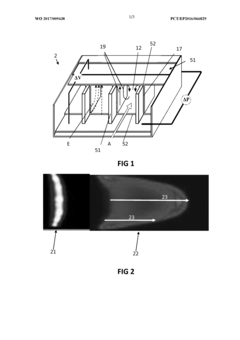
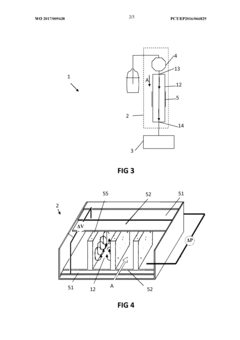
- The use of a controllable transverse flow inducer, such as an array of electrodes generating an alternating current electrokinetic field, to create micro-scale vortices that reduce dispersion and enhance mass transfer between support structures in the chromatography column, allowing for efficient separation without permanent surface charges and minimizing direct contact with electrodes.
High-performance liquid chromatography with a controllable transverse flow inducer
PatentActiveEP3322978A1
Innovation
- The use of a controllable transverse flow inducer, which generates micro-scale vortices through alternating current electrokinetics, allowing for orthogonal flow induction independent of axial velocity, reducing dispersion by combining pressure and electro-osmotic flow, and enabling retention modulation without permanent surface charges.
Application-Specific Detector Selection Guidelines
Selecting the appropriate detector for specific HPLC applications requires careful consideration of analyte properties, separation goals, and analytical requirements. For pharmaceutical applications, UV-Vis detectors remain the gold standard when analyzing compounds with chromophores, offering excellent linearity for quantitative analysis and regulatory acceptance. However, when dealing with compounds lacking strong UV absorption, such as carbohydrates or amino acids, Refractive Index (RI) or Evaporative Light Scattering Detectors (ELSD) provide better alternatives.
In environmental analysis, Mass Spectrometry (MS) detectors offer unparalleled sensitivity and specificity for trace contaminant detection, capable of identifying compounds at parts-per-trillion levels. Their ability to provide structural information makes them invaluable for unknown compound identification in complex environmental matrices. For routine water quality monitoring, however, UV-Vis detectors with appropriate wavelength selection may offer a more cost-effective solution.
Food and beverage applications often benefit from Fluorescence detectors when analyzing naturally fluorescent compounds like aflatoxins or certain vitamins, providing superior sensitivity compared to UV detection. For sugar analysis in beverages, RI detectors remain the preferred choice despite their limitations with gradient elution.
Clinical and forensic applications typically demand the highest sensitivity and specificity, making tandem MS detectors (MS/MS) the optimal choice for analyzing biological samples containing complex matrices. Their ability to filter out matrix interference while providing structural confirmation is particularly valuable in these fields.
For industrial quality control applications where robustness and reliability are paramount, Diode Array Detectors (DAD) offer versatility through spectral analysis capabilities while maintaining the simplicity required for routine operations. When analyzing polymers or large biomolecules, Multi-Angle Light Scattering (MALS) detectors coupled with size-exclusion chromatography provide essential molecular weight and size distribution information.
The selection process should also consider practical aspects such as detector maintenance requirements, operator expertise, and budget constraints. High-end detectors like MS systems require specialized training and higher maintenance budgets, while UV-Vis detectors offer greater accessibility for routine applications. Ultimately, the ideal detector choice represents a balance between analytical performance requirements, practical laboratory constraints, and the specific characteristics of target analytes.
In environmental analysis, Mass Spectrometry (MS) detectors offer unparalleled sensitivity and specificity for trace contaminant detection, capable of identifying compounds at parts-per-trillion levels. Their ability to provide structural information makes them invaluable for unknown compound identification in complex environmental matrices. For routine water quality monitoring, however, UV-Vis detectors with appropriate wavelength selection may offer a more cost-effective solution.
Food and beverage applications often benefit from Fluorescence detectors when analyzing naturally fluorescent compounds like aflatoxins or certain vitamins, providing superior sensitivity compared to UV detection. For sugar analysis in beverages, RI detectors remain the preferred choice despite their limitations with gradient elution.
Clinical and forensic applications typically demand the highest sensitivity and specificity, making tandem MS detectors (MS/MS) the optimal choice for analyzing biological samples containing complex matrices. Their ability to filter out matrix interference while providing structural confirmation is particularly valuable in these fields.
For industrial quality control applications where robustness and reliability are paramount, Diode Array Detectors (DAD) offer versatility through spectral analysis capabilities while maintaining the simplicity required for routine operations. When analyzing polymers or large biomolecules, Multi-Angle Light Scattering (MALS) detectors coupled with size-exclusion chromatography provide essential molecular weight and size distribution information.
The selection process should also consider practical aspects such as detector maintenance requirements, operator expertise, and budget constraints. High-end detectors like MS systems require specialized training and higher maintenance budgets, while UV-Vis detectors offer greater accessibility for routine applications. Ultimately, the ideal detector choice represents a balance between analytical performance requirements, practical laboratory constraints, and the specific characteristics of target analytes.
Cost-Benefit Analysis of Different HPLC Detector Types
When evaluating HPLC detector technologies, cost-benefit analysis reveals significant variations across detector types that directly impact laboratory operational efficiency and research outcomes. UV-Vis detectors represent the most economical option, with initial investments ranging from $3,000 to $10,000, offering an attractive entry point for routine analyses. Their low maintenance requirements and minimal consumables further enhance their cost-effectiveness for standard applications, despite their moderate sensitivity limitations.
Fluorescence detectors present a compelling mid-range option at $15,000 to $30,000, delivering substantially higher sensitivity for specific compound classes. The improved detection limits often justify the higher acquisition costs for laboratories focusing on trace analysis of fluorescent compounds, though specialized knowledge requirements add hidden operational costs through staff training and method development time.
Mass spectrometry detectors, while commanding premium prices of $50,000 to $300,000 depending on configuration, deliver unparalleled specificity and sensitivity. Their total cost of ownership extends beyond acquisition to include significant operational expenses for gases, vacuum systems, and specialized maintenance. However, their versatility across multiple analytical methods creates economies of scale for facilities conducting diverse analyses.
Refractive index detectors offer modest performance at accessible price points ($5,000 to $12,000), providing universal detection capabilities without requiring derivatization. Their value proposition centers on simplicity and reliability for specific applications like carbohydrate analysis, though temperature sensitivity constraints limit broader applicability.
Electrochemical detectors ($10,000 to $25,000) deliver exceptional performance-to-cost ratios for redox-active compounds, with minimal consumable requirements offsetting their moderate acquisition costs. Their specialized nature, however, restricts their utility to specific compound classes, potentially requiring complementary detection methods.
Return on investment timelines vary significantly: UV-Vis detectors typically achieve ROI within 1-2 years through high sample throughput capabilities, while MS systems may require 3-5 years to realize their full economic benefits through reduced method development time and enhanced data quality. Laboratories increasingly adopt hybrid approaches, combining cost-effective screening via UV-Vis with targeted confirmation using more sophisticated detectors, optimizing both operational costs and analytical capabilities.
The optimal detector selection ultimately depends on balancing initial investment against long-term operational costs, sample throughput requirements, and the economic value of enhanced data quality for specific research or quality control objectives.
Fluorescence detectors present a compelling mid-range option at $15,000 to $30,000, delivering substantially higher sensitivity for specific compound classes. The improved detection limits often justify the higher acquisition costs for laboratories focusing on trace analysis of fluorescent compounds, though specialized knowledge requirements add hidden operational costs through staff training and method development time.
Mass spectrometry detectors, while commanding premium prices of $50,000 to $300,000 depending on configuration, deliver unparalleled specificity and sensitivity. Their total cost of ownership extends beyond acquisition to include significant operational expenses for gases, vacuum systems, and specialized maintenance. However, their versatility across multiple analytical methods creates economies of scale for facilities conducting diverse analyses.
Refractive index detectors offer modest performance at accessible price points ($5,000 to $12,000), providing universal detection capabilities without requiring derivatization. Their value proposition centers on simplicity and reliability for specific applications like carbohydrate analysis, though temperature sensitivity constraints limit broader applicability.
Electrochemical detectors ($10,000 to $25,000) deliver exceptional performance-to-cost ratios for redox-active compounds, with minimal consumable requirements offsetting their moderate acquisition costs. Their specialized nature, however, restricts their utility to specific compound classes, potentially requiring complementary detection methods.
Return on investment timelines vary significantly: UV-Vis detectors typically achieve ROI within 1-2 years through high sample throughput capabilities, while MS systems may require 3-5 years to realize their full economic benefits through reduced method development time and enhanced data quality. Laboratories increasingly adopt hybrid approaches, combining cost-effective screening via UV-Vis with targeted confirmation using more sophisticated detectors, optimizing both operational costs and analytical capabilities.
The optimal detector selection ultimately depends on balancing initial investment against long-term operational costs, sample throughput requirements, and the economic value of enhanced data quality for specific research or quality control objectives.
Unlock deeper insights with Patsnap Eureka Quick Research — get a full tech report to explore trends and direct your research. Try now!
Generate Your Research Report Instantly with AI Agent
Supercharge your innovation with Patsnap Eureka AI Agent Platform!