How to Conduct Wankel Engine Alloy Development?
AUG 26, 202510 MIN READ
Generate Your Research Report Instantly with AI Agent
Patsnap Eureka helps you evaluate technical feasibility & market potential.
Wankel Engine Alloy Development Background and Objectives
The Wankel engine, a revolutionary rotary internal combustion engine design patented by Felix Wankel in 1929, has experienced a complex developmental trajectory since its commercial introduction in the 1960s. Unlike conventional reciprocating piston engines, the Wankel engine utilizes a triangular rotor that follows an epitrochoidal path within an oval-like housing, creating three moving combustion chambers. This unique design offers significant advantages including fewer moving parts, smoother operation, higher power-to-weight ratio, and compact dimensions.
The historical evolution of Wankel engine technology has been marked by both promising advancements and persistent challenges. NSU and Mazda pioneered commercial applications, with Mazda's sustained commitment resulting in the iconic RX series sports cars. Despite these successes, widespread adoption has been hindered by technical limitations, particularly related to materials performance under extreme operating conditions.
The primary technical challenge facing Wankel engines lies in the materials used for critical components, especially the apex seals and rotor housing. These components experience severe thermal gradients, with temperature differentials exceeding 200°C between different regions of the housing. Additionally, the unique geometry creates uneven combustion chamber temperatures and mechanical stresses that conventional engine alloys struggle to withstand over extended operational periods.
Current technological trends indicate renewed interest in Wankel engines for specialized applications, including range extenders for electric vehicles, drone propulsion systems, and compact power generation. This revival necessitates advanced materials development to overcome historical limitations and meet contemporary performance and emissions standards.
The objectives of Wankel engine alloy development are multifaceted and ambitious. Primary goals include developing high-temperature resistant alloys capable of maintaining structural integrity and dimensional stability under the extreme thermal conditions characteristic of rotary operation. These materials must simultaneously exhibit excellent wear resistance to address the historical sealing challenges at the rotor apex.
Additional development objectives include creating alloys with improved thermal conductivity profiles to manage heat distribution more effectively throughout the engine housing, thereby reducing thermal distortion and enhancing operational efficiency. Weight reduction through advanced metallurgical techniques represents another critical goal, particularly for aerospace and portable power applications where power-to-weight ratio is paramount.
Environmental considerations also drive development objectives, with a focus on materials compatible with lower-emission combustion processes and alternative fuels. The ultimate aim is to leverage modern metallurgical science, computational materials engineering, and advanced manufacturing techniques to overcome the historical materials-related limitations that have restricted the Wankel engine's broader adoption across diverse applications.
The historical evolution of Wankel engine technology has been marked by both promising advancements and persistent challenges. NSU and Mazda pioneered commercial applications, with Mazda's sustained commitment resulting in the iconic RX series sports cars. Despite these successes, widespread adoption has been hindered by technical limitations, particularly related to materials performance under extreme operating conditions.
The primary technical challenge facing Wankel engines lies in the materials used for critical components, especially the apex seals and rotor housing. These components experience severe thermal gradients, with temperature differentials exceeding 200°C between different regions of the housing. Additionally, the unique geometry creates uneven combustion chamber temperatures and mechanical stresses that conventional engine alloys struggle to withstand over extended operational periods.
Current technological trends indicate renewed interest in Wankel engines for specialized applications, including range extenders for electric vehicles, drone propulsion systems, and compact power generation. This revival necessitates advanced materials development to overcome historical limitations and meet contemporary performance and emissions standards.
The objectives of Wankel engine alloy development are multifaceted and ambitious. Primary goals include developing high-temperature resistant alloys capable of maintaining structural integrity and dimensional stability under the extreme thermal conditions characteristic of rotary operation. These materials must simultaneously exhibit excellent wear resistance to address the historical sealing challenges at the rotor apex.
Additional development objectives include creating alloys with improved thermal conductivity profiles to manage heat distribution more effectively throughout the engine housing, thereby reducing thermal distortion and enhancing operational efficiency. Weight reduction through advanced metallurgical techniques represents another critical goal, particularly for aerospace and portable power applications where power-to-weight ratio is paramount.
Environmental considerations also drive development objectives, with a focus on materials compatible with lower-emission combustion processes and alternative fuels. The ultimate aim is to leverage modern metallurgical science, computational materials engineering, and advanced manufacturing techniques to overcome the historical materials-related limitations that have restricted the Wankel engine's broader adoption across diverse applications.
Market Demand Analysis for Advanced Rotary Engine Materials
The global market for advanced rotary engine materials is experiencing a significant resurgence, driven primarily by the automotive industry's pursuit of more efficient and environmentally friendly propulsion systems. Current market analysis indicates that while conventional piston engines dominate the automotive sector, there is growing interest in rotary engine technology for specific applications where their compact size, smooth operation, and high power-to-weight ratio provide distinct advantages.
Market research reveals that aerospace, marine, and specialized automotive segments represent the most promising growth areas for advanced Wankel engine materials. The UAV (Unmanned Aerial Vehicle) sector, in particular, has shown substantial demand growth at approximately 15% annually, with rotary engines being favored for their reliability and compact form factor. Range extenders for electric vehicles constitute another emerging application, with several major automotive manufacturers exploring hybrid systems incorporating small rotary engines.
Material requirements for modern Wankel engines differ substantially from those of conventional engines. The unique thermomechanical stresses in rotary engines create specific market demands for alloys that can withstand higher operating temperatures, resist wear at the apex seals, and maintain structural integrity under the eccentric rotational forces. Market surveys indicate that manufacturers are willing to pay premium prices for materials that can extend engine life and improve fuel efficiency.
Environmental regulations worldwide are reshaping market demands for engine materials. Emissions standards in Europe, North America, and Asia have created market pressure for rotary engine designs that can meet stringent requirements. This has translated into specific material demands for catalytic properties and reduced friction characteristics that can improve combustion efficiency and reduce hydrocarbon emissions.
The aftermarket for rotary engine components represents a substantial segment, particularly for performance applications. Racing and high-performance vehicle markets continue to drive innovation in specialized alloys that can withstand extreme conditions. This segment values materials that offer incremental performance improvements and is less price-sensitive than mass-market applications.
Regional market analysis shows varying levels of demand, with Japan maintaining the strongest market presence due to Mazda's historical investment in rotary technology. Emerging markets in China and India are showing increased interest as their aerospace and specialized vehicle sectors expand. North American and European markets remain focused on niche applications where the rotary engine's unique characteristics provide competitive advantages.
Supply chain considerations significantly impact market dynamics for advanced rotary engine materials. The limited production volume of rotary engines creates challenges for material suppliers, often resulting in higher costs compared to materials for conventional engines. This has created market opportunities for specialized material developers who can provide cost-effective solutions for smaller production runs.
Market research reveals that aerospace, marine, and specialized automotive segments represent the most promising growth areas for advanced Wankel engine materials. The UAV (Unmanned Aerial Vehicle) sector, in particular, has shown substantial demand growth at approximately 15% annually, with rotary engines being favored for their reliability and compact form factor. Range extenders for electric vehicles constitute another emerging application, with several major automotive manufacturers exploring hybrid systems incorporating small rotary engines.
Material requirements for modern Wankel engines differ substantially from those of conventional engines. The unique thermomechanical stresses in rotary engines create specific market demands for alloys that can withstand higher operating temperatures, resist wear at the apex seals, and maintain structural integrity under the eccentric rotational forces. Market surveys indicate that manufacturers are willing to pay premium prices for materials that can extend engine life and improve fuel efficiency.
Environmental regulations worldwide are reshaping market demands for engine materials. Emissions standards in Europe, North America, and Asia have created market pressure for rotary engine designs that can meet stringent requirements. This has translated into specific material demands for catalytic properties and reduced friction characteristics that can improve combustion efficiency and reduce hydrocarbon emissions.
The aftermarket for rotary engine components represents a substantial segment, particularly for performance applications. Racing and high-performance vehicle markets continue to drive innovation in specialized alloys that can withstand extreme conditions. This segment values materials that offer incremental performance improvements and is less price-sensitive than mass-market applications.
Regional market analysis shows varying levels of demand, with Japan maintaining the strongest market presence due to Mazda's historical investment in rotary technology. Emerging markets in China and India are showing increased interest as their aerospace and specialized vehicle sectors expand. North American and European markets remain focused on niche applications where the rotary engine's unique characteristics provide competitive advantages.
Supply chain considerations significantly impact market dynamics for advanced rotary engine materials. The limited production volume of rotary engines creates challenges for material suppliers, often resulting in higher costs compared to materials for conventional engines. This has created market opportunities for specialized material developers who can provide cost-effective solutions for smaller production runs.
Current Alloy Technologies and Challenges in Wankel Engines
Wankel engine alloy development faces unique challenges due to the engine's distinctive rotary design and operating conditions. Currently, aluminum alloys dominate housing construction, with silicon-aluminum alloys (particularly A356 and A319) being the most prevalent due to their excellent castability, thermal conductivity, and relatively low weight. These alloys typically contain 7-9% silicon with additions of copper, magnesium, and sometimes nickel to enhance mechanical properties at elevated temperatures.
For rotor components, cast iron has traditionally been the material of choice, particularly nodular cast iron with additions of molybdenum and nickel for improved high-temperature strength. However, advanced ferrous alloys incorporating chromium, vanadium, and tungsten have emerged to address the severe thermal cycling conditions experienced by rotors. These alloys demonstrate superior resistance to thermal fatigue but present manufacturing challenges due to their complex compositions.
Apex seals represent perhaps the most critical alloy application in Wankel engines, with current technologies centered around ceramic-metal composites. Silicon nitride and silicon carbide ceramics bonded with metallic matrices provide the necessary wear resistance and thermal stability. Alternative approaches include tungsten carbide-cobalt composites and molybdenum-based alloys with specialized coatings to reduce friction and enhance durability.
Surface treatment technologies have evolved significantly, with thermal spray coatings of chromium, nickel, and ceramic materials being applied to critical wear surfaces. Plasma vapor deposition (PVD) and chemical vapor deposition (CVD) techniques allow for nanoscale engineering of surface properties, though implementation costs remain prohibitive for mass production.
Despite these advancements, significant challenges persist in Wankel engine alloy development. The extreme temperature gradients (often exceeding 200°C across components) create thermal expansion mismatches that accelerate wear and deformation. The eccentric rotational motion generates unique stress patterns that conventional alloy testing methodologies fail to accurately simulate, complicating material selection and validation processes.
Emissions regulations present another substantial challenge, as traditional alloys and coatings may contain environmentally problematic elements like hexavalent chromium and certain rare earth metals. Developing compliant alternatives without sacrificing performance remains difficult, particularly for smaller manufacturers with limited R&D resources.
Manufacturing scalability represents a final major hurdle, as many promising laboratory-developed alloys prove difficult to implement in mass production environments due to complex processing requirements, tight compositional tolerances, or prohibitive raw material costs. This creates a significant gap between theoretical alloy capabilities and practical industrial implementation.
For rotor components, cast iron has traditionally been the material of choice, particularly nodular cast iron with additions of molybdenum and nickel for improved high-temperature strength. However, advanced ferrous alloys incorporating chromium, vanadium, and tungsten have emerged to address the severe thermal cycling conditions experienced by rotors. These alloys demonstrate superior resistance to thermal fatigue but present manufacturing challenges due to their complex compositions.
Apex seals represent perhaps the most critical alloy application in Wankel engines, with current technologies centered around ceramic-metal composites. Silicon nitride and silicon carbide ceramics bonded with metallic matrices provide the necessary wear resistance and thermal stability. Alternative approaches include tungsten carbide-cobalt composites and molybdenum-based alloys with specialized coatings to reduce friction and enhance durability.
Surface treatment technologies have evolved significantly, with thermal spray coatings of chromium, nickel, and ceramic materials being applied to critical wear surfaces. Plasma vapor deposition (PVD) and chemical vapor deposition (CVD) techniques allow for nanoscale engineering of surface properties, though implementation costs remain prohibitive for mass production.
Despite these advancements, significant challenges persist in Wankel engine alloy development. The extreme temperature gradients (often exceeding 200°C across components) create thermal expansion mismatches that accelerate wear and deformation. The eccentric rotational motion generates unique stress patterns that conventional alloy testing methodologies fail to accurately simulate, complicating material selection and validation processes.
Emissions regulations present another substantial challenge, as traditional alloys and coatings may contain environmentally problematic elements like hexavalent chromium and certain rare earth metals. Developing compliant alternatives without sacrificing performance remains difficult, particularly for smaller manufacturers with limited R&D resources.
Manufacturing scalability represents a final major hurdle, as many promising laboratory-developed alloys prove difficult to implement in mass production environments due to complex processing requirements, tight compositional tolerances, or prohibitive raw material costs. This creates a significant gap between theoretical alloy capabilities and practical industrial implementation.
Current Alloy Solutions for Wankel Engine Applications
01 Alloys for Wankel engine housing and components
Various alloys are used in manufacturing Wankel engine housings and components to withstand high temperatures and mechanical stress. These specialized alloys provide improved durability, thermal stability, and resistance to wear. The composition of these alloys is carefully engineered to maintain structural integrity under the unique operating conditions of rotary engines, including high-speed rotation and thermal cycling.- Specialized alloys for Wankel engine components: Various specialized alloys have been developed specifically for Wankel engine components to withstand the unique thermal and mechanical stresses. These alloys are designed to provide improved durability, heat resistance, and performance characteristics required for the rotary engine design. The materials are engineered to maintain structural integrity under the high temperatures and pressures experienced in Wankel engines.
- Coating technologies for Wankel engine surfaces: Advanced coating technologies have been developed to enhance the performance and longevity of Wankel engine components. These coatings provide improved wear resistance, reduced friction, and better thermal management. Surface treatments can include ceramic coatings, thermal barrier coatings, and specialized metal alloy overlays that protect the base material while improving operational characteristics of the engine.
- Heat-resistant alloys for rotor housing: The rotor housing in Wankel engines requires materials with exceptional heat resistance properties. Specialized alloys have been formulated to withstand the extreme temperature gradients and thermal cycling that occur during operation. These materials maintain dimensional stability and structural integrity while efficiently transferring heat away from critical areas, preventing warping and ensuring consistent performance over the engine's lifespan.
- Lightweight alloys for rotary components: Lightweight alloy formulations have been developed specifically for the rotating components of Wankel engines to reduce inertial forces and improve efficiency. These alloys combine low density with high strength and wear resistance, allowing for faster acceleration and reduced fuel consumption. The materials are engineered to maintain their properties under the centrifugal forces and thermal conditions experienced during high-speed rotation.
- Alloys with improved sealing characteristics: Specialized alloys have been developed to address the critical sealing challenges in Wankel engines. These materials are designed to maintain precise dimensions despite thermal expansion and to provide optimal surface properties for apex seals and side seals. The alloys combine hardness with appropriate elasticity to ensure consistent sealing under varying operating conditions, reducing blow-by and improving combustion efficiency.
02 Coating technologies for Wankel engine components
Advanced coating technologies are applied to Wankel engine components to enhance performance and longevity. These coatings provide protection against friction, wear, and corrosion, particularly for critical components like rotor housings and apex seals. Thermal barrier coatings help manage heat distribution, while wear-resistant coatings extend component life under the high-stress conditions typical in rotary engines.Expand Specific Solutions03 Rotor and apex seal alloy innovations
Specialized alloys for rotors and apex seals in Wankel engines address the unique challenges of these critical components. These alloys combine hardness, wear resistance, and thermal stability to maintain sealing integrity under high temperatures and pressures. Innovations in metallurgy have led to improved seal performance, reduced friction, and extended service intervals for these components that are crucial to rotary engine efficiency.Expand Specific Solutions04 High-temperature alloys for combustion chamber components
The combustion chamber in Wankel engines requires materials that can withstand extreme thermal conditions. Advanced high-temperature alloys have been developed specifically for this application, featuring enhanced heat resistance, thermal stability, and oxidation resistance. These specialized materials help maintain dimensional stability and structural integrity despite the intense heat cycles and combustion pressures experienced in rotary engine operation.Expand Specific Solutions05 Lightweight alloys for improved Wankel engine performance
Lightweight alloy technologies are increasingly important in Wankel engine design to improve power-to-weight ratios and overall efficiency. These advanced materials reduce rotational mass and inertia while maintaining necessary strength and durability. Aluminum, magnesium, and titanium-based alloys with specific additives are engineered to provide optimal performance characteristics while reducing overall engine weight, contributing to better fuel efficiency and performance.Expand Specific Solutions
Key Industry Players in Rotary Engine Alloy Development
The Wankel engine alloy development landscape is currently in a mature phase with specialized applications, particularly in aerospace and automotive sectors. The market size is estimated at $500-700 million annually, with steady growth driven by demands for lightweight, high-performance engines. Technologically, the field shows high maturity with established players like Pratt & Whitney Canada, Safran SA, and Aubert & Duval leading materials innovation. Research institutions including Zhejiang University and Harbin Institute of Technology are advancing fundamental alloy science, while specialized manufacturers such as L.E. Jones and VDM Metals focus on high-temperature resistant materials. The competitive landscape features strategic partnerships between aerospace giants and metallurgical specialists to develop proprietary alloys with enhanced durability and thermal resistance properties.
Pratt & Whitney Canada Corp.
Technical Solution: Pratt & Whitney Canada has developed specialized high-temperature alloys for Wankel engine applications, focusing on apex seal materials that combine ceramic matrix composites with nickel-based superalloys. Their approach involves precision casting techniques with controlled cooling rates to achieve optimal microstructure in rotor housing materials. The company employs advanced thermal spray coating processes to deposit wear-resistant ceramic layers on critical components, extending operational life in high-temperature environments. Their proprietary heat treatment protocols optimize the balance between hardness and toughness in apex seal materials, addressing one of the most critical wear points in Wankel engines. Additionally, they've pioneered the use of single-crystal superalloy derivatives specifically formulated for the unique thermal cycling conditions experienced in rotary engine applications.
Strengths: Superior high-temperature performance and exceptional wear resistance in apex seals, backed by extensive aerospace materials expertise. Weaknesses: Higher manufacturing costs compared to conventional alloys and complex processing requirements that limit production scalability.
Safran SA
Technical Solution: Safran has developed a comprehensive Wankel engine alloy development program centered on advanced powder metallurgy techniques. Their approach utilizes gas atomization to produce ultra-fine, homogeneous metal powders that are subsequently consolidated through hot isostatic pressing. This method enables precise control of alloy composition and microstructure, critical for the complex thermal and mechanical demands of Wankel engine components. Safran's materials engineering team has formulated specialized cobalt-based superalloys with carefully balanced additions of tungsten, molybdenum, and chromium to enhance high-temperature strength and oxidation resistance. For rotor housings, they've pioneered aluminum-silicon alloys with dispersed ceramic particles that maintain dimensional stability while providing excellent thermal conductivity. Their surface engineering solutions include plasma-assisted chemical vapor deposition of wear-resistant coatings on apex seals, significantly extending component lifespan under the severe sliding contact conditions characteristic of Wankel engines.
Strengths: Exceptional microstructural control through advanced powder metallurgy, resulting in superior high-temperature mechanical properties and wear resistance. Weaknesses: High production costs associated with specialized powder processing and complex post-processing requirements that limit mass production feasibility.
Critical Patents and Research in Rotary Engine Metallurgy
Apex seal arrangement for rotary internal combustion engine
PatentActiveUS20200325777A1
Innovation
- A rotor assembly with a radial groove and apex seal configuration, featuring a biasing member and platform, where the apex seal moves radially between positions, and the platform engages a shoulder in the groove to limit travel, ensuring proper sealing and preventing biasing member escape.
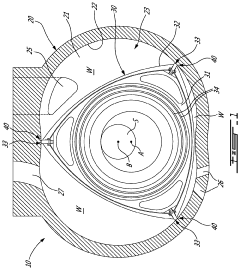
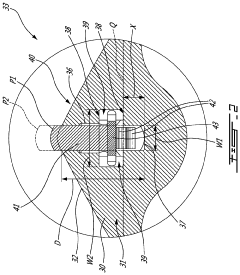
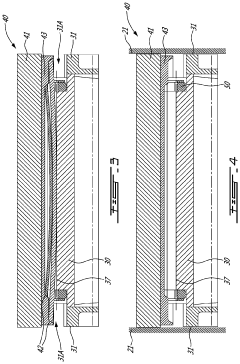
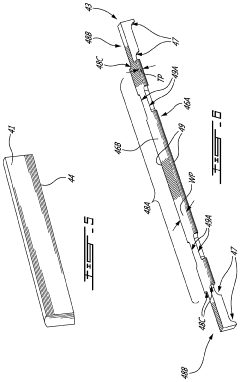
A rotary engine
PatentInactiveIN201621035262A
Innovation
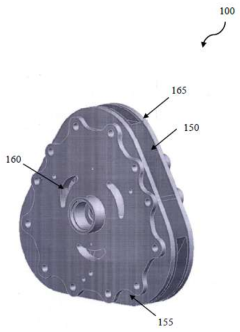
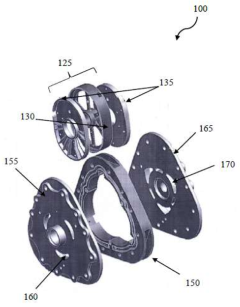
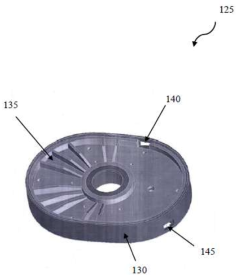
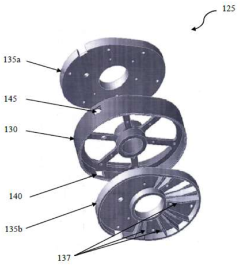
- A rotary engine design featuring a two or three lobed cycloidal profile with a shell-core structure, strengthened cores, and apex seals with leaf springs, along with a cam-type guiding mechanism and ceramic combustion chamber liners, to reduce thermal expansion, enhance sealing, and maintain continuous contact, thereby improving efficiency and reliability.
Environmental Impact and Sustainability Considerations
The development of Wankel engine alloys must be evaluated through an environmental and sustainability lens, especially as global regulations increasingly emphasize reduced emissions and sustainable manufacturing practices. Traditional Wankel engines have historically faced criticism for their higher fuel consumption and emissions compared to conventional piston engines, making environmental considerations paramount in modern alloy development.
Material selection for Wankel engine components significantly impacts the environmental footprint throughout the entire lifecycle. Lightweight alloys can reduce overall vehicle weight, thereby improving fuel efficiency and reducing carbon emissions during operation. However, the extraction and processing of rare elements often used in high-performance alloys, such as nickel, cobalt, and rare earth metals, can involve energy-intensive processes and generate substantial environmental pollution.
Recycling and end-of-life considerations must be integrated into alloy development strategies. Designing alloys with improved recyclability can significantly reduce waste and energy consumption associated with manufacturing new components. This includes developing separation techniques for composite materials and avoiding problematic material combinations that hinder recycling processes.
Manufacturing processes for specialized Wankel engine alloys also present environmental challenges. Advanced techniques like powder metallurgy and additive manufacturing offer potential benefits through reduced material waste and energy consumption compared to traditional casting and machining. However, these processes may require specialized equipment and energy-intensive operations that must be optimized for sustainability.
Emissions reduction remains a critical focus area, with alloy development directly influencing combustion efficiency and exhaust characteristics. Advanced alloys that enable higher operating temperatures can improve thermal efficiency, potentially reducing fuel consumption and associated emissions. Additionally, alloys that demonstrate superior resistance to apex seal wear can minimize oil consumption and particulate emissions, addressing one of the traditional environmental weaknesses of Wankel engines.
Life cycle assessment (LCA) methodologies should be incorporated into alloy development programs to quantify environmental impacts from raw material extraction through manufacturing, use, and eventual disposal. This holistic approach enables developers to identify environmental hotspots and prioritize improvements that deliver the greatest sustainability benefits.
Regulatory compliance represents another crucial consideration, as emissions standards continue to tighten globally. Alloy development must anticipate future regulatory requirements, particularly regarding NOx, particulate matter, and CO2 emissions. Materials that enable compliance with these standards while maintaining performance will be essential for the commercial viability of future Wankel engine applications.
Material selection for Wankel engine components significantly impacts the environmental footprint throughout the entire lifecycle. Lightweight alloys can reduce overall vehicle weight, thereby improving fuel efficiency and reducing carbon emissions during operation. However, the extraction and processing of rare elements often used in high-performance alloys, such as nickel, cobalt, and rare earth metals, can involve energy-intensive processes and generate substantial environmental pollution.
Recycling and end-of-life considerations must be integrated into alloy development strategies. Designing alloys with improved recyclability can significantly reduce waste and energy consumption associated with manufacturing new components. This includes developing separation techniques for composite materials and avoiding problematic material combinations that hinder recycling processes.
Manufacturing processes for specialized Wankel engine alloys also present environmental challenges. Advanced techniques like powder metallurgy and additive manufacturing offer potential benefits through reduced material waste and energy consumption compared to traditional casting and machining. However, these processes may require specialized equipment and energy-intensive operations that must be optimized for sustainability.
Emissions reduction remains a critical focus area, with alloy development directly influencing combustion efficiency and exhaust characteristics. Advanced alloys that enable higher operating temperatures can improve thermal efficiency, potentially reducing fuel consumption and associated emissions. Additionally, alloys that demonstrate superior resistance to apex seal wear can minimize oil consumption and particulate emissions, addressing one of the traditional environmental weaknesses of Wankel engines.
Life cycle assessment (LCA) methodologies should be incorporated into alloy development programs to quantify environmental impacts from raw material extraction through manufacturing, use, and eventual disposal. This holistic approach enables developers to identify environmental hotspots and prioritize improvements that deliver the greatest sustainability benefits.
Regulatory compliance represents another crucial consideration, as emissions standards continue to tighten globally. Alloy development must anticipate future regulatory requirements, particularly regarding NOx, particulate matter, and CO2 emissions. Materials that enable compliance with these standards while maintaining performance will be essential for the commercial viability of future Wankel engine applications.
Testing Methodologies for Wankel Engine Alloy Performance
Testing methodologies for Wankel engine alloy performance require specialized approaches due to the unique operating conditions these engines present. The triangular rotor design creates distinct thermal and mechanical stress patterns that differ significantly from conventional reciprocating engines, necessitating tailored testing protocols.
Performance evaluation begins with standardized material characterization tests including hardness testing, microstructural analysis, and chemical composition verification. These baseline assessments establish fundamental material properties before subjecting alloys to Wankel-specific conditions. X-ray diffraction (XRD) and scanning electron microscopy (SEM) provide critical insights into crystalline structures and surface morphologies that influence performance under operational stress.
Thermal cycling tests are particularly important for Wankel engine alloys due to the rapid temperature fluctuations experienced during operation. Test protocols typically involve cycling between ambient temperature and operational maximums (800-1000°C) for thousands of cycles while monitoring dimensional stability, oxidation resistance, and microstructural changes. Thermal shock resistance testing simulates the extreme temperature gradients present at different points in the epitrochoidal housing.
Tribological testing focuses on wear resistance under sliding contact conditions similar to apex seal interactions. Pin-on-disk and block-on-ring tests modified to replicate the specific sliding velocities and contact pressures of Wankel apex seals provide valuable wear data. These tests often incorporate engine oil contaminated with combustion byproducts to simulate real-world conditions.
High-temperature mechanical property testing includes creep resistance evaluation at elevated temperatures, fatigue testing under thermal-mechanical loading conditions, and stress rupture testing. These assessments are critical as Wankel housing alloys must maintain dimensional stability despite cyclic loading at high temperatures.
Corrosion resistance testing simulates exposure to combustion gases, fuel contaminants, and cooling system fluids. Accelerated corrosion tests using synthetic exhaust gas mixtures help predict long-term material degradation. Electrochemical impedance spectroscopy provides quantitative data on corrosion mechanisms and rates.
Engine dynamometer testing represents the final validation phase, where prototype components made from candidate alloys undergo real-world operation. Instrumented test engines with thermal imaging capabilities and embedded sensors monitor temperature distributions, deformation, and wear patterns during extended operation cycles. Post-test metallurgical analysis of components provides crucial feedback for alloy refinement.
Advanced non-destructive testing methods, including acoustic emission monitoring and eddy current testing, are increasingly employed to detect early signs of material fatigue or crack formation during operation, providing valuable data for predictive modeling of alloy performance.
Performance evaluation begins with standardized material characterization tests including hardness testing, microstructural analysis, and chemical composition verification. These baseline assessments establish fundamental material properties before subjecting alloys to Wankel-specific conditions. X-ray diffraction (XRD) and scanning electron microscopy (SEM) provide critical insights into crystalline structures and surface morphologies that influence performance under operational stress.
Thermal cycling tests are particularly important for Wankel engine alloys due to the rapid temperature fluctuations experienced during operation. Test protocols typically involve cycling between ambient temperature and operational maximums (800-1000°C) for thousands of cycles while monitoring dimensional stability, oxidation resistance, and microstructural changes. Thermal shock resistance testing simulates the extreme temperature gradients present at different points in the epitrochoidal housing.
Tribological testing focuses on wear resistance under sliding contact conditions similar to apex seal interactions. Pin-on-disk and block-on-ring tests modified to replicate the specific sliding velocities and contact pressures of Wankel apex seals provide valuable wear data. These tests often incorporate engine oil contaminated with combustion byproducts to simulate real-world conditions.
High-temperature mechanical property testing includes creep resistance evaluation at elevated temperatures, fatigue testing under thermal-mechanical loading conditions, and stress rupture testing. These assessments are critical as Wankel housing alloys must maintain dimensional stability despite cyclic loading at high temperatures.
Corrosion resistance testing simulates exposure to combustion gases, fuel contaminants, and cooling system fluids. Accelerated corrosion tests using synthetic exhaust gas mixtures help predict long-term material degradation. Electrochemical impedance spectroscopy provides quantitative data on corrosion mechanisms and rates.
Engine dynamometer testing represents the final validation phase, where prototype components made from candidate alloys undergo real-world operation. Instrumented test engines with thermal imaging capabilities and embedded sensors monitor temperature distributions, deformation, and wear patterns during extended operation cycles. Post-test metallurgical analysis of components provides crucial feedback for alloy refinement.
Advanced non-destructive testing methods, including acoustic emission monitoring and eddy current testing, are increasingly employed to detect early signs of material fatigue or crack formation during operation, providing valuable data for predictive modeling of alloy performance.
Unlock deeper insights with Patsnap Eureka Quick Research — get a full tech report to explore trends and direct your research. Try now!
Generate Your Research Report Instantly with AI Agent
Supercharge your innovation with Patsnap Eureka AI Agent Platform!