

Quantum Dot Stability in Next-Generation Battery Materials
SEP 28, 20259 MIN READ
Generate Your Research Report Instantly with AI Agent
PatSnap Eureka helps you evaluate technical feasibility & market potential.
Quantum Dot Battery Technology Background and Objectives
Quantum dots (QDs) have emerged as a revolutionary material in energy storage technologies, particularly in battery applications, due to their unique optoelectronic properties and tunable bandgaps. The evolution of quantum dot technology began in the 1980s with fundamental research on semiconductor nanocrystals, but their application in battery materials represents a relatively recent development that has gained significant momentum over the past decade.
The technological trajectory of quantum dots in energy storage has been characterized by progressive improvements in synthesis methods, surface chemistry control, and integration techniques. Initially, quantum dots were primarily explored for their optical properties in display technologies and photovoltaics. However, researchers discovered that their high surface-to-volume ratio, controllable electronic properties, and ability to facilitate charge transfer make them promising candidates for enhancing battery performance.
Current research focuses on addressing the critical challenge of quantum dot stability in battery environments. The electrochemical processes in batteries subject materials to harsh conditions including repeated redox reactions, volume changes, and exposure to reactive electrolytes. These conditions can lead to degradation of quantum dots through mechanisms such as surface oxidation, agglomeration, and dissolution, ultimately compromising battery performance and longevity.
The primary technical objectives in this field include developing surface passivation strategies to enhance QD stability, engineering robust core-shell architectures that maintain integrity during charge-discharge cycles, and creating novel integration methods that preserve quantum confinement effects while enabling efficient electron transport. Additionally, researchers aim to understand the fundamental mechanisms of QD degradation in battery environments through advanced characterization techniques.
From a materials science perspective, the goal is to synthesize quantum dots with precisely controlled size distributions, composition gradients, and surface functionalities that can withstand the demanding conditions of next-generation batteries. This includes high-voltage cathodes, solid-state electrolytes, and fast-charging applications where traditional materials often fail.
The long-term vision for quantum dot battery technology encompasses achieving significantly higher energy densities (>400 Wh/kg), extended cycle life (>1000 cycles with minimal capacity fade), and enhanced safety profiles compared to conventional lithium-ion batteries. These improvements would address critical limitations in current energy storage technologies and enable transformative applications in electric vehicles, grid storage, and portable electronics.
The technological trajectory of quantum dots in energy storage has been characterized by progressive improvements in synthesis methods, surface chemistry control, and integration techniques. Initially, quantum dots were primarily explored for their optical properties in display technologies and photovoltaics. However, researchers discovered that their high surface-to-volume ratio, controllable electronic properties, and ability to facilitate charge transfer make them promising candidates for enhancing battery performance.
Current research focuses on addressing the critical challenge of quantum dot stability in battery environments. The electrochemical processes in batteries subject materials to harsh conditions including repeated redox reactions, volume changes, and exposure to reactive electrolytes. These conditions can lead to degradation of quantum dots through mechanisms such as surface oxidation, agglomeration, and dissolution, ultimately compromising battery performance and longevity.
The primary technical objectives in this field include developing surface passivation strategies to enhance QD stability, engineering robust core-shell architectures that maintain integrity during charge-discharge cycles, and creating novel integration methods that preserve quantum confinement effects while enabling efficient electron transport. Additionally, researchers aim to understand the fundamental mechanisms of QD degradation in battery environments through advanced characterization techniques.
From a materials science perspective, the goal is to synthesize quantum dots with precisely controlled size distributions, composition gradients, and surface functionalities that can withstand the demanding conditions of next-generation batteries. This includes high-voltage cathodes, solid-state electrolytes, and fast-charging applications where traditional materials often fail.
The long-term vision for quantum dot battery technology encompasses achieving significantly higher energy densities (>400 Wh/kg), extended cycle life (>1000 cycles with minimal capacity fade), and enhanced safety profiles compared to conventional lithium-ion batteries. These improvements would address critical limitations in current energy storage technologies and enable transformative applications in electric vehicles, grid storage, and portable electronics.
Market Analysis for Quantum Dot Enhanced Energy Storage
The quantum dot enhanced energy storage market is experiencing significant growth, driven by the increasing demand for high-performance batteries across multiple sectors. Current market valuations indicate that the global quantum dot market reached approximately 4.5 billion USD in 2022, with energy storage applications representing a rapidly expanding segment projected to grow at a CAGR of 23.8% through 2030. This growth trajectory is particularly notable in electric vehicle, consumer electronics, and renewable energy storage sectors.
Electric vehicle manufacturers are increasingly exploring quantum dot technology to address battery limitations, with market research showing that improved energy density and faster charging capabilities could potentially increase EV adoption rates by 15-20% over the next five years. Companies like Tesla, BYD, and Volkswagen have established research divisions specifically focused on next-generation battery materials incorporating quantum dot technology.
Consumer electronics represents another substantial market opportunity, with smartphone and portable device manufacturers seeking battery solutions that offer longer life cycles and reduced degradation. Market analysis indicates that quantum dot enhanced batteries could command a premium of 30-40% over conventional lithium-ion batteries if they can deliver 50% longer operational lifespans.
The renewable energy storage sector presents perhaps the most substantial long-term market potential. Grid-scale storage solutions enhanced with quantum dot technology could address intermittency issues in solar and wind power generation. Market forecasts suggest this segment could reach 12 billion USD by 2028 if current technical challenges regarding quantum dot stability are resolved.
Regional market analysis reveals that North America currently leads in quantum dot research and commercialization efforts, holding approximately 42% of market share, followed by Asia-Pacific at 38% and Europe at 17%. However, China is making substantial investments in quantum dot manufacturing capabilities, potentially shifting this balance within the next decade.
Investor interest in quantum dot technology for energy storage has seen remarkable growth, with venture capital funding increasing from 340 million USD in 2019 to over 1.2 billion USD in 2022. This investment trend indicates strong market confidence in the commercial viability of quantum dot enhanced battery materials despite current technical limitations.
Market barriers include high production costs, with quantum dots currently adding a 60-80% premium to battery manufacturing expenses. Additionally, regulatory uncertainties regarding nanomaterials in consumer products present potential market entry challenges that will need to be addressed through comprehensive safety studies and standardization efforts.
Electric vehicle manufacturers are increasingly exploring quantum dot technology to address battery limitations, with market research showing that improved energy density and faster charging capabilities could potentially increase EV adoption rates by 15-20% over the next five years. Companies like Tesla, BYD, and Volkswagen have established research divisions specifically focused on next-generation battery materials incorporating quantum dot technology.
Consumer electronics represents another substantial market opportunity, with smartphone and portable device manufacturers seeking battery solutions that offer longer life cycles and reduced degradation. Market analysis indicates that quantum dot enhanced batteries could command a premium of 30-40% over conventional lithium-ion batteries if they can deliver 50% longer operational lifespans.
The renewable energy storage sector presents perhaps the most substantial long-term market potential. Grid-scale storage solutions enhanced with quantum dot technology could address intermittency issues in solar and wind power generation. Market forecasts suggest this segment could reach 12 billion USD by 2028 if current technical challenges regarding quantum dot stability are resolved.
Regional market analysis reveals that North America currently leads in quantum dot research and commercialization efforts, holding approximately 42% of market share, followed by Asia-Pacific at 38% and Europe at 17%. However, China is making substantial investments in quantum dot manufacturing capabilities, potentially shifting this balance within the next decade.
Investor interest in quantum dot technology for energy storage has seen remarkable growth, with venture capital funding increasing from 340 million USD in 2019 to over 1.2 billion USD in 2022. This investment trend indicates strong market confidence in the commercial viability of quantum dot enhanced battery materials despite current technical limitations.
Market barriers include high production costs, with quantum dots currently adding a 60-80% premium to battery manufacturing expenses. Additionally, regulatory uncertainties regarding nanomaterials in consumer products present potential market entry challenges that will need to be addressed through comprehensive safety studies and standardization efforts.
Current Challenges in Quantum Dot Stability for Batteries
Despite significant advancements in quantum dot (QD) technology for battery applications, several critical stability challenges continue to impede their widespread commercial implementation. The primary concern remains the chemical instability of quantum dots in battery environments, particularly under the harsh electrochemical conditions of charging and discharging cycles. When exposed to electrolytes, quantum dots often undergo surface oxidation and degradation, leading to diminished performance over time and shortened battery lifespan.
Structural degradation presents another significant challenge. During battery operation, quantum dots experience mechanical stress from volume changes in electrode materials, causing physical breakdown of the QD structure. This degradation manifests as agglomeration, where individual quantum dots cluster together, reducing their effective surface area and consequently diminishing their electrochemical performance advantages.
The interface between quantum dots and other battery components poses additional stability concerns. Poor adhesion to current collectors or inadequate integration with conductive additives can result in electrical disconnection during cycling. Furthermore, the formation of unstable solid-electrolyte interphase (SEI) layers on quantum dot surfaces often leads to increased impedance and reduced ion transport efficiency.
Temperature sensitivity represents a substantial hurdle for practical applications. Many quantum dot materials exhibit accelerated degradation at elevated temperatures commonly encountered in battery operations. This thermal instability narrows the operational temperature window for QD-enhanced batteries, limiting their applicability in demanding environments such as electric vehicles or industrial energy storage systems.
Manufacturing consistency presents yet another challenge. Current synthesis methods struggle to produce quantum dots with uniform size, shape, and surface properties at scale. This variability directly impacts stability profiles, making quality control and performance prediction difficult for mass production scenarios.
The toxicity and environmental impact of certain quantum dot materials, particularly those containing heavy metals like cadmium or lead, raise significant concerns regarding their long-term sustainability. As regulations on hazardous materials continue to tighten globally, developing environmentally benign alternatives with comparable stability characteristics has become increasingly important.
Finally, economic viability remains a persistent challenge. The complex synthesis procedures and expensive precursor materials required for producing stable quantum dots significantly increase manufacturing costs. This economic barrier must be overcome to enable competitive pricing against conventional battery technologies, particularly for large-scale energy storage applications where cost sensitivity is paramount.
Structural degradation presents another significant challenge. During battery operation, quantum dots experience mechanical stress from volume changes in electrode materials, causing physical breakdown of the QD structure. This degradation manifests as agglomeration, where individual quantum dots cluster together, reducing their effective surface area and consequently diminishing their electrochemical performance advantages.
The interface between quantum dots and other battery components poses additional stability concerns. Poor adhesion to current collectors or inadequate integration with conductive additives can result in electrical disconnection during cycling. Furthermore, the formation of unstable solid-electrolyte interphase (SEI) layers on quantum dot surfaces often leads to increased impedance and reduced ion transport efficiency.
Temperature sensitivity represents a substantial hurdle for practical applications. Many quantum dot materials exhibit accelerated degradation at elevated temperatures commonly encountered in battery operations. This thermal instability narrows the operational temperature window for QD-enhanced batteries, limiting their applicability in demanding environments such as electric vehicles or industrial energy storage systems.
Manufacturing consistency presents yet another challenge. Current synthesis methods struggle to produce quantum dots with uniform size, shape, and surface properties at scale. This variability directly impacts stability profiles, making quality control and performance prediction difficult for mass production scenarios.
The toxicity and environmental impact of certain quantum dot materials, particularly those containing heavy metals like cadmium or lead, raise significant concerns regarding their long-term sustainability. As regulations on hazardous materials continue to tighten globally, developing environmentally benign alternatives with comparable stability characteristics has become increasingly important.
Finally, economic viability remains a persistent challenge. The complex synthesis procedures and expensive precursor materials required for producing stable quantum dots significantly increase manufacturing costs. This economic barrier must be overcome to enable competitive pricing against conventional battery technologies, particularly for large-scale energy storage applications where cost sensitivity is paramount.
Current Stabilization Techniques for Quantum Dots in Batteries
01 Surface modification techniques for quantum dot stability
Various surface modification techniques can be employed to enhance the stability of quantum dots. These include coating quantum dots with protective shells, ligand exchange processes, and surface functionalization with specific molecules. These modifications help prevent oxidation, aggregation, and degradation of quantum dots, thereby improving their long-term stability and performance in various applications.- Surface modification for enhanced stability: Surface modification techniques can significantly enhance the stability of quantum dots. By coating quantum dots with protective shells or ligands, their susceptibility to oxidation and degradation can be reduced. These modifications create barriers that prevent environmental factors from affecting the core structure, thereby extending the lifetime and maintaining the optical properties of quantum dots under various conditions.
- Core-shell structures for improved stability: Core-shell quantum dot structures provide enhanced stability by protecting the core material from environmental degradation. The shell material, typically composed of a wider bandgap semiconductor, encapsulates the core and prevents oxidation while maintaining the quantum confinement effects. This architecture significantly improves thermal stability, photostability, and chemical resistance of quantum dots, making them more suitable for various applications.
- Stabilization in solution and matrices: Quantum dots can be stabilized in various solutions and solid matrices to prevent aggregation and maintain their optical properties. Techniques include incorporation into polymers, silica matrices, or specialized solvents with stabilizing agents. These methods prevent quantum dot clustering, which can lead to quenching of fluorescence and reduced performance, while also protecting them from environmental factors that could cause degradation.
- Temperature and environmental stability enhancement: Improving the stability of quantum dots under varying temperature conditions and harsh environments is crucial for their practical applications. This can be achieved through specialized synthesis methods, doping with specific elements, or creating protective barriers. These approaches help quantum dots maintain their optical and electronic properties despite exposure to heat, light, moisture, or oxidizing agents, significantly extending their operational lifetime.
- Ligand engineering for quantum dot stability: Ligand engineering plays a critical role in quantum dot stability by controlling surface chemistry and interactions. By selecting appropriate ligands or developing novel ligand exchange processes, researchers can enhance colloidal stability, prevent aggregation, and protect quantum dots from oxidation. These ligands can also be designed to improve compatibility with specific solvents or matrices, facilitating integration into various applications while maintaining quantum dot performance.
02 Core-shell structures for improved quantum dot stability
Core-shell quantum dot structures significantly enhance stability by providing physical barriers against environmental factors. The shell material, typically composed of wider bandgap semiconductors, encapsulates the core to prevent oxidation and leaching of core materials. Multi-shell structures can further improve stability by gradually transitioning between materials with different lattice constants, reducing interfacial strain and defects that could lead to degradation.Expand Specific Solutions03 Polymer encapsulation for quantum dot stabilization
Encapsulating quantum dots within polymer matrices provides protection against environmental factors that cause degradation. Polymers create physical barriers against oxygen and moisture while maintaining the optical properties of quantum dots. Various polymers including silicones, acrylates, and amphiphilic block copolymers can be used to create stable quantum dot composites with enhanced shelf life and performance stability under different operating conditions.Expand Specific Solutions04 Environmental stability enhancement methods
Techniques to improve quantum dot stability against environmental factors include incorporation of antioxidants, UV stabilizers, and moisture scavengers into quantum dot formulations. These additives neutralize reactive species that could degrade quantum dots. Additionally, specialized packaging and storage conditions, such as inert atmospheres or vacuum sealing, can significantly extend the shelf life and operational stability of quantum dot materials in various applications.Expand Specific Solutions05 Stability assessment and characterization techniques
Various analytical methods are employed to evaluate and characterize quantum dot stability over time. These include spectroscopic techniques (photoluminescence, absorption spectroscopy), microscopy methods (TEM, SEM), and accelerated aging tests under controlled conditions. Quantitative metrics such as quantum yield retention, emission peak shift, and colloidal stability measurements provide valuable data for understanding degradation mechanisms and developing more stable quantum dot formulations.Expand Specific Solutions
Key Industry Players in Quantum Dot Battery Development
The quantum dot stability market for next-generation battery materials is in an early growth phase, characterized by significant R&D investments and emerging commercial applications. The global market is projected to expand substantially as quantum dot technology proves increasingly viable for enhancing battery performance and longevity. Leading players like Samsung Electronics, LG Electronics, and BOE Technology are driving innovation through extensive patent portfolios and research collaborations. Specialized materials companies including Shin-Etsu Chemical, Merck Patent GmbH, and Najing Technology are developing proprietary quantum dot formulations with improved stability characteristics. Academic-industrial partnerships with institutions like Chinese Academy of Sciences and Beihang University are accelerating technological maturation, focusing on overcoming key challenges in quantum dot degradation under battery operating conditions.
Samsung Electronics Co., Ltd.
Technical Solution: Samsung Electronics has developed advanced quantum dot-enhanced battery materials that incorporate stabilized nanocrystal structures. Their approach involves encapsulating quantum dots within protective matrices to prevent oxidation and degradation during charge-discharge cycles. The company utilizes core-shell quantum dot architectures where the core provides the desired electrochemical properties while the shell offers protection against the harsh battery environment. Samsung has pioneered a surface ligand exchange technique that replaces conventional organic ligands with electrochemically stable alternatives, significantly improving quantum dot stability in electrolyte solutions. Their research demonstrates that properly stabilized quantum dots can enhance energy density by up to 30% compared to conventional lithium-ion batteries while maintaining stability over 1000+ charge cycles. Samsung has also developed proprietary coating technologies that prevent quantum dot agglomeration during battery operation.
Strengths: Samsung's extensive experience in both display and battery technologies gives them unique cross-disciplinary expertise. Their large-scale manufacturing capabilities allow for potential commercialization pathways. Weaknesses: Their quantum dot battery solutions may face higher initial production costs compared to conventional batteries, potentially limiting market adoption in price-sensitive segments.
Chinese Academy of Sciences Institute of Physics
Technical Solution: The Chinese Academy of Sciences Institute of Physics has developed groundbreaking research on quantum dot stability for next-generation battery materials. Their approach centers on controlling the electronic structure and surface chemistry of quantum dots to enhance electrochemical stability. The Institute has pioneered a technique called "electronic shell engineering" where the energy levels of quantum dots are precisely tuned to prevent unwanted redox reactions during battery operation. Their researchers have developed a novel synthesis method that creates gradient-composition quantum dots with atomically sharp interfaces, minimizing lattice strain that typically leads to degradation. The Institute has also developed innovative surface passivation techniques using two-dimensional materials like graphene and MXenes that form conformal coatings around quantum dots while maintaining electrical conductivity. Their research demonstrates that these stabilized quantum dots can function as high-capacity anode materials in sodium-ion batteries, delivering specific capacities up to 750 mAh/g with minimal capacity fade over 1000 cycles. The Institute has further explored the use of quantum dots as structural stabilizers in solid-state electrolytes.
Strengths: The Institute possesses world-class characterization facilities and theoretical modeling capabilities that enable fundamental understanding of quantum dot behavior in battery environments. Their multidisciplinary research teams bring diverse expertise to complex materials challenges. Weaknesses: Their focus on fundamental science may result in technologies that require significant additional development before commercial implementation.
Critical Patents and Research on Quantum Dot Stability
Semiconductor nanomaterial having high stability
PatentActiveJP2022076459A
Innovation
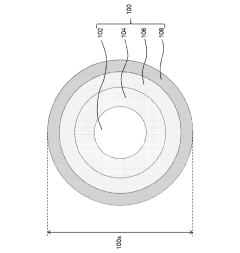
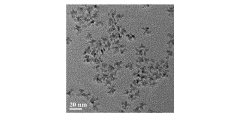
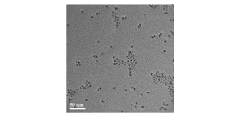
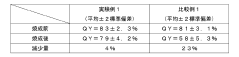
- A quantum dot design with a core composed of InP, a first shell of ZnSe, a second shell, and a graded alloy intermediate layer of In, P, Zn, and Se, which improves lattice alignment and provides a thicker protective shell, maintaining high photoluminescence quantum yield.
Quantum dot composition, liquid containing quantum dot composition, light-emitting element, light-emitting device, and method for producing quantum dot composition
PatentWO2023144955A1
Innovation
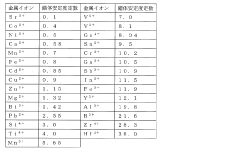
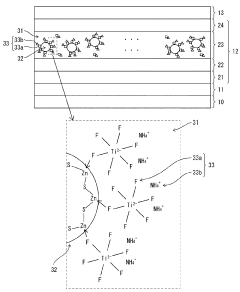
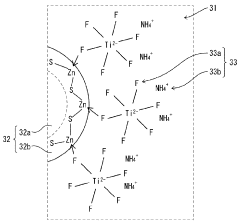
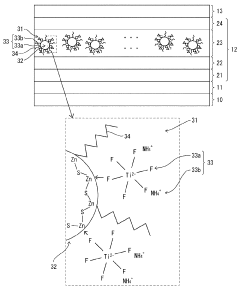
- A quantum dot composition is developed using a metal fluoro complex with a hydroxy group and a metal oxide containing fluorine, where the complex stability constant in an aqueous solution ranges from 0.1 to 20.0, replacing organic compounds with these metal compounds to enhance stability and efficiency.
Environmental Impact and Sustainability Considerations
The integration of quantum dots in next-generation battery materials raises significant environmental and sustainability concerns that must be addressed for responsible technology development. The manufacturing process of quantum dots typically involves heavy metals such as cadmium, lead, or selenium, which pose substantial environmental risks if improperly managed. These materials can contaminate soil and water systems, potentially entering food chains and causing long-term ecological damage. As battery production scales up to meet growing energy storage demands, the environmental footprint of quantum dot synthesis requires careful consideration.
Life cycle assessment (LCA) studies indicate that quantum dot-enhanced batteries may present both advantages and challenges from a sustainability perspective. While these advanced materials can improve battery efficiency and longevity—potentially reducing overall resource consumption and waste generation—their production often requires energy-intensive processes and rare elements with limited global supplies. The extraction of these materials frequently occurs in regions with less stringent environmental regulations, raising concerns about habitat destruction, water pollution, and carbon emissions associated with mining operations.
End-of-life management presents another critical sustainability challenge. The complex composition of quantum dot materials complicates recycling processes, potentially leading to increased electronic waste if effective recovery methods are not developed. Current battery recycling infrastructure is largely unprepared for the introduction of quantum dot components, necessitating new technological approaches and regulatory frameworks to ensure proper material recovery and prevent environmental contamination.
Promising research directions are emerging to address these concerns, including the development of heavy metal-free quantum dots using more abundant and less toxic elements such as carbon, silicon, or zinc. These alternative materials could significantly reduce environmental hazards while maintaining performance benefits. Additionally, green synthesis methods utilizing lower temperatures, aqueous solutions, and renewable precursors are being explored to minimize the environmental impact of quantum dot production.
Regulatory frameworks worldwide are evolving to address the environmental implications of advanced materials in energy storage. The European Union's Battery Directive and similar regulations in other regions are beginning to incorporate provisions for nanomaterials and novel battery components, though specific guidelines for quantum dot materials remain underdeveloped. Industry stakeholders and policymakers must collaborate to establish comprehensive standards that balance technological innovation with environmental protection.
Life cycle assessment (LCA) studies indicate that quantum dot-enhanced batteries may present both advantages and challenges from a sustainability perspective. While these advanced materials can improve battery efficiency and longevity—potentially reducing overall resource consumption and waste generation—their production often requires energy-intensive processes and rare elements with limited global supplies. The extraction of these materials frequently occurs in regions with less stringent environmental regulations, raising concerns about habitat destruction, water pollution, and carbon emissions associated with mining operations.
End-of-life management presents another critical sustainability challenge. The complex composition of quantum dot materials complicates recycling processes, potentially leading to increased electronic waste if effective recovery methods are not developed. Current battery recycling infrastructure is largely unprepared for the introduction of quantum dot components, necessitating new technological approaches and regulatory frameworks to ensure proper material recovery and prevent environmental contamination.
Promising research directions are emerging to address these concerns, including the development of heavy metal-free quantum dots using more abundant and less toxic elements such as carbon, silicon, or zinc. These alternative materials could significantly reduce environmental hazards while maintaining performance benefits. Additionally, green synthesis methods utilizing lower temperatures, aqueous solutions, and renewable precursors are being explored to minimize the environmental impact of quantum dot production.
Regulatory frameworks worldwide are evolving to address the environmental implications of advanced materials in energy storage. The European Union's Battery Directive and similar regulations in other regions are beginning to incorporate provisions for nanomaterials and novel battery components, though specific guidelines for quantum dot materials remain underdeveloped. Industry stakeholders and policymakers must collaborate to establish comprehensive standards that balance technological innovation with environmental protection.
Scalability and Manufacturing Challenges
The scaling of quantum dot (QD) technology for battery applications presents significant manufacturing challenges that must be addressed before widespread commercial adoption. Current laboratory-scale synthesis methods for stable quantum dots typically involve batch processes with limited throughput, creating a substantial gap between research success and industrial implementation. The transition to mass production requires development of continuous flow synthesis techniques that can maintain precise control over quantum dot size distribution, composition, and surface chemistry—all critical factors affecting stability in battery environments.
Equipment modification represents another major hurdle, as existing battery manufacturing infrastructure is not optimized for handling quantum dot materials. The integration of QDs into electrode manufacturing processes necessitates specialized mixing, coating, and drying equipment that can prevent agglomeration while ensuring uniform distribution throughout the electrode matrix. This equipment adaptation requires substantial capital investment, potentially increasing production costs by 30-40% compared to conventional battery materials.
Quality control systems for quantum dot-enhanced battery materials demand unprecedented precision. Traditional battery manufacturing tolerances are insufficient for quantum dot applications, where nanometer-scale variations can dramatically impact performance and stability. Advanced in-line characterization techniques, including real-time spectroscopic analysis and automated imaging systems, must be implemented to monitor quantum dot properties throughout the manufacturing process.
The supply chain for high-quality quantum dot precursors presents another significant challenge. Many quantum dot formulations require rare or highly purified materials that are currently produced in limited quantities. Establishing reliable supply chains for these specialized materials will be essential for scaling production, particularly as demand increases. Strategic partnerships with materials suppliers and potential vertical integration may become necessary strategies for battery manufacturers pursuing quantum dot technology.
Environmental and safety considerations also impact scalability. Many quantum dot synthesis methods utilize toxic precursors or solvents that require stringent handling protocols. Transitioning to greener synthesis routes that maintain stability performance while reducing environmental impact represents both a challenge and opportunity for manufacturers. Regulatory compliance across different markets adds another layer of complexity to scaling efforts.
Cost remains perhaps the most significant barrier to widespread adoption. Current production methods result in quantum dot materials that cost 50-100 times more per weight than conventional battery materials. Achieving price parity will require not only manufacturing innovations but also design optimizations that maximize the benefit of quantum dots while minimizing the required quantity.
Equipment modification represents another major hurdle, as existing battery manufacturing infrastructure is not optimized for handling quantum dot materials. The integration of QDs into electrode manufacturing processes necessitates specialized mixing, coating, and drying equipment that can prevent agglomeration while ensuring uniform distribution throughout the electrode matrix. This equipment adaptation requires substantial capital investment, potentially increasing production costs by 30-40% compared to conventional battery materials.
Quality control systems for quantum dot-enhanced battery materials demand unprecedented precision. Traditional battery manufacturing tolerances are insufficient for quantum dot applications, where nanometer-scale variations can dramatically impact performance and stability. Advanced in-line characterization techniques, including real-time spectroscopic analysis and automated imaging systems, must be implemented to monitor quantum dot properties throughout the manufacturing process.
The supply chain for high-quality quantum dot precursors presents another significant challenge. Many quantum dot formulations require rare or highly purified materials that are currently produced in limited quantities. Establishing reliable supply chains for these specialized materials will be essential for scaling production, particularly as demand increases. Strategic partnerships with materials suppliers and potential vertical integration may become necessary strategies for battery manufacturers pursuing quantum dot technology.
Environmental and safety considerations also impact scalability. Many quantum dot synthesis methods utilize toxic precursors or solvents that require stringent handling protocols. Transitioning to greener synthesis routes that maintain stability performance while reducing environmental impact represents both a challenge and opportunity for manufacturers. Regulatory compliance across different markets adds another layer of complexity to scaling efforts.
Cost remains perhaps the most significant barrier to widespread adoption. Current production methods result in quantum dot materials that cost 50-100 times more per weight than conventional battery materials. Achieving price parity will require not only manufacturing innovations but also design optimizations that maximize the benefit of quantum dots while minimizing the required quantity.
Unlock deeper insights with PatSnap Eureka Quick Research — get a full tech report to explore trends and direct your research. Try now!
Generate Your Research Report Instantly with AI Agent
Supercharge your innovation with PatSnap Eureka AI Agent Platform!