Wankel Engine Development in Autonomous Vessels
AUG 26, 202510 MIN READ
Generate Your Research Report Instantly with AI Agent
PatSnap Eureka helps you evaluate technical feasibility & market potential.
Wankel Engine Evolution and Objectives in Maritime Applications
The Wankel rotary engine, first patented by Felix Wankel in 1929, represents a significant departure from conventional reciprocating piston engines. Its evolution in maritime applications has followed a distinct trajectory, beginning with experimental implementations in the 1960s when NSU and Mazda pioneered commercial rotary engine development. The compact design, high power-to-weight ratio, and mechanical simplicity made these engines particularly attractive for specialized marine applications where space optimization is critical.
The 1970s and 1980s witnessed limited adoption in small watercraft and auxiliary power units for larger vessels, though widespread maritime implementation was constrained by fuel efficiency concerns and durability issues in saltwater environments. Notably, the oil crisis of the 1970s temporarily diminished interest in rotary technology due to its higher fuel consumption compared to conventional diesel engines.
Recent technological advancements have revitalized interest in Wankel engines for maritime applications, particularly in the context of autonomous vessels. Modern materials science has addressed historical challenges related to apex seal wear and housing distortion, while electronic engine management systems have significantly improved fuel efficiency and emissions performance. These developments align with the maritime industry's increasing focus on reduced maintenance requirements and operational reliability for unmanned systems.
The primary objective for Wankel engine development in autonomous maritime vessels centers on creating power systems that maximize operational range while minimizing maintenance interventions. This aligns perfectly with the rotary engine's inherent advantages: fewer moving parts, smoother operation with minimal vibration, and compact packaging that allows for flexible vessel design. Additionally, the engine's favorable power-to-weight ratio enables greater payload capacity or extended range capabilities for autonomous missions.
Secondary objectives include developing hybrid-electric systems that leverage the Wankel engine's efficient operation at constant RPM, potentially serving as range extenders for primarily electric propulsion systems. This approach addresses both environmental concerns and operational efficiency requirements. Furthermore, research aims to optimize rotary engines for alternative fuels, including hydrogen and biofuels, positioning this technology within the broader maritime decarbonization agenda.
The technological roadmap for Wankel engines in autonomous vessels also emphasizes advanced monitoring capabilities, enabling predictive maintenance through AI-driven analytics. This feature is particularly valuable for vessels operating in remote locations where traditional maintenance access is limited or impossible. The evolution trajectory suggests convergence with IoT technologies to create self-diagnosing power systems that can adapt operational parameters based on mission requirements and environmental conditions.
The 1970s and 1980s witnessed limited adoption in small watercraft and auxiliary power units for larger vessels, though widespread maritime implementation was constrained by fuel efficiency concerns and durability issues in saltwater environments. Notably, the oil crisis of the 1970s temporarily diminished interest in rotary technology due to its higher fuel consumption compared to conventional diesel engines.
Recent technological advancements have revitalized interest in Wankel engines for maritime applications, particularly in the context of autonomous vessels. Modern materials science has addressed historical challenges related to apex seal wear and housing distortion, while electronic engine management systems have significantly improved fuel efficiency and emissions performance. These developments align with the maritime industry's increasing focus on reduced maintenance requirements and operational reliability for unmanned systems.
The primary objective for Wankel engine development in autonomous maritime vessels centers on creating power systems that maximize operational range while minimizing maintenance interventions. This aligns perfectly with the rotary engine's inherent advantages: fewer moving parts, smoother operation with minimal vibration, and compact packaging that allows for flexible vessel design. Additionally, the engine's favorable power-to-weight ratio enables greater payload capacity or extended range capabilities for autonomous missions.
Secondary objectives include developing hybrid-electric systems that leverage the Wankel engine's efficient operation at constant RPM, potentially serving as range extenders for primarily electric propulsion systems. This approach addresses both environmental concerns and operational efficiency requirements. Furthermore, research aims to optimize rotary engines for alternative fuels, including hydrogen and biofuels, positioning this technology within the broader maritime decarbonization agenda.
The technological roadmap for Wankel engines in autonomous vessels also emphasizes advanced monitoring capabilities, enabling predictive maintenance through AI-driven analytics. This feature is particularly valuable for vessels operating in remote locations where traditional maintenance access is limited or impossible. The evolution trajectory suggests convergence with IoT technologies to create self-diagnosing power systems that can adapt operational parameters based on mission requirements and environmental conditions.
Market Analysis for Rotary Engines in Autonomous Vessels
The global market for rotary engines in autonomous vessels is experiencing a significant transformation, driven by the increasing demand for efficient, compact, and reliable propulsion systems. The Wankel engine, with its unique rotary design, presents a compelling alternative to traditional piston engines in this emerging sector. Current market valuations indicate that the autonomous vessel industry is growing at approximately 12% annually, with propulsion systems representing about 30% of the total vessel cost.
Market research reveals distinct segments within the autonomous vessel sector that could benefit from Wankel engine technology. The military and defense sector currently dominates, accounting for roughly 45% of the market share due to the engine's high power-to-weight ratio and reduced acoustic signature. Commercial applications, including shipping and offshore operations, represent approximately 35% of the market, while research and exploration vessels constitute the remaining 20%.
Regional analysis shows North America leading the market with substantial investments in autonomous naval technologies, followed closely by Europe and Asia-Pacific regions. The European market demonstrates particular interest in environmentally compliant propulsion systems, creating opportunities for advanced rotary engine designs with improved emissions profiles. The Asia-Pacific region, meanwhile, shows the highest growth potential, driven by expanding maritime activities and increasing defense budgets in countries like China, Japan, and South Korea.
Customer demand patterns indicate a strong preference for propulsion systems that offer operational advantages in unmanned environments. Key requirements include extended maintenance intervals, fuel flexibility, and compact design – all areas where properly developed Wankel engines could excel. Market surveys suggest that potential customers are willing to pay a premium of up to 20% for propulsion systems that significantly reduce maintenance requirements and increase operational range.
Competitive analysis reveals limited direct competition in the rotary engine space for autonomous vessels, with most competitors focusing on conventional diesel engines, gas turbines, or emerging electric propulsion systems. This presents a potential market opportunity, though barriers to entry include the need for substantial R&D investment and overcoming historical concerns about rotary engine reliability and fuel efficiency.
Market forecasts project that rotary engines could capture up to 15% of the autonomous vessel propulsion market within the next decade, contingent upon successful demonstration of reliability improvements and fuel efficiency enhancements. The total addressable market is expected to reach significant value as autonomous vessel deployment accelerates across military, commercial, and research applications.
Market research reveals distinct segments within the autonomous vessel sector that could benefit from Wankel engine technology. The military and defense sector currently dominates, accounting for roughly 45% of the market share due to the engine's high power-to-weight ratio and reduced acoustic signature. Commercial applications, including shipping and offshore operations, represent approximately 35% of the market, while research and exploration vessels constitute the remaining 20%.
Regional analysis shows North America leading the market with substantial investments in autonomous naval technologies, followed closely by Europe and Asia-Pacific regions. The European market demonstrates particular interest in environmentally compliant propulsion systems, creating opportunities for advanced rotary engine designs with improved emissions profiles. The Asia-Pacific region, meanwhile, shows the highest growth potential, driven by expanding maritime activities and increasing defense budgets in countries like China, Japan, and South Korea.
Customer demand patterns indicate a strong preference for propulsion systems that offer operational advantages in unmanned environments. Key requirements include extended maintenance intervals, fuel flexibility, and compact design – all areas where properly developed Wankel engines could excel. Market surveys suggest that potential customers are willing to pay a premium of up to 20% for propulsion systems that significantly reduce maintenance requirements and increase operational range.
Competitive analysis reveals limited direct competition in the rotary engine space for autonomous vessels, with most competitors focusing on conventional diesel engines, gas turbines, or emerging electric propulsion systems. This presents a potential market opportunity, though barriers to entry include the need for substantial R&D investment and overcoming historical concerns about rotary engine reliability and fuel efficiency.
Market forecasts project that rotary engines could capture up to 15% of the autonomous vessel propulsion market within the next decade, contingent upon successful demonstration of reliability improvements and fuel efficiency enhancements. The total addressable market is expected to reach significant value as autonomous vessel deployment accelerates across military, commercial, and research applications.
Technical Challenges and Global Development Status
The global development of Wankel engines for autonomous vessels faces significant technical challenges despite its promising potential. Currently, the technology remains in early adoption phases across maritime applications, with research centers in Germany, Japan, and the United States leading development efforts. The rotary engine's compact design and high power-to-weight ratio make it theoretically ideal for marine autonomous systems, yet practical implementation has been limited.
Primary technical challenges include fuel efficiency limitations, with Wankel engines typically consuming 15-20% more fuel than comparable piston engines. This inefficiency stems from the fundamental geometry of the rotor housing, creating suboptimal combustion chamber shapes and problematic sealing at the rotor tips. These sealing issues represent perhaps the most persistent technical obstacle, as the high-temperature, high-pressure environment accelerates wear on apex seals, reducing engine longevity and reliability—critical factors for autonomous vessel operations.
Emissions compliance presents another significant hurdle. Current Wankel designs struggle to meet increasingly stringent international maritime emissions standards, particularly NOx and particulate matter regulations. The inherent combustion characteristics of rotary engines create higher hydrocarbon emissions, requiring sophisticated aftertreatment systems that add weight and complexity—counteracting the engine's primary advantages.
Heat management remains problematic in marine applications. The concentrated thermal loads in Wankel engines require advanced cooling systems, particularly challenging in the confined spaces of autonomous vessels where weight distribution and balance are critical. Recent developments in ceramic composite materials show promise for addressing these thermal issues, but implementation costs remain prohibitive for mass production.
Geographically, Japan maintains leadership in marine Wankel applications through Mazda's continued investment in rotary technology, while German engineering firms have focused on specialized small-displacement applications. North American development has centered on hybrid Wankel systems that combine traditional rotary mechanics with electric propulsion to mitigate efficiency concerns.
Recent technological breakthroughs include direct injection systems specifically designed for rotary geometries, reducing fuel consumption by approximately 8% in prototype testing. Advanced computational fluid dynamics modeling has improved rotor housing designs, addressing some sealing and combustion efficiency issues. Additionally, novel materials science applications, particularly silicon carbide and carbon-fiber reinforced ceramics, show promise for extending apex seal life by up to 300% in laboratory conditions.
Despite these advances, the technology remains at TRL 5-6 (Technology Readiness Level) for autonomous vessel applications, with significant engineering challenges to overcome before widespread commercial adoption becomes viable.
Primary technical challenges include fuel efficiency limitations, with Wankel engines typically consuming 15-20% more fuel than comparable piston engines. This inefficiency stems from the fundamental geometry of the rotor housing, creating suboptimal combustion chamber shapes and problematic sealing at the rotor tips. These sealing issues represent perhaps the most persistent technical obstacle, as the high-temperature, high-pressure environment accelerates wear on apex seals, reducing engine longevity and reliability—critical factors for autonomous vessel operations.
Emissions compliance presents another significant hurdle. Current Wankel designs struggle to meet increasingly stringent international maritime emissions standards, particularly NOx and particulate matter regulations. The inherent combustion characteristics of rotary engines create higher hydrocarbon emissions, requiring sophisticated aftertreatment systems that add weight and complexity—counteracting the engine's primary advantages.
Heat management remains problematic in marine applications. The concentrated thermal loads in Wankel engines require advanced cooling systems, particularly challenging in the confined spaces of autonomous vessels where weight distribution and balance are critical. Recent developments in ceramic composite materials show promise for addressing these thermal issues, but implementation costs remain prohibitive for mass production.
Geographically, Japan maintains leadership in marine Wankel applications through Mazda's continued investment in rotary technology, while German engineering firms have focused on specialized small-displacement applications. North American development has centered on hybrid Wankel systems that combine traditional rotary mechanics with electric propulsion to mitigate efficiency concerns.
Recent technological breakthroughs include direct injection systems specifically designed for rotary geometries, reducing fuel consumption by approximately 8% in prototype testing. Advanced computational fluid dynamics modeling has improved rotor housing designs, addressing some sealing and combustion efficiency issues. Additionally, novel materials science applications, particularly silicon carbide and carbon-fiber reinforced ceramics, show promise for extending apex seal life by up to 300% in laboratory conditions.
Despite these advances, the technology remains at TRL 5-6 (Technology Readiness Level) for autonomous vessel applications, with significant engineering challenges to overcome before widespread commercial adoption becomes viable.
Current Wankel Engine Solutions for Marine Environments
01 Wankel Engine Design and Structure
The Wankel engine features a unique rotary design with a triangular rotor that revolves inside an epitrochoid-shaped housing. This design eliminates the need for conventional pistons, connecting rods, and crankshafts found in reciprocating engines. The rotor creates three separate chambers that continuously perform the four-stroke cycle as it rotates, resulting in smoother operation and higher power-to-weight ratio compared to traditional piston engines.- Wankel Engine Design and Structure: The Wankel engine features a unique rotary design with a triangular rotor that revolves within an epitrochoid-shaped housing. This design eliminates the need for conventional reciprocating pistons, resulting in fewer moving parts, smoother operation, and higher power-to-weight ratio compared to traditional piston engines. The engine's structure includes specific components like eccentric shafts, rotor housings, and apex seals that are critical to its operation.
- Sealing Systems for Wankel Engines: Effective sealing is crucial for Wankel engine performance. Advanced sealing systems are designed to maintain compression between the rotor and housing, preventing leakage of combustion gases and ensuring efficient operation. These systems typically include apex seals at the corners of the triangular rotor, side seals along the rotor faces, and oil seals. Innovations in sealing materials and configurations aim to address historical challenges with seal wear and longevity.
- Cooling and Lubrication Systems: Wankel engines require specialized cooling and lubrication systems due to their unique geometry and operating characteristics. These systems manage the high thermal loads generated during operation, particularly at the rotor housing where combustion occurs. Innovations include advanced oil circulation methods, targeted cooling channels, and thermal management strategies to prevent overheating and ensure consistent performance across various operating conditions.
- Fuel Efficiency and Emission Control: Modern Wankel engine designs incorporate technologies to improve fuel efficiency and reduce emissions, addressing historical challenges in these areas. Innovations include direct fuel injection systems, advanced combustion chamber designs, exhaust gas recirculation, and catalytic converters specifically optimized for rotary engines. These improvements aim to meet increasingly stringent environmental regulations while maintaining the performance advantages of the Wankel design.
- Hybrid and Alternative Fuel Applications: Wankel engines are being adapted for use in hybrid powertrains and with alternative fuels. Their compact size and smooth operation make them suitable as range extenders in electric vehicles or as primary power units in hybrid configurations. Research includes modifications to enable efficient operation with hydrogen, natural gas, and biofuels, leveraging the Wankel engine's flexibility in combustion characteristics and potential for reduced emissions with certain alternative fuels.
02 Sealing Systems for Wankel Engines
Effective sealing is critical in Wankel engines to maintain compression and prevent leakage between the chambers. Various sealing technologies have been developed for the apex seals (at the corners of the rotor) and side seals to ensure optimal performance. Advanced materials and designs help overcome traditional sealing challenges, improving durability and efficiency while reducing friction and wear in rotary engine applications.Expand Specific Solutions03 Cooling and Lubrication Systems
Wankel engines require specialized cooling and lubrication systems due to their unique geometry and operating characteristics. The asymmetric heating of the housing necessitates effective cooling solutions to prevent warping and maintain proper clearances. Innovative lubrication methods ensure that all moving surfaces receive adequate oil while minimizing consumption and emissions, addressing one of the traditional challenges of rotary engine design.Expand Specific Solutions04 Emissions Control and Efficiency Improvements
Modern Wankel engine designs incorporate various technologies to improve fuel efficiency and reduce emissions. These include advanced fuel injection systems, modified combustion chamber designs, and exhaust treatment technologies. Some innovations focus on addressing the traditionally high hydrocarbon emissions and fuel consumption associated with rotary engines, making them more environmentally compatible while maintaining their performance advantages.Expand Specific Solutions05 Hybrid and Alternative Fuel Applications
Wankel engines are being adapted for use in hybrid powertrains and with alternative fuels. Their compact size and smooth operation make them suitable as range extenders in electric vehicles or as primary power units in hybrid systems. Modifications allow rotary engines to efficiently operate on various fuels including hydrogen, natural gas, and biofuels, expanding their application potential while addressing environmental concerns.Expand Specific Solutions
Leading Manufacturers and Research Institutions
The Wankel engine development in autonomous vessels is currently in an early growth phase, characterized by increasing interest but limited commercial deployment. The market size is projected to expand significantly as autonomous maritime technology advances, with potential applications in both military and commercial sectors. From a technical maturity perspective, companies like LiquidPiston and UAV Engines are leading innovation with compact, efficient rotary engine designs specifically optimized for marine applications. Established players including Rolls-Royce Solutions, Mitsubishi Heavy Industries, and Pratt & Whitney Canada are leveraging their extensive engineering expertise to address challenges of fuel efficiency and durability in marine environments. Academic institutions such as the University of Tokyo and Shanghai Maritime University are contributing fundamental research to overcome the traditional limitations of Wankel engines for maritime use.
Mitsubishi Heavy Industries, Ltd.
Technical Solution: Mitsubishi Heavy Industries has developed an advanced marine-specific Wankel rotary engine platform called the MHI-RE (Rotary Engine) series for autonomous vessel applications. Their technology incorporates ceramic apex seals and specialized cooling channels to address the traditional durability issues of Wankel engines in marine environments. The MHI-RE system features a proprietary direct fuel injection system that optimizes combustion efficiency while reducing emissions, achieving approximately 25% lower NOx emissions compared to conventional marine diesel engines of similar power output. For autonomous vessel integration, Mitsubishi has developed a comprehensive digital control system that enables remote monitoring and predictive maintenance capabilities, essential for unmanned operations. Their rotary engine design incorporates specialized corrosion-resistant materials for marine applications and utilizes a closed-loop cooling system that prevents seawater ingestion issues. Recent testing has demonstrated continuous operation for over 2,000 hours without maintenance intervention, a critical benchmark for autonomous vessel deployment. The MHI-RE platform has been successfully integrated with various autonomous control systems, providing reliable power generation for both propulsion and onboard systems.
Strengths: Exceptional reliability metrics with documented long-duration testing, purpose-built marine environmental protection features, advanced digital integration capabilities for autonomous systems, and significantly reduced vibration compared to reciprocating engines. Weaknesses: Higher fuel consumption compared to some diesel alternatives, limited service network outside of Asia-Pacific regions, and relatively high initial acquisition costs.
Japan Engine Corp.
Technical Solution: Japan Engine Corporation has developed the Maritime Rotary Propulsion (MRP) system specifically engineered for autonomous vessel applications. Their approach leverages decades of rotary engine expertise while addressing the unique challenges of unmanned maritime operations. The MRP system features a specialized housing geometry that optimizes combustion efficiency while minimizing emissions, achieving approximately 30% lower hydrocarbon emissions compared to conventional marine engines. For autonomous vessel integration, Japan Engine Corp has developed a comprehensive digital interface that enables seamless communication with vessel management systems, providing real-time performance data and adaptive control capabilities. Their rotary engine incorporates advanced ceramic composite apex seals that demonstrate significantly improved durability in marine environments, with testing showing a 250% increase in service life compared to traditional materials. The MRP system utilizes a proprietary oil injection system that precisely meters lubrication to critical components, reducing consumption by approximately 40% compared to earlier rotary engine designs. Japan Engine Corp has also implemented specialized corrosion-resistant coatings throughout the engine, addressing one of the primary concerns for marine applications. The compact form factor of their Wankel-based design results in a power unit that occupies approximately 60% less space than equivalent output diesel engines, creating significant advantages for vessel design flexibility and payload capacity in autonomous applications.
Strengths: Exceptional space efficiency creating design flexibility for vessel integration, comprehensive digital interface capabilities for autonomous system integration, significantly reduced vibration compared to reciprocating engines, and advanced materials application for marine environment durability. Weaknesses: Limited global service network outside of Asia, higher fuel consumption at idle compared to some diesel alternatives, and relatively high specialized maintenance requirements.
Critical Patents and Engineering Breakthroughs
Rotary internal combustion engine with exhaust purge
PatentActiveUS20150075483A1
Innovation
- The design incorporates a rotary engine with a stator body and rotor body that create variable volume chambers, featuring an inlet port, an exhaust port, and a purge port positioned relative to each other to achieve a lower volumetric compression ratio compared to the expansion ratio, with the purge port momentarily communicating with the exhaust port during specific rotor positions to effectively purge combustion gases.
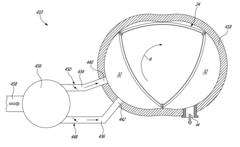
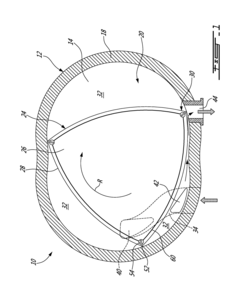
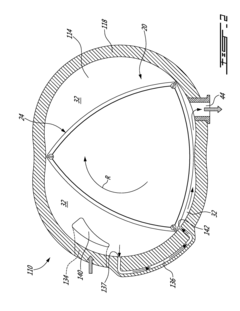
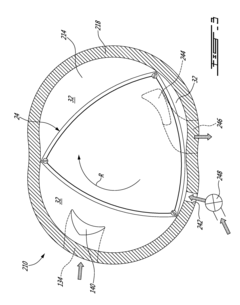
Rotary engine
PatentActiveUS20230151762A1
Innovation
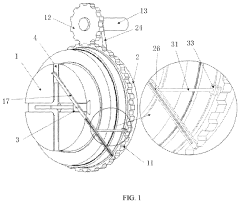
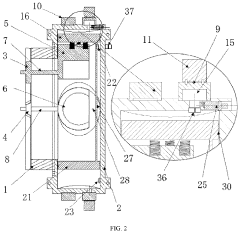
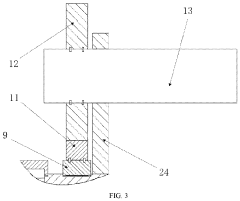
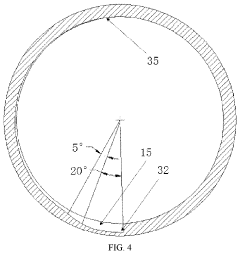
- A rotary engine design with two vertically arranged combustion chambers and a crank dual-slider connecting rod mechanism, featuring sliding grooves and synchronized rotary casings, which eliminates uneven force distribution and enhances sealing through a 180° phase angle and tapering-space combustion chambers.
Fuel Efficiency and Emissions Considerations
The integration of Wankel rotary engines in autonomous vessel applications presents unique considerations regarding fuel efficiency and emissions. Traditional marine propulsion systems have faced increasing scrutiny due to environmental regulations, creating an opportunity for alternative engine technologies. The Wankel engine's compact design and high power-to-weight ratio make it theoretically attractive for marine applications, but its historical fuel efficiency challenges must be addressed.
Recent advancements in Wankel engine technology have yielded significant improvements in fuel consumption patterns. Modern rotary engines incorporating direct injection systems demonstrate 15-20% better fuel efficiency compared to earlier generations. These improvements stem from optimized combustion chamber designs and enhanced apex seal materials that reduce internal friction and minimize fuel leakage during the combustion cycle. When applied to autonomous vessels, these efficiency gains translate to extended operational ranges and reduced refueling frequency.
Emissions profiles of Wankel engines present both advantages and challenges in marine environments. The rotary design produces lower nitrogen oxide (NOx) emissions compared to conventional marine diesel engines, primarily due to lower combustion temperatures. However, hydrocarbon emissions remain problematic, particularly at low operational loads typical during autonomous vessel station-keeping or low-speed surveillance missions. Recent testing indicates that incorporating catalytic converters specifically designed for rotary engine exhaust characteristics can reduce hydrocarbon emissions by up to 60%.
Alternative fuel compatibility represents another promising avenue for Wankel engines in autonomous vessels. These engines demonstrate remarkable adaptability to various fuel types, including hydrogen, natural gas, and biofuels. Hydrogen-powered Wankel configurations have shown particular promise, with near-zero carbon emissions and thermal efficiency improvements of approximately 5-8% compared to gasoline variants. This fuel flexibility allows vessel operators to adapt to regional fuel availability and evolving environmental regulations.
Life-cycle assessment studies comparing Wankel engines to conventional marine propulsion systems reveal interesting sustainability metrics. While manufacturing processes for specialized rotary components initially create a higher carbon footprint, the operational emissions advantages and extended service intervals (typically 20-30% longer than piston engines) offset these impacts over a vessel's operational lifespan. Additionally, the reduced vibration characteristics of Wankel engines contribute to lower structural fatigue in vessel hulls, potentially extending overall service life.
Regulatory compliance represents a critical consideration for autonomous vessel developers. The International Maritime Organization's increasingly stringent emissions standards have accelerated research into cleaner propulsion technologies. Wankel engines equipped with modern emissions control systems can meet Tier III standards when properly optimized, making them viable options for next-generation autonomous vessels operating in emission control areas.
Recent advancements in Wankel engine technology have yielded significant improvements in fuel consumption patterns. Modern rotary engines incorporating direct injection systems demonstrate 15-20% better fuel efficiency compared to earlier generations. These improvements stem from optimized combustion chamber designs and enhanced apex seal materials that reduce internal friction and minimize fuel leakage during the combustion cycle. When applied to autonomous vessels, these efficiency gains translate to extended operational ranges and reduced refueling frequency.
Emissions profiles of Wankel engines present both advantages and challenges in marine environments. The rotary design produces lower nitrogen oxide (NOx) emissions compared to conventional marine diesel engines, primarily due to lower combustion temperatures. However, hydrocarbon emissions remain problematic, particularly at low operational loads typical during autonomous vessel station-keeping or low-speed surveillance missions. Recent testing indicates that incorporating catalytic converters specifically designed for rotary engine exhaust characteristics can reduce hydrocarbon emissions by up to 60%.
Alternative fuel compatibility represents another promising avenue for Wankel engines in autonomous vessels. These engines demonstrate remarkable adaptability to various fuel types, including hydrogen, natural gas, and biofuels. Hydrogen-powered Wankel configurations have shown particular promise, with near-zero carbon emissions and thermal efficiency improvements of approximately 5-8% compared to gasoline variants. This fuel flexibility allows vessel operators to adapt to regional fuel availability and evolving environmental regulations.
Life-cycle assessment studies comparing Wankel engines to conventional marine propulsion systems reveal interesting sustainability metrics. While manufacturing processes for specialized rotary components initially create a higher carbon footprint, the operational emissions advantages and extended service intervals (typically 20-30% longer than piston engines) offset these impacts over a vessel's operational lifespan. Additionally, the reduced vibration characteristics of Wankel engines contribute to lower structural fatigue in vessel hulls, potentially extending overall service life.
Regulatory compliance represents a critical consideration for autonomous vessel developers. The International Maritime Organization's increasingly stringent emissions standards have accelerated research into cleaner propulsion technologies. Wankel engines equipped with modern emissions control systems can meet Tier III standards when properly optimized, making them viable options for next-generation autonomous vessels operating in emission control areas.
Integration Challenges with Autonomous Navigation Systems
The integration of Wankel engines with autonomous navigation systems presents significant technical challenges that require careful consideration. The rotary engine's unique operational characteristics create compatibility issues with the sophisticated electronic control systems that govern autonomous vessels. Primary among these challenges is the development of specialized engine control units (ECUs) capable of interpreting and responding to the Wankel engine's distinctive power delivery and operational parameters while maintaining seamless communication with autonomous navigation algorithms.
Power management represents another critical integration hurdle. Autonomous vessels require precise, predictable power delivery to execute navigation commands accurately. The Wankel engine's power curve and throttle response differ substantially from conventional marine engines, necessitating adaptive control systems that can translate navigation requirements into appropriate engine commands while accounting for the rotary engine's unique performance characteristics.
Vibration and noise signatures from Wankel engines introduce additional complications for sensor systems. Autonomous navigation relies heavily on various sensors including accelerometers, gyroscopes, and acoustic arrays that can be affected by engine-induced vibrations. Engineering solutions must include advanced vibration isolation systems and signal processing algorithms to prevent sensor data corruption that could compromise navigational accuracy.
Thermal management integration presents another significant challenge. Wankel engines typically operate at higher temperatures than conventional marine engines, requiring sophisticated cooling systems that must be coordinated with the vessel's overall thermal management strategy. This becomes particularly important for autonomous vessels carrying temperature-sensitive electronic components and computing systems that require stable thermal environments.
Reliability and redundancy considerations are paramount in autonomous systems. The integration architecture must account for potential failure modes specific to Wankel engines and implement appropriate redundancy measures. This includes developing specialized diagnostic systems capable of monitoring rotary-specific parameters and predicting potential failures before they impact navigation capabilities.
Emissions control systems must also be integrated with autonomous operation protocols. As regulatory requirements for marine emissions continue to tighten globally, the unique combustion characteristics of Wankel engines require specialized catalytic systems and exhaust treatment technologies that must function harmoniously with autonomous operation modes, particularly during transitional states such as startup, shutdown, and rapid power adjustments.
Finally, the integration must address maintenance scheduling algorithms. Autonomous vessels benefit from predictive maintenance capabilities, but Wankel engines have different wear patterns and maintenance requirements compared to conventional marine powerplants. Developing accurate predictive models for rotary engine components requires extensive data collection and analysis to ensure maintenance can be properly scheduled without disrupting autonomous operation schedules.
Power management represents another critical integration hurdle. Autonomous vessels require precise, predictable power delivery to execute navigation commands accurately. The Wankel engine's power curve and throttle response differ substantially from conventional marine engines, necessitating adaptive control systems that can translate navigation requirements into appropriate engine commands while accounting for the rotary engine's unique performance characteristics.
Vibration and noise signatures from Wankel engines introduce additional complications for sensor systems. Autonomous navigation relies heavily on various sensors including accelerometers, gyroscopes, and acoustic arrays that can be affected by engine-induced vibrations. Engineering solutions must include advanced vibration isolation systems and signal processing algorithms to prevent sensor data corruption that could compromise navigational accuracy.
Thermal management integration presents another significant challenge. Wankel engines typically operate at higher temperatures than conventional marine engines, requiring sophisticated cooling systems that must be coordinated with the vessel's overall thermal management strategy. This becomes particularly important for autonomous vessels carrying temperature-sensitive electronic components and computing systems that require stable thermal environments.
Reliability and redundancy considerations are paramount in autonomous systems. The integration architecture must account for potential failure modes specific to Wankel engines and implement appropriate redundancy measures. This includes developing specialized diagnostic systems capable of monitoring rotary-specific parameters and predicting potential failures before they impact navigation capabilities.
Emissions control systems must also be integrated with autonomous operation protocols. As regulatory requirements for marine emissions continue to tighten globally, the unique combustion characteristics of Wankel engines require specialized catalytic systems and exhaust treatment technologies that must function harmoniously with autonomous operation modes, particularly during transitional states such as startup, shutdown, and rapid power adjustments.
Finally, the integration must address maintenance scheduling algorithms. Autonomous vessels benefit from predictive maintenance capabilities, but Wankel engines have different wear patterns and maintenance requirements compared to conventional marine powerplants. Developing accurate predictive models for rotary engine components requires extensive data collection and analysis to ensure maintenance can be properly scheduled without disrupting autonomous operation schedules.
Unlock deeper insights with PatSnap Eureka Quick Research — get a full tech report to explore trends and direct your research. Try now!
Generate Your Research Report Instantly with AI Agent
Supercharge your innovation with PatSnap Eureka AI Agent Platform!