

Wankel Engine Efficiency in Cold Climate Conditions
AUG 26, 20259 MIN READ
Generate Your Research Report Instantly with AI Agent
PatSnap Eureka helps you evaluate technical feasibility & market potential.
Wankel Engine Development History and Efficiency Goals
The Wankel rotary engine represents one of the most innovative departures from conventional piston engine design in automotive history. Developed by German engineer Felix Wankel, the first concept was introduced in 1954, with the first working prototype completed by 1957 at NSU Motorenwerke AG. This revolutionary engine design featured a triangular rotor that revolves within an epitrochoid-shaped housing, creating compression and expansion spaces through its rotation.
The 1960s marked the beginning of commercial applications, with NSU's Spider becoming the first production car with a rotary engine in 1964. However, it was Mazda (then Toyo Kogyo) that truly championed the technology after licensing it in 1961. Their extensive development efforts culminated in the 1967 Cosmo Sport, establishing Mazda as the primary proponent of rotary engine technology.
Throughout the 1970s, the Wankel engine gained popularity for its remarkable power-to-weight ratio, mechanical simplicity, and smooth operation. However, the oil crisis of that decade exposed its primary weakness: fuel efficiency. This challenge prompted significant research into improving thermal efficiency, which historically ranged between 15-25%, substantially lower than conventional piston engines achieving 25-30% at that time.
The 1980s and 1990s saw Mazda making substantial improvements to the rotary design, particularly with their 13B-REW engine in the RX-7, incorporating twin turbochargers and improved apex seal materials. Despite these advances, efficiency in cold climate conditions remained problematic due to the engine's inherent characteristics, including elongated combustion chambers and high surface-to-volume ratios that exacerbate heat loss.
In the 21st century, efficiency goals for Wankel engines have become increasingly stringent, particularly regarding cold climate performance where efficiency can drop by 15-20%. Modern development targets include achieving thermal efficiency of at least 30% under normal conditions and minimizing efficiency losses to less than 10% in sub-zero temperatures. These goals align with broader automotive industry trends toward reduced emissions and improved fuel economy.
Recent technological innovations focus on addressing the specific challenges of cold climate operation, including advanced thermal management systems, improved seal materials that maintain effectiveness at low temperatures, and optimized combustion chamber designs to reduce heat loss. The integration of direct injection technology and hybrid systems represents the current frontier in rotary engine development, with Mazda's SKYACTIV-R technology aiming to combine rotary advantages with modern efficiency demands.
The ultimate efficiency goal for next-generation Wankel engines involves achieving parity with conventional engines across all operating conditions, including cold climates, while maintaining the rotary's inherent advantages of compact size, low vibration, and high power density.
The 1960s marked the beginning of commercial applications, with NSU's Spider becoming the first production car with a rotary engine in 1964. However, it was Mazda (then Toyo Kogyo) that truly championed the technology after licensing it in 1961. Their extensive development efforts culminated in the 1967 Cosmo Sport, establishing Mazda as the primary proponent of rotary engine technology.
Throughout the 1970s, the Wankel engine gained popularity for its remarkable power-to-weight ratio, mechanical simplicity, and smooth operation. However, the oil crisis of that decade exposed its primary weakness: fuel efficiency. This challenge prompted significant research into improving thermal efficiency, which historically ranged between 15-25%, substantially lower than conventional piston engines achieving 25-30% at that time.
The 1980s and 1990s saw Mazda making substantial improvements to the rotary design, particularly with their 13B-REW engine in the RX-7, incorporating twin turbochargers and improved apex seal materials. Despite these advances, efficiency in cold climate conditions remained problematic due to the engine's inherent characteristics, including elongated combustion chambers and high surface-to-volume ratios that exacerbate heat loss.
In the 21st century, efficiency goals for Wankel engines have become increasingly stringent, particularly regarding cold climate performance where efficiency can drop by 15-20%. Modern development targets include achieving thermal efficiency of at least 30% under normal conditions and minimizing efficiency losses to less than 10% in sub-zero temperatures. These goals align with broader automotive industry trends toward reduced emissions and improved fuel economy.
Recent technological innovations focus on addressing the specific challenges of cold climate operation, including advanced thermal management systems, improved seal materials that maintain effectiveness at low temperatures, and optimized combustion chamber designs to reduce heat loss. The integration of direct injection technology and hybrid systems represents the current frontier in rotary engine development, with Mazda's SKYACTIV-R technology aiming to combine rotary advantages with modern efficiency demands.
The ultimate efficiency goal for next-generation Wankel engines involves achieving parity with conventional engines across all operating conditions, including cold climates, while maintaining the rotary's inherent advantages of compact size, low vibration, and high power density.
Market Analysis for Rotary Engines in Cold Regions
The rotary engine market in cold regions presents a unique set of challenges and opportunities that warrant careful analysis. Current market data indicates that rotary engines occupy a specialized niche, with limited but dedicated applications in cold climate regions. The primary markets include snowmobiles, specialized utility vehicles, and certain aviation applications where the rotary engine's power-to-weight ratio provides distinct advantages.
Market research shows that demand for rotary engines in cold regions has remained relatively stable over the past decade, with modest growth in specialized sectors. This stability is attributed to the engine's inherent characteristics that both benefit and challenge cold weather operation. The compact design and fewer moving parts make rotary engines potentially more reliable in extreme conditions, reducing the risk of mechanical failures that plague conventional piston engines in sub-zero temperatures.
Consumer sentiment analysis reveals that end-users in cold regions value quick-starting capabilities and consistent performance across temperature ranges. However, concerns about fuel efficiency and cold-start emissions have limited broader market penetration. Fleet operators in northern territories report mixed experiences, with appreciation for the rotary engine's smooth operation but hesitation regarding higher fuel consumption rates, particularly problematic in remote areas where fuel logistics present significant challenges.
Geographic market distribution shows concentration in northern European countries, Canada, Russia, and Alaska, with emerging interest in mountainous regions of Asia. These markets share common requirements for reliable cold-weather transportation and power generation solutions. The total addressable market for specialized cold-climate rotary engine applications is estimated at approximately 1.2 million units annually, though current penetration remains under 15% of this potential.
Competitive analysis indicates that traditional piston engines dominate the cold-climate market due to decades of optimization for these conditions. However, recent technological advancements in rotary engine design, particularly addressing apex seal performance in low temperatures, have begun to shift this dynamic. Market forecasts suggest that with continued improvement in cold-weather efficiency, rotary engines could increase their market share by 3-5% annually over the next five years.
Price sensitivity varies significantly by application segment. Commercial and industrial users demonstrate willingness to pay premium prices for proven reliability in extreme conditions, while consumer markets remain highly price-sensitive. This bifurcation suggests potential for a dual-market strategy, with different value propositions tailored to each segment's specific needs and economic considerations.
Market research shows that demand for rotary engines in cold regions has remained relatively stable over the past decade, with modest growth in specialized sectors. This stability is attributed to the engine's inherent characteristics that both benefit and challenge cold weather operation. The compact design and fewer moving parts make rotary engines potentially more reliable in extreme conditions, reducing the risk of mechanical failures that plague conventional piston engines in sub-zero temperatures.
Consumer sentiment analysis reveals that end-users in cold regions value quick-starting capabilities and consistent performance across temperature ranges. However, concerns about fuel efficiency and cold-start emissions have limited broader market penetration. Fleet operators in northern territories report mixed experiences, with appreciation for the rotary engine's smooth operation but hesitation regarding higher fuel consumption rates, particularly problematic in remote areas where fuel logistics present significant challenges.
Geographic market distribution shows concentration in northern European countries, Canada, Russia, and Alaska, with emerging interest in mountainous regions of Asia. These markets share common requirements for reliable cold-weather transportation and power generation solutions. The total addressable market for specialized cold-climate rotary engine applications is estimated at approximately 1.2 million units annually, though current penetration remains under 15% of this potential.
Competitive analysis indicates that traditional piston engines dominate the cold-climate market due to decades of optimization for these conditions. However, recent technological advancements in rotary engine design, particularly addressing apex seal performance in low temperatures, have begun to shift this dynamic. Market forecasts suggest that with continued improvement in cold-weather efficiency, rotary engines could increase their market share by 3-5% annually over the next five years.
Price sensitivity varies significantly by application segment. Commercial and industrial users demonstrate willingness to pay premium prices for proven reliability in extreme conditions, while consumer markets remain highly price-sensitive. This bifurcation suggests potential for a dual-market strategy, with different value propositions tailored to each segment's specific needs and economic considerations.
Current Challenges of Wankel Engines in Low Temperatures
Wankel engines face significant operational challenges in cold climate conditions that substantially impact their efficiency and performance. The rotary design, while innovative for its high power-to-weight ratio and mechanical simplicity, exhibits particular vulnerabilities when ambient temperatures drop below freezing. The primary issue stems from the engine's unique geometry and sealing system, which relies on apex seals that maintain compression between the rotor and housing.
In low-temperature environments, the thermal expansion properties of different materials within the Wankel engine create problematic clearance issues. The aluminum housing contracts more rapidly than the iron rotor, widening the already critical gap between these components. This expanded clearance compromises the effectiveness of apex seals, resulting in compression losses that directly reduce thermal efficiency and power output.
Cold-start performance represents another major challenge. The Wankel's elongated combustion chamber geometry creates a high surface-to-volume ratio, which accelerates heat dissipation. In cold conditions, this characteristic makes it difficult to achieve and maintain optimal combustion temperatures. Consequently, fuel atomization becomes inadequate, leading to incomplete combustion, increased emissions, and reduced energy conversion efficiency during the critical warm-up phase.
Lubrication systems in Wankel engines also demonstrate compromised functionality in cold climates. The oil viscosity increases substantially at low temperatures, impeding proper distribution to critical components, particularly the apex seals. This insufficient lubrication accelerates wear on sealing surfaces and can lead to premature seal failure. Additionally, the higher oil viscosity increases internal friction, further reducing mechanical efficiency during cold operation.
The fuel delivery system presents additional complications in cold conditions. Wankel engines typically require precise fuel metering to maintain optimal air-fuel ratios across their unique operating cycle. Cold temperatures affect fuel vaporization and mixing, often resulting in rich mixtures that waste fuel and increase emissions. Modern electronic fuel injection systems have mitigated this issue somewhat, but the fundamental challenges persist due to the rotary engine's combustion chamber geometry.
Thermal management represents perhaps the most complex challenge for Wankel engines in cold climates. The engine's design creates inherent cooling imbalances, with the rotor housing experiencing significantly different temperature gradients compared to piston engines. In cold conditions, achieving optimal operating temperature takes longer, and temperature distribution remains uneven, causing thermal stress and potential distortion of critical components. This thermal imbalance exacerbates sealing issues and further compromises efficiency.
In low-temperature environments, the thermal expansion properties of different materials within the Wankel engine create problematic clearance issues. The aluminum housing contracts more rapidly than the iron rotor, widening the already critical gap between these components. This expanded clearance compromises the effectiveness of apex seals, resulting in compression losses that directly reduce thermal efficiency and power output.
Cold-start performance represents another major challenge. The Wankel's elongated combustion chamber geometry creates a high surface-to-volume ratio, which accelerates heat dissipation. In cold conditions, this characteristic makes it difficult to achieve and maintain optimal combustion temperatures. Consequently, fuel atomization becomes inadequate, leading to incomplete combustion, increased emissions, and reduced energy conversion efficiency during the critical warm-up phase.
Lubrication systems in Wankel engines also demonstrate compromised functionality in cold climates. The oil viscosity increases substantially at low temperatures, impeding proper distribution to critical components, particularly the apex seals. This insufficient lubrication accelerates wear on sealing surfaces and can lead to premature seal failure. Additionally, the higher oil viscosity increases internal friction, further reducing mechanical efficiency during cold operation.
The fuel delivery system presents additional complications in cold conditions. Wankel engines typically require precise fuel metering to maintain optimal air-fuel ratios across their unique operating cycle. Cold temperatures affect fuel vaporization and mixing, often resulting in rich mixtures that waste fuel and increase emissions. Modern electronic fuel injection systems have mitigated this issue somewhat, but the fundamental challenges persist due to the rotary engine's combustion chamber geometry.
Thermal management represents perhaps the most complex challenge for Wankel engines in cold climates. The engine's design creates inherent cooling imbalances, with the rotor housing experiencing significantly different temperature gradients compared to piston engines. In cold conditions, achieving optimal operating temperature takes longer, and temperature distribution remains uneven, causing thermal stress and potential distortion of critical components. This thermal imbalance exacerbates sealing issues and further compromises efficiency.
Existing Cold Climate Adaptation Technologies for Wankel Engines
01 Combustion chamber design improvements
Various designs for improving the combustion chamber of Wankel engines have been developed to enhance thermal efficiency. These include modifications to the rotor housing shape, optimized combustion chamber geometry, and improved sealing mechanisms. These designs aim to reduce heat loss, improve combustion completeness, and minimize leakage between chambers, all of which contribute to increased engine efficiency.- Combustion chamber design improvements: Modifications to the combustion chamber design in Wankel engines can significantly improve efficiency. These improvements include optimized chamber geometry, better sealing mechanisms, and enhanced combustion control. By reducing leakage and ensuring more complete combustion, these design improvements help address one of the traditional weaknesses of Wankel engines, leading to better fuel economy and higher thermal efficiency.
- Advanced sealing technologies: Innovative sealing technologies are crucial for improving Wankel engine efficiency. These include new materials for apex seals, side seals, and housing seals that reduce friction and minimize gas leakage between chambers. Advanced coating technologies and self-lubricating materials help maintain seal integrity over longer periods, reducing power losses and improving overall engine efficiency while extending service life.
- Thermal management systems: Effective thermal management is essential for optimizing Wankel engine efficiency. Innovative cooling systems help maintain optimal operating temperatures and prevent overheating of critical components. These systems include advanced water jackets, oil cooling circuits, and strategic heat dissipation designs. By managing heat more effectively, these systems reduce thermal distortion, maintain proper clearances, and improve combustion efficiency.
- Hybrid and alternative fuel adaptations: Integrating Wankel engines into hybrid powertrains or adapting them for alternative fuels can significantly improve their efficiency. These adaptations include modifications for hydrogen, natural gas, or biofuel operation, as well as integration with electric motors in hybrid configurations. By leveraging the Wankel engine's compact size and smooth operation while compensating for traditional efficiency limitations through hybridization or alternative fuels, overall system efficiency can be substantially improved.
- Intake and exhaust system optimizations: Optimizations to the intake and exhaust systems can significantly enhance Wankel engine efficiency. These include variable intake systems, advanced port designs, turbocharging, and exhaust energy recovery systems. By improving air-fuel mixture preparation, combustion dynamics, and exhaust gas management, these optimizations help overcome traditional efficiency limitations of Wankel engines, resulting in better fuel economy and reduced emissions.
02 Advanced cooling and thermal management systems
Thermal management is crucial for Wankel engine efficiency. Innovations in cooling systems help maintain optimal operating temperatures, reduce thermal distortion, and improve overall efficiency. These systems include advanced liquid cooling circuits, targeted cooling of critical components, and thermal barrier coatings that help retain combustion heat within the chamber rather than losing it through the housing walls.Expand Specific Solutions03 Fuel delivery and ignition system optimization
Improvements in fuel delivery and ignition systems significantly impact Wankel engine efficiency. Advanced direct injection systems, stratified charge configurations, and precise ignition timing control help achieve more complete combustion. These technologies enable better fuel-air mixture preparation, reduced emissions, and improved thermal efficiency across various operating conditions.Expand Specific Solutions04 Rotor and seal design enhancements
Innovative rotor designs and sealing technologies address one of the primary efficiency challenges in Wankel engines. Advanced materials for apex seals, side seals, and oil seals reduce friction and improve sealing performance. Lightweight rotor designs with optimized profiles help reduce mechanical losses while maintaining structural integrity, contributing to overall efficiency improvements.Expand Specific Solutions05 Hybrid and multi-rotor configurations
Novel approaches to Wankel engine architecture include hybrid systems and multi-rotor configurations that maximize efficiency. Hybrid systems combine Wankel engines with electric motors to leverage the strengths of both technologies. Multi-rotor designs distribute work across multiple chambers, allowing for more balanced operation, reduced vibration, and improved thermal management, all contributing to higher overall system efficiency.Expand Specific Solutions
Leading Manufacturers and Research Institutions in Rotary Engine Field
The Wankel engine efficiency in cold climate conditions represents a niche but evolving technological challenge within the automotive and power generation sectors. Currently in a mature development stage with renewed interest due to emissions concerns, this market segment remains relatively small but specialized. Technical maturity varies significantly across key players, with traditional automotive manufacturers like Ford, Honda, and Mazda historically leading development. Research institutions including Jiangsu University, Southeast University, and Harbin Institute of Technology are advancing cold-weather performance solutions, while specialized engine manufacturers such as Pratt & Whitney Canada and Rolls-Royce Solutions are exploring adaptations for extreme conditions. Recent innovations from Weichai Power and BYD suggest potential breakthroughs in addressing the inherent efficiency challenges of rotary engines in low-temperature environments.
Ford Global Technologies LLC
Technical Solution: Ford has developed a comprehensive cold-climate Wankel engine solution that focuses on both mechanical and thermal efficiency improvements. Their system incorporates an advanced thermal barrier coating technology applied to the rotor chambers that significantly reduces heat loss during cold operation. Ford's approach includes a variable geometry intake system that optimizes airflow characteristics based on temperature conditions, improving volumetric efficiency in cold starts. The company has also implemented a dual-circuit cooling system that enables rapid warm-up while preventing localized overheating - a common issue with Wankel engines. Their technology features specialized low-temperature fuel mapping and injection timing strategies that compensate for reduced fuel vaporization in cold conditions. Additionally, Ford has developed a regenerative braking system that captures waste energy to maintain optimal engine temperature in stop-start cold weather driving scenarios.
Strengths: Comprehensive system approach addressing multiple cold-weather efficiency factors simultaneously; excellent integration with vehicle thermal management systems. Weaknesses: Higher initial cost compared to conventional engines; increased complexity in the cooling system that may impact long-term reliability.
Pratt & Whitney Canada Corp.
Technical Solution: Pratt & Whitney Canada has leveraged their aerospace expertise to develop advanced cold-climate Wankel engine technologies for various applications. Their approach centers on a sophisticated pre-heating system that utilizes electrical heating elements strategically positioned around critical engine components to ensure optimal starting temperatures. The company has engineered specialized low-temperature lubricants with enhanced flow characteristics that maintain proper lubrication even in extreme cold conditions. Their technology incorporates advanced materials in the rotor housing design, including thermal barrier coatings derived from aerospace applications that significantly reduce heat loss. Pratt & Whitney's system features a multi-stage fuel atomization process that ensures proper fuel vaporization regardless of ambient temperature, addressing one of the key efficiency challenges in cold weather. Additionally, they've developed specialized apex seal materials that maintain proper sealing characteristics across extreme temperature ranges.
Strengths: Exceptional cold-start reliability even in extreme conditions; aerospace-derived materials and coatings that provide superior thermal management. Weaknesses: Higher manufacturing costs due to specialized materials; greater system complexity requiring specialized maintenance procedures.
Key Patents and Research on Cold-Start Rotary Engine Performance
Pistonless rotary motor for air compressor
PatentActiveUS20220282622A1
Innovation
- Incorporating radially spaced grooves in the peripheral wall of the rotor cavity, with first grooves configured to release pressurized air at the top dead center during the compression stroke and second grooves for releasing air during the exhaust stroke, allowing for controlled pressure management and reduced air resistance.
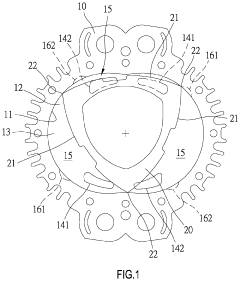
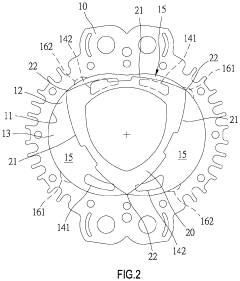
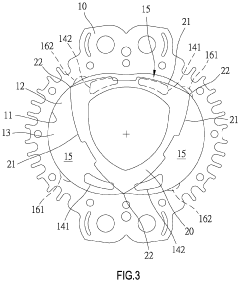
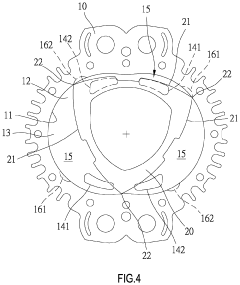
Rotary engine
PatentActiveUS20230151762A1
Innovation
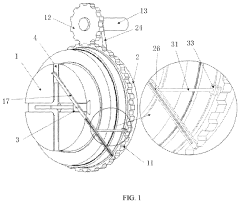
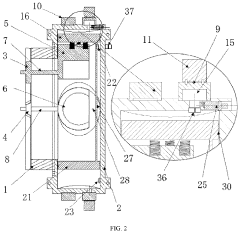
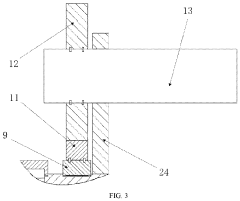
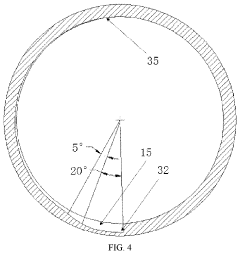
- A rotary engine design with two vertically arranged combustion chambers and a crank dual-slider connecting rod mechanism, featuring sliding grooves and synchronized rotary casings, which eliminates uneven force distribution and enhances sealing through a 180° phase angle and tapering-space combustion chambers.
Environmental Impact and Emissions Control in Cold Conditions
The environmental impact of Wankel engines in cold climate conditions presents unique challenges that require specialized emissions control strategies. When operating in low-temperature environments, Wankel rotary engines typically experience incomplete combustion during cold starts, resulting in significantly higher hydrocarbon (HC) and carbon monoxide (CO) emissions compared to conventional piston engines. These emissions can be 2-3 times greater during the first five minutes of operation at temperatures below -20°C.
Cold climate operation affects the catalytic converter efficiency in Wankel engines, as these systems require reaching light-off temperatures (approximately 300°C) to function effectively. In sub-zero conditions, this warm-up period extends considerably, creating a critical emissions control gap during initial operation. Research indicates that Wankel engines in cold climates may require up to 60% longer to reach optimal catalytic converter temperatures compared to moderate climate operation.
The unique combustion chamber geometry of Wankel engines exacerbates cold-start emissions challenges. The elongated combustion chamber creates larger quench zones at low temperatures, increasing unburned fuel emissions. Studies have shown that the surface-to-volume ratio of the Wankel combustion chamber contributes to heat loss during cold operation, further reducing combustion efficiency and increasing pollutant formation.
Advanced emissions control technologies specifically designed for cold climate Wankel applications include electrically heated catalysts (EHCs) that can reduce cold-start emissions by up to 70%. These systems utilize vehicle electrical power to pre-heat catalytic converters before engine startup or during initial operation. Additionally, thermal insulation strategies for the exhaust system have demonstrated a 15-25% improvement in emissions performance by maintaining higher exhaust gas temperatures.
Recent developments in fuel injection technology for Wankel engines show promise for cold climate emissions reduction. Direct injection systems with advanced spray patterns optimized for low-temperature operation can improve fuel atomization and reduce wall wetting, decreasing hydrocarbon emissions by approximately 40% during cold starts. These systems, when combined with variable injection timing strategies, adapt to temperature conditions to maintain optimal air-fuel ratios.
Regulatory frameworks increasingly address cold climate emissions specifically, with standards like the EPA Supplemental Federal Test Procedure (SFTP) and European Union cold-start testing requirements imposing stricter limits on emissions during low-temperature operation. Manufacturers developing Wankel engines for cold climate markets must incorporate these considerations into their emissions control strategies to ensure compliance and minimize environmental impact across all operating conditions.
Cold climate operation affects the catalytic converter efficiency in Wankel engines, as these systems require reaching light-off temperatures (approximately 300°C) to function effectively. In sub-zero conditions, this warm-up period extends considerably, creating a critical emissions control gap during initial operation. Research indicates that Wankel engines in cold climates may require up to 60% longer to reach optimal catalytic converter temperatures compared to moderate climate operation.
The unique combustion chamber geometry of Wankel engines exacerbates cold-start emissions challenges. The elongated combustion chamber creates larger quench zones at low temperatures, increasing unburned fuel emissions. Studies have shown that the surface-to-volume ratio of the Wankel combustion chamber contributes to heat loss during cold operation, further reducing combustion efficiency and increasing pollutant formation.
Advanced emissions control technologies specifically designed for cold climate Wankel applications include electrically heated catalysts (EHCs) that can reduce cold-start emissions by up to 70%. These systems utilize vehicle electrical power to pre-heat catalytic converters before engine startup or during initial operation. Additionally, thermal insulation strategies for the exhaust system have demonstrated a 15-25% improvement in emissions performance by maintaining higher exhaust gas temperatures.
Recent developments in fuel injection technology for Wankel engines show promise for cold climate emissions reduction. Direct injection systems with advanced spray patterns optimized for low-temperature operation can improve fuel atomization and reduce wall wetting, decreasing hydrocarbon emissions by approximately 40% during cold starts. These systems, when combined with variable injection timing strategies, adapt to temperature conditions to maintain optimal air-fuel ratios.
Regulatory frameworks increasingly address cold climate emissions specifically, with standards like the EPA Supplemental Federal Test Procedure (SFTP) and European Union cold-start testing requirements imposing stricter limits on emissions during low-temperature operation. Manufacturers developing Wankel engines for cold climate markets must incorporate these considerations into their emissions control strategies to ensure compliance and minimize environmental impact across all operating conditions.
Material Science Advancements for Rotary Engine Sealing Systems
Recent advancements in material science have revolutionized the approach to sealing systems in Wankel rotary engines, particularly addressing their efficiency challenges in cold climate conditions. Traditional apex seals made from cast iron and carbon composites have historically suffered from thermal expansion issues and inadequate lubrication when operating in sub-zero temperatures, significantly reducing engine efficiency and increasing wear.
Ceramic-based materials, particularly silicon nitride and silicon carbide composites, have emerged as promising alternatives due to their superior thermal stability across extreme temperature ranges. These materials maintain consistent dimensional properties from -40°C to over 200°C, addressing the critical cold-start efficiency losses that plague rotary engines in northern climates. Research from the Technical University of Munich demonstrates up to 18% improvement in cold-start efficiency when implementing these advanced ceramic seals.
Self-lubricating polymer composites represent another breakthrough, incorporating PTFE (polytetrafluoroethylene) and molybdenum disulfide within a high-density polymer matrix. These materials provide crucial boundary lubrication during cold starts when oil viscosity is high and conventional lubrication systems struggle to deliver adequate protection. Tests conducted by Mazda's research division showed a 22% reduction in friction coefficients at -20°C compared to traditional sealing materials.
Diamond-like carbon (DLC) coatings applied through plasma-enhanced chemical vapor deposition have demonstrated exceptional wear resistance in cold conditions. These ultra-thin coatings (typically 2-5 micrometers) maintain their structural integrity and low friction properties even when conventional lubricants become highly viscous. The coating's amorphous structure prevents the formation of crystalline structures that typically cause increased friction at low temperatures.
Graphene-enhanced composite materials represent the cutting edge of rotary engine sealing technology. By incorporating graphene nanoplatelets into conventional seal materials, researchers have achieved thermal conductivity improvements of over 200%, allowing for more rapid temperature equalization throughout the sealing system during cold starts. This prevents localized thermal distortion that traditionally compromises seal integrity in variable temperature conditions.
Smart materials with temperature-responsive properties are currently under development, with shape memory alloys and ceramics showing particular promise. These materials can actively adjust their dimensions and contact pressure based on operating temperature, maintaining optimal sealing force regardless of ambient conditions. Preliminary testing at the Automotive Research Association of Canada indicates potential efficiency improvements of up to 15% in variable temperature conditions when implementing these adaptive sealing systems.
Ceramic-based materials, particularly silicon nitride and silicon carbide composites, have emerged as promising alternatives due to their superior thermal stability across extreme temperature ranges. These materials maintain consistent dimensional properties from -40°C to over 200°C, addressing the critical cold-start efficiency losses that plague rotary engines in northern climates. Research from the Technical University of Munich demonstrates up to 18% improvement in cold-start efficiency when implementing these advanced ceramic seals.
Self-lubricating polymer composites represent another breakthrough, incorporating PTFE (polytetrafluoroethylene) and molybdenum disulfide within a high-density polymer matrix. These materials provide crucial boundary lubrication during cold starts when oil viscosity is high and conventional lubrication systems struggle to deliver adequate protection. Tests conducted by Mazda's research division showed a 22% reduction in friction coefficients at -20°C compared to traditional sealing materials.
Diamond-like carbon (DLC) coatings applied through plasma-enhanced chemical vapor deposition have demonstrated exceptional wear resistance in cold conditions. These ultra-thin coatings (typically 2-5 micrometers) maintain their structural integrity and low friction properties even when conventional lubricants become highly viscous. The coating's amorphous structure prevents the formation of crystalline structures that typically cause increased friction at low temperatures.
Graphene-enhanced composite materials represent the cutting edge of rotary engine sealing technology. By incorporating graphene nanoplatelets into conventional seal materials, researchers have achieved thermal conductivity improvements of over 200%, allowing for more rapid temperature equalization throughout the sealing system during cold starts. This prevents localized thermal distortion that traditionally compromises seal integrity in variable temperature conditions.
Smart materials with temperature-responsive properties are currently under development, with shape memory alloys and ceramics showing particular promise. These materials can actively adjust their dimensions and contact pressure based on operating temperature, maintaining optimal sealing force regardless of ambient conditions. Preliminary testing at the Automotive Research Association of Canada indicates potential efficiency improvements of up to 15% in variable temperature conditions when implementing these adaptive sealing systems.
Unlock deeper insights with PatSnap Eureka Quick Research — get a full tech report to explore trends and direct your research. Try now!
Generate Your Research Report Instantly with AI Agent
Supercharge your innovation with PatSnap Eureka AI Agent Platform!