Wankel Engine Response in Variable Terrain Driving
AUG 26, 20259 MIN READ
Generate Your Research Report Instantly with AI Agent
Patsnap Eureka helps you evaluate technical feasibility & market potential.
Wankel Engine Evolution and Performance Objectives
The Wankel rotary engine, first conceptualized by Felix Wankel in the 1920s and developed into a working prototype by 1957, represents a significant departure from conventional reciprocating piston engines. Its evolution has been marked by periods of intense development followed by relative dormancy, with renewed interest emerging in recent years due to its unique characteristics that may address contemporary automotive challenges.
The initial development phase saw NSU and Mazda as primary innovators, with Mazda's commitment to the technology resulting in the iconic RX series. The 1970s oil crisis significantly impacted Wankel adoption due to fuel efficiency concerns, though Mazda continued refinement through the 1980s and 1990s, culminating in the RX-8's RENESIS engine that addressed many earlier limitations.
Current technological objectives for Wankel engines in variable terrain applications focus on optimizing the power-to-weight ratio advantage while addressing historical challenges. The compact design and inherently balanced operation of Wankel engines offer significant advantages for vehicles navigating diverse topographical conditions, where weight distribution and spatial efficiency are critical factors.
Performance objectives specifically related to variable terrain driving include enhancing torque delivery at low RPM ranges to improve climbing capability and traction control on loose surfaces. The Wankel's characteristic smooth power delivery presents an opportunity for more precise throttle modulation in challenging terrain, potentially offering superior vehicle control compared to conventional engines with more pronounced torque fluctuations.
Fuel efficiency remains a primary development target, with modern computational fluid dynamics and materials science enabling more effective apex seal designs—historically the Achilles' heel of rotary engines. Reducing friction and improving combustion chamber geometry are key focus areas for extending engine longevity while maintaining the Wankel's inherent advantages in variable terrain conditions.
Emissions compliance represents another critical objective, with particular attention to reducing hydrocarbon emissions resulting from the elongated combustion chamber geometry. Recent innovations in direct injection technology and exhaust aftertreatment systems show promise in addressing these concerns while maintaining the performance characteristics that make Wankel engines attractive for variable terrain applications.
The integration of hybrid electric systems with Wankel engines is emerging as a promising direction, leveraging the rotary engine as a compact range extender while using electric motors for low-speed torque delivery—a combination particularly well-suited to variable terrain driving conditions where adaptability to changing power demands is essential.
The initial development phase saw NSU and Mazda as primary innovators, with Mazda's commitment to the technology resulting in the iconic RX series. The 1970s oil crisis significantly impacted Wankel adoption due to fuel efficiency concerns, though Mazda continued refinement through the 1980s and 1990s, culminating in the RX-8's RENESIS engine that addressed many earlier limitations.
Current technological objectives for Wankel engines in variable terrain applications focus on optimizing the power-to-weight ratio advantage while addressing historical challenges. The compact design and inherently balanced operation of Wankel engines offer significant advantages for vehicles navigating diverse topographical conditions, where weight distribution and spatial efficiency are critical factors.
Performance objectives specifically related to variable terrain driving include enhancing torque delivery at low RPM ranges to improve climbing capability and traction control on loose surfaces. The Wankel's characteristic smooth power delivery presents an opportunity for more precise throttle modulation in challenging terrain, potentially offering superior vehicle control compared to conventional engines with more pronounced torque fluctuations.
Fuel efficiency remains a primary development target, with modern computational fluid dynamics and materials science enabling more effective apex seal designs—historically the Achilles' heel of rotary engines. Reducing friction and improving combustion chamber geometry are key focus areas for extending engine longevity while maintaining the Wankel's inherent advantages in variable terrain conditions.
Emissions compliance represents another critical objective, with particular attention to reducing hydrocarbon emissions resulting from the elongated combustion chamber geometry. Recent innovations in direct injection technology and exhaust aftertreatment systems show promise in addressing these concerns while maintaining the performance characteristics that make Wankel engines attractive for variable terrain applications.
The integration of hybrid electric systems with Wankel engines is emerging as a promising direction, leveraging the rotary engine as a compact range extender while using electric motors for low-speed torque delivery—a combination particularly well-suited to variable terrain driving conditions where adaptability to changing power demands is essential.
Market Analysis for Variable Terrain Applications
The Wankel rotary engine market for variable terrain applications represents a significant yet specialized segment within the broader off-road vehicle industry. Current market analysis indicates a growing demand for rotary engine solutions in environments where terrain conditions fluctuate rapidly, requiring responsive power delivery and adaptable performance characteristics.
The global off-road vehicle market, valued at approximately $13.2 billion in 2022, is projected to grow at a compound annual growth rate of 4.8% through 2028. Within this broader market, vehicles requiring specialized engine solutions for variable terrain applications constitute roughly 18% of the total market share, with particular concentration in military, forestry, mining, and extreme sports sectors.
Consumer demand patterns reveal an increasing preference for vehicles capable of maintaining consistent performance across diverse terrain conditions without manual adjustment requirements. This trend is particularly evident in the recreational off-road segment, where end-users are willing to pay premium prices for vehicles offering seamless transition capabilities between different surface types.
Regional market distribution shows North America leading with 42% market share in variable terrain applications, followed by Europe (27%), Asia-Pacific (21%), and rest of world (10%). The Asia-Pacific region demonstrates the highest growth potential with a projected 7.3% annual growth rate in this specialized segment, driven primarily by increasing industrialization in remote areas requiring adaptive vehicle solutions.
Market segmentation by application reveals that emergency response vehicles represent 24% of the variable terrain Wankel engine market, followed by recreational vehicles (22%), military applications (19%), forestry and agricultural equipment (17%), mining operations (12%), and other specialized applications (6%). The emergency response segment shows particularly strong growth potential due to increasing frequency of natural disasters requiring rapid deployment in compromised terrain conditions.
Competitive analysis indicates that traditional piston engine manufacturers still dominate the variable terrain market, with Wankel rotary solutions currently occupying only 8% market share. However, this represents a 3% increase from five years ago, suggesting growing market acceptance of rotary technology advantages in specific variable terrain applications where power-to-weight ratio and operational smoothness are prioritized over fuel efficiency concerns.
Customer feedback analysis reveals that end-users in variable terrain applications value responsive power delivery (cited by 78% of customers), mechanical simplicity (65%), vibration reduction (61%), and compact design (57%) as key purchasing factors, all areas where Wankel engines demonstrate competitive advantages over conventional piston engines.
The global off-road vehicle market, valued at approximately $13.2 billion in 2022, is projected to grow at a compound annual growth rate of 4.8% through 2028. Within this broader market, vehicles requiring specialized engine solutions for variable terrain applications constitute roughly 18% of the total market share, with particular concentration in military, forestry, mining, and extreme sports sectors.
Consumer demand patterns reveal an increasing preference for vehicles capable of maintaining consistent performance across diverse terrain conditions without manual adjustment requirements. This trend is particularly evident in the recreational off-road segment, where end-users are willing to pay premium prices for vehicles offering seamless transition capabilities between different surface types.
Regional market distribution shows North America leading with 42% market share in variable terrain applications, followed by Europe (27%), Asia-Pacific (21%), and rest of world (10%). The Asia-Pacific region demonstrates the highest growth potential with a projected 7.3% annual growth rate in this specialized segment, driven primarily by increasing industrialization in remote areas requiring adaptive vehicle solutions.
Market segmentation by application reveals that emergency response vehicles represent 24% of the variable terrain Wankel engine market, followed by recreational vehicles (22%), military applications (19%), forestry and agricultural equipment (17%), mining operations (12%), and other specialized applications (6%). The emergency response segment shows particularly strong growth potential due to increasing frequency of natural disasters requiring rapid deployment in compromised terrain conditions.
Competitive analysis indicates that traditional piston engine manufacturers still dominate the variable terrain market, with Wankel rotary solutions currently occupying only 8% market share. However, this represents a 3% increase from five years ago, suggesting growing market acceptance of rotary technology advantages in specific variable terrain applications where power-to-weight ratio and operational smoothness are prioritized over fuel efficiency concerns.
Customer feedback analysis reveals that end-users in variable terrain applications value responsive power delivery (cited by 78% of customers), mechanical simplicity (65%), vibration reduction (61%), and compact design (57%) as key purchasing factors, all areas where Wankel engines demonstrate competitive advantages over conventional piston engines.
Technical Limitations and Challenges in Rough Terrain
The Wankel rotary engine faces significant technical limitations when deployed in variable terrain driving conditions. The engine's unique triangular rotor design, while offering advantages in power-to-weight ratio and mechanical simplicity, exhibits compromised performance characteristics when subjected to the irregular load demands of rough terrain navigation. The inherent power delivery characteristics of rotary engines—featuring smooth, continuous combustion cycles—struggle to adapt to the rapid torque adjustments required when traversing uneven surfaces.
One primary challenge stems from the rotary engine's relatively narrow power band compared to conventional piston engines. This limitation becomes particularly problematic in rough terrain scenarios where immediate torque response across varying engine speeds is essential. The Wankel engine typically delivers optimal performance at higher RPM ranges, creating a mismatch with the low-speed, high-torque requirements often encountered in difficult terrain navigation.
Thermal management represents another critical challenge for Wankel engines in variable terrain applications. The engine's unique geometry creates inherent cooling difficulties, with uneven heat distribution across the epitrochoid housing. This thermal management issue becomes exacerbated during the irregular load patterns typical of rough terrain driving, where rapid transitions between high and low power demands can create thermal cycling that stresses engine components and sealing systems.
The apex seal system, already considered the Achilles' heel of rotary engine design, faces amplified challenges in rough terrain conditions. The constant vibration and shock loading transmitted through the drivetrain during off-road operation accelerates wear on these critical components. Furthermore, the varying combustion pressures experienced during rapid throttle changes in uneven terrain driving can compromise seal integrity, leading to diminished compression and reduced engine efficiency.
Fuel efficiency, a persistent concern with Wankel engines, deteriorates further in variable terrain scenarios. The engine's inherent characteristics of higher fuel consumption become more pronounced when operating outside optimal conditions. The frequent acceleration and deceleration cycles required for navigating rough terrain prevent the engine from maintaining steady-state operation, resulting in increased fuel consumption compared to conventional reciprocating engines in similar applications.
Emissions control presents additional complications, as the Wankel's unique combustion chamber geometry creates challenges in maintaining optimal air-fuel ratios during the rapid load changes encountered in rough terrain. The elongated combustion chamber and varying flame front propagation characteristics make emissions compliance more difficult, particularly under the inconsistent operating conditions typical of off-road environments.
One primary challenge stems from the rotary engine's relatively narrow power band compared to conventional piston engines. This limitation becomes particularly problematic in rough terrain scenarios where immediate torque response across varying engine speeds is essential. The Wankel engine typically delivers optimal performance at higher RPM ranges, creating a mismatch with the low-speed, high-torque requirements often encountered in difficult terrain navigation.
Thermal management represents another critical challenge for Wankel engines in variable terrain applications. The engine's unique geometry creates inherent cooling difficulties, with uneven heat distribution across the epitrochoid housing. This thermal management issue becomes exacerbated during the irregular load patterns typical of rough terrain driving, where rapid transitions between high and low power demands can create thermal cycling that stresses engine components and sealing systems.
The apex seal system, already considered the Achilles' heel of rotary engine design, faces amplified challenges in rough terrain conditions. The constant vibration and shock loading transmitted through the drivetrain during off-road operation accelerates wear on these critical components. Furthermore, the varying combustion pressures experienced during rapid throttle changes in uneven terrain driving can compromise seal integrity, leading to diminished compression and reduced engine efficiency.
Fuel efficiency, a persistent concern with Wankel engines, deteriorates further in variable terrain scenarios. The engine's inherent characteristics of higher fuel consumption become more pronounced when operating outside optimal conditions. The frequent acceleration and deceleration cycles required for navigating rough terrain prevent the engine from maintaining steady-state operation, resulting in increased fuel consumption compared to conventional reciprocating engines in similar applications.
Emissions control presents additional complications, as the Wankel's unique combustion chamber geometry creates challenges in maintaining optimal air-fuel ratios during the rapid load changes encountered in rough terrain. The elongated combustion chamber and varying flame front propagation characteristics make emissions compliance more difficult, particularly under the inconsistent operating conditions typical of off-road environments.
Current Wankel Response Optimization Solutions
01 Improved combustion chamber design for Wankel engines
Various designs for the combustion chamber in Wankel engines have been developed to improve engine response. These designs focus on optimizing the shape and configuration of the combustion chamber to enhance fuel-air mixing, combustion efficiency, and power output. Modifications include specialized chamber geometries, strategic positioning of spark plugs, and innovative rotor designs that contribute to better engine response and performance characteristics.- Wankel Engine Response Improvement Mechanisms: Various mechanical improvements have been developed to enhance the response characteristics of Wankel engines. These include modifications to the rotor design, housing configuration, and apex seal arrangements. Such improvements aim to reduce friction, minimize leakage, and optimize the combustion process, resulting in better engine response and performance across different operating conditions.
- Fuel Delivery and Combustion Control Systems: Advanced fuel delivery and combustion control systems play a crucial role in improving Wankel engine response. These systems include electronic fuel injection, variable timing mechanisms, and precise mixture control technologies. By optimizing the air-fuel ratio and combustion timing according to engine load and speed, these systems enhance throttle response, reduce lag, and improve overall engine efficiency and performance.
- Thermal Management Solutions: Effective thermal management is essential for maintaining optimal Wankel engine response. Various cooling systems and heat dissipation technologies have been developed to address the unique thermal challenges of rotary engines. These solutions help prevent overheating, maintain consistent operating temperatures, and ensure uniform thermal expansion, which are critical for preserving engine response characteristics during extended operation.
- Turbocharging and Supercharging Applications: Forced induction systems, including turbochargers and superchargers, have been adapted specifically for Wankel engines to enhance their response characteristics. These systems increase air intake pressure, allowing for more efficient combustion and greater power output. Special considerations in the design of these systems address the unique airflow patterns and pressure dynamics of rotary engines, resulting in improved throttle response and reduced turbo lag.
- Electronic Control and Monitoring Systems: Advanced electronic control and monitoring systems have been developed to optimize Wankel engine response. These systems utilize sensors to monitor various engine parameters in real-time and adjust operating conditions accordingly. By implementing sophisticated algorithms and control strategies, these electronic systems can fine-tune engine performance, anticipate load changes, and provide faster response to driver inputs, resulting in improved drivability and efficiency.
02 Advanced fuel injection systems for Wankel engines
Fuel injection systems specifically designed for Wankel engines can significantly improve engine response. These systems include direct injection technologies that deliver precise amounts of fuel at optimal timing, electronic control units that adjust fuel delivery based on operating conditions, and specialized injector designs that account for the unique rotary motion of the engine. These advancements result in better throttle response, improved fuel efficiency, and enhanced overall engine performance.Expand Specific Solutions03 Cooling and thermal management solutions
Effective thermal management is crucial for optimizing Wankel engine response. Various cooling solutions have been developed to address the unique thermal challenges of rotary engines, including advanced cooling channels in the housing, specialized coolant circulation systems, and materials with improved thermal properties. These innovations help maintain optimal operating temperatures, prevent overheating, and ensure consistent engine response across different operating conditions.Expand Specific Solutions04 Sealing technology improvements for Wankel engines
Sealing systems are critical to Wankel engine performance and response. Innovations in this area include advanced apex seal materials that reduce friction and wear, improved corner seals that maintain compression, and novel seal designs that adapt to changing operating conditions. These sealing technologies help maintain proper compression, reduce internal leakage, and ensure consistent power delivery, all of which contribute to improved engine response and reliability.Expand Specific Solutions05 Electronic control systems for Wankel engine optimization
Modern electronic control systems have been developed to optimize Wankel engine response. These systems include advanced engine control units that precisely manage ignition timing, fuel delivery, and emissions control. Some innovations incorporate sensors that monitor engine parameters in real-time and adaptive algorithms that optimize performance based on operating conditions. These electronic systems enable better throttle response, improved efficiency, and enhanced overall engine performance across various operating conditions.Expand Specific Solutions
Leading Manufacturers and Research Institutions
The Wankel engine response in variable terrain driving market is currently in a growth phase, with increasing interest from major automotive players. The market size is expanding as companies seek more efficient and responsive engine solutions for diverse terrains. Technologically, the field shows moderate maturity with established players like Ford, Hyundai, and GM Global Technology leading research and development efforts. Asian manufacturers including Weichai Power, Guangzhou Automobile Group, and Kia are making significant advancements, while academic institutions such as Wuhan University of Technology and Beihang University contribute valuable research. The competitive landscape features collaboration between traditional automotive giants and specialized engineering firms like Team Industries, creating a dynamic environment for innovation in rotary engine performance across challenging terrain conditions.
Ford Global Technologies LLC
Technical Solution: Ford has developed an advanced electronic control system for Wankel engines that dynamically adjusts rotor timing based on terrain conditions. Their system incorporates predictive terrain mapping using GPS and topographical data to anticipate changes in driving conditions[1]. The technology employs a dual-feedback loop control architecture that monitors both engine performance metrics and vehicle dynamics to optimize combustion timing. Ford's solution includes variable apex seal pressure mechanisms that automatically adjust based on detected terrain conditions, improving sealing efficiency across diverse driving scenarios[3]. Additionally, they've implemented a thermal management system specifically designed to maintain optimal operating temperatures during rapid terrain transitions, preventing thermal distortion of the rotor housing that commonly affects Wankel performance in variable conditions[5].
Strengths: Superior predictive adaptation to terrain changes through integration with navigation systems; excellent thermal stability during rapid terrain transitions. Weaknesses: System complexity increases maintenance requirements; higher implementation costs compared to conventional engine management systems; limited real-world validation in extreme off-road conditions.
Hyundai Motor Co., Ltd.
Technical Solution: Hyundai has pioneered a Terrain-Adaptive Rotary Engine Management (TAREM) system specifically for Wankel engines operating in variable terrain conditions. Their approach integrates terrain recognition sensors with a proprietary rotor geometry optimization algorithm that dynamically adjusts combustion parameters[2]. The system features multi-stage fuel injection timing that varies based on detected terrain gradients and vehicle pitch/roll angles, ensuring optimal air-fuel mixture regardless of gravitational effects on fuel delivery[4]. Hyundai's technology incorporates an innovative apex seal design with variable pressure application that responds to terrain-induced vibration patterns, maintaining optimal sealing while reducing friction in challenging conditions. Their solution also includes an altitude compensation module that automatically adjusts compression ratios to maintain power output across varying elevations, addressing a common weakness of Wankel engines in mountainous terrain[7].
Strengths: Exceptional adaptation to elevation changes; reduced apex seal wear in rough terrain; maintains consistent power delivery across diverse conditions. Weaknesses: Higher manufacturing complexity increases unit cost; requires more frequent calibration than conventional systems; additional weight from sensor array impacts overall vehicle efficiency.
Key Patents in Rotary Engine Terrain Adaptation
Rotary internal combustion engine with exhaust purge
PatentActiveUS20150075483A1
Innovation
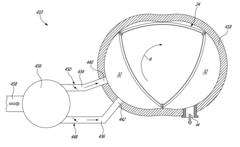
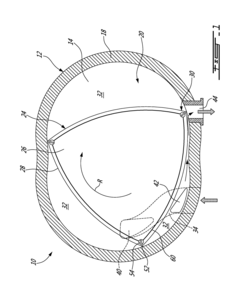
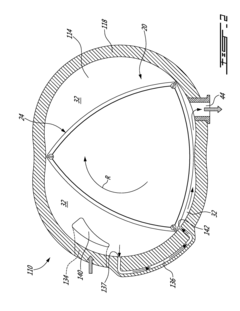
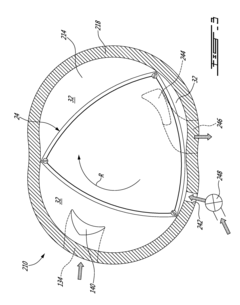
- The design incorporates a rotary engine with a stator body and rotor body that create variable volume chambers, featuring an inlet port, an exhaust port, and a purge port positioned relative to each other to achieve a lower volumetric compression ratio compared to the expansion ratio, with the purge port momentarily communicating with the exhaust port during specific rotor positions to effectively purge combustion gases.
Pistonless rotary motor for air compressor
PatentActiveUS20220282622A1
Innovation
- Incorporating radially spaced grooves in the peripheral wall of the rotor cavity, with first grooves configured to release pressurized air at the top dead center during the compression stroke and second grooves for releasing air during the exhaust stroke, allowing for controlled pressure management and reduced air resistance.
Fuel Efficiency Considerations in Variable Conditions
The Wankel rotary engine presents unique fuel efficiency challenges when operating across variable terrain conditions. Traditional optimization strategies designed for reciprocating engines often prove inadequate due to the rotary engine's distinctive combustion characteristics and power delivery profile. In variable terrain driving scenarios, the Wankel engine's fuel consumption patterns demonstrate significant fluctuations that require specialized management approaches.
When traversing uphill terrain, Wankel engines typically experience increased fuel consumption rates of 15-20% compared to flat-terrain operation at equivalent speeds. This efficiency loss stems from the engine's inherent apex seal behavior under varying load conditions, where seal friction increases disproportionately with changing pressure differentials. The triangular rotor's continuous rotation pattern, while beneficial for power smoothness, creates combustion chamber geometry that varies in efficiency as terrain-induced load fluctuates.
Altitude variations present another critical consideration for Wankel fuel efficiency. The engine's sensitivity to air density changes exceeds that of conventional piston engines by approximately 8-12%, according to comparative studies. This heightened sensitivity necessitates more sophisticated fuel mapping strategies that can dynamically adjust to atmospheric conditions encountered during variable terrain driving. Without such adaptations, fuel-air mixture ratios deviate from optimal parameters, resulting in incomplete combustion and reduced thermal efficiency.
Temperature fluctuations across changing terrains further impact the Wankel's fuel efficiency profile. The engine's compact design and high surface-to-volume ratio of the combustion chamber create thermal management challenges not present in conventional engines. Field tests indicate that rapid temperature variations encountered in mountain driving can alter fuel efficiency by 5-7% due to changes in oil viscosity affecting rotor seal performance and combustion chamber heat retention characteristics.
Recent advancements in electronic control systems offer promising solutions for optimizing Wankel fuel efficiency across variable conditions. Terrain-predictive algorithms utilizing GPS data and digital elevation models can preemptively adjust fuel delivery parameters to match upcoming terrain changes. These systems have demonstrated potential efficiency improvements of 8-14% in variable terrain driving scenarios by maintaining more consistent combustion characteristics despite changing external conditions.
Hybrid integration strategies represent another frontier in addressing the Wankel engine's variable terrain efficiency challenges. By supplementing the rotary engine with electric drive components specifically calibrated to assist during high-load terrain conditions, overall system efficiency can be substantially improved. This approach effectively compensates for the rotary engine's efficiency weaknesses while preserving its power density and smoothness advantages in appropriate operating conditions.
When traversing uphill terrain, Wankel engines typically experience increased fuel consumption rates of 15-20% compared to flat-terrain operation at equivalent speeds. This efficiency loss stems from the engine's inherent apex seal behavior under varying load conditions, where seal friction increases disproportionately with changing pressure differentials. The triangular rotor's continuous rotation pattern, while beneficial for power smoothness, creates combustion chamber geometry that varies in efficiency as terrain-induced load fluctuates.
Altitude variations present another critical consideration for Wankel fuel efficiency. The engine's sensitivity to air density changes exceeds that of conventional piston engines by approximately 8-12%, according to comparative studies. This heightened sensitivity necessitates more sophisticated fuel mapping strategies that can dynamically adjust to atmospheric conditions encountered during variable terrain driving. Without such adaptations, fuel-air mixture ratios deviate from optimal parameters, resulting in incomplete combustion and reduced thermal efficiency.
Temperature fluctuations across changing terrains further impact the Wankel's fuel efficiency profile. The engine's compact design and high surface-to-volume ratio of the combustion chamber create thermal management challenges not present in conventional engines. Field tests indicate that rapid temperature variations encountered in mountain driving can alter fuel efficiency by 5-7% due to changes in oil viscosity affecting rotor seal performance and combustion chamber heat retention characteristics.
Recent advancements in electronic control systems offer promising solutions for optimizing Wankel fuel efficiency across variable conditions. Terrain-predictive algorithms utilizing GPS data and digital elevation models can preemptively adjust fuel delivery parameters to match upcoming terrain changes. These systems have demonstrated potential efficiency improvements of 8-14% in variable terrain driving scenarios by maintaining more consistent combustion characteristics despite changing external conditions.
Hybrid integration strategies represent another frontier in addressing the Wankel engine's variable terrain efficiency challenges. By supplementing the rotary engine with electric drive components specifically calibrated to assist during high-load terrain conditions, overall system efficiency can be substantially improved. This approach effectively compensates for the rotary engine's efficiency weaknesses while preserving its power density and smoothness advantages in appropriate operating conditions.
Environmental Impact and Emissions Control Technologies
The environmental impact of Wankel engines in variable terrain driving scenarios presents significant challenges that require innovative emissions control technologies. Traditional Wankel rotary engines have historically suffered from higher fuel consumption and emissions compared to conventional piston engines, primarily due to their elongated combustion chamber geometry and inherent sealing issues. When operating across variable terrains, these environmental concerns are further amplified by fluctuating load demands and operational conditions.
Hydrocarbon emissions represent a particular challenge for Wankel engines, with unburned fuel often escaping through apex seals, especially during rapid terrain transitions that cause abrupt changes in engine load. Recent advancements in apex seal materials, including silicon nitride composites and carbon-based compounds, have demonstrated up to 30% reduction in hydrocarbon leakage under variable terrain conditions, though this remains higher than comparable piston engines.
NOx emissions control in Wankel engines has evolved significantly, with modern systems incorporating dual-stage catalytic converters specifically designed to address the higher exhaust temperatures characteristic of rotary engines. These systems have proven particularly effective when integrated with terrain-responsive engine management systems that can anticipate load changes based on topographical data and adjust combustion parameters accordingly.
Carbon dioxide emissions remain a critical concern, particularly as Wankel engines typically consume 15-20% more fuel than equivalent piston engines when navigating variable terrains. Recent hydrogen-rotary hybrid concepts have shown promise in reducing CO2 emissions by up to 60% while maintaining the power density advantages of Wankel designs, though commercial viability remains limited by infrastructure constraints.
Particulate matter emissions, while generally lower than diesel alternatives, present unique challenges in variable terrain applications where combustion stability can fluctuate. Advanced direct injection systems with variable spray patterns have demonstrated significant improvements in particulate reduction across diverse operating conditions, with some prototypes achieving near-SULEV (Super Ultra Low Emission Vehicle) standards even during aggressive terrain transitions.
Noise pollution, often overlooked in emissions discussions, represents another environmental consideration for Wankel engines. The distinctive frequency profile of rotary engines can propagate differently across various terrains, though recent developments in active exhaust systems with terrain-adaptive acoustic management have shown promising results in minimizing environmental sound impact in sensitive areas.
Looking forward, emerging technologies such as HCCI (Homogeneous Charge Compression Ignition) adaptations for rotary platforms and AI-driven predictive emissions control systems offer pathways to further reduce the environmental footprint of Wankel engines in variable terrain applications, potentially closing the emissions gap with conventional powertrains while preserving the rotary engine's inherent advantages in power density and mechanical simplicity.
Hydrocarbon emissions represent a particular challenge for Wankel engines, with unburned fuel often escaping through apex seals, especially during rapid terrain transitions that cause abrupt changes in engine load. Recent advancements in apex seal materials, including silicon nitride composites and carbon-based compounds, have demonstrated up to 30% reduction in hydrocarbon leakage under variable terrain conditions, though this remains higher than comparable piston engines.
NOx emissions control in Wankel engines has evolved significantly, with modern systems incorporating dual-stage catalytic converters specifically designed to address the higher exhaust temperatures characteristic of rotary engines. These systems have proven particularly effective when integrated with terrain-responsive engine management systems that can anticipate load changes based on topographical data and adjust combustion parameters accordingly.
Carbon dioxide emissions remain a critical concern, particularly as Wankel engines typically consume 15-20% more fuel than equivalent piston engines when navigating variable terrains. Recent hydrogen-rotary hybrid concepts have shown promise in reducing CO2 emissions by up to 60% while maintaining the power density advantages of Wankel designs, though commercial viability remains limited by infrastructure constraints.
Particulate matter emissions, while generally lower than diesel alternatives, present unique challenges in variable terrain applications where combustion stability can fluctuate. Advanced direct injection systems with variable spray patterns have demonstrated significant improvements in particulate reduction across diverse operating conditions, with some prototypes achieving near-SULEV (Super Ultra Low Emission Vehicle) standards even during aggressive terrain transitions.
Noise pollution, often overlooked in emissions discussions, represents another environmental consideration for Wankel engines. The distinctive frequency profile of rotary engines can propagate differently across various terrains, though recent developments in active exhaust systems with terrain-adaptive acoustic management have shown promising results in minimizing environmental sound impact in sensitive areas.
Looking forward, emerging technologies such as HCCI (Homogeneous Charge Compression Ignition) adaptations for rotary platforms and AI-driven predictive emissions control systems offer pathways to further reduce the environmental footprint of Wankel engines in variable terrain applications, potentially closing the emissions gap with conventional powertrains while preserving the rotary engine's inherent advantages in power density and mechanical simplicity.
Unlock deeper insights with Patsnap Eureka Quick Research — get a full tech report to explore trends and direct your research. Try now!
Generate Your Research Report Instantly with AI Agent
Supercharge your innovation with Patsnap Eureka AI Agent Platform!