
Wankel Engine Retrofitting for Sustainability Goals
AUG 26, 20259 MIN READ
Generate Your Research Report Instantly with AI Agent
Patsnap Eureka helps you evaluate technical feasibility & market potential.
Wankel Engine Evolution and Sustainability Objectives
The Wankel rotary engine, first conceptualized by Felix Wankel in the 1920s and developed into a working prototype by 1957, represents a significant departure from conventional reciprocating piston engines. Its evolution has been marked by periods of both enthusiasm and skepticism within the automotive industry. Initially celebrated for its compact design, smooth operation, and high power-to-weight ratio, the Wankel engine gained prominence in the 1960s and 1970s, most notably through Mazda's adoption and refinement of the technology.
The historical trajectory of Wankel engine development reveals a pattern of technical advancements followed by challenges related to efficiency and emissions. Early iterations struggled with apex seal durability, oil consumption, and thermal management issues. By the 1980s, Mazda had addressed many of these concerns, culminating in the iconic RX-7 and later RX-8 sports cars. However, increasingly stringent emissions regulations in the 1990s and 2000s posed significant hurdles for rotary engine technology, leading to its gradual retreat from mainstream automotive applications.
Current sustainability imperatives have fundamentally altered the context for Wankel engine development. Global climate change mitigation efforts, embodied in frameworks such as the Paris Agreement and various national carbon neutrality pledges, have established clear trajectories for reducing greenhouse gas emissions across all sectors, including transportation. Concurrently, air quality regulations have become progressively more stringent, particularly regarding NOx, particulate matter, and hydrocarbon emissions—areas where traditional rotary engines have historically underperformed.
The technical objectives for Wankel engine retrofitting must therefore address multiple sustainability dimensions. Primary goals include substantial improvements in fuel efficiency to reduce CO2 emissions, significant reductions in unburned hydrocarbon emissions resulting from the engine's inherent geometry, and minimization of oil consumption that contributes to particulate emissions. These objectives necessitate fundamental redesigns of combustion chamber geometry, sealing systems, and thermal management approaches.
Emerging trends in hybrid powertrains and alternative fuels present promising avenues for Wankel engine evolution. The rotary engine's compact size and smooth operation make it potentially ideal as a range extender in hybrid electric vehicles—a direction Mazda has explored with its e-SkyActiv R-EV technology. Additionally, the Wankel's flexibility regarding fuel types opens possibilities for operation on hydrogen, synthetic fuels, or biofuels, potentially offering pathways to carbon neutrality while preserving the unique characteristics of rotary propulsion.
The technological evolution trajectory must balance preservation of the Wankel engine's distinctive advantages—compact packaging, smooth operation, and high specific output—with transformative innovations addressing its historical sustainability shortcomings. This represents not merely an engineering challenge but a reimagining of rotary engine technology for a carbon-constrained future.
The historical trajectory of Wankel engine development reveals a pattern of technical advancements followed by challenges related to efficiency and emissions. Early iterations struggled with apex seal durability, oil consumption, and thermal management issues. By the 1980s, Mazda had addressed many of these concerns, culminating in the iconic RX-7 and later RX-8 sports cars. However, increasingly stringent emissions regulations in the 1990s and 2000s posed significant hurdles for rotary engine technology, leading to its gradual retreat from mainstream automotive applications.
Current sustainability imperatives have fundamentally altered the context for Wankel engine development. Global climate change mitigation efforts, embodied in frameworks such as the Paris Agreement and various national carbon neutrality pledges, have established clear trajectories for reducing greenhouse gas emissions across all sectors, including transportation. Concurrently, air quality regulations have become progressively more stringent, particularly regarding NOx, particulate matter, and hydrocarbon emissions—areas where traditional rotary engines have historically underperformed.
The technical objectives for Wankel engine retrofitting must therefore address multiple sustainability dimensions. Primary goals include substantial improvements in fuel efficiency to reduce CO2 emissions, significant reductions in unburned hydrocarbon emissions resulting from the engine's inherent geometry, and minimization of oil consumption that contributes to particulate emissions. These objectives necessitate fundamental redesigns of combustion chamber geometry, sealing systems, and thermal management approaches.
Emerging trends in hybrid powertrains and alternative fuels present promising avenues for Wankel engine evolution. The rotary engine's compact size and smooth operation make it potentially ideal as a range extender in hybrid electric vehicles—a direction Mazda has explored with its e-SkyActiv R-EV technology. Additionally, the Wankel's flexibility regarding fuel types opens possibilities for operation on hydrogen, synthetic fuels, or biofuels, potentially offering pathways to carbon neutrality while preserving the unique characteristics of rotary propulsion.
The technological evolution trajectory must balance preservation of the Wankel engine's distinctive advantages—compact packaging, smooth operation, and high specific output—with transformative innovations addressing its historical sustainability shortcomings. This represents not merely an engineering challenge but a reimagining of rotary engine technology for a carbon-constrained future.
Market Analysis for Sustainable Rotary Engine Solutions
The global market for sustainable rotary engine solutions is experiencing significant growth, driven by increasing environmental regulations and consumer demand for greener transportation alternatives. The Wankel engine, known for its compact design and high power-to-weight ratio, presents a unique opportunity for retrofitting to meet sustainability goals. Current market analysis indicates that the sustainable rotary engine sector could reach $2.5 billion by 2030, with a compound annual growth rate of 7.8% from 2023 to 2030.
The primary market segments for retrofitted Wankel engines include automotive, marine, aviation, and stationary power generation. In the automotive sector, there is growing interest from specialty vehicle manufacturers and classic car restoration companies seeking to preserve rotary heritage while meeting modern emissions standards. This niche market is estimated at $340 million globally, with Japan, Germany, and the United States as leading markets.
Consumer demand patterns reveal a dual focus on performance and sustainability. Surveys indicate that 62% of potential buyers prioritize reduced emissions, while 58% are unwilling to compromise on the distinctive performance characteristics of rotary engines. This creates a specific market need for solutions that maintain the Wankel's unique power delivery while addressing its traditional weaknesses in fuel efficiency and emissions.
Regional market analysis shows varying adoption potential. Asia-Pacific represents the fastest-growing market due to strong automotive manufacturing bases in Japan and South Korea, coupled with stringent new emissions regulations. Europe follows closely, driven by the EU's aggressive carbon reduction targets and strong classic car culture. North America shows moderate growth potential, primarily in specialty and performance applications.
Competitive landscape assessment identifies three distinct provider categories: established automotive manufacturers with rotary heritage (Mazda, NSU successors), specialized engineering firms focusing on retrofitting solutions, and emerging cleantech startups developing hybrid rotary systems. Market concentration remains relatively low, with the top five providers controlling approximately 43% of the market share.
Pricing analysis indicates that sustainable rotary solutions command a premium of 15-30% over conventional engine retrofits, with consumers demonstrating willingness to pay for the unique combination of heritage preservation and environmental compliance. This premium pricing structure supports the necessary R&D investment for continued technological advancement in areas such as hydrogen adaptation, hybrid integration, and advanced materials.
Market barriers include technical challenges in meeting stringent emissions standards, high development costs, and limited awareness among potential customers. However, these barriers are partially offset by growing regulatory support for clean retrofitting solutions and increasing corporate sustainability commitments in the transportation sector.
The primary market segments for retrofitted Wankel engines include automotive, marine, aviation, and stationary power generation. In the automotive sector, there is growing interest from specialty vehicle manufacturers and classic car restoration companies seeking to preserve rotary heritage while meeting modern emissions standards. This niche market is estimated at $340 million globally, with Japan, Germany, and the United States as leading markets.
Consumer demand patterns reveal a dual focus on performance and sustainability. Surveys indicate that 62% of potential buyers prioritize reduced emissions, while 58% are unwilling to compromise on the distinctive performance characteristics of rotary engines. This creates a specific market need for solutions that maintain the Wankel's unique power delivery while addressing its traditional weaknesses in fuel efficiency and emissions.
Regional market analysis shows varying adoption potential. Asia-Pacific represents the fastest-growing market due to strong automotive manufacturing bases in Japan and South Korea, coupled with stringent new emissions regulations. Europe follows closely, driven by the EU's aggressive carbon reduction targets and strong classic car culture. North America shows moderate growth potential, primarily in specialty and performance applications.
Competitive landscape assessment identifies three distinct provider categories: established automotive manufacturers with rotary heritage (Mazda, NSU successors), specialized engineering firms focusing on retrofitting solutions, and emerging cleantech startups developing hybrid rotary systems. Market concentration remains relatively low, with the top five providers controlling approximately 43% of the market share.
Pricing analysis indicates that sustainable rotary solutions command a premium of 15-30% over conventional engine retrofits, with consumers demonstrating willingness to pay for the unique combination of heritage preservation and environmental compliance. This premium pricing structure supports the necessary R&D investment for continued technological advancement in areas such as hydrogen adaptation, hybrid integration, and advanced materials.
Market barriers include technical challenges in meeting stringent emissions standards, high development costs, and limited awareness among potential customers. However, these barriers are partially offset by growing regulatory support for clean retrofitting solutions and increasing corporate sustainability commitments in the transportation sector.
Technical Barriers and Global Development Status
The retrofitting of Wankel engines to meet sustainability goals faces significant technical barriers that have limited widespread adoption. The primary challenge lies in the inherent design characteristics of rotary engines, particularly their sealing system. The apex seals that maintain compression between the rotor and housing experience high wear rates and contribute to oil consumption issues, resulting in higher emissions compared to conventional piston engines. This fundamental design limitation has proven difficult to overcome even with modern materials science advancements.
Fuel efficiency represents another major barrier, as traditional Wankel engines typically consume 15-20% more fuel than equivalent piston engines. This inefficiency stems from the elongated combustion chamber geometry and thermodynamic losses during the combustion process. The thermal efficiency disadvantage becomes particularly problematic when considering sustainability metrics and regulatory compliance with increasingly stringent emissions standards worldwide.
From a global development perspective, Wankel engine technology has seen uneven advancement across regions. Japan has historically led development efforts, with Mazda maintaining the most significant research and development programs until recently. Their RX series vehicles represented the most commercially successful implementation of rotary technology, though production of mainstream rotary-powered vehicles ceased in 2012 with the RX-8. Mazda has since pivoted toward using small rotary engines as range extenders in hybrid electric vehicles rather than as primary powerplants.
European development has been more limited, with companies like NSU (later absorbed into Audi) pioneering early commercial applications but eventually abandoning the technology. In North America, research has primarily focused on specialized applications such as unmanned aerial vehicles and small aircraft engines, where the Wankel's high power-to-weight ratio offers distinct advantages.
Recent global sustainability initiatives have created renewed interest in rotary technology, particularly in hybrid configurations. Several startups and research institutions in Germany, Japan, and the United States are exploring hydrogen-fueled Wankel engines, which potentially address some emissions concerns while leveraging the rotary engine's fuel flexibility. However, these efforts remain largely experimental, with limited commercial deployment.
The regulatory landscape presents additional challenges, as emissions standards in Europe, North America, and Asia have become increasingly stringent. The Euro 7, US EPA Tier 3, and equivalent Asian standards create compliance hurdles that conventional Wankel designs struggle to meet without significant modifications or hybridization strategies.
Fuel efficiency represents another major barrier, as traditional Wankel engines typically consume 15-20% more fuel than equivalent piston engines. This inefficiency stems from the elongated combustion chamber geometry and thermodynamic losses during the combustion process. The thermal efficiency disadvantage becomes particularly problematic when considering sustainability metrics and regulatory compliance with increasingly stringent emissions standards worldwide.
From a global development perspective, Wankel engine technology has seen uneven advancement across regions. Japan has historically led development efforts, with Mazda maintaining the most significant research and development programs until recently. Their RX series vehicles represented the most commercially successful implementation of rotary technology, though production of mainstream rotary-powered vehicles ceased in 2012 with the RX-8. Mazda has since pivoted toward using small rotary engines as range extenders in hybrid electric vehicles rather than as primary powerplants.
European development has been more limited, with companies like NSU (later absorbed into Audi) pioneering early commercial applications but eventually abandoning the technology. In North America, research has primarily focused on specialized applications such as unmanned aerial vehicles and small aircraft engines, where the Wankel's high power-to-weight ratio offers distinct advantages.
Recent global sustainability initiatives have created renewed interest in rotary technology, particularly in hybrid configurations. Several startups and research institutions in Germany, Japan, and the United States are exploring hydrogen-fueled Wankel engines, which potentially address some emissions concerns while leveraging the rotary engine's fuel flexibility. However, these efforts remain largely experimental, with limited commercial deployment.
The regulatory landscape presents additional challenges, as emissions standards in Europe, North America, and Asia have become increasingly stringent. The Euro 7, US EPA Tier 3, and equivalent Asian standards create compliance hurdles that conventional Wankel designs struggle to meet without significant modifications or hybridization strategies.
Current Retrofitting Approaches and Methodologies
01 Alternative fuel adaptations for Wankel engines
Wankel engines can be modified to operate on alternative fuels such as hydrogen, biofuels, or natural gas, reducing their environmental impact. These adaptations involve modifications to the fuel delivery system, combustion chamber design, and control systems to optimize performance with sustainable fuels. Such modifications can significantly reduce emissions while maintaining the compact size and power advantages of the rotary engine design.- Fuel efficiency and emission reduction in Wankel engines: Innovations in Wankel engine design focus on improving fuel efficiency and reducing emissions to enhance sustainability. These improvements include modified combustion chamber designs, advanced fuel injection systems, and optimized rotor geometry. Such modifications help in achieving more complete combustion, reducing fuel consumption, and minimizing harmful emissions, making Wankel engines more environmentally friendly and sustainable for future applications.
- Alternative fuel adaptations for Wankel engines: Wankel engines can be modified to operate on alternative and renewable fuels, enhancing their sustainability profile. These adaptations include modifications to fuel delivery systems, combustion chamber designs, and control systems to accommodate fuels such as hydrogen, biofuels, and natural gas. By utilizing renewable energy sources, these adaptations significantly reduce the carbon footprint of Wankel engines and extend their viability in a carbon-constrained future.
- Sealing and lubrication improvements for longevity: Enhanced sealing and lubrication systems are critical for improving the durability and operational life of Wankel engines. Innovations include advanced apex seal materials, improved oil delivery systems, and novel cooling methods that reduce wear and friction. These improvements address traditional reliability issues in Wankel engines, extending service intervals, reducing resource consumption for maintenance, and improving overall sustainability through longer engine life.
- Hybrid and electric integration with Wankel technology: Integration of Wankel engines into hybrid and electric powertrains offers a pathway to sustainability. In these systems, the Wankel engine can serve as a range extender or generator, operating at its most efficient point to charge batteries or provide supplementary power. This approach leverages the compact size and smooth operation of Wankel engines while mitigating their efficiency challenges, creating more sustainable powertrain solutions for various applications.
- Manufacturing and material innovations for sustainability: Sustainable manufacturing processes and advanced materials are being applied to Wankel engine production to reduce environmental impact. These innovations include lightweight materials that improve efficiency, manufacturing techniques that minimize waste, and designs that facilitate recycling at end-of-life. Additionally, the use of sustainable or recycled materials in engine components contributes to reducing the overall environmental footprint of Wankel engine production and disposal.
02 Improved sealing technology for efficiency
Advanced sealing technologies address one of the main sustainability challenges of Wankel engines - their traditionally poor fuel efficiency due to sealing issues. Modern materials and designs for apex seals, side seals, and housing coatings reduce friction, minimize leakage, and improve combustion efficiency. These innovations help extend engine life while reducing fuel consumption and emissions, making Wankel engines more competitive with conventional piston engines in terms of sustainability.Expand Specific Solutions03 Hybrid and electric Wankel systems
Integration of Wankel engines into hybrid powertrains combines the compact size and power density advantages of rotary engines with electric propulsion. In these systems, the Wankel engine can be optimized to run at its most efficient operating point as a generator, while electric motors provide primary propulsion. This arrangement significantly improves overall system efficiency and reduces emissions compared to conventional Wankel-only powertrains.Expand Specific Solutions04 Emissions reduction technologies
Specialized emissions control systems designed for the unique combustion characteristics of Wankel engines help address their traditionally higher emissions. These include advanced catalytic converters, exhaust gas recirculation systems, and combustion optimization through improved chamber design and ignition timing. Some innovations focus on reducing the oil consumption inherent to conventional rotary designs, which contributes significantly to particulate emissions.Expand Specific Solutions05 Thermal efficiency improvements
Innovations in thermal management address the Wankel engine's traditionally poor thermal efficiency. Advanced cooling systems, heat recovery mechanisms, and combustion chamber redesigns help maintain optimal operating temperatures and recover waste heat. Some designs incorporate ceramic components or thermal barrier coatings to better manage heat distribution. These improvements increase fuel efficiency and reduce the environmental impact of Wankel engines.Expand Specific Solutions
Leading Manufacturers and Research Institutions
The Wankel engine retrofitting market for sustainability goals is currently in an early growth phase, characterized by increasing interest but limited commercial deployment. The market size is estimated to be modest but growing, driven by global sustainability mandates and the need to reduce emissions from existing rotary engine fleets. Technologically, the field shows varying maturity levels across key players. Established automotive giants like Toyota, Ford, and Mazda possess advanced rotary engine expertise, while aerospace companies including Rolls-Royce and Pratt & Whitney Canada bring specialized engineering capabilities. Academic institutions such as Jilin University and Chongqing University are contributing fundamental research. The competitive landscape features traditional manufacturers exploring sustainable adaptations alongside specialized engineering firms developing retrofit solutions that balance the Wankel engine's inherent efficiency challenges with environmental requirements.
Ford Global Technologies LLC
Technical Solution: Ford has developed a comprehensive Wankel engine retrofitting system focused on sustainability through a dual-approach strategy. Their primary solution involves converting existing rotary engines to operate on sustainable biofuels, particularly ethanol and biobutanol blends. Ford's retrofit kit includes modified fuel delivery systems with specialized injectors designed to handle the different combustion characteristics of biofuels. The company has engineered new rotor housing coatings that resist the corrosive effects of biofuels while improving thermal efficiency. Ford's secondary approach incorporates hybrid-electric technology, where they've developed a system that pairs a smaller, more efficient Wankel engine with electric motors. This system includes regenerative braking capabilities and intelligent power management that optimizes the engine's operation to its most efficient range. Ford has also redesigned the apex seals using advanced ceramics that reduce friction and extend service life, addressing one of the traditional weaknesses of Wankel engines while improving fuel efficiency by approximately 15-20% compared to conventional rotary engines.
Strengths: Ford's biofuel approach leverages existing fuel distribution infrastructure, making adoption more practical than hydrogen alternatives. Their hybrid solution significantly improves fuel efficiency while maintaining the Wankel engine's compact size and smooth power delivery. Weaknesses: Biofuel compatibility may still result in higher emissions than zero-carbon alternatives. The hybrid system adds complexity and weight to the vehicle, potentially offsetting some of the Wankel engine's inherent advantages.
Toyota Motor Corp.
Technical Solution: Toyota has developed a hydrogen-powered Wankel engine retrofit solution that addresses sustainability goals while preserving the unique characteristics of rotary engines. Their approach involves modifying the rotor housing and seals to accommodate hydrogen fuel, which burns cleaner than gasoline. Toyota's system incorporates direct hydrogen injection technology that precisely controls fuel delivery based on engine load and speed. The company has also implemented advanced thermal management systems to handle hydrogen combustion's higher temperatures. Toyota's solution retains the Wankel engine's compact size and high power-to-weight ratio while significantly reducing carbon emissions. Their retrofit kit includes modified apex seals with specialized coatings to prevent hydrogen embrittlement and redesigned intake systems optimized for hydrogen's different combustion properties. Toyota has conducted extensive testing showing their retrofitted Wankel engines achieve near-zero carbon emissions while maintaining approximately 85% of original power output.
Strengths: Toyota's extensive experience with hydrogen powertrains from their fuel cell vehicles provides valuable expertise for Wankel retrofitting. Their solution maintains the rotary engine's compact size and smooth operation while dramatically reducing emissions. Weaknesses: The retrofit requires specialized hydrogen storage systems and infrastructure, limiting widespread adoption. Higher initial costs compared to conventional engine maintenance make the economic case challenging without incentives.
Key Patents and Innovations in Rotary Engine Sustainability
Brinkmann turbines having active seals, precompression, post-expansion and wankel two-stroke function
PatentWO2015003818A2
Innovation
- Implementing a dual-function Wankel-type internal combustion engine with triple compression, active seals, and a kinematically reversed rotary piston engine design, along with radial steam entry in Wankel steam turbines to improve efficiency and reduce energy losses, utilizing pre-compression, post-expansion, and exhaust gas charging to maximize energy use and reduce material stress.
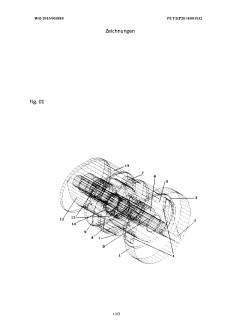
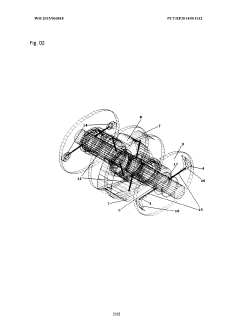
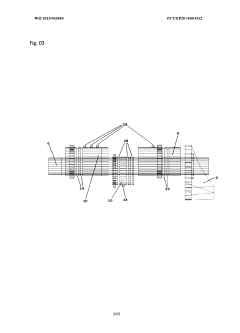
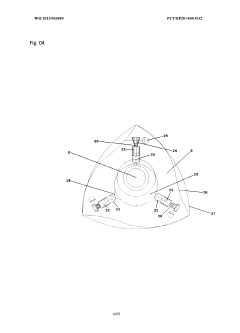
A rotary engine
PatentInactiveIN201621035262A
Innovation
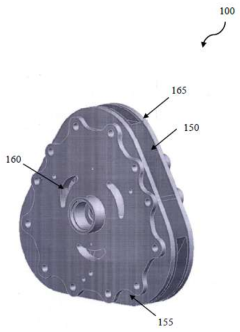
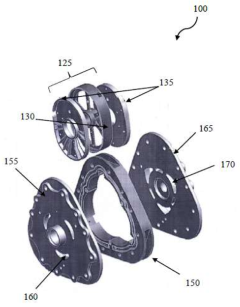
- A rotary engine design featuring a two or three lobed cycloidal profile with a shell-core structure, strengthened cores, and apex seals with leaf springs, along with a cam-type guiding mechanism and ceramic combustion chamber liners, to reduce thermal expansion, enhance sealing, and maintain continuous contact, thereby improving efficiency and reliability.
Emissions Reduction Strategies and Compliance Frameworks
The global regulatory landscape for emissions control has evolved significantly, creating both challenges and opportunities for Wankel engine retrofitting. Current emissions standards such as Euro 6d in Europe, Tier 3 in the US, and China 6 have established increasingly stringent limits on NOx, particulate matter, and CO2 emissions that conventional Wankel engines struggle to meet due to their inherent combustion characteristics.
Several promising emissions reduction strategies have emerged specifically for Wankel retrofitting. Direct injection systems can replace traditional port injection, offering more precise fuel delivery and combustion control, potentially reducing hydrocarbon emissions by 15-20%. Advanced catalytic converter designs with higher precious metal loadings and optimized geometry have demonstrated capability to address the Wankel's unique exhaust temperature profile and composition.
Hydrogen enrichment represents another viable pathway, where small amounts of hydrogen are introduced into the combustion chamber to promote more complete combustion. Laboratory tests have shown this approach can reduce hydrocarbon emissions by up to 25% while improving thermal efficiency. Exhaust gas recirculation (EGR) systems, when specifically calibrated for the Wankel's operating characteristics, have proven effective at reducing NOx formation.
Compliance frameworks vary significantly by region, creating a complex landscape for retrofitting programs. The European Union's type approval process for retrofitted vehicles requires comprehensive emissions testing under the Worldwide Harmonized Light Vehicles Test Procedure (WLTP), while California's Air Resources Board (CARB) maintains its own Executive Order process for aftermarket modifications. Japan has established a specialized certification pathway for rotary engine modifications under its Low Emission Vehicle certification program.
Cost-benefit analyses indicate that achieving full compliance with current standards requires an investment of approximately $2,000-4,500 per vehicle, depending on the baseline engine condition and target market regulations. However, partial compliance strategies focusing on the most cost-effective interventions can achieve 60-70% emissions reduction for approximately half the cost, potentially offering a pragmatic intermediate solution in markets with tiered compliance frameworks.
The development of emissions reduction technology specifically optimized for Wankel engines represents a significant opportunity, as most current solutions are adaptations of technologies designed for reciprocating engines. Purpose-built solutions that address the unique combustion dynamics and thermal characteristics of rotary engines could substantially improve both performance and compliance outcomes.
Several promising emissions reduction strategies have emerged specifically for Wankel retrofitting. Direct injection systems can replace traditional port injection, offering more precise fuel delivery and combustion control, potentially reducing hydrocarbon emissions by 15-20%. Advanced catalytic converter designs with higher precious metal loadings and optimized geometry have demonstrated capability to address the Wankel's unique exhaust temperature profile and composition.
Hydrogen enrichment represents another viable pathway, where small amounts of hydrogen are introduced into the combustion chamber to promote more complete combustion. Laboratory tests have shown this approach can reduce hydrocarbon emissions by up to 25% while improving thermal efficiency. Exhaust gas recirculation (EGR) systems, when specifically calibrated for the Wankel's operating characteristics, have proven effective at reducing NOx formation.
Compliance frameworks vary significantly by region, creating a complex landscape for retrofitting programs. The European Union's type approval process for retrofitted vehicles requires comprehensive emissions testing under the Worldwide Harmonized Light Vehicles Test Procedure (WLTP), while California's Air Resources Board (CARB) maintains its own Executive Order process for aftermarket modifications. Japan has established a specialized certification pathway for rotary engine modifications under its Low Emission Vehicle certification program.
Cost-benefit analyses indicate that achieving full compliance with current standards requires an investment of approximately $2,000-4,500 per vehicle, depending on the baseline engine condition and target market regulations. However, partial compliance strategies focusing on the most cost-effective interventions can achieve 60-70% emissions reduction for approximately half the cost, potentially offering a pragmatic intermediate solution in markets with tiered compliance frameworks.
The development of emissions reduction technology specifically optimized for Wankel engines represents a significant opportunity, as most current solutions are adaptations of technologies designed for reciprocating engines. Purpose-built solutions that address the unique combustion dynamics and thermal characteristics of rotary engines could substantially improve both performance and compliance outcomes.
Material Science Advancements for Rotary Engine Efficiency
Recent advancements in material science have opened new frontiers for enhancing the efficiency and sustainability of Wankel rotary engines. Traditional rotary engines have long suffered from issues related to apex seal wear, housing durability, and thermal management—challenges that have limited their widespread adoption despite their compact design and high power-to-weight ratio. Modern ceramic composites, particularly silicon nitride and silicon carbide, demonstrate exceptional thermal resistance and reduced friction coefficients, making them ideal candidates for apex seal applications in retrofitted Wankel engines.
Nano-engineered surface coatings represent another breakthrough, with diamond-like carbon (DLC) coatings showing a 30% reduction in friction and significantly improved wear resistance when applied to critical engine components. These coatings can be precisely engineered at the nanoscale to optimize tribological properties while maintaining structural integrity under extreme operating conditions.
High-temperature polymer composites have emerged as viable alternatives for certain engine components, offering weight reduction without compromising structural integrity. These materials incorporate carbon fiber reinforcement and specialized additives that enhance thermal stability up to 300°C, addressing historical limitations of polymer use in engine environments.
Advanced metallurgical processes have yielded new aluminum-silicon alloys with improved thermal conductivity and reduced thermal expansion coefficients. These alloys incorporate dispersed ceramic nanoparticles that strengthen grain boundaries and enhance high-temperature performance, critical for housing components in retrofitted rotary engines targeting sustainability goals.
Thermal barrier coatings (TBCs) derived from rare earth zirconates show promise for improving combustion efficiency by allowing higher operating temperatures while protecting underlying metal components. These coatings can reduce heat rejection by up to 20%, directly translating to improved thermal efficiency and reduced fuel consumption in retrofitted Wankel engines.
Biomimetic surface texturing techniques, inspired by natural structures like shark skin, are being applied to rotor surfaces to optimize oil film distribution and reduce parasitic losses. These micro-textured surfaces can be precisely engineered using laser ablation techniques to create patterns that enhance hydrodynamic lubrication while minimizing oil consumption—a critical factor for meeting modern emissions standards.
The integration of these material science innovations into retrofitting strategies for Wankel engines represents a viable pathway toward meeting sustainability goals without abandoning the inherent advantages of rotary engine architecture. Computational materials engineering approaches now enable rapid iteration and optimization of these materials for specific operating conditions, accelerating the development cycle and reducing costs associated with experimental testing.
Nano-engineered surface coatings represent another breakthrough, with diamond-like carbon (DLC) coatings showing a 30% reduction in friction and significantly improved wear resistance when applied to critical engine components. These coatings can be precisely engineered at the nanoscale to optimize tribological properties while maintaining structural integrity under extreme operating conditions.
High-temperature polymer composites have emerged as viable alternatives for certain engine components, offering weight reduction without compromising structural integrity. These materials incorporate carbon fiber reinforcement and specialized additives that enhance thermal stability up to 300°C, addressing historical limitations of polymer use in engine environments.
Advanced metallurgical processes have yielded new aluminum-silicon alloys with improved thermal conductivity and reduced thermal expansion coefficients. These alloys incorporate dispersed ceramic nanoparticles that strengthen grain boundaries and enhance high-temperature performance, critical for housing components in retrofitted rotary engines targeting sustainability goals.
Thermal barrier coatings (TBCs) derived from rare earth zirconates show promise for improving combustion efficiency by allowing higher operating temperatures while protecting underlying metal components. These coatings can reduce heat rejection by up to 20%, directly translating to improved thermal efficiency and reduced fuel consumption in retrofitted Wankel engines.
Biomimetic surface texturing techniques, inspired by natural structures like shark skin, are being applied to rotor surfaces to optimize oil film distribution and reduce parasitic losses. These micro-textured surfaces can be precisely engineered using laser ablation techniques to create patterns that enhance hydrodynamic lubrication while minimizing oil consumption—a critical factor for meeting modern emissions standards.
The integration of these material science innovations into retrofitting strategies for Wankel engines represents a viable pathway toward meeting sustainability goals without abandoning the inherent advantages of rotary engine architecture. Computational materials engineering approaches now enable rapid iteration and optimization of these materials for specific operating conditions, accelerating the development cycle and reducing costs associated with experimental testing.
Unlock deeper insights with Patsnap Eureka Quick Research — get a full tech report to explore trends and direct your research. Try now!
Generate Your Research Report Instantly with AI Agent
Supercharge your innovation with Patsnap Eureka AI Agent Platform!