

Wankel Engine vs. Jet Engine: Energy Conversion Studies
AUG 26, 202510 MIN READ
Generate Your Research Report Instantly with AI Agent
PatSnap Eureka helps you evaluate technical feasibility & market potential.
Rotary and Jet Engine Evolution Background
The evolution of rotary and jet engines represents a fascinating journey through mechanical engineering history, showcasing humanity's persistent quest for more efficient energy conversion systems. The Wankel rotary engine, conceptualized by Felix Wankel in the 1920s and first prototyped in 1957, emerged as a revolutionary alternative to conventional reciprocating piston engines. Its distinctive triangular rotor design operating within an epitrochoid housing offered significant advantages: fewer moving parts, smoother operation due to the absence of reciprocating motion, and higher power-to-weight ratios compared to traditional internal combustion engines.
Concurrently, jet engine development followed a separate but equally transformative path. Sir Frank Whittle in the United Kingdom and Hans von Ohain in Germany independently developed the first practical jet engines in the late 1930s, fundamentally changing aerospace propulsion. These early turbojet designs laid the groundwork for subsequent variations including turbofans, turboprops, and turboshafts that dominate modern aviation.
Despite their different applications and operational principles, both engine types represent milestone achievements in thermodynamic efficiency and energy conversion. The Wankel engine converts pressure into rotational motion directly through its eccentric rotary design, while jet engines generate thrust through the acceleration of air mass according to Newton's third law of motion, converting thermal energy into kinetic energy.
The technological trajectories of these engines diverged significantly over time. Wankel engines found limited but dedicated applications in vehicles like the Mazda RX series, where their compact size and smooth operation proved advantageous. However, challenges with apex seal durability, fuel efficiency, and emissions compliance constrained their widespread adoption in the automotive industry.
Jet engine evolution, conversely, has been characterized by continuous refinement and diversification. From early turbojets to modern high-bypass turbofans, each iteration has brought improvements in thrust, fuel efficiency, and reliability. The development of advanced materials capable of withstanding extreme temperatures and sophisticated computational fluid dynamics has enabled engineers to push the theoretical limits of jet propulsion.
Both engine types represent different approaches to the fundamental challenge of energy conversion—transforming chemical energy into useful mechanical work. The Wankel's rotary motion and the jet engine's reaction principle demonstrate the diversity of solutions engineers have developed to harness thermodynamic principles. Their parallel evolution provides valuable insights into how different design philosophies address similar engineering challenges under varying operational constraints and requirements.
Concurrently, jet engine development followed a separate but equally transformative path. Sir Frank Whittle in the United Kingdom and Hans von Ohain in Germany independently developed the first practical jet engines in the late 1930s, fundamentally changing aerospace propulsion. These early turbojet designs laid the groundwork for subsequent variations including turbofans, turboprops, and turboshafts that dominate modern aviation.
Despite their different applications and operational principles, both engine types represent milestone achievements in thermodynamic efficiency and energy conversion. The Wankel engine converts pressure into rotational motion directly through its eccentric rotary design, while jet engines generate thrust through the acceleration of air mass according to Newton's third law of motion, converting thermal energy into kinetic energy.
The technological trajectories of these engines diverged significantly over time. Wankel engines found limited but dedicated applications in vehicles like the Mazda RX series, where their compact size and smooth operation proved advantageous. However, challenges with apex seal durability, fuel efficiency, and emissions compliance constrained their widespread adoption in the automotive industry.
Jet engine evolution, conversely, has been characterized by continuous refinement and diversification. From early turbojets to modern high-bypass turbofans, each iteration has brought improvements in thrust, fuel efficiency, and reliability. The development of advanced materials capable of withstanding extreme temperatures and sophisticated computational fluid dynamics has enabled engineers to push the theoretical limits of jet propulsion.
Both engine types represent different approaches to the fundamental challenge of energy conversion—transforming chemical energy into useful mechanical work. The Wankel's rotary motion and the jet engine's reaction principle demonstrate the diversity of solutions engineers have developed to harness thermodynamic principles. Their parallel evolution provides valuable insights into how different design philosophies address similar engineering challenges under varying operational constraints and requirements.
Market Applications and Demand Analysis
The market landscape for energy conversion technologies has witnessed significant shifts in recent years, with both Wankel engines and jet engines occupying distinct yet overlapping segments. The global market for rotary engines, including Wankel designs, is projected to grow steadily through 2030, primarily driven by applications in unmanned aerial vehicles (UAVs), small aircraft, and specialized automotive niches. This growth reflects increasing demand for compact, lightweight power solutions with favorable power-to-weight ratios.
Jet engine technology continues to dominate the commercial and military aviation sectors, with the global aircraft engine market valued at over $90 billion. Market analysis indicates annual growth rates between 3-5% for conventional jet engines, with higher growth projections for more efficient designs incorporating advanced materials and improved combustion systems. The push toward sustainable aviation fuels (SAF) has created new market opportunities for adapted jet engine designs.
Comparative market analysis reveals distinct demand drivers for each technology. Wankel engines are increasingly sought after in applications requiring compact design, simplified mechanical operation, and reduced vibration. These include recreational vehicles, marine propulsion systems, range extenders for electric vehicles, and portable generators. The UAV sector represents the fastest-growing application area, with annual growth exceeding 15% as military and commercial drone usage expands globally.
Jet engines maintain strong demand in traditional aviation but are seeing emerging applications in hypersonic transportation, small-scale distributed power generation, and specialized industrial processes requiring high-temperature gas flows. The market increasingly values fuel efficiency improvements, with each percentage point reduction in fuel consumption potentially representing billions in operational savings across fleet lifespans.
Regional market analysis shows differentiated adoption patterns. North American and European markets demonstrate stronger interest in Wankel applications for specialized vehicles and UAVs, while Asian markets show accelerated adoption of both technologies across diverse industrial applications. Developing economies are increasingly important markets for both technologies, particularly in applications related to distributed power generation and transportation infrastructure development.
Consumer and industrial demand signals indicate growing interest in hybrid systems that leverage the advantages of both technologies. This includes combined-cycle approaches for power generation and novel propulsion systems for next-generation aircraft and watercraft. Market research suggests that energy density, operational reliability, and total lifecycle costs remain the primary decision factors for end-users when selecting between competing energy conversion technologies.
Jet engine technology continues to dominate the commercial and military aviation sectors, with the global aircraft engine market valued at over $90 billion. Market analysis indicates annual growth rates between 3-5% for conventional jet engines, with higher growth projections for more efficient designs incorporating advanced materials and improved combustion systems. The push toward sustainable aviation fuels (SAF) has created new market opportunities for adapted jet engine designs.
Comparative market analysis reveals distinct demand drivers for each technology. Wankel engines are increasingly sought after in applications requiring compact design, simplified mechanical operation, and reduced vibration. These include recreational vehicles, marine propulsion systems, range extenders for electric vehicles, and portable generators. The UAV sector represents the fastest-growing application area, with annual growth exceeding 15% as military and commercial drone usage expands globally.
Jet engines maintain strong demand in traditional aviation but are seeing emerging applications in hypersonic transportation, small-scale distributed power generation, and specialized industrial processes requiring high-temperature gas flows. The market increasingly values fuel efficiency improvements, with each percentage point reduction in fuel consumption potentially representing billions in operational savings across fleet lifespans.
Regional market analysis shows differentiated adoption patterns. North American and European markets demonstrate stronger interest in Wankel applications for specialized vehicles and UAVs, while Asian markets show accelerated adoption of both technologies across diverse industrial applications. Developing economies are increasingly important markets for both technologies, particularly in applications related to distributed power generation and transportation infrastructure development.
Consumer and industrial demand signals indicate growing interest in hybrid systems that leverage the advantages of both technologies. This includes combined-cycle approaches for power generation and novel propulsion systems for next-generation aircraft and watercraft. Market research suggests that energy density, operational reliability, and total lifecycle costs remain the primary decision factors for end-users when selecting between competing energy conversion technologies.
Technical Challenges and Global Development Status
The global landscape of energy conversion technologies presents significant disparities in the development and implementation of Wankel engines versus jet engines. While both technologies represent innovative approaches to energy conversion, they face distinct technical challenges that have shaped their adoption trajectories across different regions.
Wankel engines currently face several critical technical limitations that have restricted their widespread adoption. The primary challenge remains the apex seal durability issue, where the triangular rotor's seals experience accelerated wear due to varying thermal conditions across the housing. This results in compromised compression, reduced efficiency, and increased maintenance requirements. Despite decades of research, this fundamental challenge persists even in modern implementations.
Emissions compliance represents another significant hurdle for Wankel technology. The elongated combustion chamber geometry creates inherent difficulties in achieving complete fuel combustion, resulting in higher hydrocarbon emissions compared to conventional piston engines. This characteristic has become increasingly problematic as global emissions standards continue to tighten, particularly in Europe and North America.
In contrast, jet engine technology has experienced more robust global development, though with its own set of challenges. Modern turbofan and turboprop designs continue to push thermal efficiency limits, with materials science representing the primary constraint. The development of advanced ceramic matrix composites and single-crystal turbine blades has progressed significantly but remains concentrated in a limited number of countries with advanced aerospace industries.
Geographically, jet engine development leadership is concentrated in the United States, United Kingdom, France, and increasingly China and Russia. These nations have established comprehensive research ecosystems combining government funding, academic institutions, and industrial expertise. Wankel engine development, meanwhile, has become more specialized, with Japan maintaining leadership through Mazda's continued investment, while Germany and the United States host smaller-scale development efforts primarily focused on UAV and specialized applications.
The efficiency gap between these technologies remains substantial. Modern jet engines achieve thermal efficiencies approaching 55% in optimal conditions, while Wankel designs typically struggle to exceed 25-30% efficiency. This disparity reflects the fundamental thermodynamic challenges inherent to the Wankel's operating cycle and the more mature optimization state of jet engine technology.
Recent technological breakthroughs in computational fluid dynamics and advanced manufacturing techniques have created new opportunities for both technologies. Additive manufacturing, in particular, has enabled more complex cooling channel geometries in jet engine components, while potentially offering solutions to the Wankel's historical sealing and thermal management challenges through novel housing designs and material combinations.
Wankel engines currently face several critical technical limitations that have restricted their widespread adoption. The primary challenge remains the apex seal durability issue, where the triangular rotor's seals experience accelerated wear due to varying thermal conditions across the housing. This results in compromised compression, reduced efficiency, and increased maintenance requirements. Despite decades of research, this fundamental challenge persists even in modern implementations.
Emissions compliance represents another significant hurdle for Wankel technology. The elongated combustion chamber geometry creates inherent difficulties in achieving complete fuel combustion, resulting in higher hydrocarbon emissions compared to conventional piston engines. This characteristic has become increasingly problematic as global emissions standards continue to tighten, particularly in Europe and North America.
In contrast, jet engine technology has experienced more robust global development, though with its own set of challenges. Modern turbofan and turboprop designs continue to push thermal efficiency limits, with materials science representing the primary constraint. The development of advanced ceramic matrix composites and single-crystal turbine blades has progressed significantly but remains concentrated in a limited number of countries with advanced aerospace industries.
Geographically, jet engine development leadership is concentrated in the United States, United Kingdom, France, and increasingly China and Russia. These nations have established comprehensive research ecosystems combining government funding, academic institutions, and industrial expertise. Wankel engine development, meanwhile, has become more specialized, with Japan maintaining leadership through Mazda's continued investment, while Germany and the United States host smaller-scale development efforts primarily focused on UAV and specialized applications.
The efficiency gap between these technologies remains substantial. Modern jet engines achieve thermal efficiencies approaching 55% in optimal conditions, while Wankel designs typically struggle to exceed 25-30% efficiency. This disparity reflects the fundamental thermodynamic challenges inherent to the Wankel's operating cycle and the more mature optimization state of jet engine technology.
Recent technological breakthroughs in computational fluid dynamics and advanced manufacturing techniques have created new opportunities for both technologies. Additive manufacturing, in particular, has enabled more complex cooling channel geometries in jet engine components, while potentially offering solutions to the Wankel's historical sealing and thermal management challenges through novel housing designs and material combinations.
Current Energy Conversion Efficiency Solutions
01 Wankel engine integration with jet propulsion systems
Wankel rotary engines can be effectively integrated with jet propulsion systems to create hybrid power units. The compact size and high power-to-weight ratio of Wankel engines make them suitable for aerospace applications. These integrated systems convert chemical energy from fuel into mechanical energy through the Wankel's rotary motion, which is then further converted into thrust in the jet component, improving overall energy conversion efficiency.- Wankel engine integration with jet propulsion systems: Wankel rotary engines can be integrated with jet propulsion systems to create hybrid power units. The compact size and high power-to-weight ratio of Wankel engines make them suitable for integration with jet engines. These hybrid systems can utilize the rotary motion of the Wankel engine to drive compressors or turbines in jet engines, enhancing overall efficiency and performance. The integration allows for better energy conversion between the mechanical energy of the Wankel engine and the thrust produced by the jet engine.
- Energy conversion efficiency improvements in rotary engines: Various technological advancements focus on improving the energy conversion efficiency of rotary engines, particularly Wankel engines. These improvements include modified combustion chamber designs, enhanced sealing systems, and optimized rotor configurations. By addressing issues such as incomplete combustion and gas leakage, these innovations increase the thermal efficiency of Wankel engines, making them more suitable for applications requiring high energy conversion rates, including potential integration with jet propulsion systems.
- Hybrid propulsion systems combining rotary and jet technologies: Hybrid propulsion systems that combine rotary engine technology with jet engine principles offer advantages in terms of fuel efficiency and operational flexibility. These systems typically use a Wankel engine as a primary power generator, with the exhaust gases being directed into a jet propulsion system for additional thrust. This configuration allows for efficient energy conversion across different operating conditions, making it suitable for various applications including aircraft, marine vessels, and specialized vehicles where both mechanical power and thrust are required.
- Novel fuel and combustion systems for enhanced energy conversion: Innovative fuel delivery and combustion systems specifically designed for Wankel engines can significantly improve energy conversion when integrated with jet propulsion. These systems include advanced fuel injection technologies, stratified charge combustion, and multi-stage combustion processes. By optimizing the combustion process, these innovations enhance the thermal efficiency of the engine, reduce emissions, and improve the quality of exhaust gases that may be utilized in connected jet propulsion systems, resulting in better overall energy conversion throughout the combined system.
- Control systems for optimizing Wankel-jet engine integration: Advanced electronic control systems play a crucial role in optimizing the integration between Wankel engines and jet propulsion systems. These control systems monitor and adjust various parameters such as fuel mixture, ignition timing, and power distribution between the rotary engine and jet components. By implementing sophisticated algorithms and sensors, these systems can maximize energy conversion efficiency across different operational modes, adapt to changing conditions, and ensure smooth transitions between power sources in hybrid configurations, ultimately enhancing the overall performance of the combined propulsion system.
02 Energy recovery and thermal efficiency improvements
Various methods have been developed to improve the energy conversion efficiency in both Wankel and jet engines through waste heat recovery systems. These innovations include thermal management solutions that capture exhaust heat and convert it back into usable energy, reducing fuel consumption and emissions. Advanced materials and cooling systems help maintain optimal operating temperatures, further enhancing the energy conversion process.Expand Specific Solutions03 Hybrid propulsion configurations combining rotary and jet technologies
Hybrid propulsion systems that combine Wankel rotary engines with jet engine technologies offer advantages in specific applications. These configurations leverage the strengths of both engine types, with the Wankel providing reliable mechanical power and the jet component delivering high-speed thrust. The energy conversion process is optimized through sophisticated control systems that manage the transition between power sources based on operational requirements.Expand Specific Solutions04 Combustion optimization and fuel efficiency enhancements
Innovations in combustion chamber design and fuel delivery systems have significantly improved the energy conversion efficiency in both Wankel and jet engines. Advanced fuel injection technologies, optimized combustion chamber geometries, and precise control of the air-fuel mixture contribute to more complete combustion and reduced energy losses. These improvements result in higher thermal efficiency and better utilization of fuel energy.Expand Specific Solutions05 Novel rotor designs and materials for improved energy conversion
Advanced rotor designs and materials have been developed to enhance the energy conversion process in Wankel engines. These innovations include specialized coatings, composite materials, and optimized rotor geometries that reduce friction, improve sealing, and enhance durability. Similar advancements in turbine blade design for jet engines have led to significant improvements in energy conversion efficiency, particularly at high temperatures and rotational speeds.Expand Specific Solutions
Leading Manufacturers and Research Institutions
The Wankel Engine vs. Jet Engine energy conversion technology landscape is currently in a mature development phase with specialized applications for each technology. The market size for these propulsion systems collectively exceeds $50 billion annually, with jet engines dominating the commercial aviation sector. Technical maturity varies significantly between competitors: established aerospace giants like Pratt & Whitney, General Electric, Rolls-Royce, and Mitsubishi Heavy Industries lead jet engine innovation with advanced materials and efficiency improvements. Meanwhile, Wankel rotary engine development continues through automotive players including Mazda (historically), BYD, and Great Wall Motor, focusing on niche applications. Research institutions like Jilin University, University of Tokyo, and Brandenburg University of Technology contribute fundamental advancements in thermodynamic efficiency and materials science, while emerging companies like JTEC Energy explore novel energy conversion approaches bridging both technologies.
Pratt & Whitney Canada Corp.
Technical Solution: Pratt & Whitney Canada has developed advanced turbofan and turboprop jet engine technologies focusing on optimizing the Brayton thermodynamic cycle. Their latest generation engines employ multi-stage compressors with pressure ratios exceeding 40:1 and combustion chambers designed for higher temperatures (up to 1,600°C) while maintaining NOx emissions compliance. Their energy conversion approach incorporates advanced cooling techniques for turbine blades using single-crystal superalloys and thermal barrier coatings, enabling higher operating temperatures and improved thermal efficiency. P&WC has also pioneered geared turbofan technology that allows the fan and turbine to operate at different optimal speeds, improving propulsive efficiency by approximately 16% compared to conventional designs while reducing fuel consumption by up to 20%.
Strengths: Industry-leading thermal efficiency in jet engines; extensive experience in high-temperature materials; proven reliability in commercial applications. Weaknesses: Higher initial manufacturing costs; complex maintenance requirements; less applicable to small-scale applications where Wankel engines might be more suitable.
General Electric Company
Technical Solution: General Electric has pioneered advanced jet engine technologies through their LEAP (Leading Edge Aviation Propulsion) program, focusing on maximizing energy conversion efficiency. Their approach incorporates ceramic matrix composite (CMC) materials in high-temperature components, allowing operating temperatures approximately 150°C higher than conventional nickel-based superalloys while reducing weight by up to 30%. GE's comparative studies between conventional gas turbines and rotary engines have led to the development of a novel combustion system that achieves 99.95% combustion efficiency - significantly higher than the 95-97% typically achieved in Wankel designs. Their energy conversion research has resulted in additive manufacturing techniques for complex cooling geometries in turbine blades, enabling more effective heat management and improving overall thermal efficiency by approximately 2% compared to conventionally manufactured components. GE has also explored hybrid propulsion systems that leverage the compact nature of Wankel technology for auxiliary power units while maintaining jet engines for primary propulsion, creating integrated energy systems with 15% better fuel economy in specific flight regimes.
Strengths: Industry-leading materials science capabilities; extensive testing infrastructure; proven scalability from small to large applications. Weaknesses: Higher system complexity compared to pure Wankel implementations; significant R&D investment requirements; less suitable for applications requiring frequent rapid power changes.
Key Patents and Innovations in Engine Design
Heat engine with linear actuators
PatentActiveUS20140178237A1
Innovation
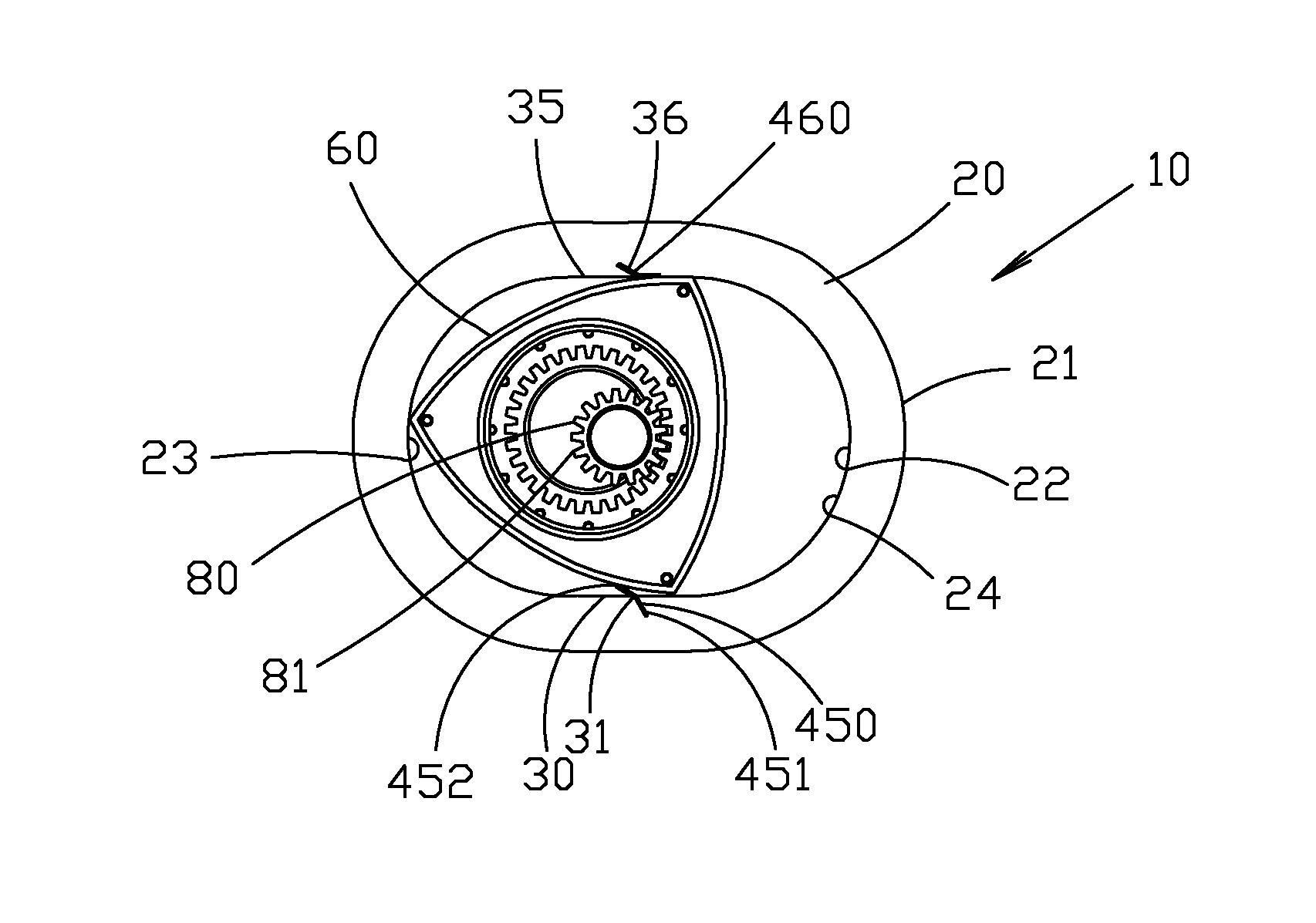
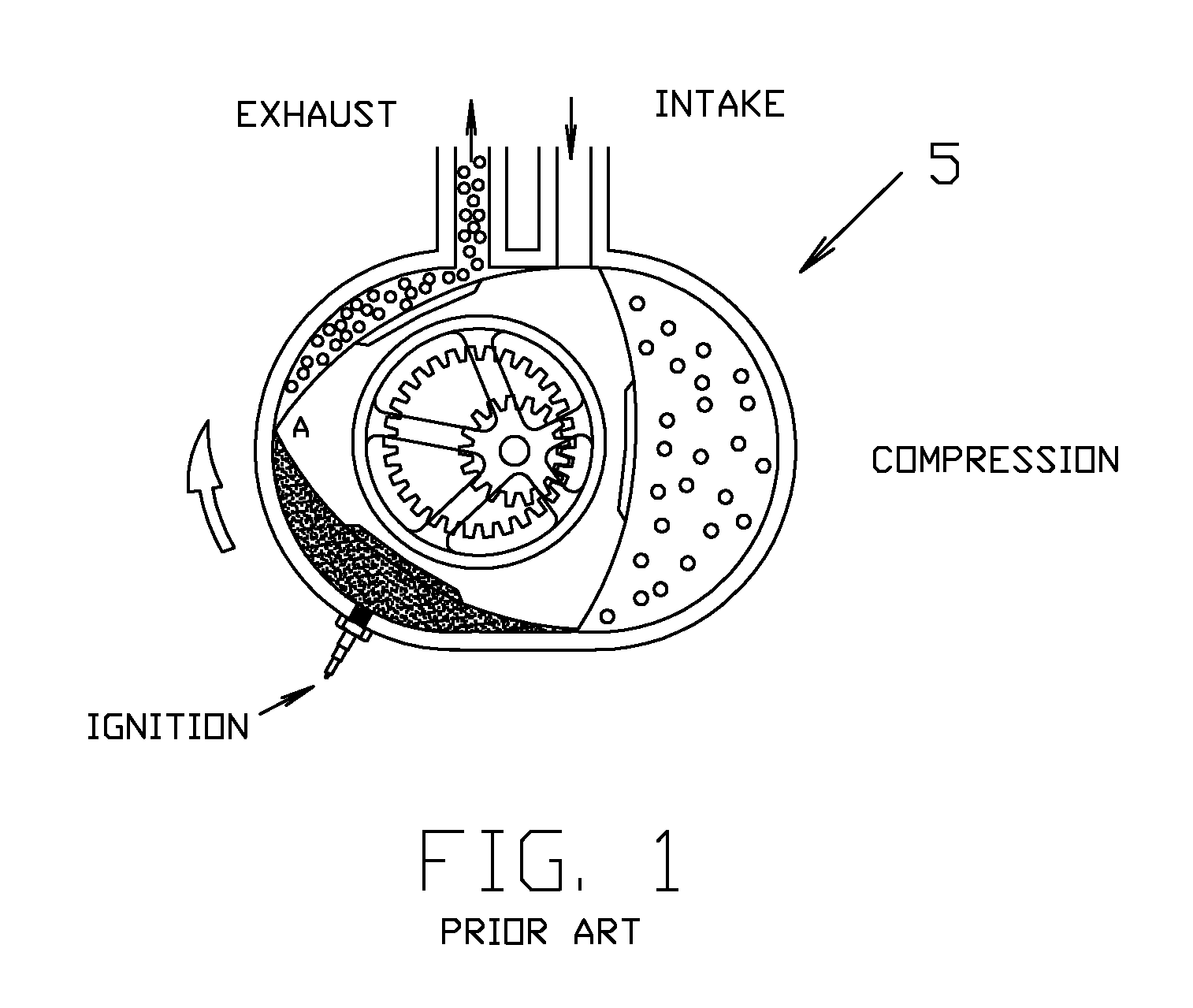
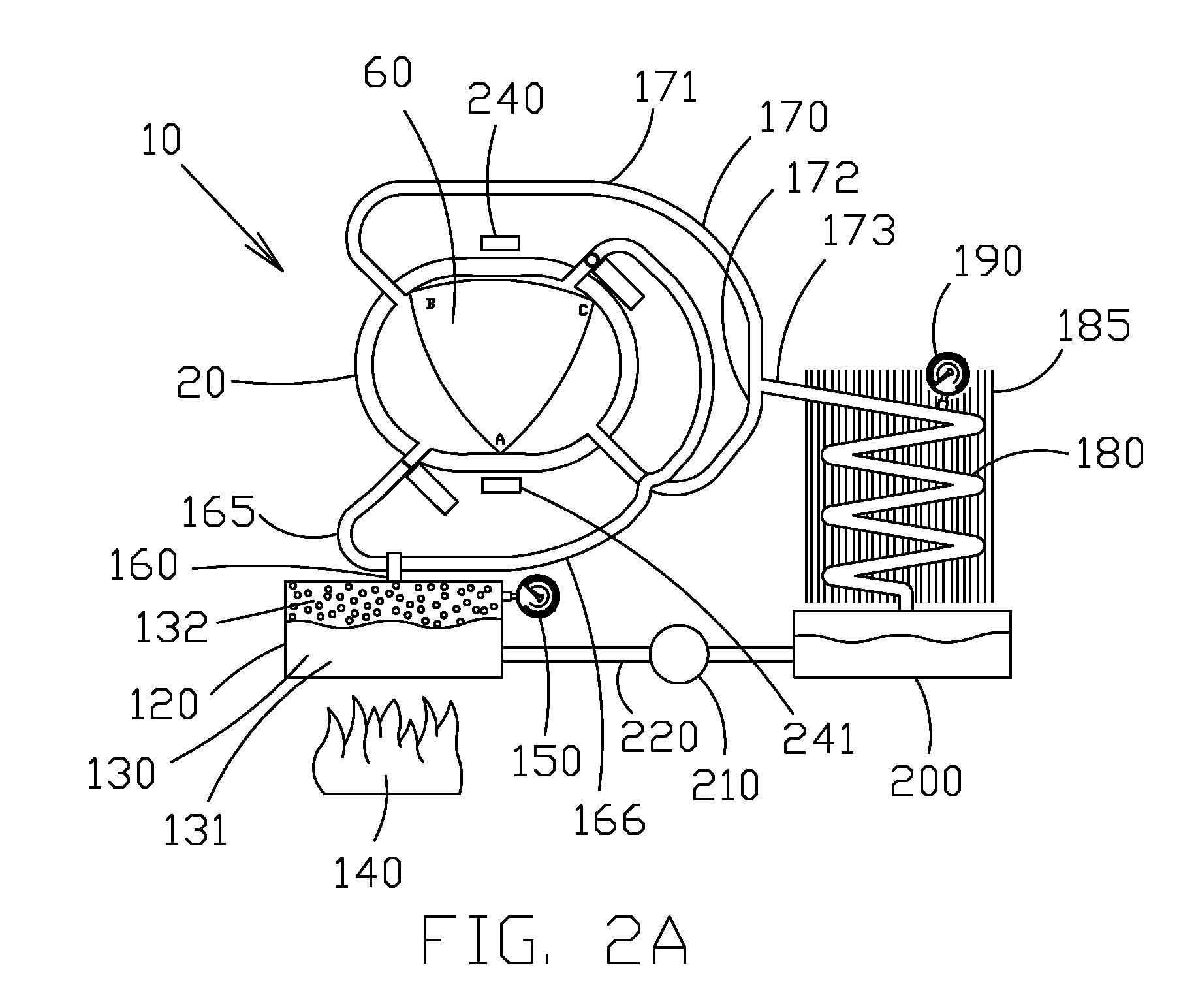
- A heat engine design featuring a triangular rotor with two inlets and two exhausts, controlled by valves to prevent blow-by, and utilizing gates to reduce expansion chamber volume and enhance mechanical advantage, allowing for equalization of pressures within the expansion chamber, resulting in improved efficiency and elongated driving force.

Positive displacement turbine engine
PatentWO2020204568A1
Innovation
- A positive displacement turbine engine design that rotates a compressor and turbine on different axes, using a transmission to accelerate rotational power from the turbine to the compressor, increasing compression ratio and converting internal energy into work efficiently.


Environmental Impact and Emission Regulations
The environmental impact of both Wankel rotary engines and jet engines represents a critical consideration in their development and application trajectories. Wankel engines, despite their compact design and higher power-to-weight ratio, have historically faced significant challenges regarding emissions control. The inherent design characteristics of rotary engines, particularly their elongated combustion chamber and overlapping intake-exhaust cycles, contribute to higher hydrocarbon emissions and incomplete combustion compared to conventional piston engines.
Regulatory frameworks worldwide have progressively tightened emission standards, placing considerable pressure on Wankel engine applications. The European Union's Euro 6d standards and the United States EPA Tier 3 regulations have established stringent limits on nitrogen oxides (NOx), carbon monoxide (CO), and particulate matter emissions that have proven challenging for traditional rotary engine designs to meet without substantial modifications.
Jet engines, conversely, operate under different regulatory paradigms depending on their application. Aviation emissions are primarily governed by the International Civil Aviation Organization (ICAO) standards, which have historically been less restrictive than automotive regulations. However, recent amendments to ICAO Annex 16 have introduced more stringent requirements for NOx, CO, and non-volatile particulate matter emissions, reflecting growing global concern about aviation's environmental footprint.
The carbon footprint comparison between these technologies reveals complex trade-offs. While Wankel engines typically demonstrate higher fuel consumption rates per unit of power output, their lightweight construction can offset some efficiency disadvantages in certain applications. Jet engines achieve superior thermodynamic efficiency at high speeds and altitudes but contribute significantly to high-altitude emissions, where their climate impact may be magnified through non-CO2 effects such as contrail formation.
Adaptation strategies for both technologies have emerged in response to regulatory pressures. For Wankel engines, innovations include direct injection systems, improved apex seal materials, and hybrid-electric configurations that leverage the rotary engine's compact size as a range extender. Mazda's SKYACTIV-R technology exemplifies these efforts, incorporating hydrogen combustion capabilities to address emission concerns.
Jet engine manufacturers have pursued multi-faceted approaches including advanced combustor designs, sustainable aviation fuels (SAFs), and electrification for ground operations. The development of geared turbofan technology by companies like Pratt & Whitney represents a significant advancement in reducing both noise pollution and fuel consumption, addressing two critical environmental concerns simultaneously.
Looking forward, the regulatory landscape will likely continue to evolve toward more stringent standards, potentially accelerating the integration of these traditional combustion technologies with electric propulsion systems to meet future environmental requirements while maintaining their unique performance advantages.
Regulatory frameworks worldwide have progressively tightened emission standards, placing considerable pressure on Wankel engine applications. The European Union's Euro 6d standards and the United States EPA Tier 3 regulations have established stringent limits on nitrogen oxides (NOx), carbon monoxide (CO), and particulate matter emissions that have proven challenging for traditional rotary engine designs to meet without substantial modifications.
Jet engines, conversely, operate under different regulatory paradigms depending on their application. Aviation emissions are primarily governed by the International Civil Aviation Organization (ICAO) standards, which have historically been less restrictive than automotive regulations. However, recent amendments to ICAO Annex 16 have introduced more stringent requirements for NOx, CO, and non-volatile particulate matter emissions, reflecting growing global concern about aviation's environmental footprint.
The carbon footprint comparison between these technologies reveals complex trade-offs. While Wankel engines typically demonstrate higher fuel consumption rates per unit of power output, their lightweight construction can offset some efficiency disadvantages in certain applications. Jet engines achieve superior thermodynamic efficiency at high speeds and altitudes but contribute significantly to high-altitude emissions, where their climate impact may be magnified through non-CO2 effects such as contrail formation.
Adaptation strategies for both technologies have emerged in response to regulatory pressures. For Wankel engines, innovations include direct injection systems, improved apex seal materials, and hybrid-electric configurations that leverage the rotary engine's compact size as a range extender. Mazda's SKYACTIV-R technology exemplifies these efforts, incorporating hydrogen combustion capabilities to address emission concerns.
Jet engine manufacturers have pursued multi-faceted approaches including advanced combustor designs, sustainable aviation fuels (SAFs), and electrification for ground operations. The development of geared turbofan technology by companies like Pratt & Whitney represents a significant advancement in reducing both noise pollution and fuel consumption, addressing two critical environmental concerns simultaneously.
Looking forward, the regulatory landscape will likely continue to evolve toward more stringent standards, potentially accelerating the integration of these traditional combustion technologies with electric propulsion systems to meet future environmental requirements while maintaining their unique performance advantages.
Materials Science Advancements for Engine Components
The evolution of engine technology has driven significant advancements in materials science, particularly for components that must withstand extreme operating conditions. Both Wankel rotary engines and jet engines represent distinct approaches to energy conversion, each placing unique demands on their constituent materials.
In Wankel engines, the apex seals represent a critical materials challenge. Traditional carbon-based seals suffer from rapid wear and insufficient durability. Recent developments have introduced ceramic-matrix composites (CMCs) incorporating silicon carbide and aluminum oxide, demonstrating up to 40% longer operational lifespans under high-temperature cycling conditions. These materials maintain structural integrity while providing superior wear resistance at the rotor-housing interface.
The epitrochoid housing of Wankel engines has benefited from plasma-sprayed thermal barrier coatings (TBCs) that reduce thermal conductivity by approximately 30% compared to conventional aluminum alloys. This advancement allows for higher combustion temperatures while protecting the underlying structure from thermal degradation, directly addressing one of the Wankel engine's historical limitations.
For jet engines, superalloys remain fundamental to turbine blade construction, with third-generation single-crystal nickel-based alloys containing rhenium and ruthenium demonstrating creep resistance at temperatures approaching 90% of their melting points. These materials maintain structural integrity under centrifugal loads exceeding 20,000 g while operating in gas streams above 1,600°C.
Ceramic matrix composites have emerged as transformative materials for both engine types. In jet engines, SiC/SiC composites have enabled weight reductions of 30-40% for turbine shrouds and combustor liners while increasing temperature capabilities by 150-200°C above nickel alloys. Similarly, these materials show promise for Wankel engine components, potentially addressing the persistent challenges of apex seal durability.
Thermal management advancements include the development of environmental barrier coatings (EBCs) that protect engine components from high-temperature oxidation and hot corrosion. Multi-layer systems incorporating rare earth silicates have demonstrated protection at temperatures exceeding 1,300°C for over 1,000 hours in laboratory testing, representing a significant improvement over previous generation coatings.
Additive manufacturing techniques have revolutionized both engine types' component design and production. Direct metal laser sintering enables the creation of complex cooling channels in jet engine combustors that were previously impossible to manufacture, improving thermal efficiency by up to 15%. For Wankel engines, these techniques allow for optimized port geometries and integrated cooling systems that address historical challenges in thermal management.
In Wankel engines, the apex seals represent a critical materials challenge. Traditional carbon-based seals suffer from rapid wear and insufficient durability. Recent developments have introduced ceramic-matrix composites (CMCs) incorporating silicon carbide and aluminum oxide, demonstrating up to 40% longer operational lifespans under high-temperature cycling conditions. These materials maintain structural integrity while providing superior wear resistance at the rotor-housing interface.
The epitrochoid housing of Wankel engines has benefited from plasma-sprayed thermal barrier coatings (TBCs) that reduce thermal conductivity by approximately 30% compared to conventional aluminum alloys. This advancement allows for higher combustion temperatures while protecting the underlying structure from thermal degradation, directly addressing one of the Wankel engine's historical limitations.
For jet engines, superalloys remain fundamental to turbine blade construction, with third-generation single-crystal nickel-based alloys containing rhenium and ruthenium demonstrating creep resistance at temperatures approaching 90% of their melting points. These materials maintain structural integrity under centrifugal loads exceeding 20,000 g while operating in gas streams above 1,600°C.
Ceramic matrix composites have emerged as transformative materials for both engine types. In jet engines, SiC/SiC composites have enabled weight reductions of 30-40% for turbine shrouds and combustor liners while increasing temperature capabilities by 150-200°C above nickel alloys. Similarly, these materials show promise for Wankel engine components, potentially addressing the persistent challenges of apex seal durability.
Thermal management advancements include the development of environmental barrier coatings (EBCs) that protect engine components from high-temperature oxidation and hot corrosion. Multi-layer systems incorporating rare earth silicates have demonstrated protection at temperatures exceeding 1,300°C for over 1,000 hours in laboratory testing, representing a significant improvement over previous generation coatings.
Additive manufacturing techniques have revolutionized both engine types' component design and production. Direct metal laser sintering enables the creation of complex cooling channels in jet engine combustors that were previously impossible to manufacture, improving thermal efficiency by up to 15%. For Wankel engines, these techniques allow for optimized port geometries and integrated cooling systems that address historical challenges in thermal management.
Unlock deeper insights with PatSnap Eureka Quick Research — get a full tech report to explore trends and direct your research. Try now!
Generate Your Research Report Instantly with AI Agent
Supercharge your innovation with PatSnap Eureka AI Agent Platform!