
Fatigue driving detection method based on electroencephalogram signals
An EEG signal, fatigue driving technology, applied in diagnostic recording/measurement, medical science, instruments, etc., can solve problems such as affecting driving safety and interfering with the normal operation of drivers, and achieve the effect of accurate and objective judgment.
- Summary
- Abstract
- Description
- Claims
- Application Information
AI Technical Summary
Problems solved by technology
Method used
Image


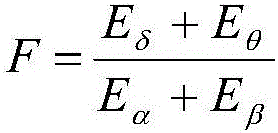
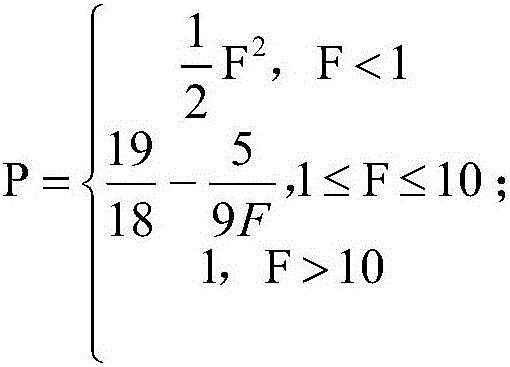
Examples
Embodiment Construction
[0044] The following specific examples further illustrate the present invention, but are not intended to limit the present invention.
[0045] A method for detecting fatigue driving based on EEG signals, comprising the following steps:
[0046] S1: Collect the EEG signal of the driver while driving in real time, and perform the process of removing blink artifacts to obtain the EEG brain wave signal;
[0047] S1-1: Perform ICA on the EEG signal to obtain N independent components and a mixing matrix A;
[0048] S1-2: Calculate the CBI(j) of each component;
[0049] S1-3: Find out the largest component of CBI and use it as a candidate component;
[0050] S1-4: Check whether the candidate component satisfies the relevant conditions, if so, it is an eye blinking component, otherwise it is not;
[0051] S1-5: After determining the blink component, set the column of coefficients corresponding to the blink component in matrix A to zero, and then reconstruct the signal;
[0052] S2...
PUM
 Login to View More
 Abstract
Description
Claims
Application Information
 Login to View More