
Gold nanoflower with liver cancer targeting and radiotherapy sensitivity characteristics and preparation and application thereof
A technology of gold nanoflowers and gold nanorods, applied in the field of gold nanoflowers, can solve the problems of weak targeting cancer tissue and cells, low X-ray absorption efficiency of tumor cell endocytosis, and limited promotion and application, and achieves improved Enrichment degree and residence time, good radiotherapy sensitization, and the effect of increasing residence time
Patent Information
- Authority / Receiving Office
- CN · China
- Current Assignee / Owner
- Publication Date
- 2019-08-02
Smart Images
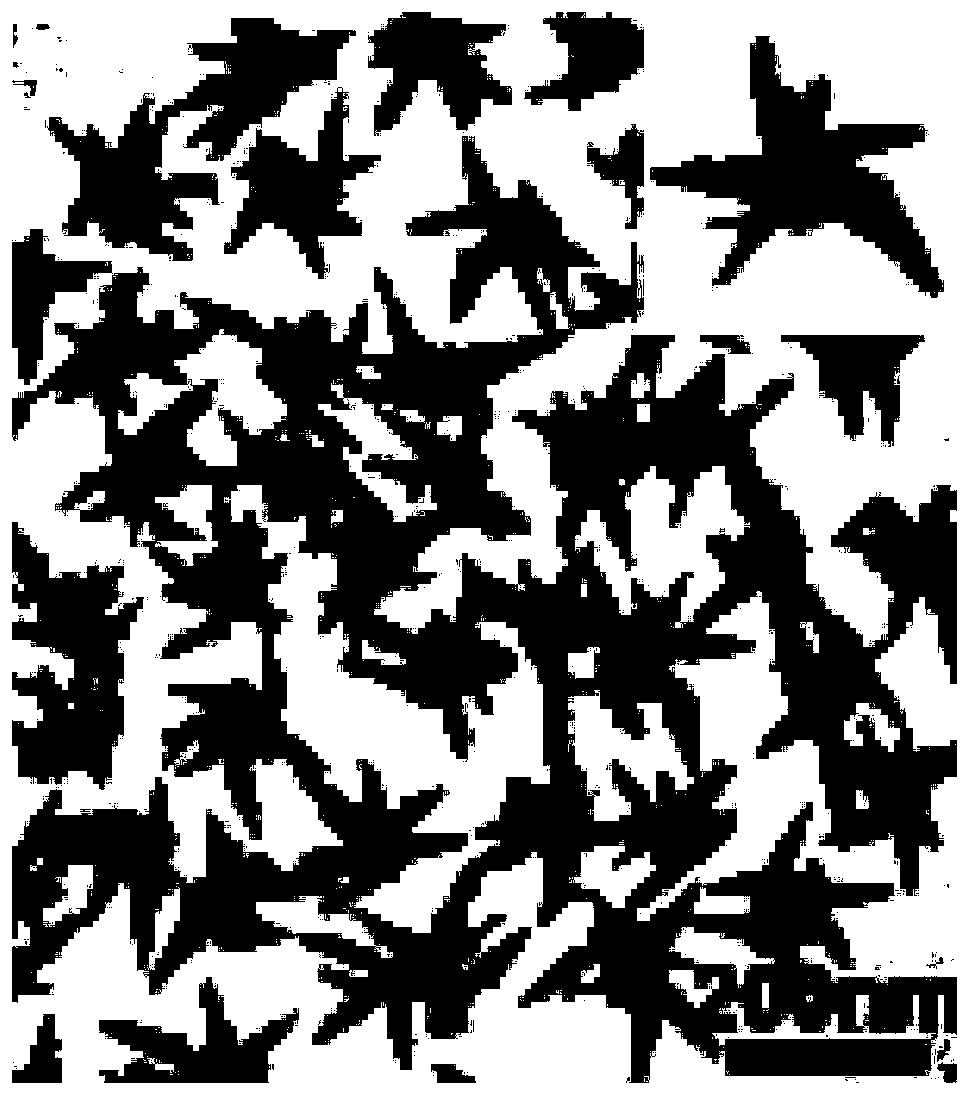
Figure 1 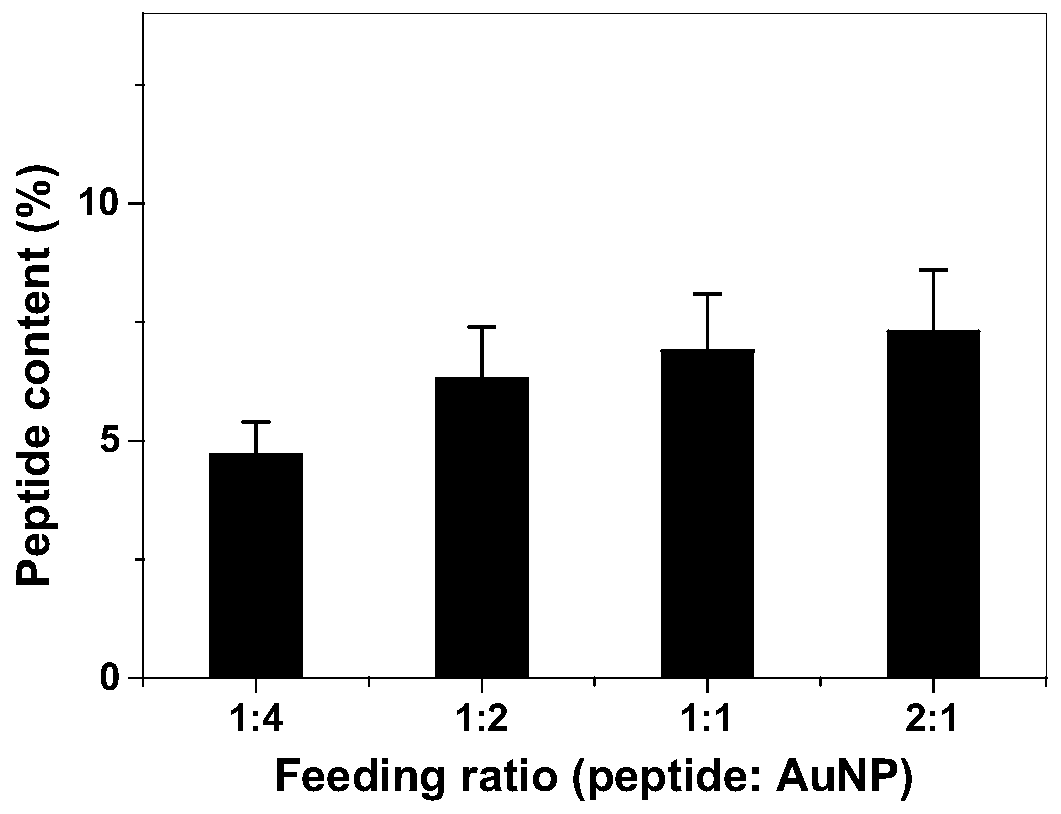
Figure 2 
Figure 3
Abstract
Description
[0001] (1) Technical field
[0002] The invention relates to gold nanoflowers with properties of liver cancer targeting and radiotherapy sensitization, and a preparation method and application thereof.
[0003] (2) Background technology
[0004] Radiation therapy for tumors is a local treatment method that uses radiation to treat tumors. Radiation includes α, β, γ rays produced by radioactive isotopes and x-rays, electron beams, proton beams and other particle beams produced by various x-ray therapy machines or accelerators. About 70% of cancer patients need radiotherapy in the course of cancer treatment, and about 40% of cancers can be cured with radiotherapy. The role and status of radiotherapy in tumor treatment has become increasingly prominent, and it has become one of the main means of treating malignant tumors. Due to the large side effects of radiotherapy, there is an urgent need to enhance the sensitivity of tumor tissue to radiotherapy, so as to increase the curativ...
Examples
Embodiment 1
[0038] 1) Add 360 μL of 0.01M glutathione solution to 1 mL (0.1 mM) of gold nanorods (self-prepared, with a size of 14×50 nm, see below for the method), stir vigorously at room temperature for 2 hours; then add 5.81 mL of cetyltrimethylammonium chloride (CTAC) at a concentration of 0.033 mM, 40 μL of HAuCl at a concentration of 25 mM 4 solution, 30 μL of 1 mM AgNO 3 Solution, 60 μL of ascorbic acid solution with a concentration of 100 mM. Stir vigorously at room temperature for half an hour and then stand overnight in a constant temperature water bath at 28° C. to obtain monodisperse gold nanoflower particles. Its transmission electron microscope pictures are shown in figure 1 .
[0039] Preparation of gold nanorods by seed growth method:
[0040] Preparation of gold seeds: 0.25 mL of 10 mM HAuCl 4 Add to 10mL 0.1M CTAB solution, then add 0.6mL 0.01M NaBH under vigorous stirring 4 , after continuing to stir vigorously for 2 minutes, it was left to stand in a water bath a...
Embodiment 2
[0048] Same as Example 1, the difference lies in step 2): take 10 mg of gold nanoflower particles obtained in step 1) and centrifuge to remove excess CTAC ligand, then disperse in 20 mg / mL polypeptide-polysarcosine solution, and place at 30°C Shake in a constant temperature water bath. Repeat this step one day later after removing the supernatant by centrifugation. The functionalized gold nanoflower particles were then collected by centrifugation. The content of polypeptide molecules on the surface of nanomaterials was analyzed by BCA kit, and the results can be found in figure 2 , showing that the mass of the polypeptide accounts for 7.9% of the nanomaterial.
Embodiment 3
[0050] Same as Example 1, the difference lies in step 2): Take 10 mg of citric acid-protected spherical gold nanoparticles (particle size 5-20 nm), disperse them in 5 mg / mL polypeptide-polysarcosine solution, and place them at a constant temperature of 30 ° C Shake in water bath. Repeat this step one day later after removing the supernatant by centrifugation. The functionalized gold nanospheres were then collected by centrifugation. The same dose of gold nanospheres (calculated according to the gold content) was injected into tumor-bearing nude mice, and radiotherapy was performed. See results Figure 7 , showing that the radiosensitization effect of gold nanospheres is worse than that of gold nanoflowers with the same responsive surface, indicating that gold nanoflowers have better radiosensitization effects.