
Purines as trk kinase inhibitors
A kind of kinase inhibition, compound technology, applied in the field of chemical medicine
Patent Information
- Authority / Receiving Office
- CN · China
- Patent Type
- Patents(China)
- Current Assignee / Owner
- Publication Date
- 2020-06-09
Smart Images
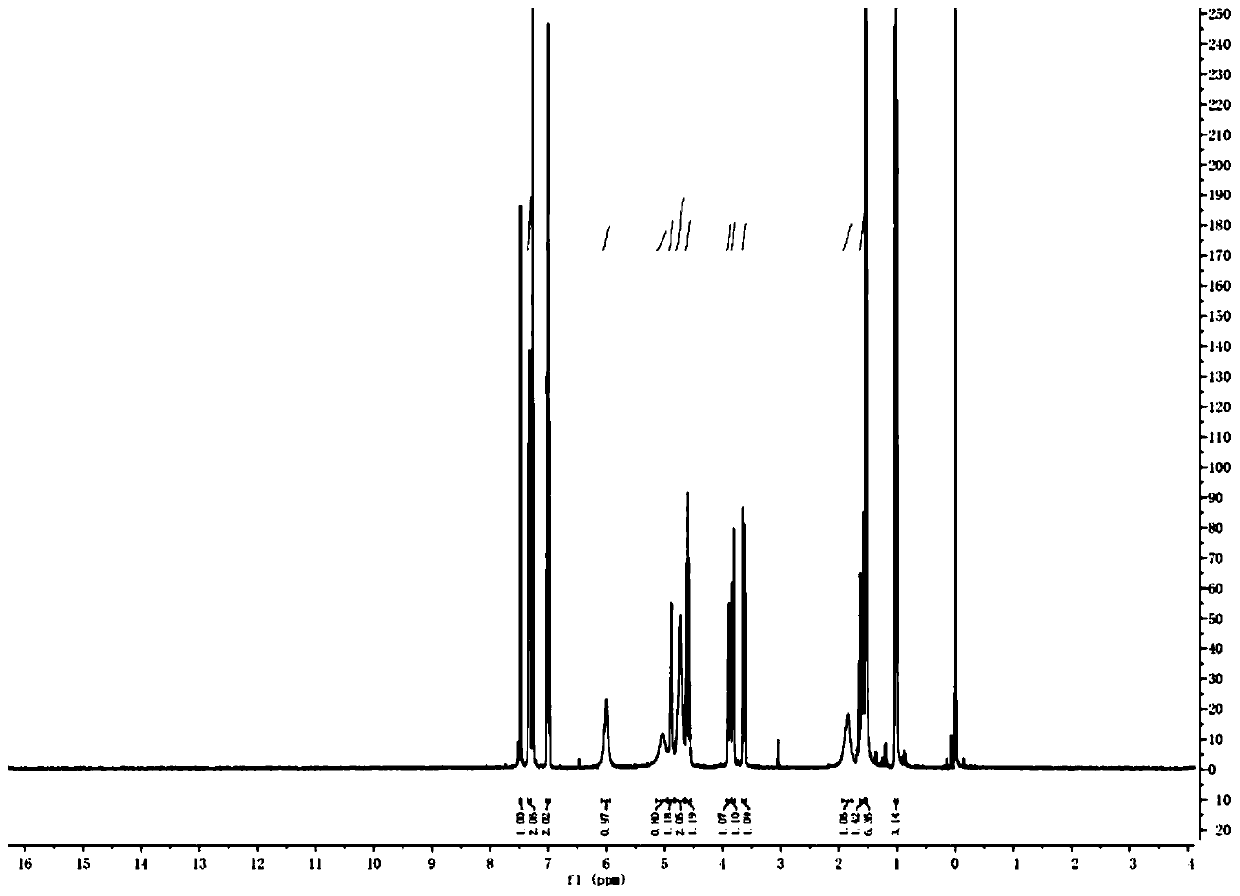
Figure 1 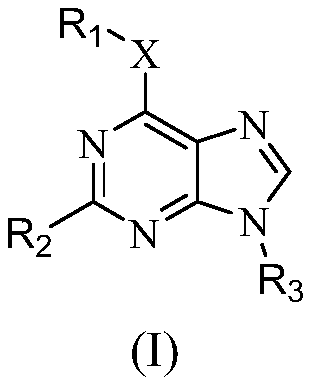
Figure 2 
Figure 3
Abstract
Description
technical field
[0001] The invention belongs to the field of chemical medicine, in particular to purine compounds as Trk kinase inhibitors. Background technique
[0002] The occurrence of malignant tumors is caused by a series of gene abnormalities, including the inactivation of tumor suppressor genes and the activation of proto-oncogenes. Cancer cells grow vigorously, showing relatively endless growth, which is not in harmony with the normal metabolism of the human body, seriously affects the normal functions of various organs of the human body, destroys the normal tissue structure of the human body, and is a disease that seriously endangers human life and health. The development of small molecule kinase inhibitors as potential cancer therapies is currently an area of interest, as mutations and gene fusions of certain Trks and their controlled counterparts are associated with uncontrolled tumorigenesis and proliferation .
[0003] Tropomyosin-related kinase (Trk) is a k...
Examples
Embodiment 1
[0096] The preparation of embodiment 1 intermediate:
[0097] Preparation of 2-chloro-N-(4-fluorobenzyl)-9H-purin-6-amine:
[0098] The structural formula is as follows:
[0099] Add n-butanol (50mL) and 2,4-dichloropyrimidine (5g, 26.7mmol) into an eggplant-shaped bottle (250mL), stir to dissolve, then slowly add p-fluorobenzylamine (3.4g, 27mmol) and triethyl Amine (3.4g, 33.6mmol) was heated to 110°C for 3h. It was detected by TLC that the reaction was complete, cooled to 20° C., a solid precipitated out, filtered with suction, washed with n-butanol (5 mL), and dried to obtain a white solid product (5.5 g, yield 75%).
[0100] Preparation of 2-chloro-N-(4-fluorobenzyl)-9-isopropyl-9H-purin-6-amine (intermediate A1):
[0101] The structural formula is as follows:
[0102] Add DMSO (10mL) and 2-chloro-N-(4-fluorobenzyl)-9H-purin-6-amine (2g, 7.2mmol) into an eggplant-shaped flask (250mL), stir to dissolve, and store at 18-20°C Potassium carbonate (3.5 g, 25.3 mmol) a...
Embodiment 2
[0121] Example 2 Preparation of (S)-2-((6-(4-fluorobenzoyl)-9-isopropyl-9H-purin-2-ol) butanone-1-ol
[0122]
[0123] Add intermediate A1 (1.2g, 3.8mmol) and (R)-2-amino-1-butanol (3mL) into an eggplant-shaped flask (25mL), under nitrogen protection, heat to 160°C for 8h, and TLC detects that the reaction is complete , cooled to room temperature, added water (20 mL), extracted with ethyl acetate (20 mL×4), washed the organic layer with 50°C warm water (30 mL×2), dried over sodium sulfate, and evaporated most of the solvent under reduced pressure. Ethyl acetate (10 mL) was added to the residual liquid, crystals were precipitated, and white crystals (1 g, 70%) were obtained by filtration.
[0124] 1 H-NMR (400MHz, CDCl 3 )δ: 7.48(d,J=2.0Hz,1H),7.36–7.29(m,2H),7.04–6.97(m,2H),6.01(s,1H),5.04(s,1H),4.89(d ,J=6.1Hz,1H),4.73(s,2H),4.60(p,J=6.8Hz,1H),3.85-3.93(m,1H),3.82(dd,J=10.7,2.6Hz,1H) ,3.63(dd,J=10.7,7.7Hz,1H),1.85(s,1H),1.64–1.57(m,1H),1.53(d,J=6.7Hz,6H),0.97-0.08(m,3H...
Embodiment 3
[0125] Example 3 Preparation of 2-((6-(4-fluorophenyl)amino)-9-isopropyl-9H-purin-2-yl)amino)-2-phenethyl 1-ol
[0126] Synthesis was carried out in the same manner as that of Compound 1 except that DL-phenylglycinol was used instead of (R)-2-amino-1-butanol. The structural formula is as follows:
[0127]
[0128] 1 H-NMR (400MHz, DMSO-d 6 )δ: 8.82(s, 1H), 8.29(s, 1H), 7.76(s, 1H), 7.32-7.43(m, 3H), 7.24(t, J=7.5Hz, 1H), 7.11-7.19(m ,2H),7.05(s,1H),6.61(d,J=7.5Hz,0H),4.71–4.64(m,1H),4.61(d,J=6.2Hz,2H),4.54–4.40(m, 1H), 3.69–3.57(m, 1H), 1.50(d, J=6.8Hz, 6H), 1.41(d, J=6.7Hz, 2H).