

Parkinson's disease specific serum endogenous small molecule marker and application thereof
A technology of Parkinson's disease and markers, applied in the field of biomedicine, can solve the problems of being unable to effectively respond to the condition of PD patients, and achieve the effects of high accuracy, high sensitivity, high accuracy and sensitivity
Patent Information
- Authority / Receiving Office
- CN · China
- Current Assignee / Owner
- Publication Date
- 2020-07-03
- Estimated Expiration
- Not applicable · inactive patent
Smart Images
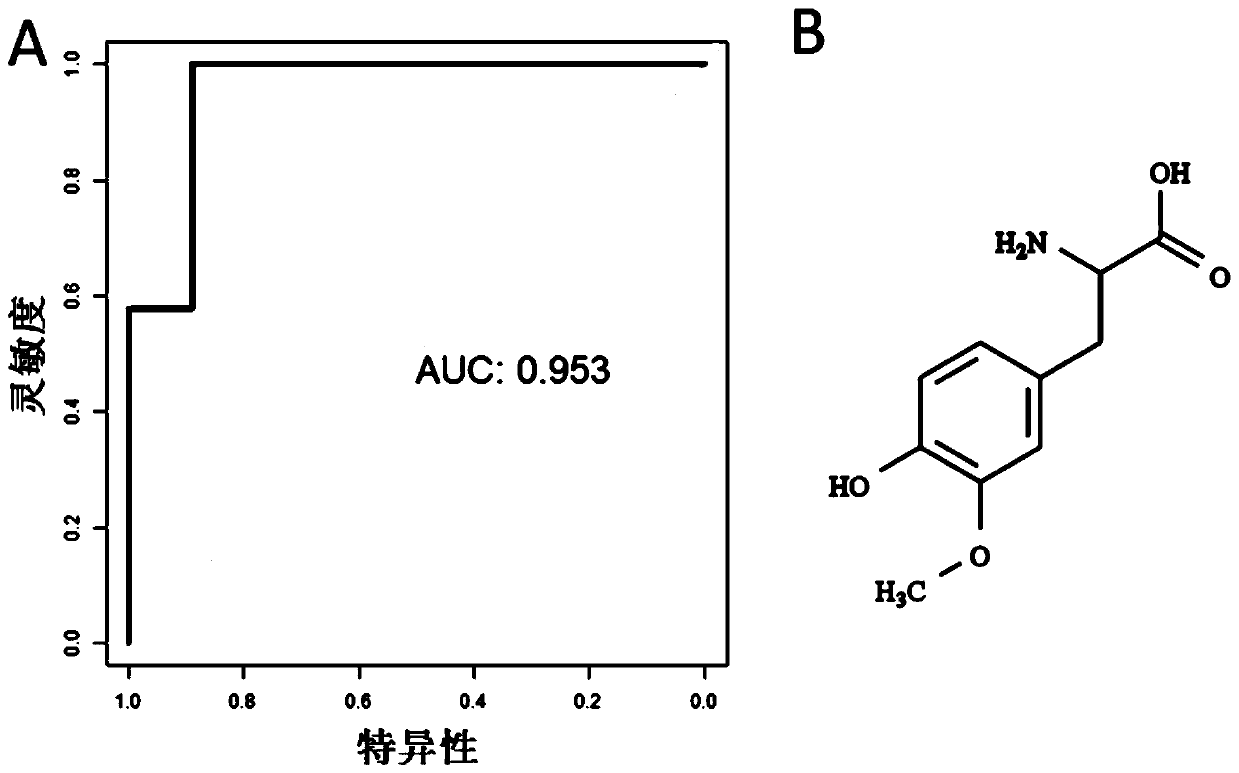
Figure 1 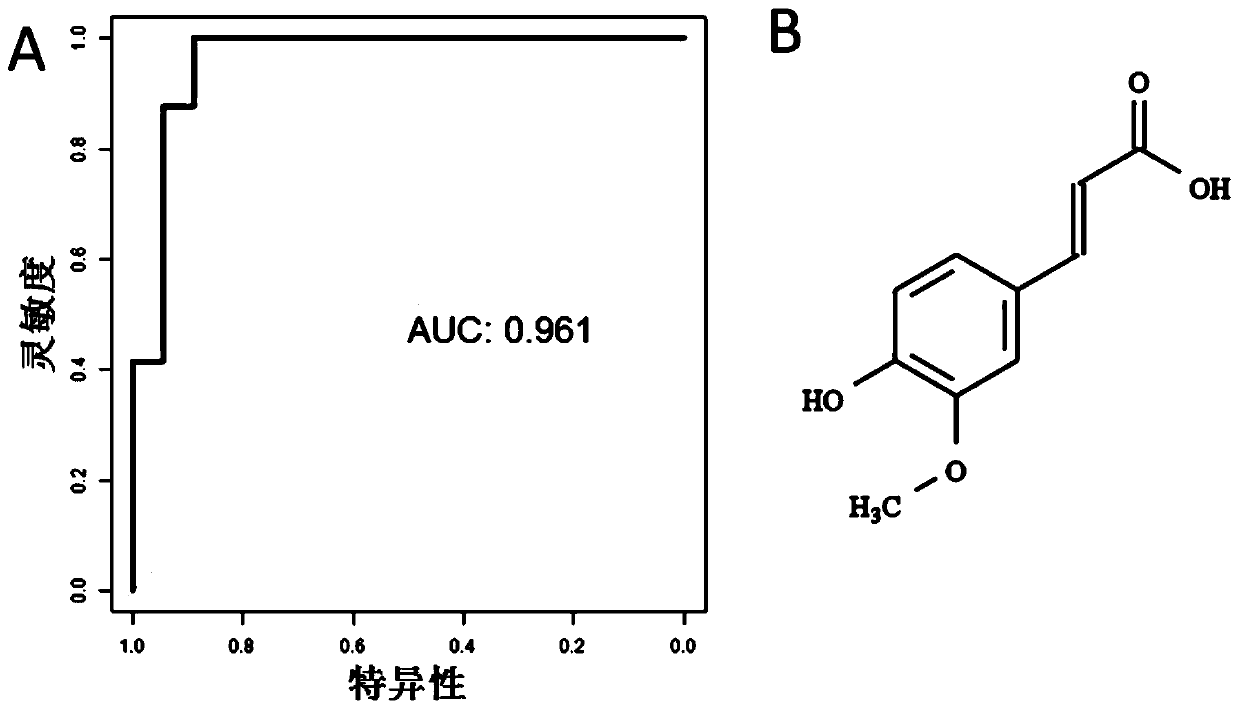
Figure 2 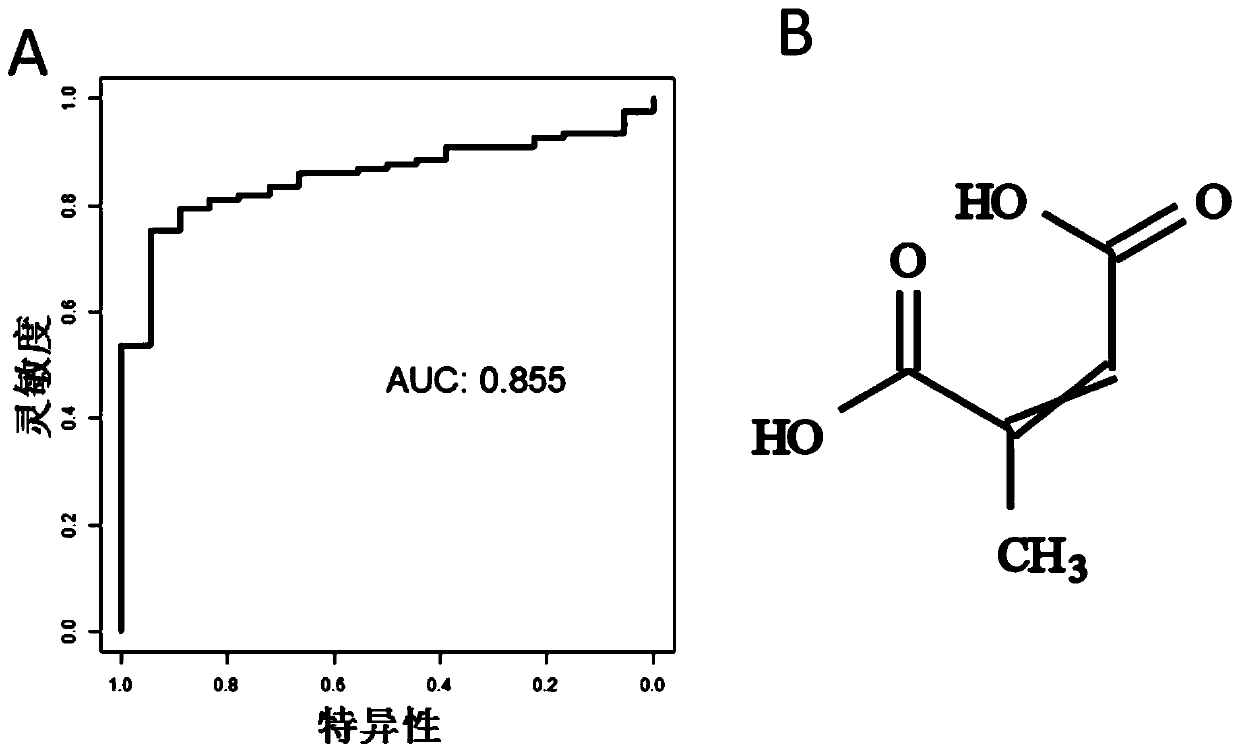
Figure 3
Abstract
Description
technical field
[0001] The invention belongs to the technical field of biomedicine, and in particular relates to a Parkinson's disease-specific serum endogenous small molecule marker and its application. Background technique
[0002] Parkinson's disease (PD) is one of the diseases that seriously endanger the quality of life of the elderly, and it is also one of the most important neurodegenerative diseases. , PD patients are gradually increasing. As of 2019, the number of PD patients in my country has reached 3 million, and there is a trend of increasing year by year. So many PD patients have caused a huge economic burden to the family and the country.
[0003] The pathogenesis of PD is not very clear yet, but it is directly related to genetics, environment and aging. Currently, the drugs for PD are mainly dopamine drugs and monoamine oxidase type B (MAO-B) inhibitor drugs, but these drugs cannot Reversing the process of PD, so the early diagnosis and treatment of PD is the...
Examples
Embodiment 1
[0031] Example 1 Parkinson's disease-specific serum endogenous small molecule markers
[0032] The present invention discloses a Parkinson's disease-specific serum endogenous small molecular marker, which can be used alone or in combination of two or more for early diagnosis of Parkinson's disease, including 2-amino-3-( 4-Hydroxy-3-methoxyphenyl)propanoic acid (2-Amino-3-(4-hydroxy-3-methoxyphenyl)propanoic acid), Ferulic acid, Citraconic acid, Altrose, pentadecanoic acid, O-phosphoserine, 4,6β-hydroxymorphine (4,6β-Hydromorphol), levothyroxine (Levothyroxine), 5ξ, 9ξ, 16ξ)-17-hydroxyaluminum-19-acid ((5ξ,9ξ,16ξ)-17-Hydroxykauran-19-oicacid), 8-(1,2-dihydroxy-3-methylbut-3-ene- 1-yl)-7-methoxy-2H-chromium-2--2-one (8-(1,2-dihydroxy-3-methylbut-3-en-1-yl)-7-methoxy-2H- chromen-2-one), 10-hydroxydecanoic acid (10-Hydroxydecanoic acid), perfluorooctanoic acid (Perfluorooctanoic acid, PFOA), 9,12,13-trihydroxy-10(e), 15(z)-octadecanedi One or more of the alkenoic acids (Corchor...
Embodiment 2
[0042] Example 2 Diagnosis of Parkinson's disease using Altrose (Altrose) as a single marker:
[0043] The specific implementation method is as follows:
[0044] 1. Obtain the subject's sample and perform pre-treatment: After collecting the subject's blood sample according to the standardized and reasonable operation process, take 100 μL of blood and add it to 350 μL of methanol, vortex and mix, high-speed centrifugation, and take the supernatant, Concentrate and dry, add 100 μL of acetonitrile for reconstitution, pass through a filter plug, and directly perform UHPLC-QTOFMS test.
[0045] 2. Data processing: After the UHPLC-QTOFMS test, collect the UHPLC-QTOFMS data for analysis. The XCMS program was used for data processing, and the parameters were set according to the software instructions. After processing by XCMS program, the charge-to-mass ratio, retention time, peak area and secondary mass spectrometry indicators of all metabolites were obtained.
[0046] 3. Determin...
Embodiment 3
[0048] Example 3 Ferulic acid is used as a single marker to diagnose Parkinson's disease.
[0049] The determination of the tester's ferulic acid concentration is the same as step 1-3 in Example 2. The concentration of ferulic acid in the blood of the subjects measured above was compared with the threshold value of non-Parkinson patients. If the value exceeds the threshold for non-Parkinson patients, then the subject has a higher likelihood of developing Parkinson's disease. Among them, the concentration of ferulic acid in the blood of healthy people is less than 50nmol / L, and the results show that the area under the characteristic curve is 0.96, indicating that using ferulic acid as a marker of PD can very accurately predict whether the subject has Parkinson's disease .
[0050] Taking a sample as an example, the concentration of ferulic acid in the sample blood is 434nmol / L, which is higher than the threshold value (50nmol / L) of the general population, indicating that the ...