
Method and apparatus for synchronizing dynamic graphics
a dynamic graphics and dynamic image technology, applied in the direction of instruments, television systems, color signal processing circuits, etc., can solve the problems of no method at present to allow users, no method at present to reconstruct original images at receiving devices, and the inability to copy complete video
Patent Information
- Authority / Receiving Office
- US · United States
- Current Assignee / Owner
- Publication Date
- 2003-12-04
- Estimated Expiration
- Not applicable · inactive patent
Smart Images
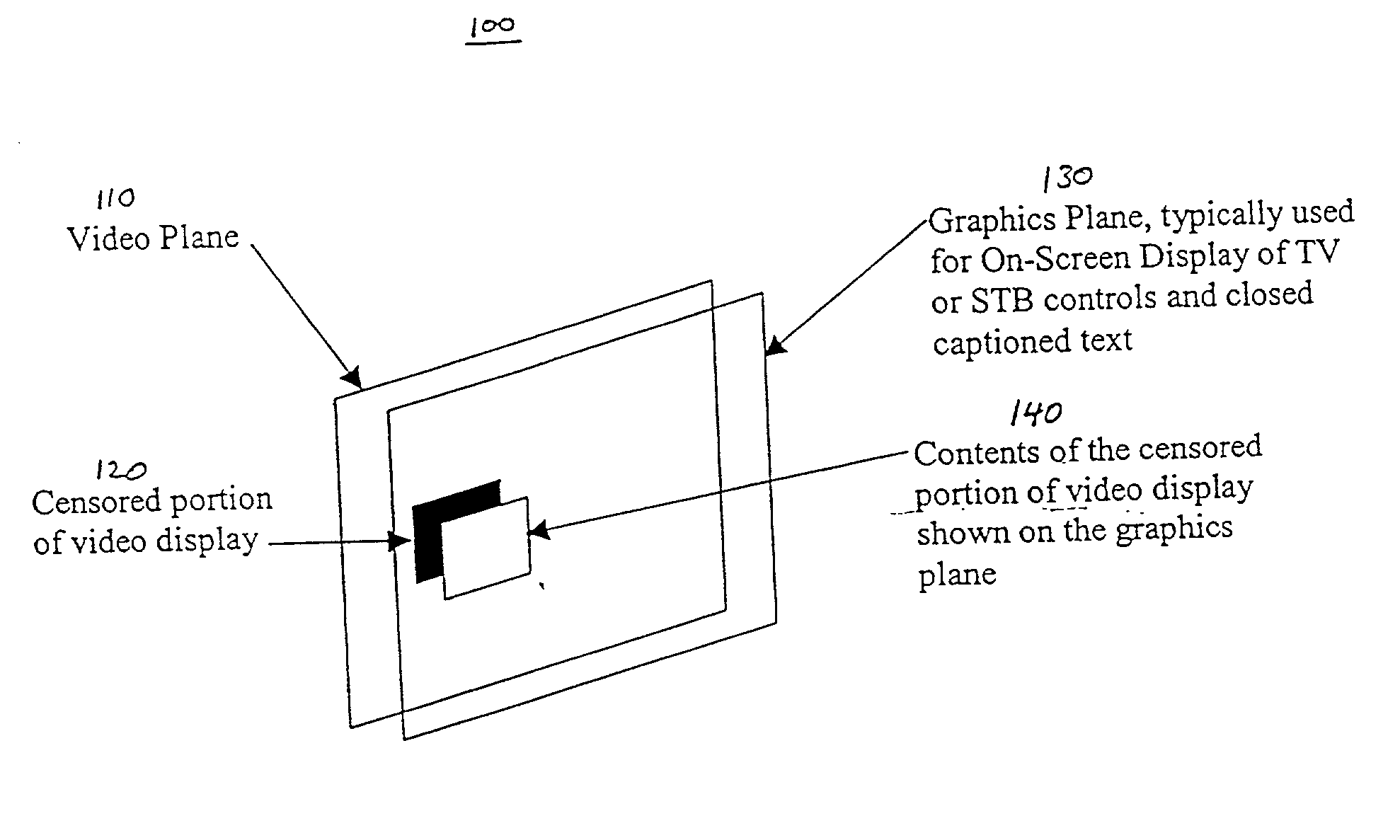
Figure 1 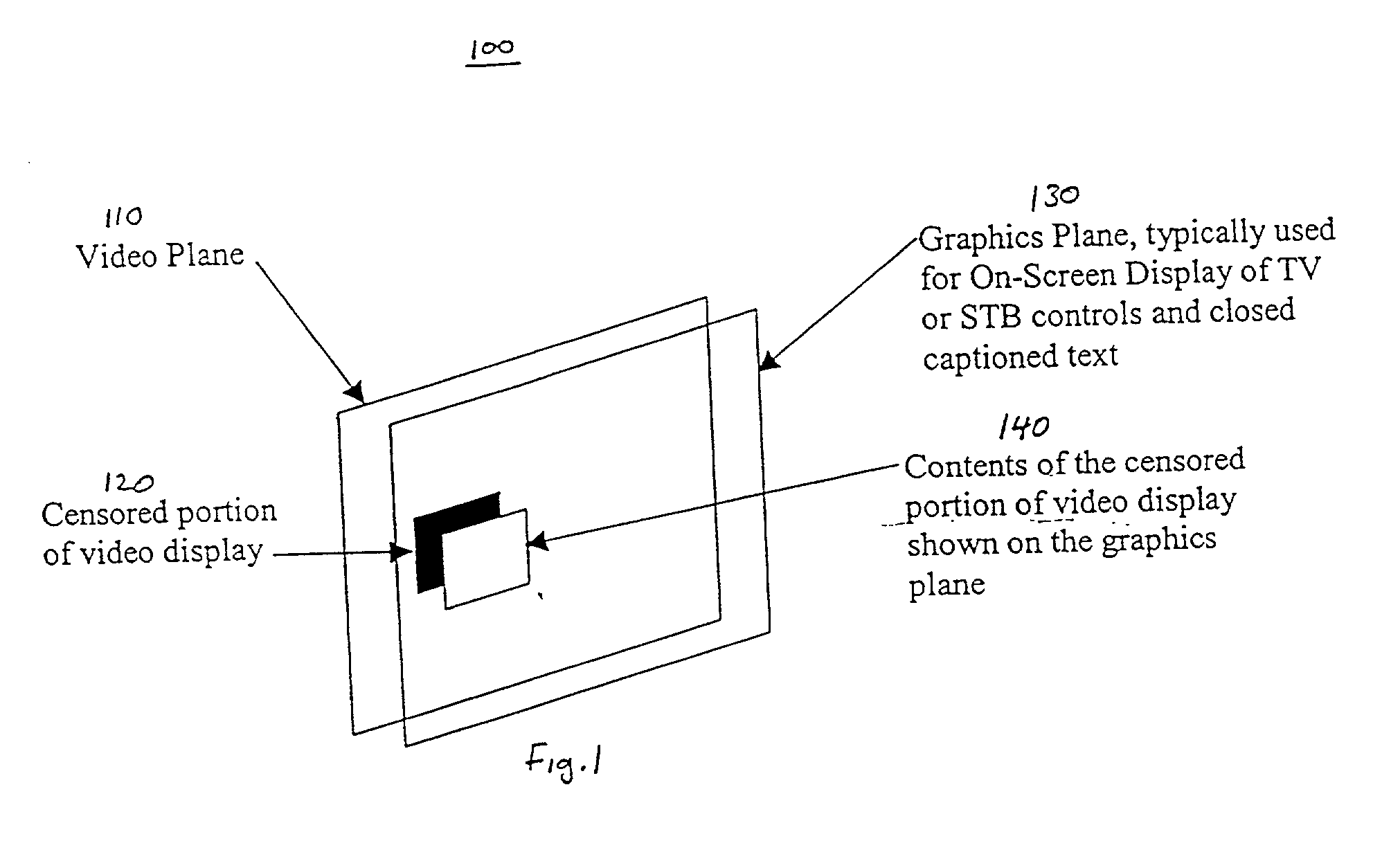
Figure 2 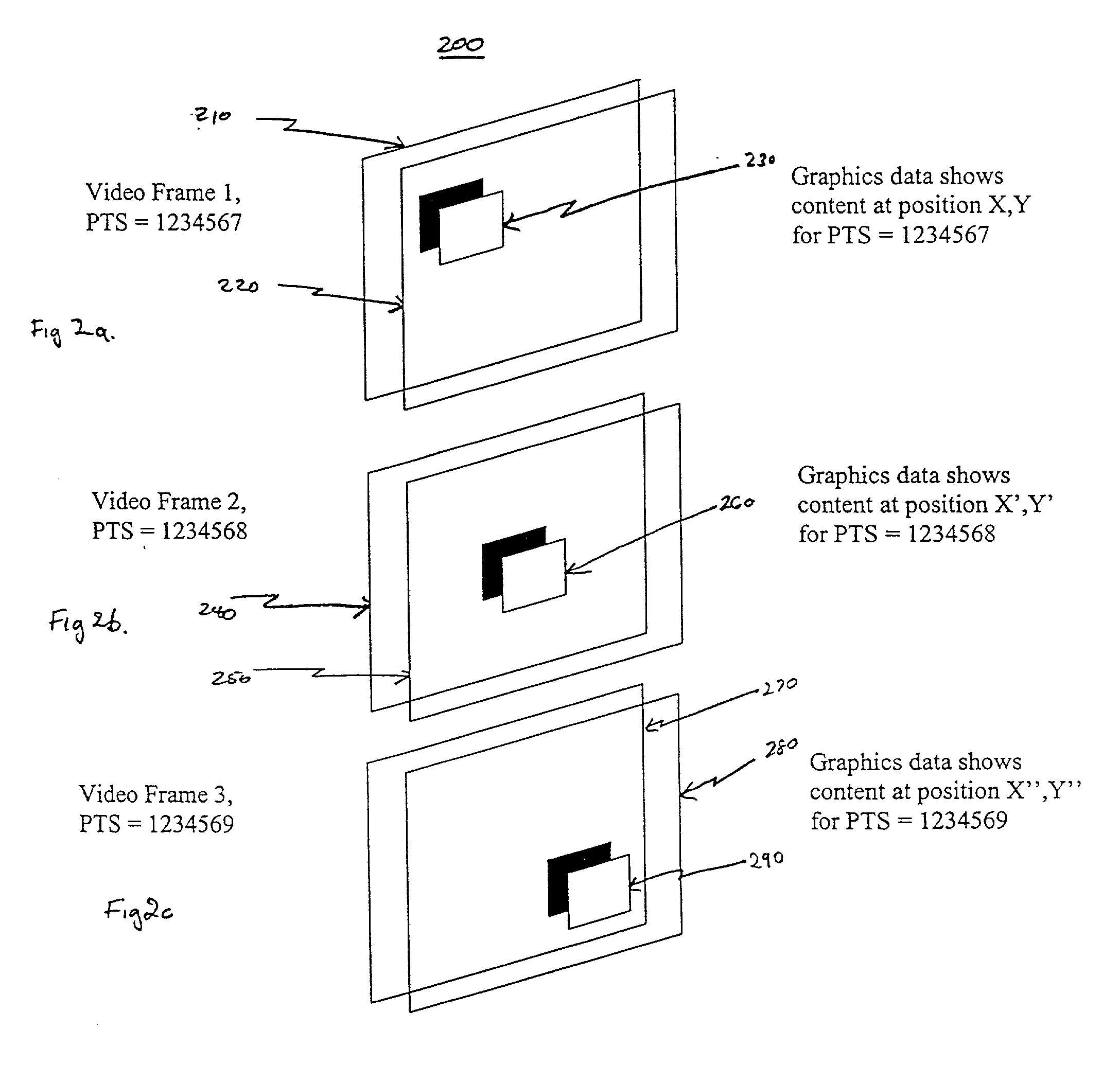
Figure 3
Abstract
Description
I. FIELD OF THE INVENTION
[0001] The present invention relates to completing parts of a video plane by overlaying graphic content from the graphics plane onto the video plane, and more specifically synchronizing the graphic content to be overlaid with the particular video plane by using frame identifier information of the chosen video plane.II. BACKGROUND OF THE INVENTION
[0002] Concealing part of video is routinely performed today for a variety of reasons. For example, if a particular part of a video is deemed not suitable for viewing by the public in general, then that part of the video not suitable for viewing is concealed by a blurring operation of the part of the video deemed not suitable. When the video is then viewed, the blurred part of the video would conceal the not suitable material but would still allow the rest of the video content to be viewed.
[0003] Sometimes an entire video channel is concealed from viewing by a scrambling operation. This may be done when a monthly acc...
Examples
Embodiment Construction
[0018] Definitions
[0019] Included are the following definitions which are set forth and are intended to be used when reviewing the matter contained in the below description and shown in the accompanying drawings to be interpreted as illustrative and not in a limiting sense.
[0020] Video--a digital video signal provided from content providers, including but not limited to cable companies, satellite providers and pay per view providers.
[0021] Video Channel--a designated frequency for carrying modulated video content.
[0022] Video plane--internal hardware device used for the scan out to a display.
[0023] Graphic plane--internal hardware device used for graphic overlaying on the video.
[0024] Graphic content--the package of information sent from the content provider that specifies data to be overlaid on the displayed video.
[0025] Video content--video information intended for display on a display device.
[0026] Graphic overlay--graphic plane on the video for display.
[0027] Graphic plane infor...