
Pyrolysis machine
- Summary
- Abstract
- Description
- Claims
- Application Information
AI Technical Summary
Benefits of technology
Problems solved by technology
Method used
Image

Examples
Embodiment Construction
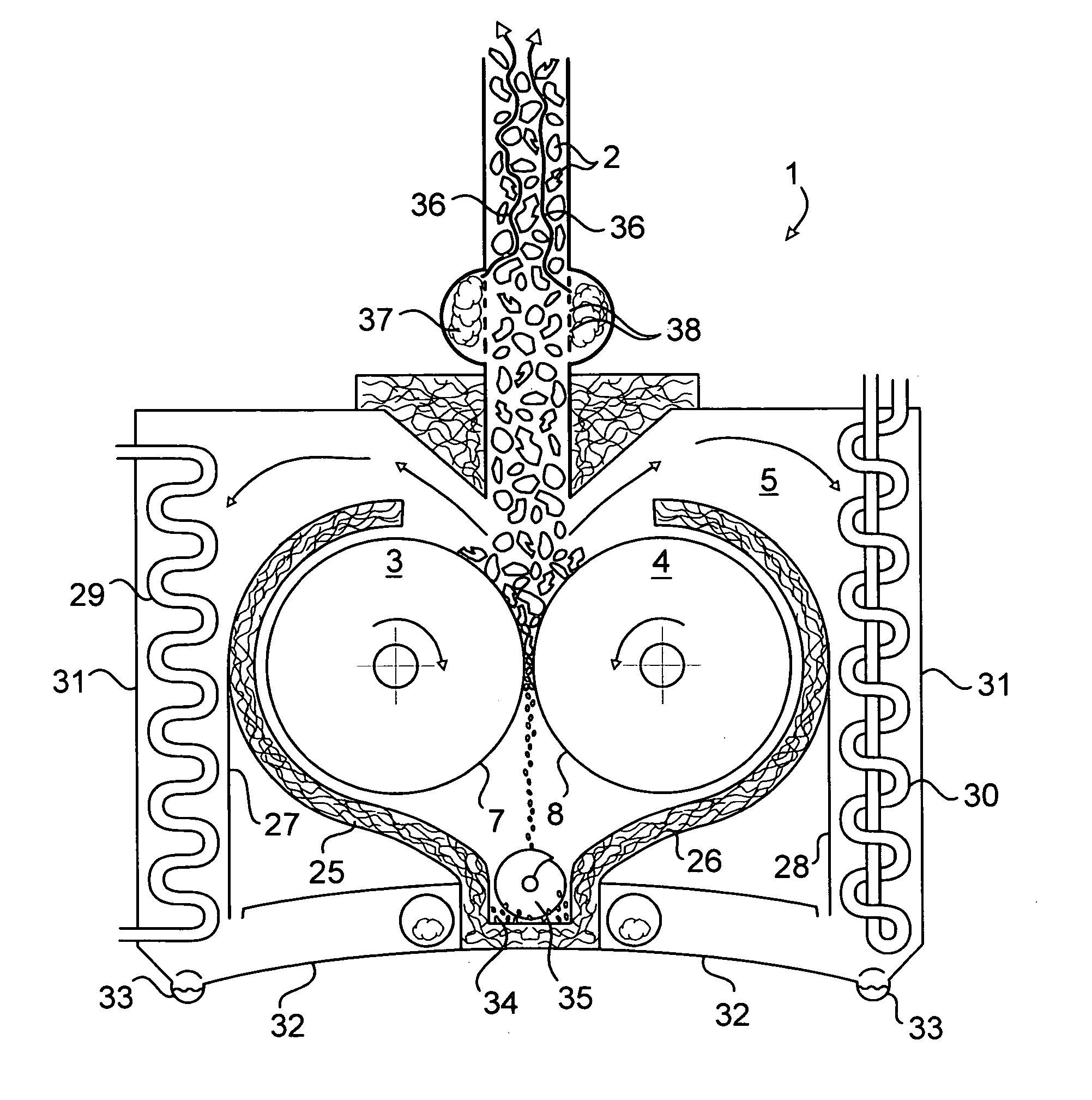
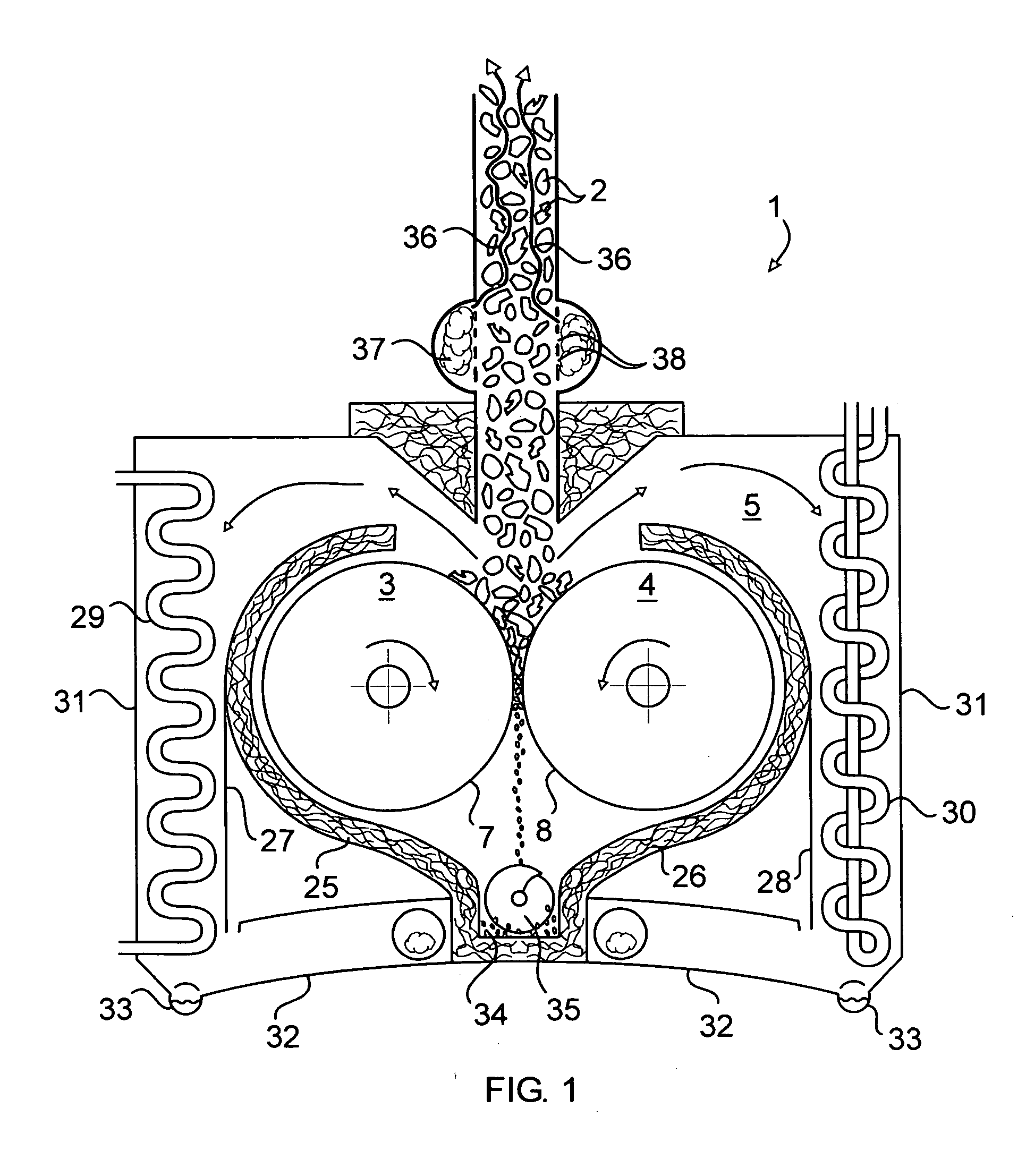
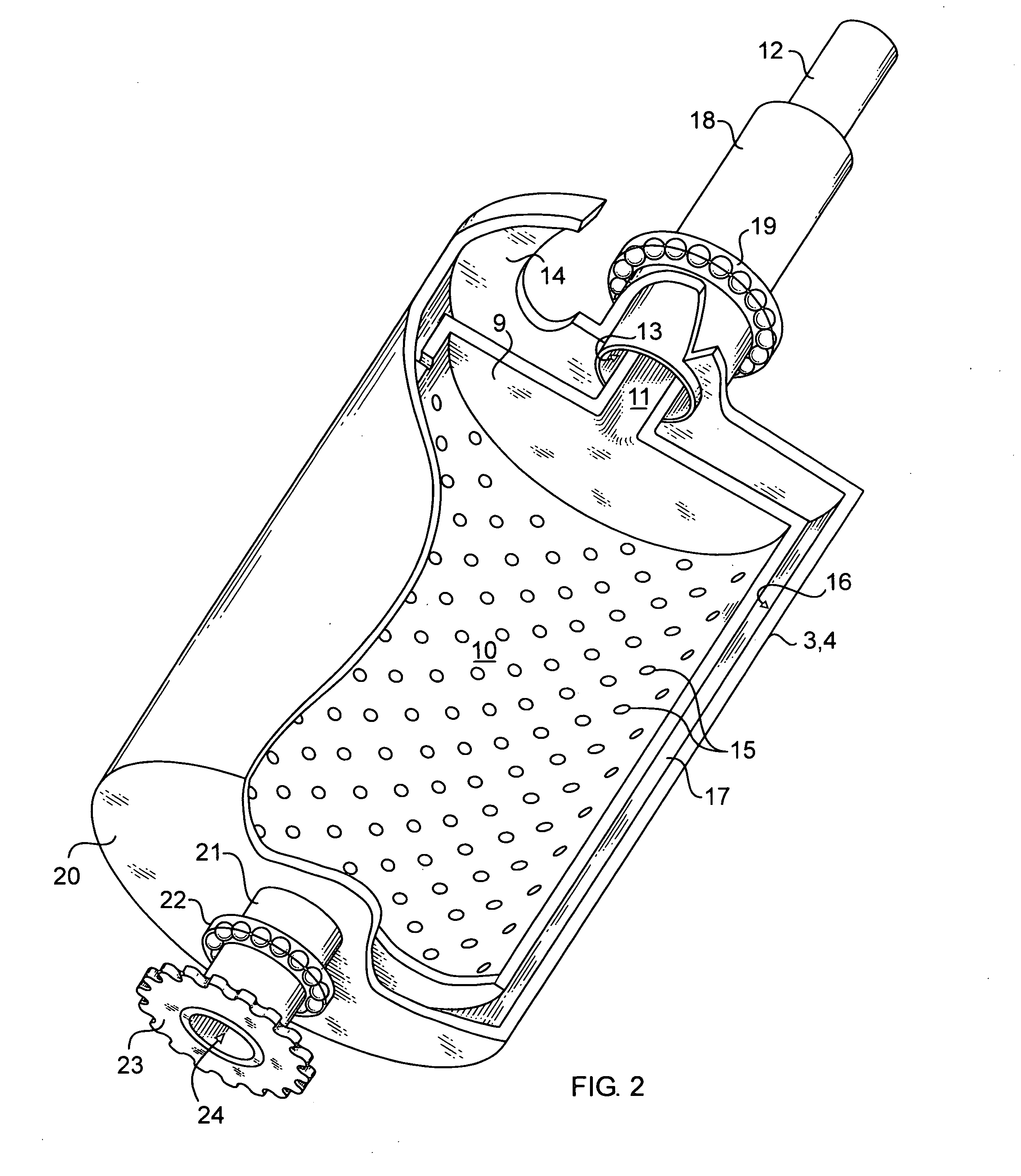
[0010] Referring now to the drawing, there is shown in the diagram of FIG. 1, an apparatus 1 particularly adapted to the practice the ablative pyrolytic process of converting biomass material such as paper, wood chips or other vegetation debris in order to extract from them useful byproducts such as oils or other liquids, and carbon particles and other solids. The biomass material 2 is fed to a pair of counter-rotating crunching rollers 3, 4 held in a sealed enclosure 5. The biomass material is dropped into the enclosure through a chute 6. The rollers are axially parallel and their circumferential outer surfaces 7, 8 are narrowly spaced-apart to grab, crunch and burn the pieces of biomass material. The walls of the rollers are made of a heat-transmitting material, preferably stainless steel and are heated from the inside. The rollers can include electric heating elements, but are preferably exposed to a flow of super-heated gas or highly heated fluid.
[0011] As more specifically ill...
PUM
| Property | Measurement | Unit |
|---|---|---|
| Temperature | aaaaa | aaaaa |
| Flow rate | aaaaa | aaaaa |
| Speed | aaaaa | aaaaa |
Abstract
Description
Claims
Application Information
 Login to View More