
Personal game device and method
- Summary
- Abstract
- Description
- Claims
- Application Information
AI Technical Summary
Problems solved by technology
Method used
Image

Examples
Embodiment Construction
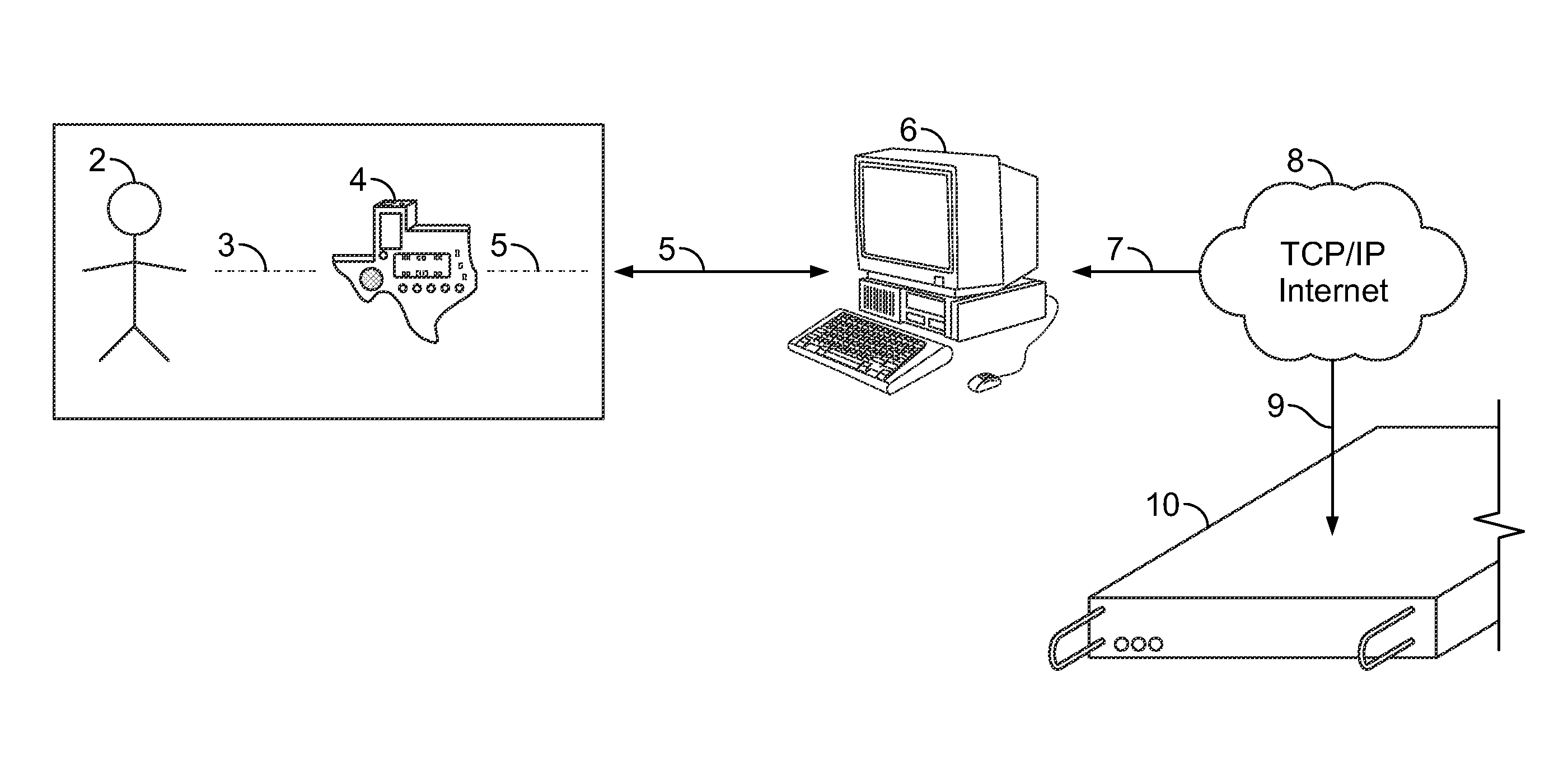
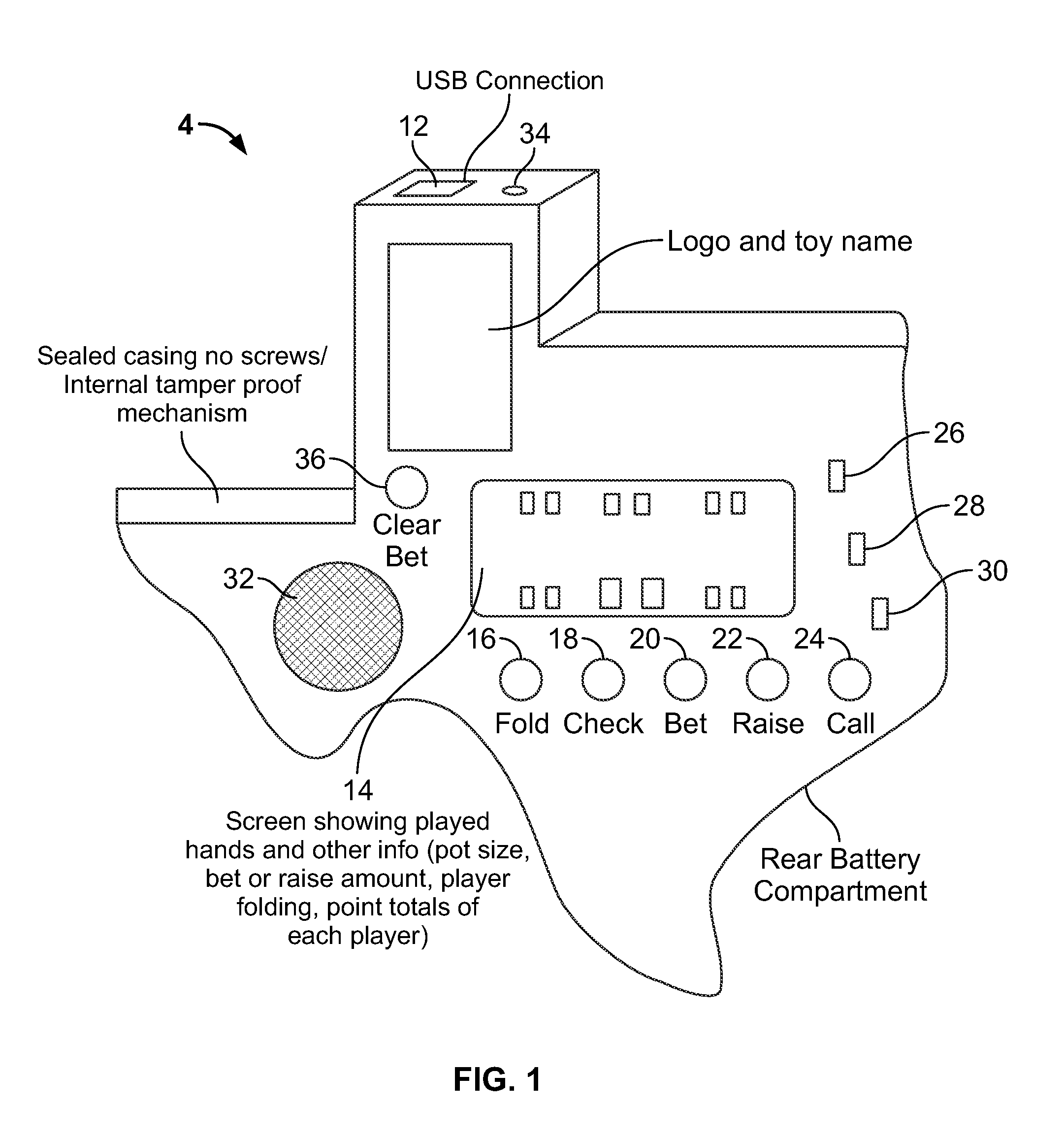
[0015]Referring to FIG. 1, an example game device 4 is shaped like a map of the State of Texas, and it is configured to allow the player to play Texas No-Limit Hold 'Em poker, although in principle the device could be configured to allow play of any of a variety of poker games. Such poker varieties, which are within the scope of the present invention, are described in detail in Robert's Rules of Poker, which is incorporated herein by reference.
[0016]In Texas Hold 'Em, each player is dealt two hole cards face down. Five community cards are dealt face-up in the center of the table, which also may be called the board. The player who makes the best five-card poker hand with any combination of his hole cards and the five community cards wins the round. In a conventional Texas Hold 'Em game, a disc or other marker is used to indicate which player is the dealer for the round. In electronic game device 4 of the invention the dealer is similarly identified.
[0017]Before the cards are dealt, t...
PUM
 Login to View More
 Abstract
Description
Claims
Application Information
 Login to View More