Anti-entrapment system

a technology of anti-entrapment and anti-seismic device, which is applied in the direction of pedestrian/occupant safety arrangement, pulse technique, instruments, etc., can solve the problem of requiring a relatively large amount of pinching of objects, and achieve the effect of preventing any pinching of either objects

US20080011093A1Inactive Publication Date: 2008-01-17UUSI
11 Cites 13 Cited by

Patent Information

Authority / Receiving Office
US · United States
Patent Type
Applications(United States)
Current Assignee / Owner
Publication Date
2008-01-17
Estimated Expiration
Not applicable · inactive patent

Smart Images

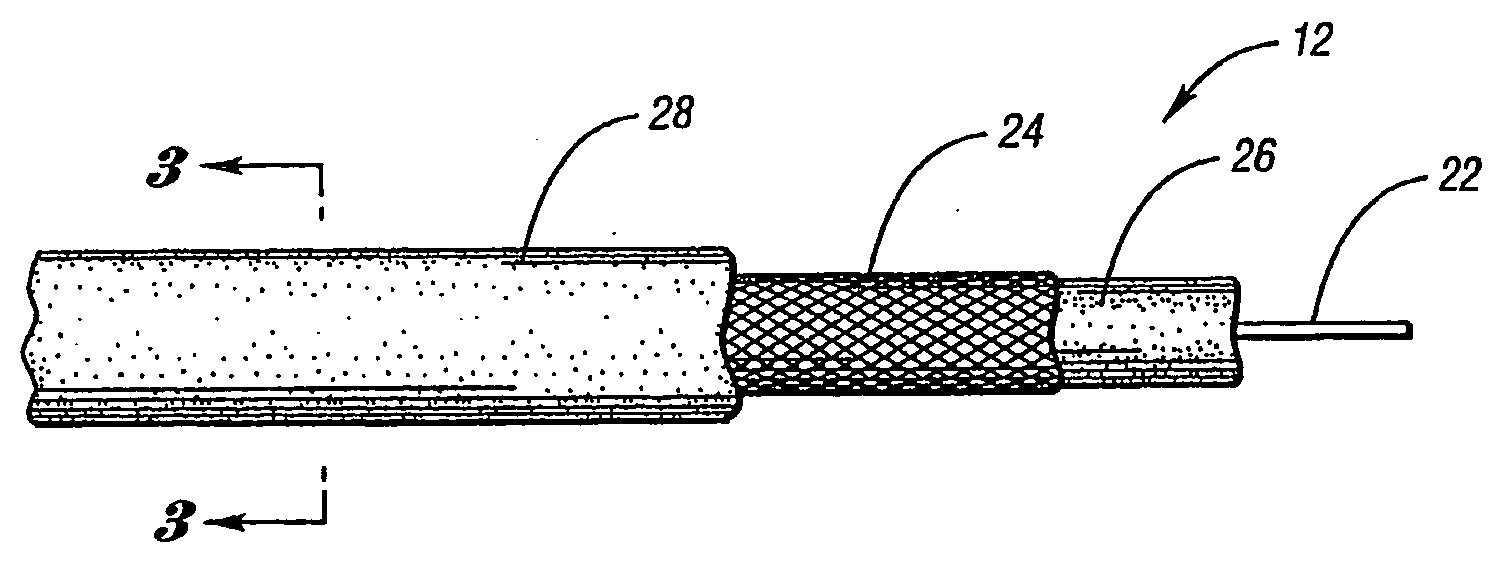
  • Figure 1
    Figure 1
  • Figure 2
    Figure 2
  • Figure 3
    Figure 3
Patent Text Reader

Abstract

An anti-entrapment system for preventing objects from being entrapped by a translating device includes a capacitance sensor positioned adjacent to the translating device and a controller. The sensor has first and second conductors separated by a separation distance and a compressible dielectric element interposed between the conductors. The conductors have a capacitance dependent upon the separation distance. The capacitance of the conductors changes in response to a geometry of the sensor changing as a result of either conductor or the dielectric element deforming in response to a first object touching the sensor. The capacitance of the conductors changes in response to a second conductive object coming into proximity with either conductor. The controller receives a signal from the sensor indicative of the capacitance of the conductors, and controls the translating device as a function of the capacitance of the conductors to prevent the translating device from entrapping either object.
Need to check novelty before this filing date? Find Prior Art

Description

CROSS-REFERENCE TO RELATED APPLICATIONS

[0001] This application is a continuation of U.S. application Ser. No. 11 / 584,043, filed Oct. 20, 2006, now U.S. Pat. No. ______; which is a continuation-in-part of U.S. application Ser. No. 10 / 927,916, filed Aug. 27, 2004, now U.S. Pat. No. 7,132,642; which is a continuation-in-part of U.S. application Ser. No. 10 / 262,446, filed Sep. 30, 2002, now U.S. Pat. No. 6,782,759; which is a continuation-in-part of U.S. application Ser. No. 09 / 901,883, filed Jul. 9, 2001, now U.S. Pat. No. 6,499,359. This application is related to U.S. application Ser. No. 11 / 005,616, filed Dec. 6, 2004, now U.S. Pat. No. 7,162,928.BACKGROUND OF THE INVENTION

[0002] 1. Field of the Invention

[0003] The present invention relates to an anti-entrapment system provided with a capacitance sensor for preventing entrapment of an object.

[0004] 2. Background Art

[0005] Anti-entrapment systems use various types of sensors to detect pinching of an object such as a human body pa...

Examples

Embodiment Construction

)

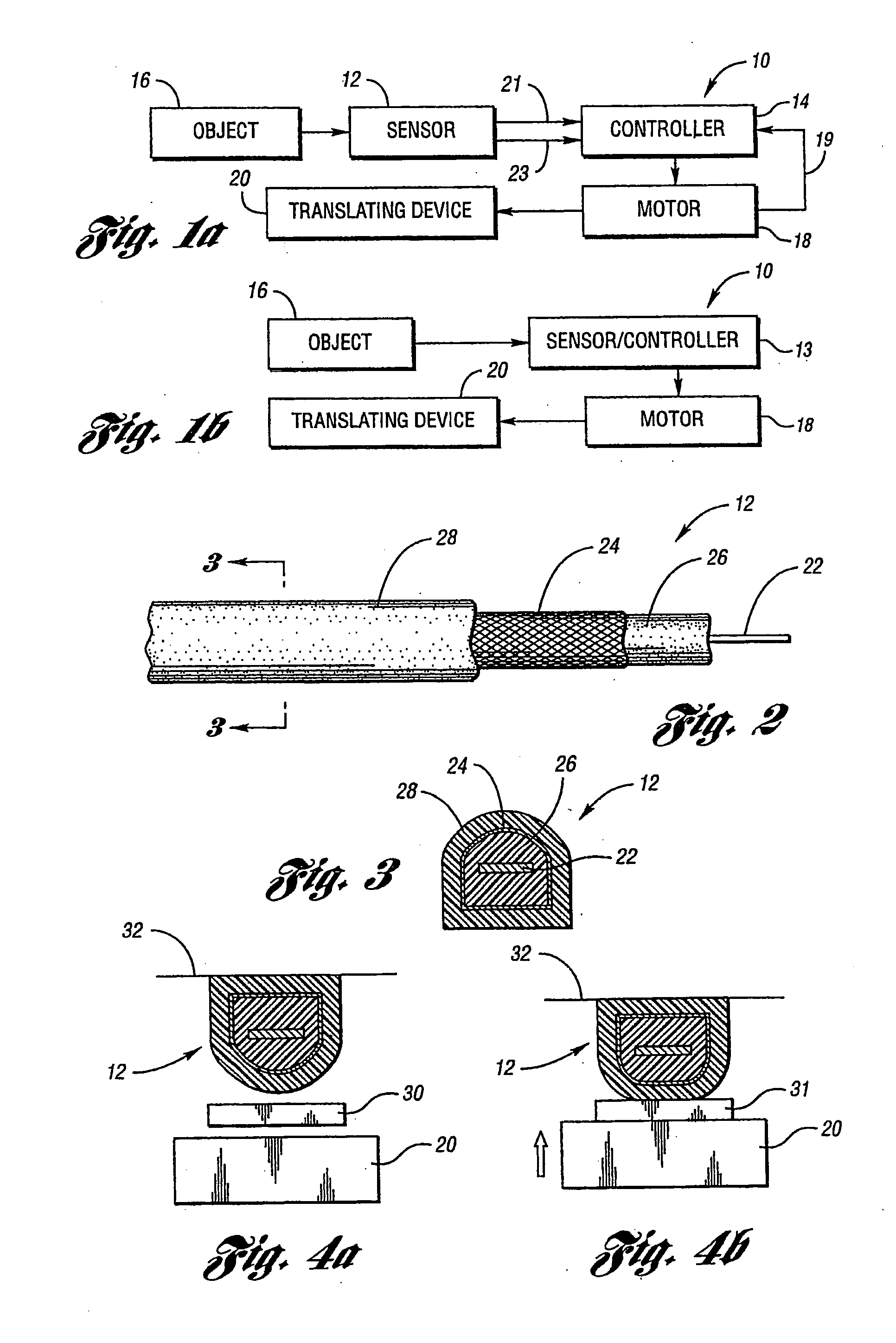
[0094] Referring now to FIG. 1a, an anti-entrapment system 10 in accordance with the present invention is shown. Anti-entrapment system 10 includes a sensor 12 and a controller 14. Sensor 12 is generally a capacitance sensor that is operable to detect touching by an object 16 to the sensor and / or the presence (i.e., proximity) of an object 16 near the sensor. In response to an object 16, including human body parts, touching sensor 12, the capacitance of the sensor changes. Likewise, in response to an electrically conductive object 16, including human body parts, coming within the proximity of sensor 12, the capacitance of the sensor changes even without the object actually touching, or applying any force, to the sensor. This provides for zero force detection of a human body part before contact to sensor 12 is made by the body part. As such, sensor 12 is a contact (i.e., touch) and a non-contact (i.e., proximity) sensor.

[0095] Controller 14 controls a motor 18 associated with a tra...