
Overlapping screen reading of non-sequential text
a screen reading and non-sequential technology, applied in the field of text screen reading, can solve the problems of long-overcomed challenge of screen reading conventional sequences of text, such as in ordinary documents, and provide a completely different challeng
- Summary
- Abstract
- Description
- Claims
- Application Information
AI Technical Summary
Benefits of technology
Problems solved by technology
Method used
Image

Examples
Embodiment Construction
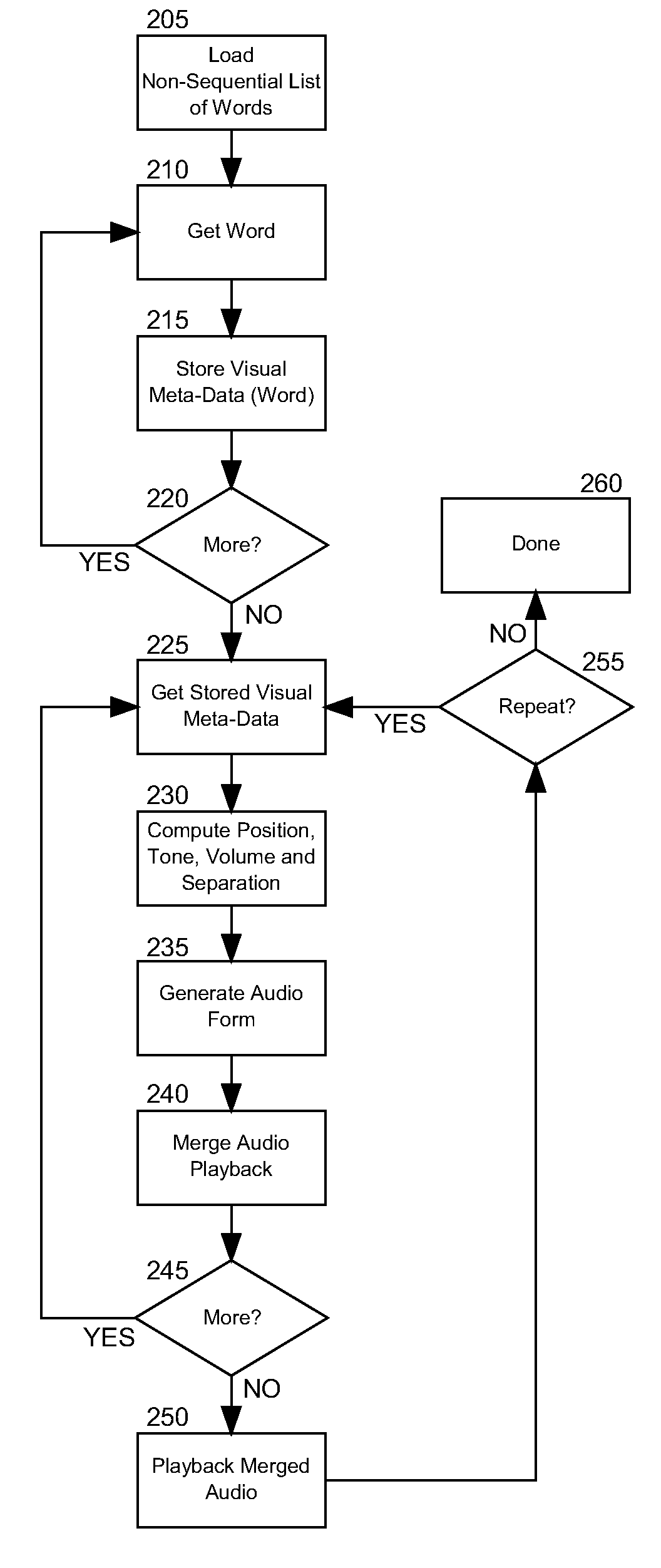
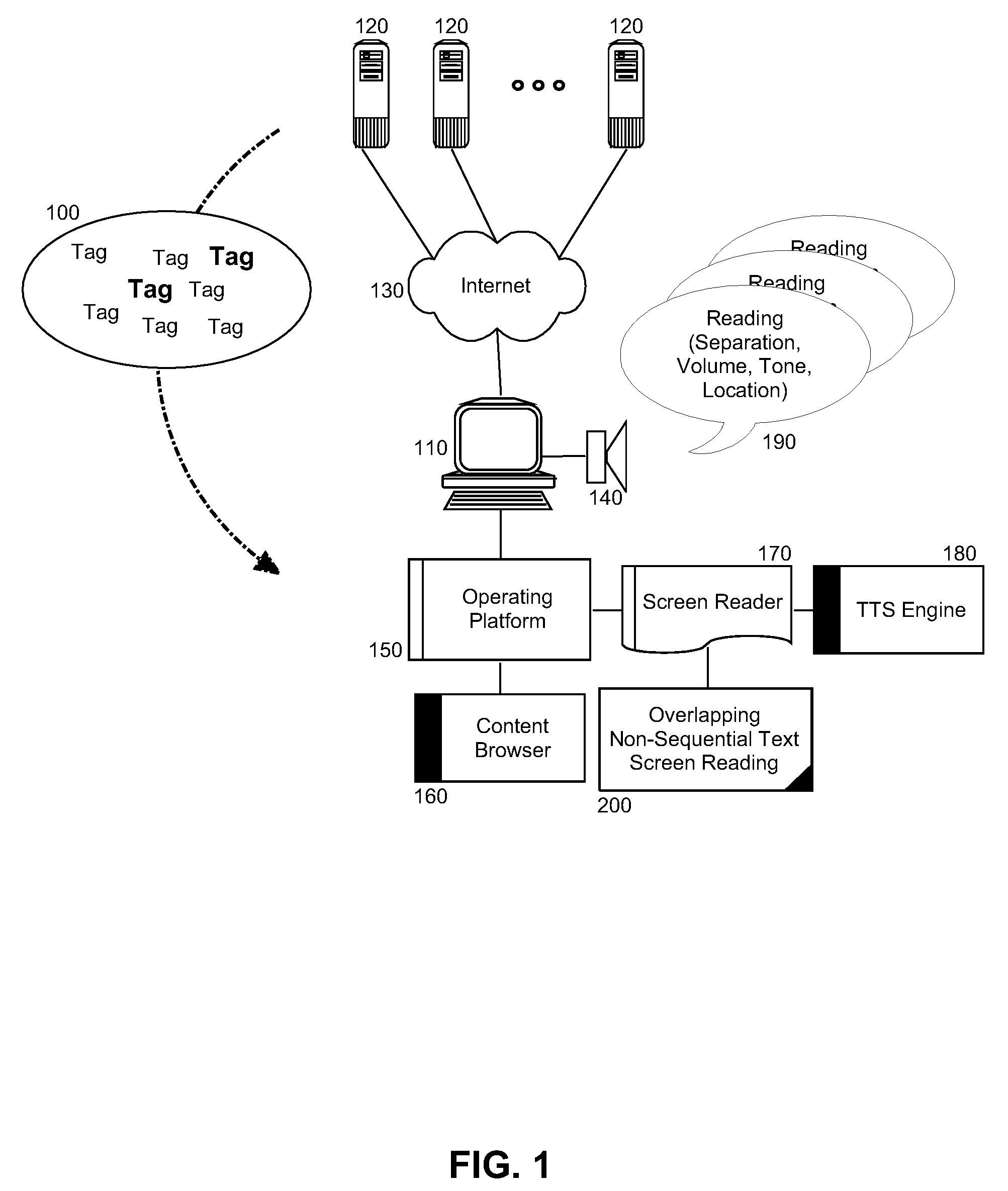
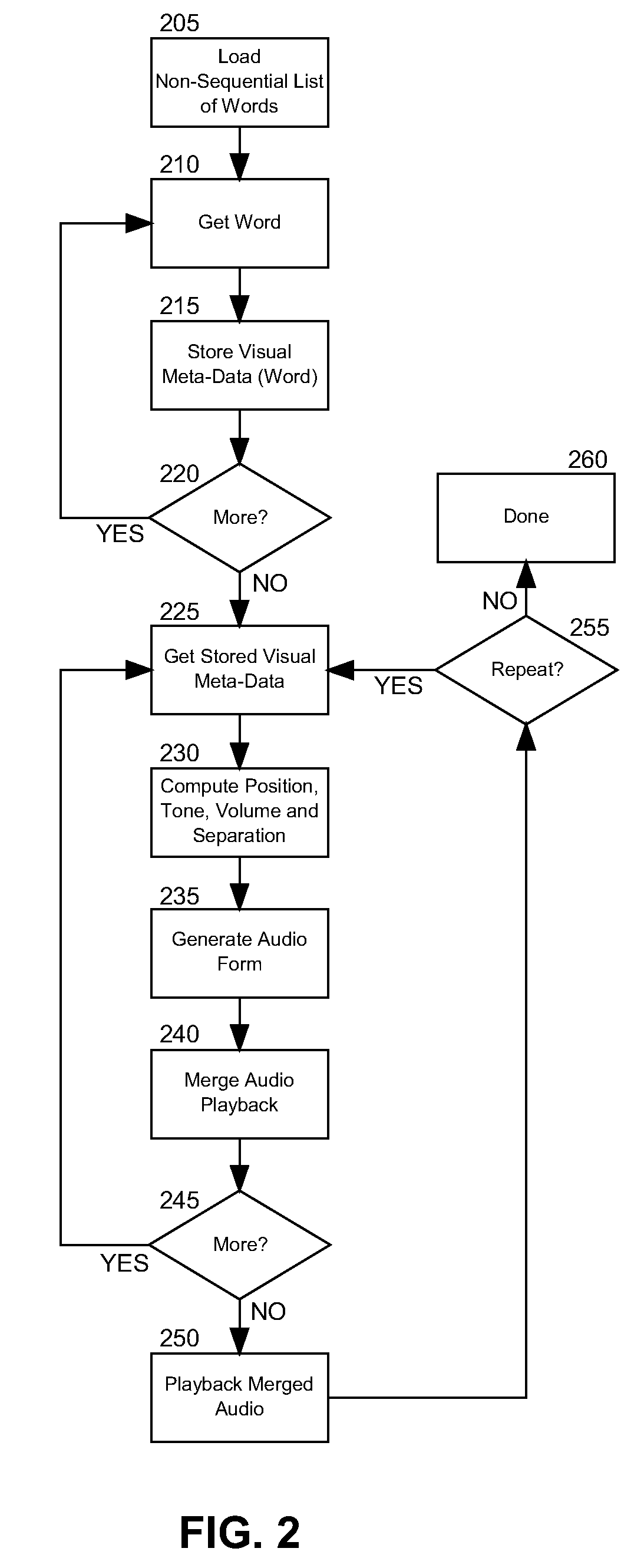
[0015]Embodiments of the present invention provide a method, system and computer program product for overlapping screen reading of non-sequential text. In accordance with an embodiment of the present invention, words in non-sequential text such as an index to Web content or a tag cloud can be parsed and the audio form of the words in the non-sequential text can be individually configured for corresponding visual characteristics of the words in the non-sequential text. Thereafter, the individually configured audio form of each of the words can be overlappingly merged to form an audio stream played back over an audio channel. The process can repeat for variant audio forms for the words in the non-sequential text so as to provide different audio perspectives of the non-sequential text. In this way, the audio experience of interacting with non-sequential text can reflect a similar visual experience of interacting with non-sequential text.
[0016]In further illustration, FIG. 1 is a schema...
PUM
 Login to View More
 Abstract
Description
Claims
Application Information
 Login to View More