
Intermediate View Synthesis and Multi-View Data Signal Extraction
- Summary
- Abstract
- Description
- Claims
- Application Information
AI Technical Summary
Benefits of technology
Problems solved by technology
Method used
Image

Examples
third embodiment
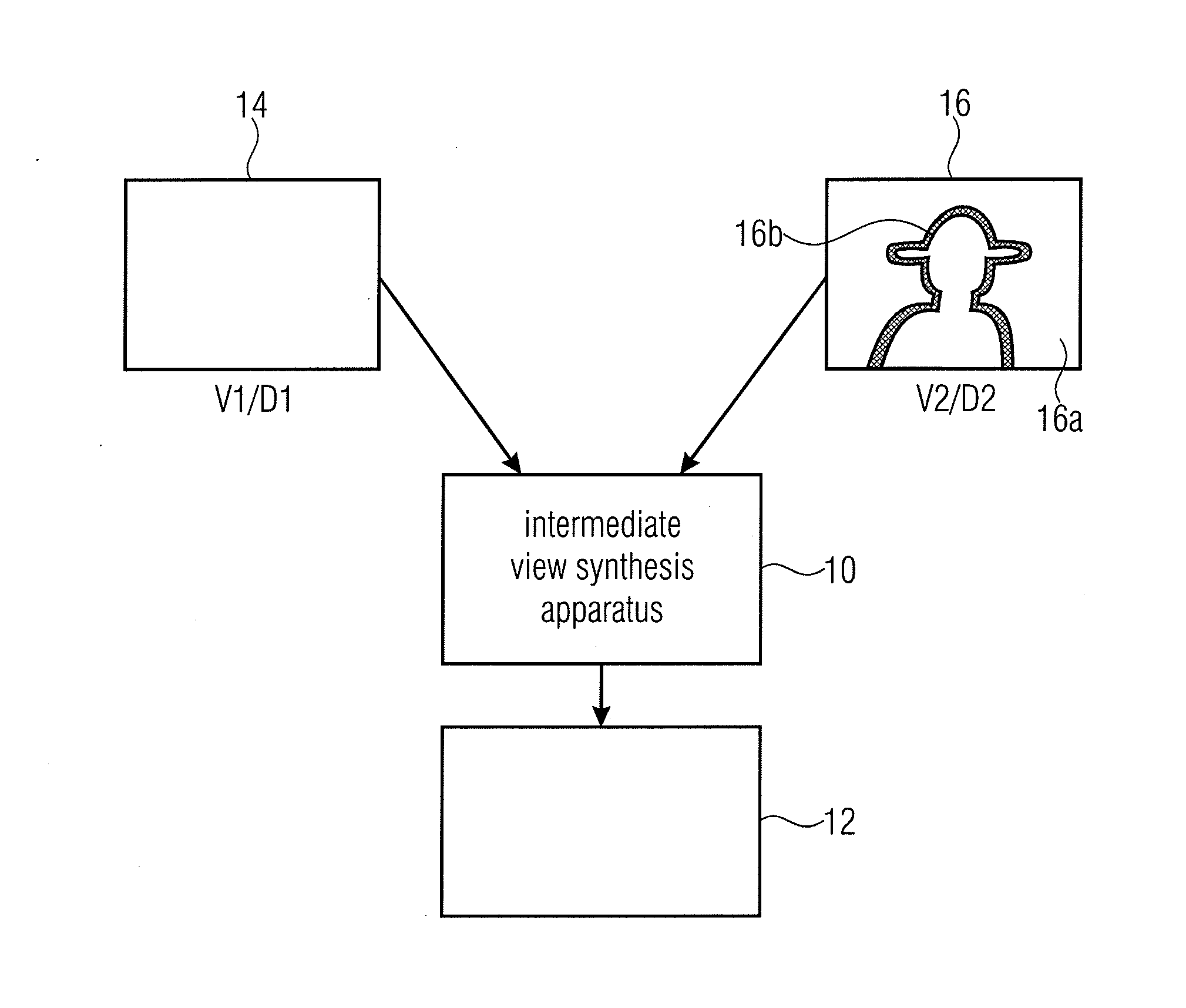
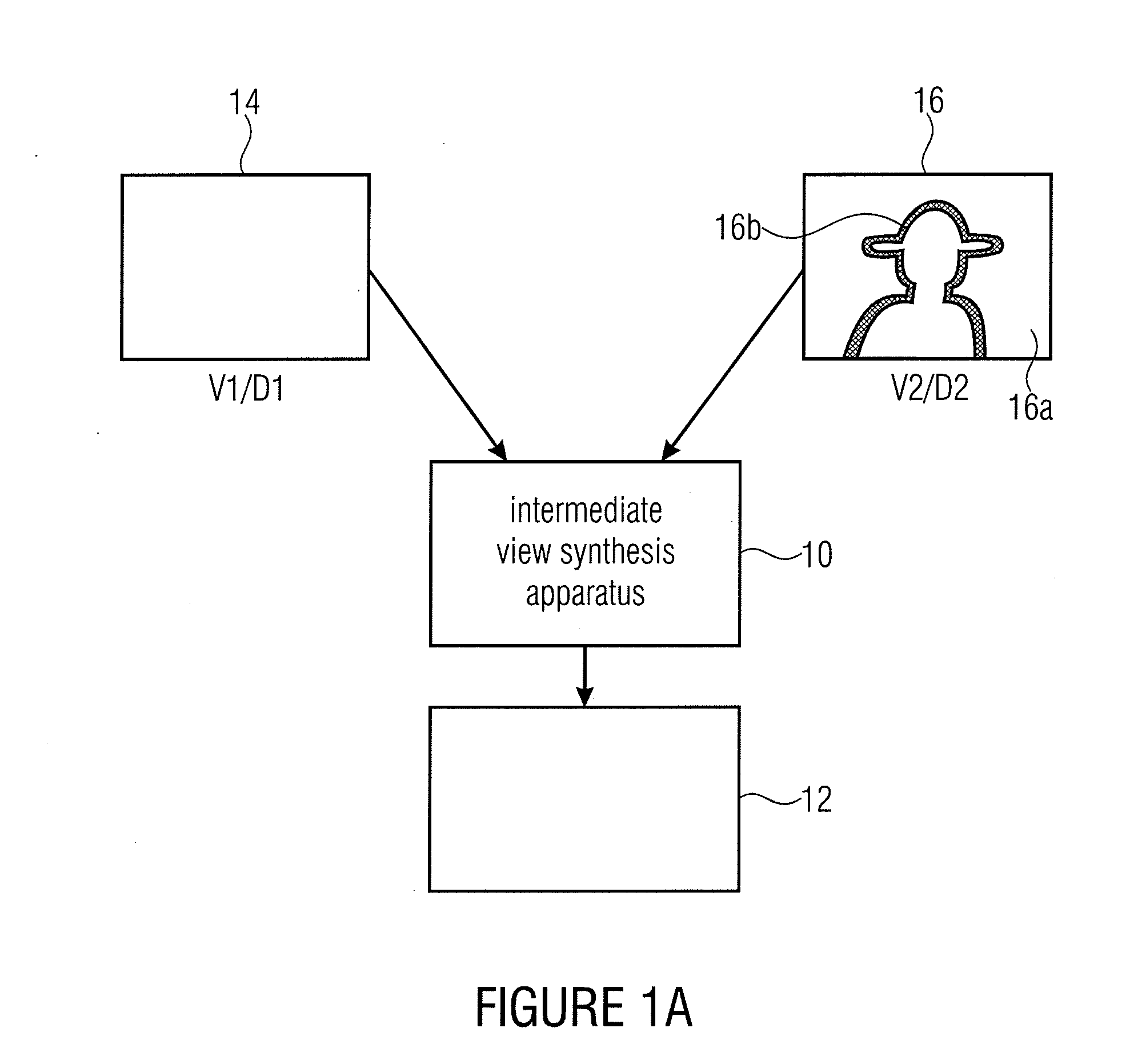
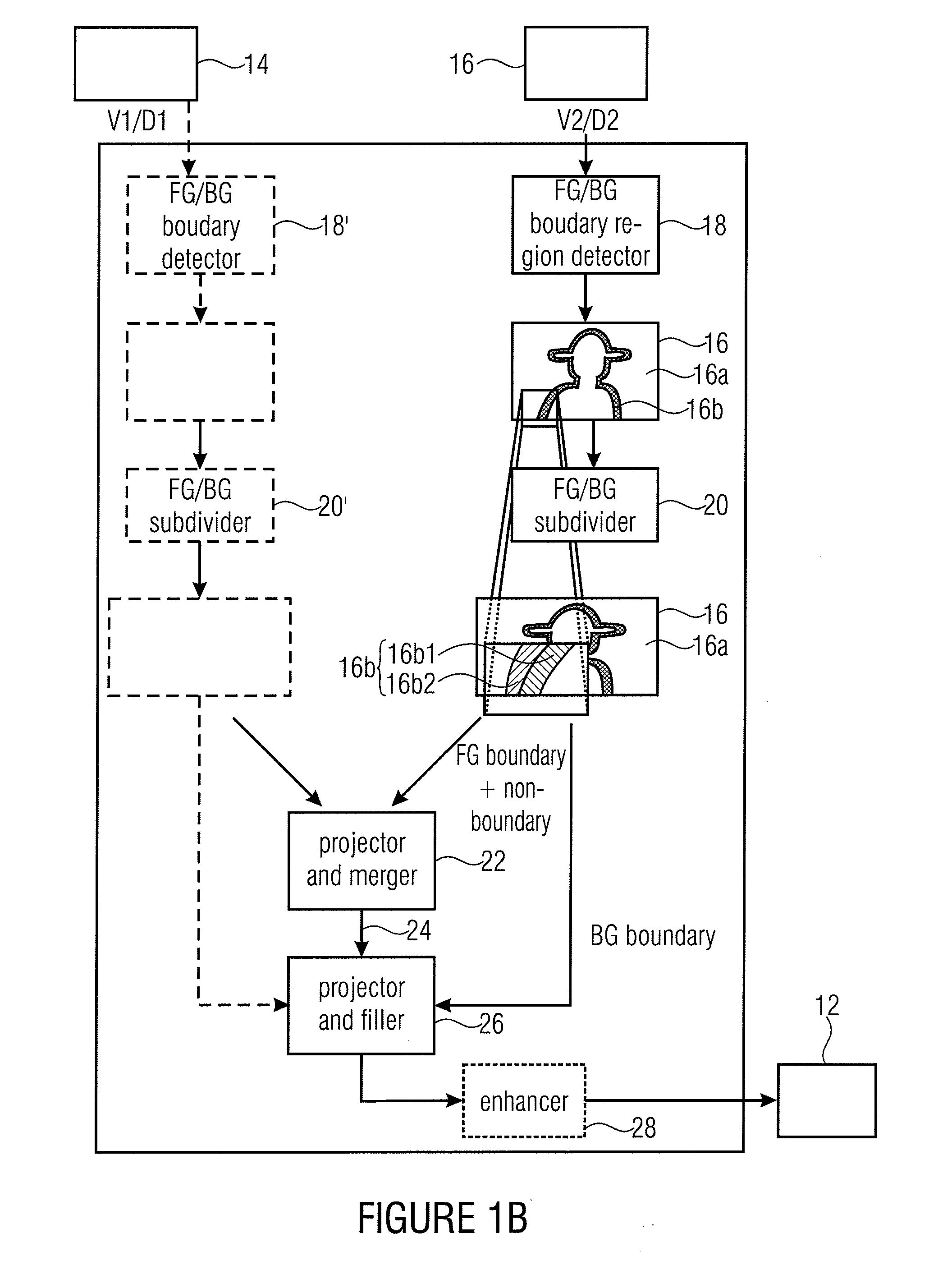
[0127]The following portion describes the present invention. In particular, A system for video rendering on multiscopic 3D displays is considered in the following where the data is represented as layered depth video (LDV). This representation consists of one full or central video with associated per-pixel depth and additional residual layers. Thus, only one full view with additional residual data needs to be transmitted. The LDV data is used at the receiver to generate all intermediate views for the display. The LDV layer extraction as well as the view synthesis, using a scene reliability-driven approach, is presented. Here, unreliable image regions are detected and in contrast to previous approaches the residual data is enlarged to reduce artifacts in unreliable areas during rendering. To provide maximum data coverage, the residual data remains at its original positions and will not be projected towards the central view. The view synthesis process also uses this reliability analysi...
second embodiment
[0173]It should be noted that several modifications may be made to the above embodiments. For example, the LDV extraction process presented within the second embodiment may be implemented such that the information transmitted for V1 and V9 indicates the division into non-boundary, background boundary region and foreground boundary region. Additionally or alternatively, the LDV extraction process may also be implemented such that the information transmitted for V5 indicates also the division into non-boundary, background boundary region and foreground boundary region so that the respective layer extraction process has not to be performed again as far as the edge detection and splitting into background and foreground is concerned. Same applies to the MVD embodiments described above. Further, the above described enhancement, correction, clean-up and filtering processes could, depending on the respective applications, be left away. The projections could be performed in another way so th...
PUM
 Login to View More
 Abstract
Description
Claims
Application Information
 Login to View More