Appending signature to size limited message

a message and signature technology, applied in the field of size limited messaging systems, can solve the problem of rather severe limitation of the length of the messag

US6948130B2Active Publication Date: 2005-09-20GOOGLE TECH HLDG LLC
6 Cites 20 Cited by

Patent Information

Authority / Receiving Office
US · United States
Patent Type
Patents(United States)
Current Assignee / Owner
Publication Date
2005-09-20

Smart Images

  • Figure 1
    Figure 1
  • Figure 2
    Figure 2
  • Figure 3
    Figure 3
Patent Text Reader

Abstract

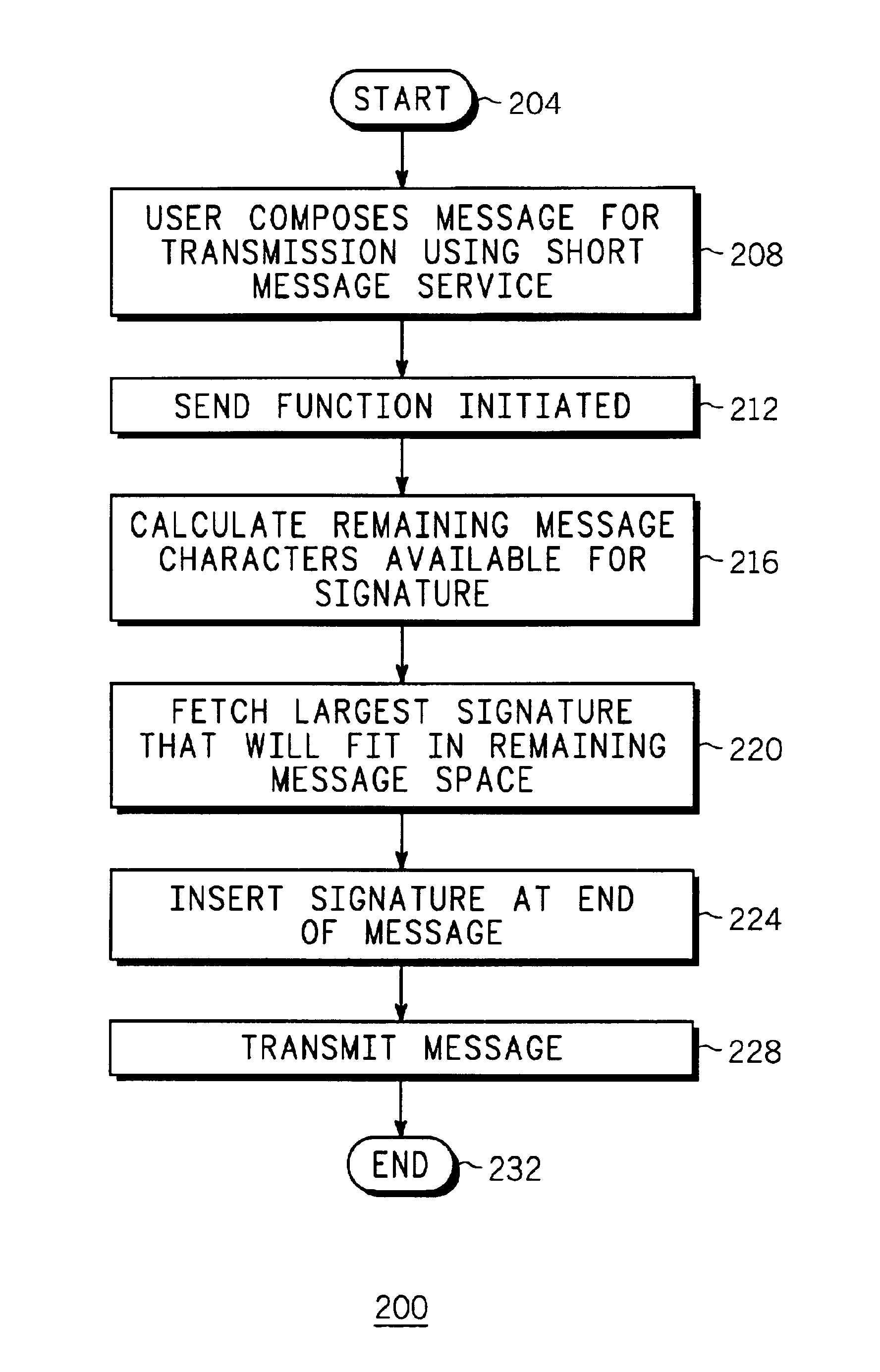
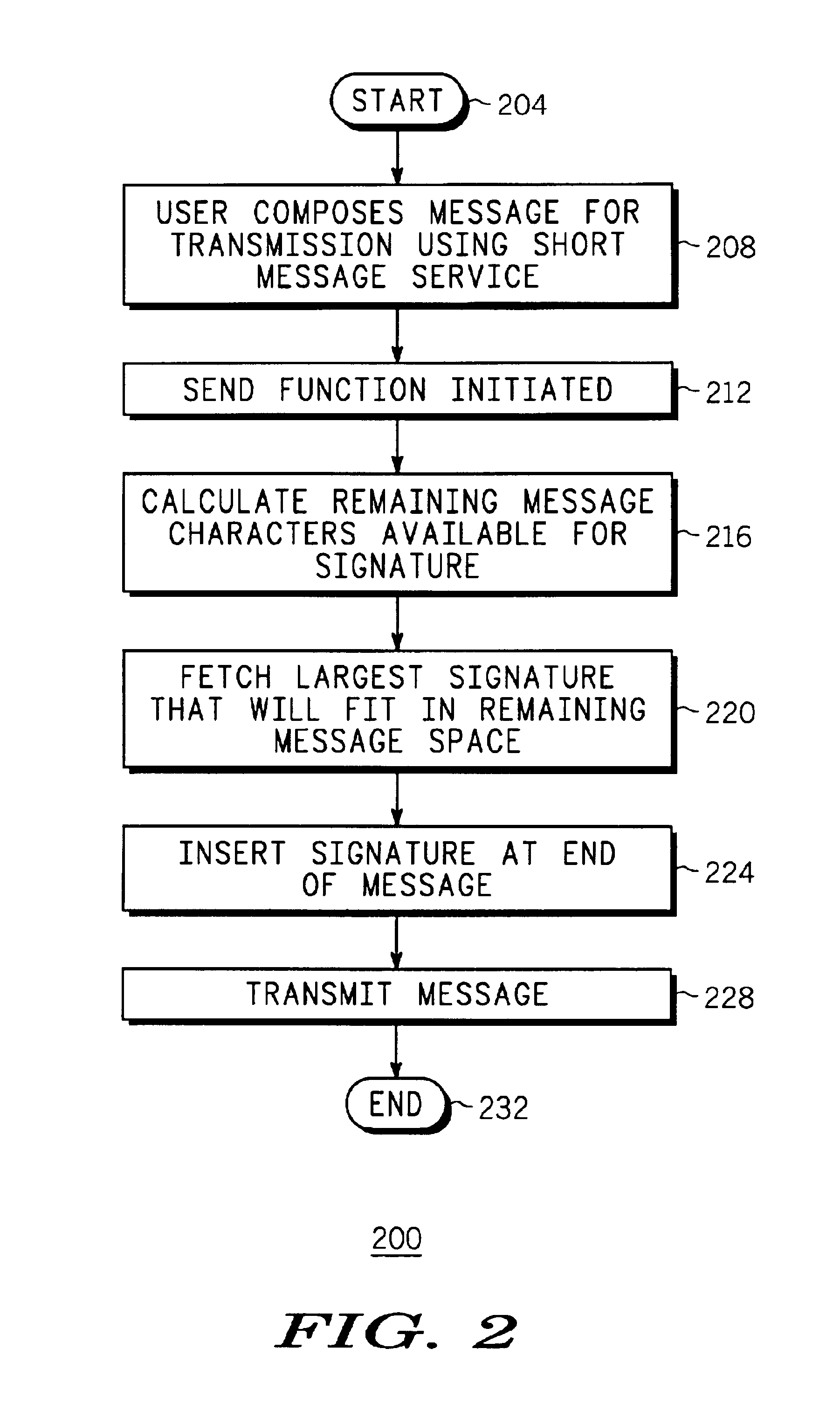
A messaging device (100) has a keyboard, keypad or other input device (150) that receives entry of a message. A processor (110), upon receipt of a command from the keyboard (150) instructs the messaging device (100) to append a signature (which might be or have a graphical content) to the message, executes a program process (200) that determine how much unused space is available in the message (216). The program then selects (220) a signature, from a plurality of possible signatures (170, 172, 174, . . . , 176) having varying size, that will fit within the unused characters and appends (224) the selected signature to the message.
Need to check novelty before this filing date? Find Prior Art

Description

FIELD OF THE INVENTION

[0001] This invention relates generally to the field of size limited messaging systems such as Short Messaging Service (SMS) communication systems. More particularly, this invention relates to providing signatures for size limited messages.BACKGROUND OF THE INVENTION

[0002] Electronic mail software and even certain two-way text paging systems provide the user with the ability to automatically append a “signature” to outgoing messages. This signature is generally a predefined segment of text that identifies the message sender (but could be any data that a user wishes to routinely append to messages). When the sender elects to send the text, or alternatively when a new message is initiated, the signature is appended at the end of the message. This saves the user from having to enter an identifying segment of information (e.g., name, address, email address, phone numbers, etc.) each time a message is created or sent. Since there is generally no practical limit to the...

Examples

Embodiment Construction

[0011]While this invention is susceptible of embodiment in many different forms, there is shown in the drawings and will herein be described in detail specific embodiments, with the understanding that the present disclosure is to be considered as an example of the principles of the invention and not intended to limit the invention to the specific embodiments shown and described. In the description below, like reference numerals are used to describe the same, similar or corresponding elements in the several views of the drawings.

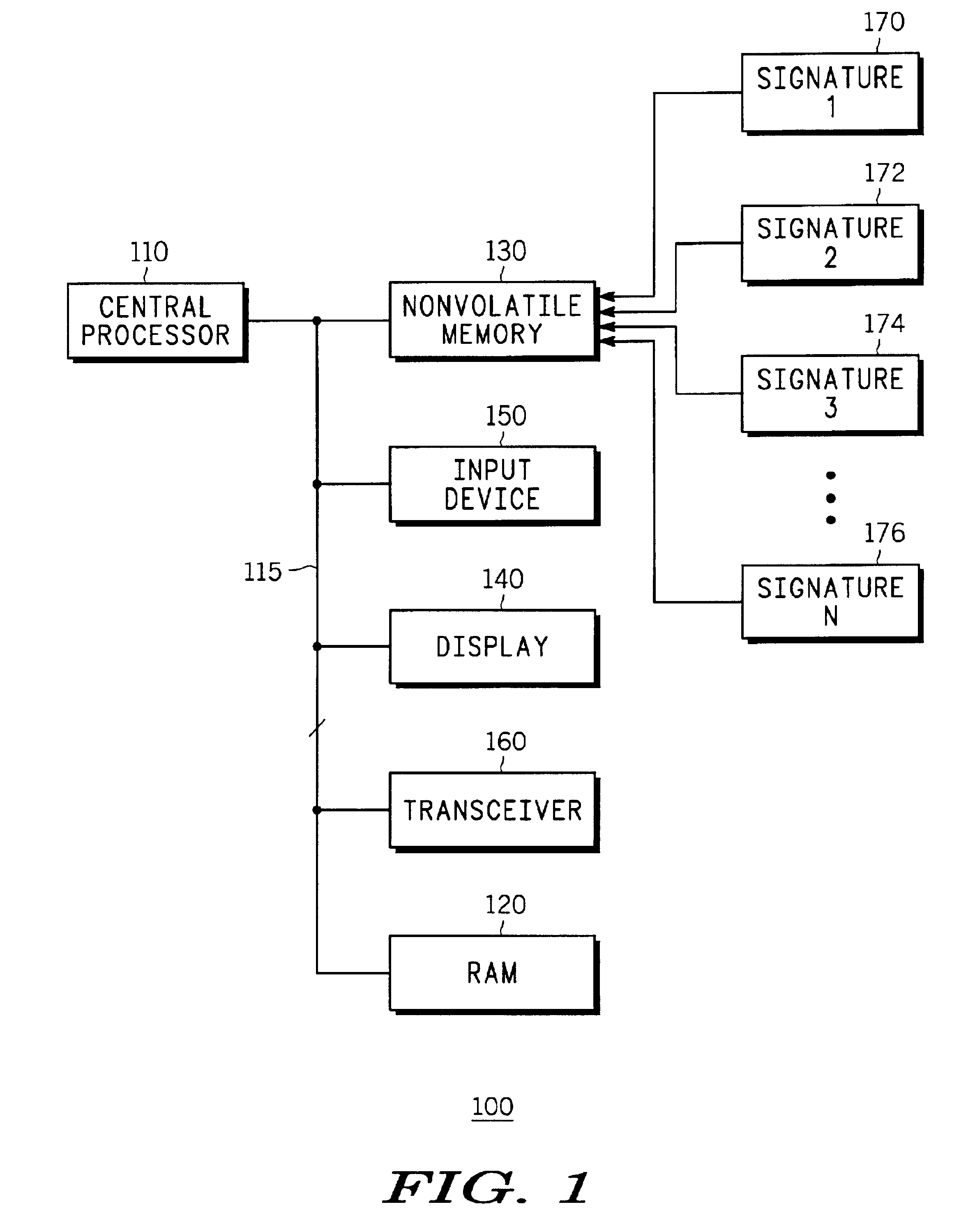
[0012]An exemplary messaging device 100 (which may be wired or wireless) is depicted in FIG. 1. Such a messaging device 100 may be embodied, for example without intending to limit the scope of the invention, as a cellular telephone device, a mobile telephone device, a pager device, a Personal Digital Assistant (PDA) or any other suitable device capable of transmitting messages. Such devices can send and receive messages using any suitable wired connection or ...