
System and computer-implemented method for evaluating integrals using a quasi-Monte Carlo methodology in which sample points represent dependent samples generated using a low-discrepancy sequence
a system and computer-implemented method technology, applied in the field of systems and computer-implemented methods for evaluating integrals, can solve the problems of difficult determination, large error, and difficult partitioning of integration domains into sub-domains, preferably of equal siz
- Summary
- Abstract
- Description
- Claims
- Application Information
AI Technical Summary
Problems solved by technology
Method used
Image


Examples
Embodiment Construction
[0029]The invention provides an computer graphic system and method for generating pixel values for pixels in an image of a scene, which makes use of a strictly-deterministic quasi-Monte Carlo methodology that makes use of trajectory splitting by dependent sampling for generating sample points for use in generating sample values for evaluating the integral or integrals whose function(s) represent the contributions of the light reflected from the various points in the scene to the respective pixel value, rather than the random or pseudo-random Monte Carlo methodology which has been used in the past. The strictly-deterministic methodology ensures a priori that the sample points will be generally more evenly distributed over the interval or region over which the integral(s) is (are) to be evaluated in a low-discrepancy manner.
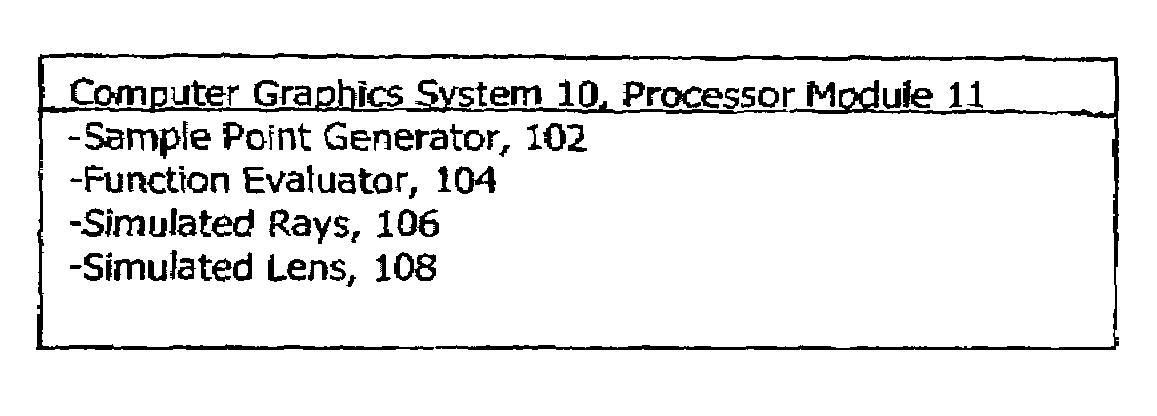
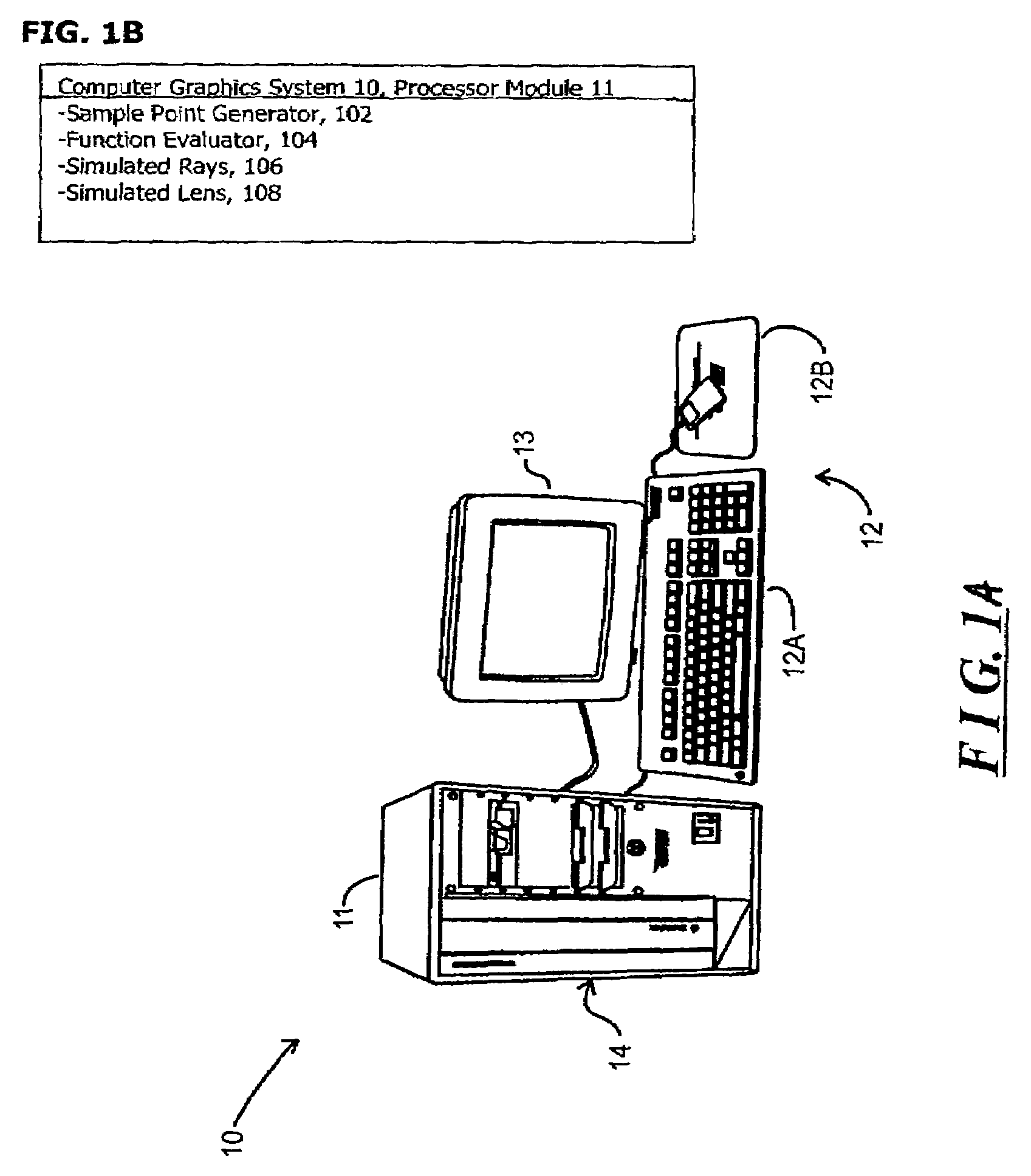
[0030]FIG. 1 attached hereto depicts an illustrative computer system 10 that makes use of such a strictly deterministic methodology. With reference to FIG. 1, the ...
PUM
 Login to View More
 Abstract
Description
Claims
Application Information
 Login to View More