
Filtered in-box for voice mail, e-mail, pages, web-based information, and faxes
a technology of voice mail and in-box, which is applied in the field of organizing, prioritizing, and displaying incoming message information on a wireless device, can solve the problems of user missing an important work assignment, important messages going unnoticed among a large number of unimportant messages, and not being very useful, so as to prevent being overwhelmed with information
- Summary
- Abstract
- Description
- Claims
- Application Information
AI Technical Summary
Benefits of technology
Problems solved by technology
Method used
Image

Examples
Embodiment Construction
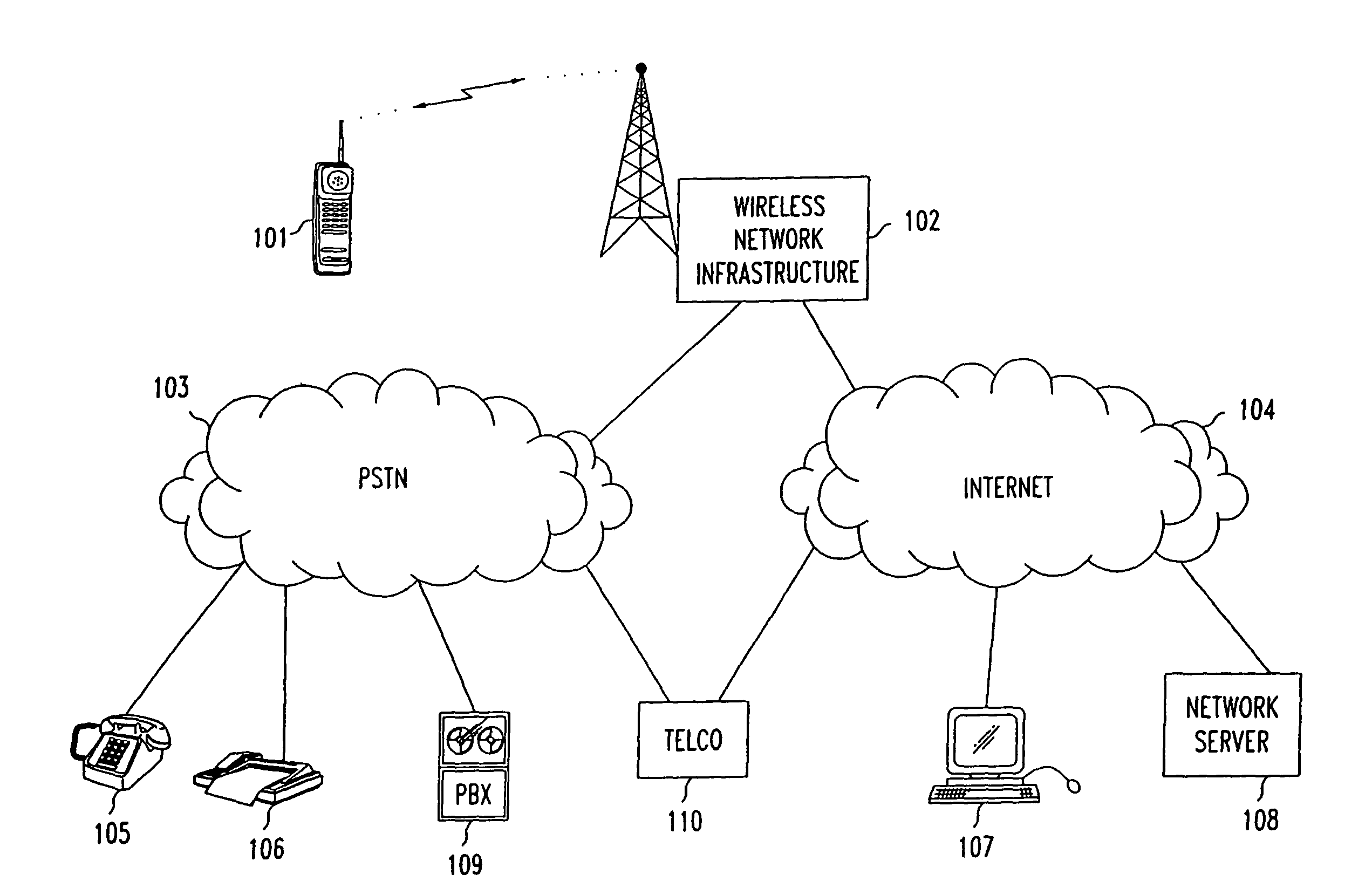
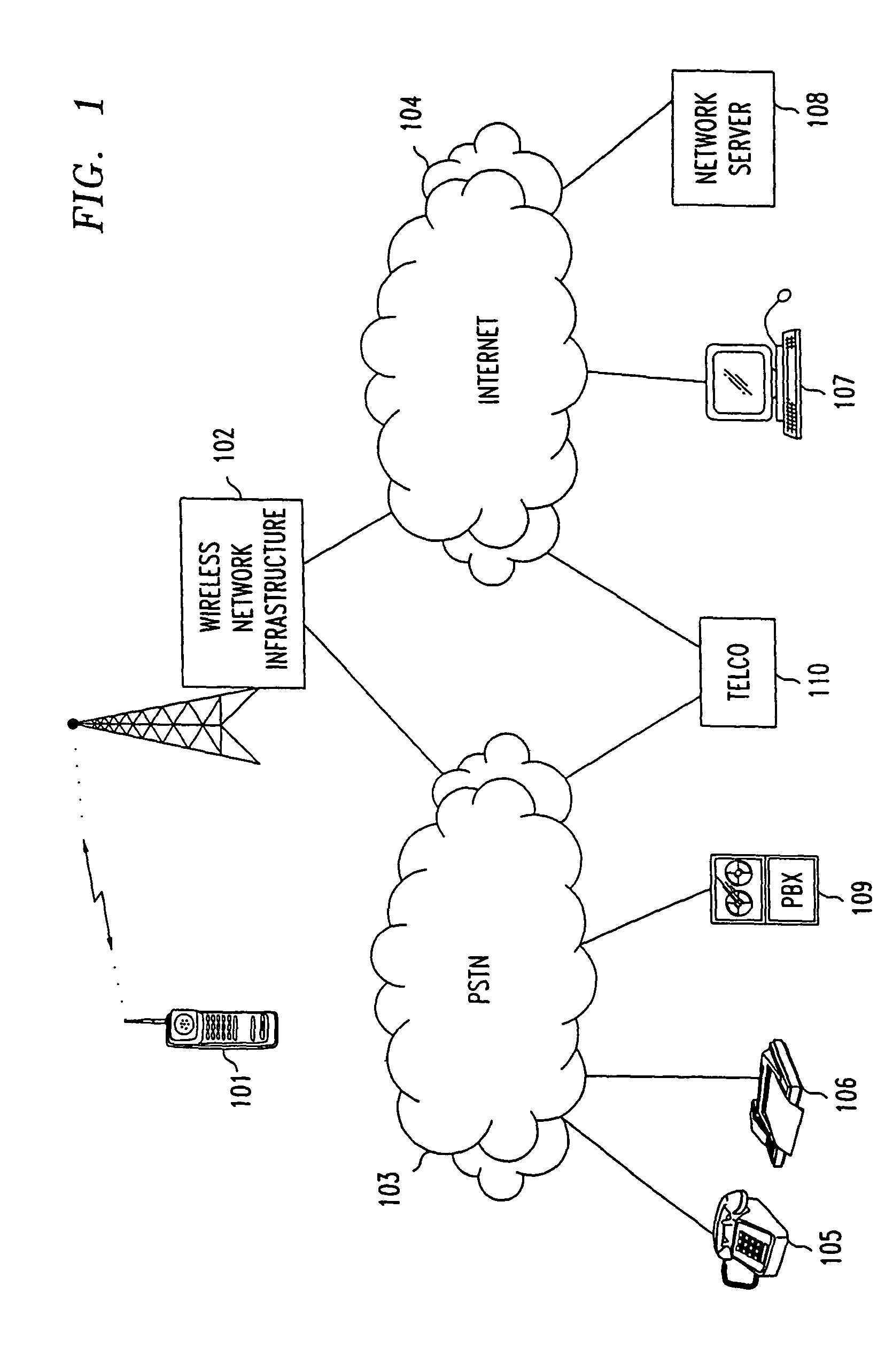
[0011]The present invention could be implemented within a wireless network similar to that depicted in FIG. 1. A wireless device 101 communicates with a wireless infrastructure 102 that is connected to a variety of public and private networks including the Public Switched Telephone Network (PSTN) 103 and the Internet 104. The user of the wireless device subscribes to a variety of information services that send messages of various formats or types to the wireless device via one of the networks to which wireless infrastructure 102 is connected. These services can include, but are not limited to, email, paging, voice mail, fax, and short-message services (including short-message-based information services). These messages can originate from a variety of equipment such as telephone 105, fax machine 106, computer terminal 107, or network service 108, depending on the type of message. The equipment that sends the message will vary based on the type of message, and some messages may pass t...
PUM
 Login to View More
 Abstract
Description
Claims
Application Information
 Login to View More