
Grey card for controlling exposure and white balance of a digital camera
a digital camera and green card technology, applied in the direction of exposure control, camera focusing arrangement, color signal processing circuit, etc., can solve the problems of time-consuming and confusing process, exposure problems, and inability to adjust the overall reflectance of the target surface, so as to facilitate focussing and reduce the effect of surface area and small area
- Summary
- Abstract
- Description
- Claims
- Application Information
AI Technical Summary
Benefits of technology
Problems solved by technology
Method used
Image

Examples
first embodiment
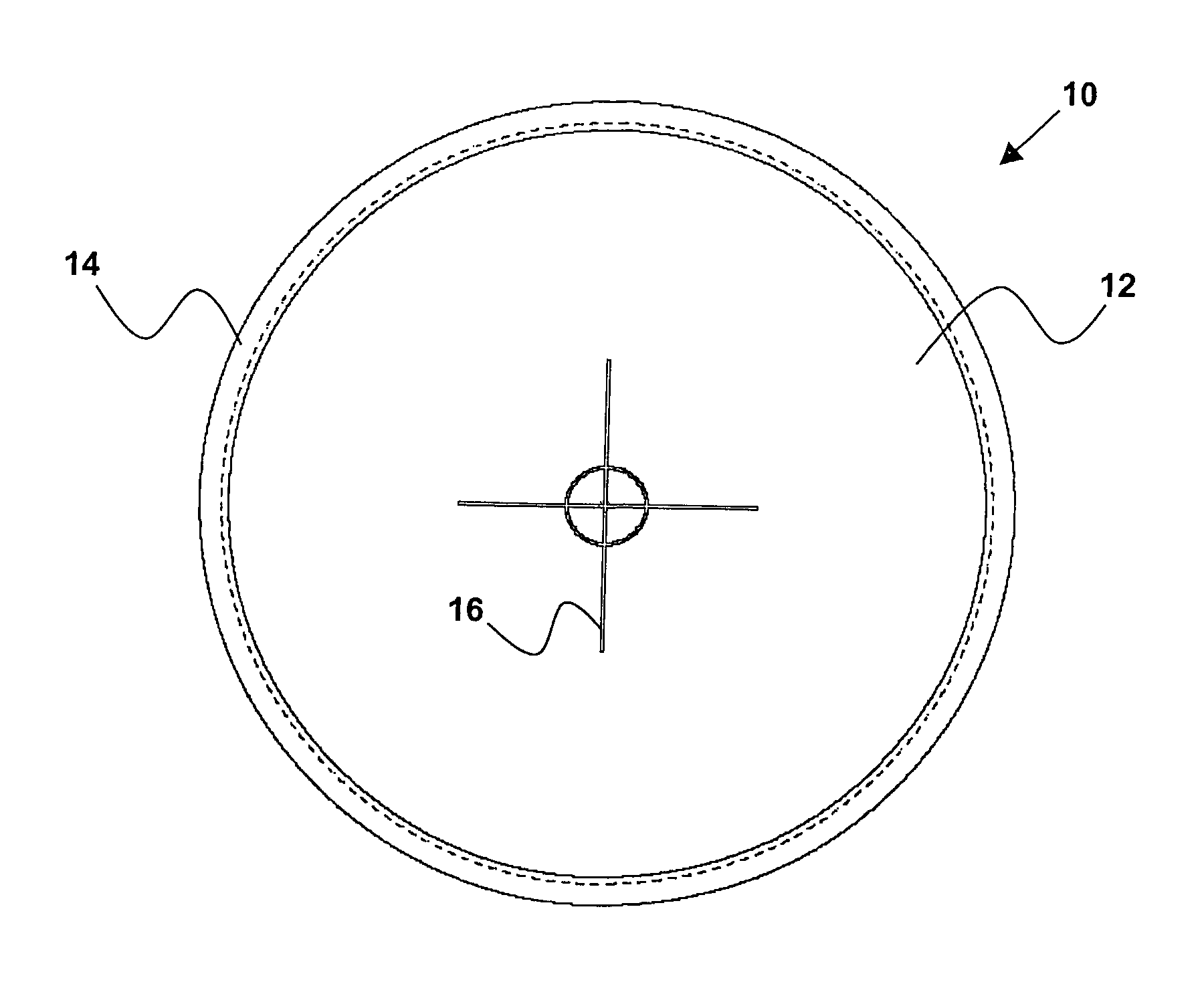
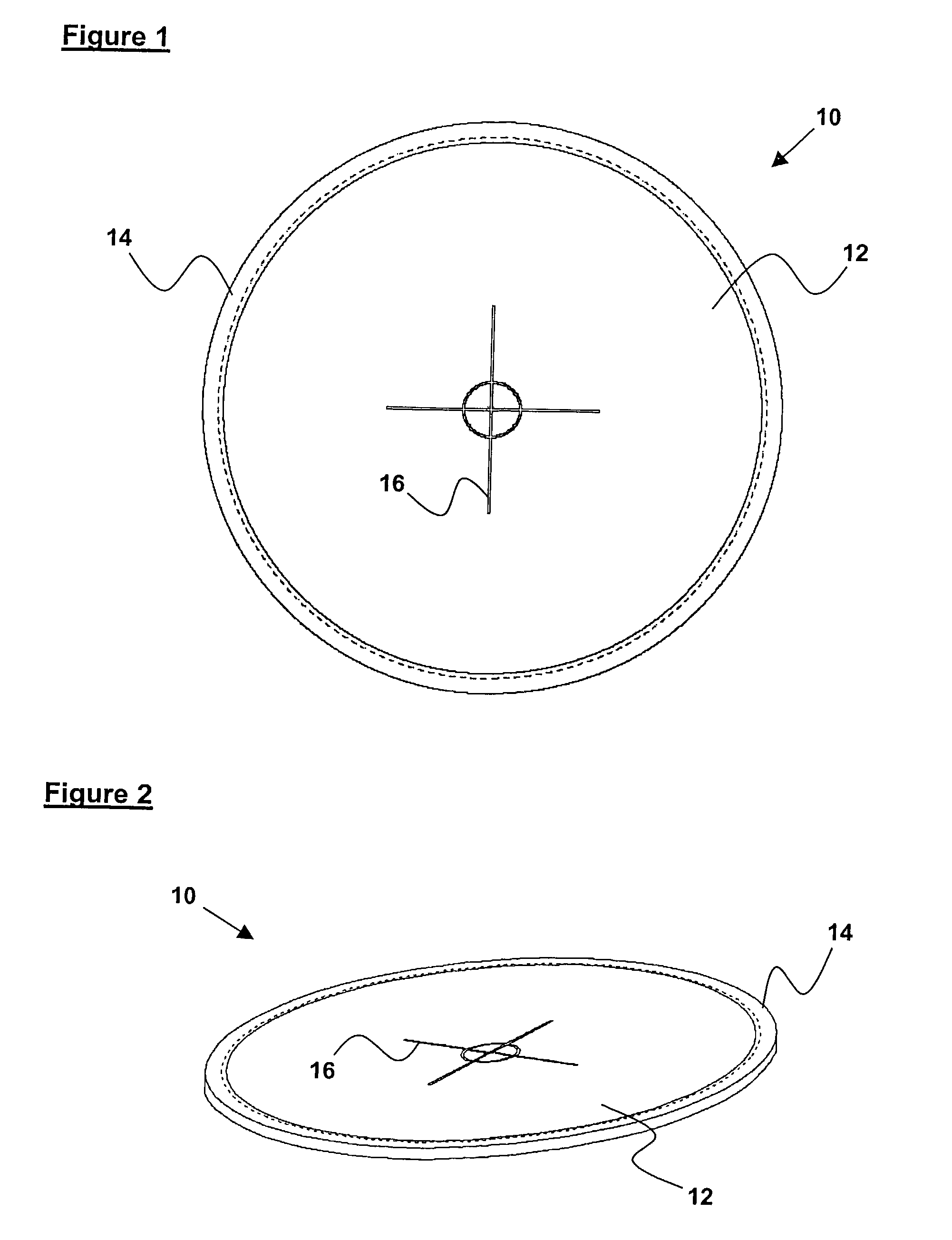
[0030]FIGS. 1 and 2 show a target according to the invention, which is generally designated 10. The target 10 comprises a circular sheet of fabric that is stretchable and has a target surface 12 formed on one side. The target surface 12 is grey in colour and has a reflectance of 18% for all wavelengths of visible light. The target surface 12 therefore has a neutral reflectance, ie it reflects the same proportion of all wavelengths of visible light falling upon it, and represents the middle tone (Zone V in the Ansel Adams Zone System) used for exposure determination.
[0031]The target surface 12 is formed with a target feature 16 at its centre. The target feature 16 is formed from narrow white lines that do not significantly alter the overall reflectance properties of the target surface 12. The target feature 16 comprises a pair of straight lines that intersect one another at their centres, and are orientated perpendicularly to one another. The target feature 16 further comprises a cir...
second embodiment
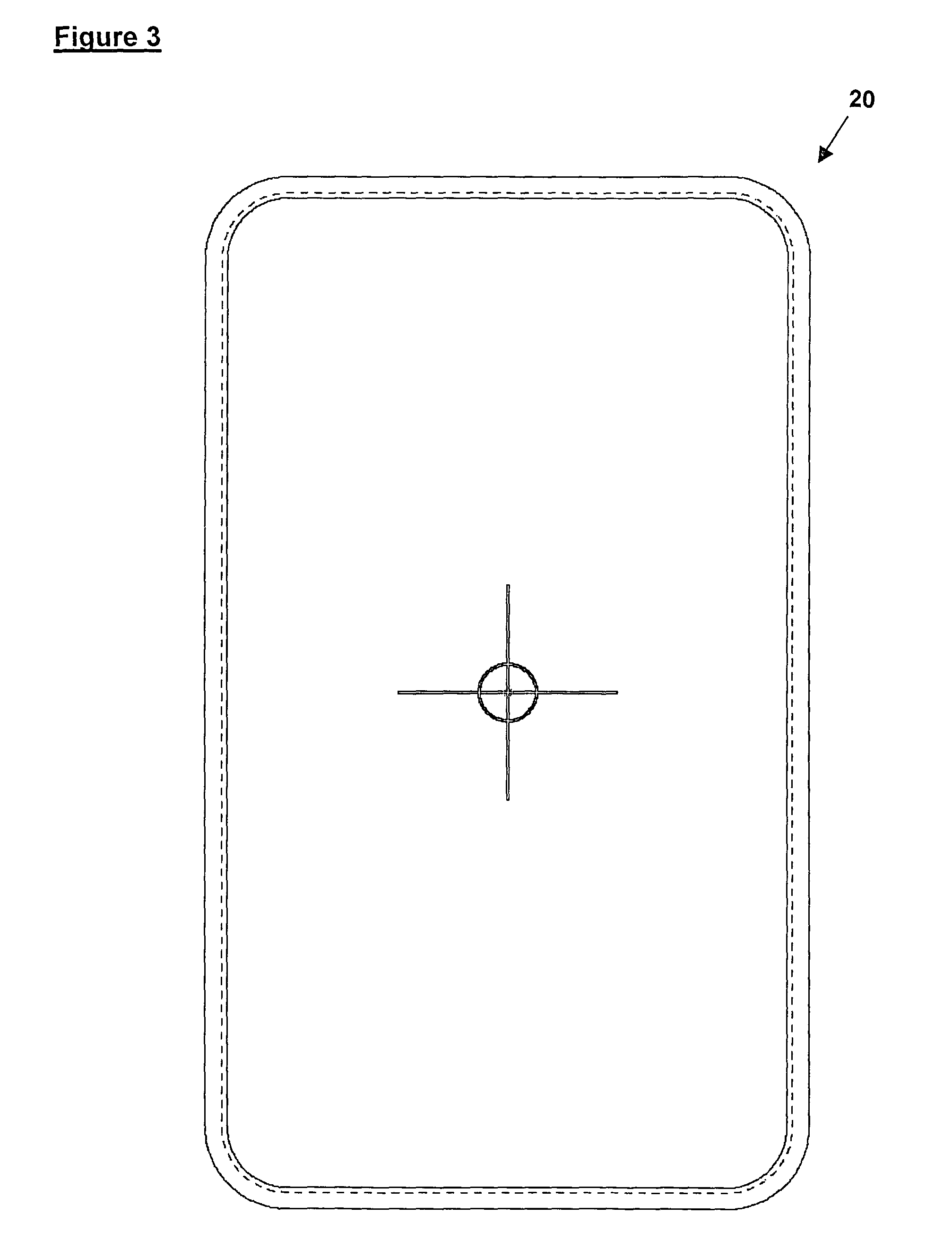
[0036]FIG. 3 shows a target according to the invention, which is generally designated 20. The target 20 shown in FIG. 3 is identical to the target 10 shown in FIGS. 1 and 2 in all aspects other than size and shape. In particular, the target 20 shown in FIG. 3 is generally rectangular in shape, with rounded corners, and is therefore suitable for more elongate subjects.
PUM
| Property | Measurement | Unit |
|---|---|---|
| reflectance | aaaaa | aaaaa |
| total visible light reflectance | aaaaa | aaaaa |
| visible light reflectance | aaaaa | aaaaa |
Abstract
Description
Claims
Application Information
 Login to View More