
Electronic device and method for secure operating system update in embedded system
a technology of embedded systems and embedded devices, applied in the field of embedded devices and secure firmware updates, can solve problems such as difficult to correct failures, embedded systems that cease to operate properly, and update risks
- Summary
- Abstract
- Description
- Claims
- Application Information
AI Technical Summary
Problems solved by technology
Method used
Image

Examples
Embodiment Construction
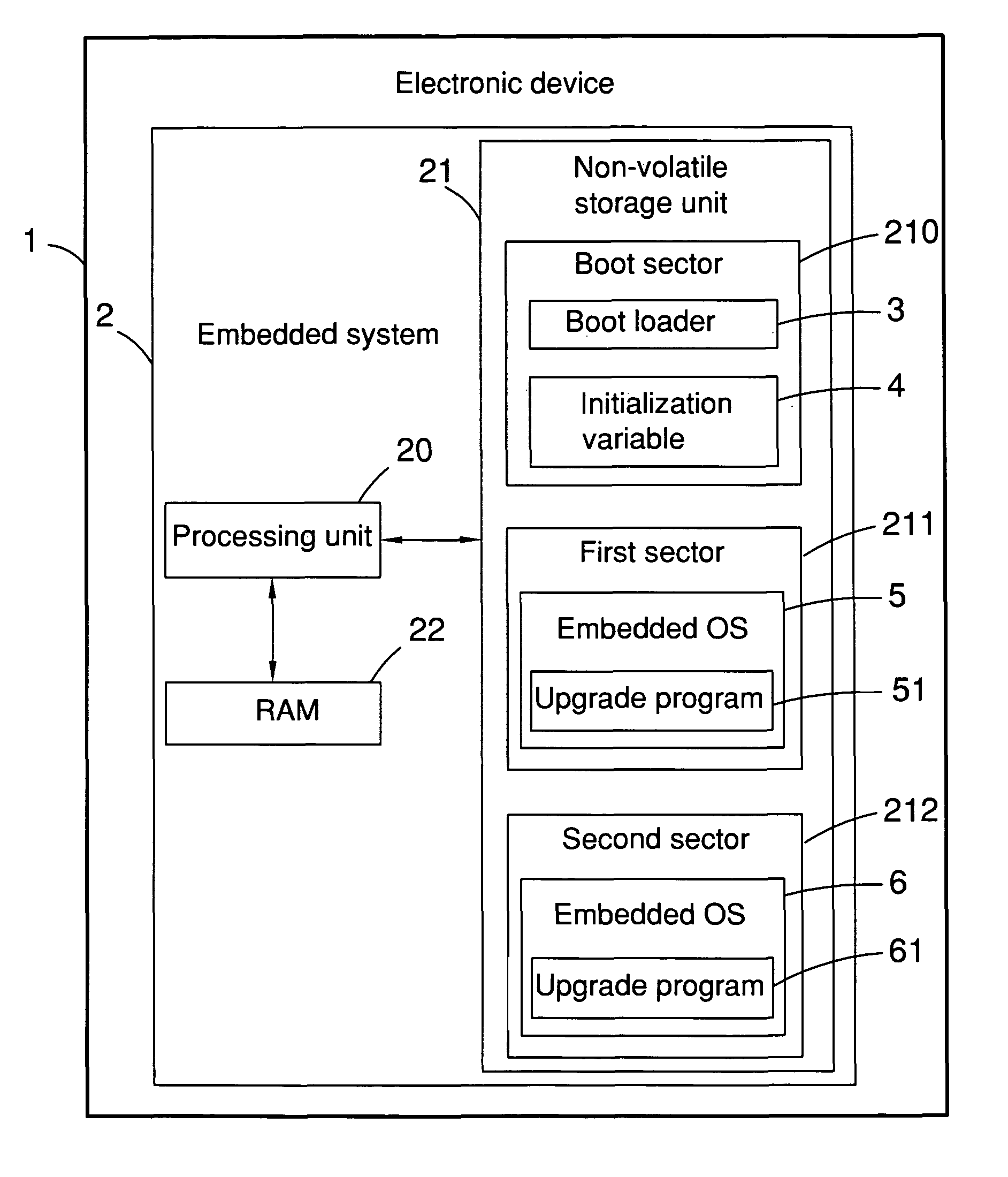
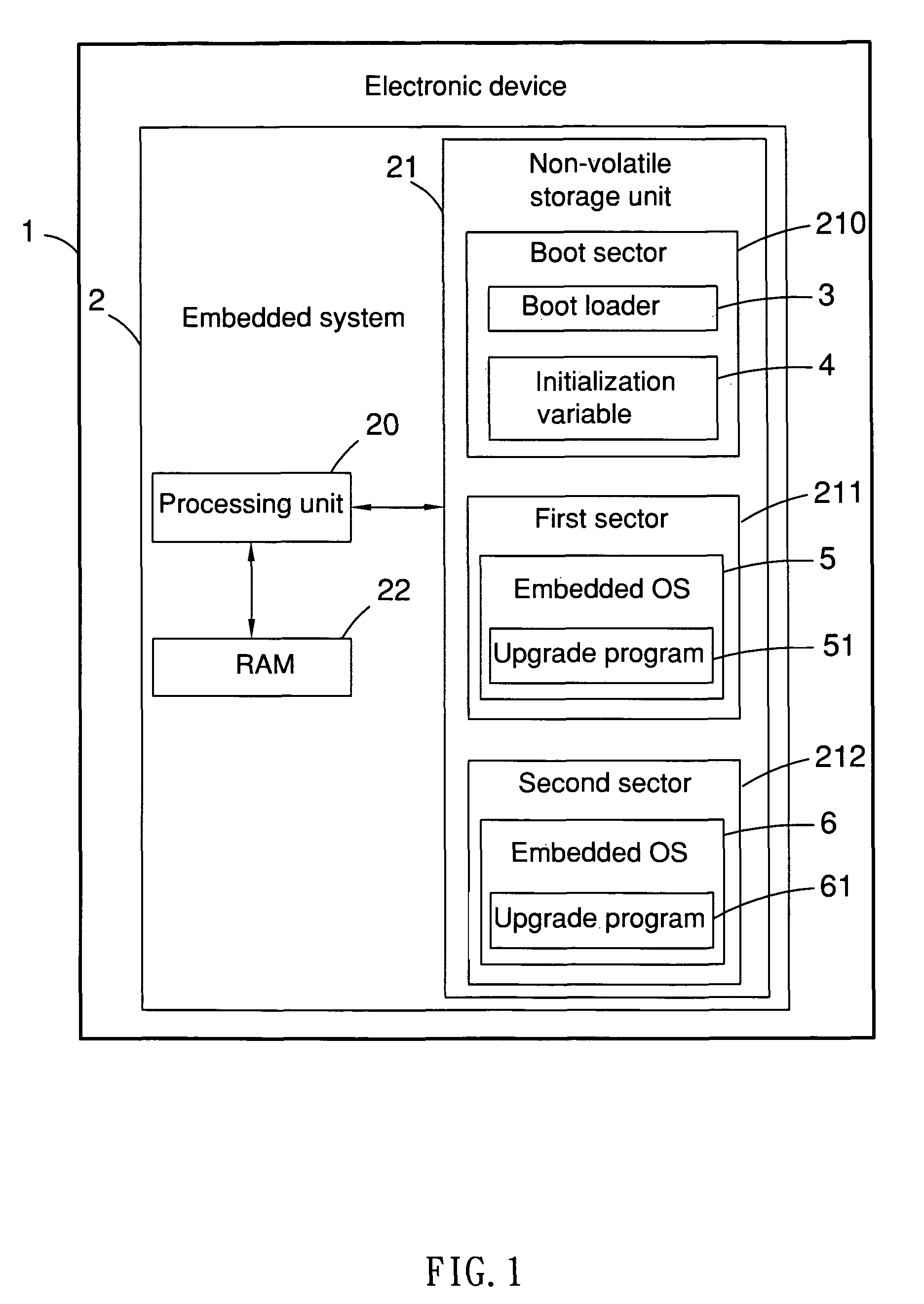
[0017]Referring now to FIG. 1, an electronic device 1 according to a first embodiment of the present invention is disclosed. The electronic device 1 is installed with an embedded system 2 created for a specific task. Examples include i Pods, remote controls, cell phones, e-book, broadband IP sharing router, mobile internet device and most any electronic application one can imagine.
[0018]The embedded system 2 of the electronic device 1 includes a processing unit 20, a non-volatile storage unit 21 and a random-access memory (hereinafter RAM) 22. The non-volatile storage unit 21 is coupled to the processing unit 20 and the RAM 22 is coupled to the processing unit 20 as well. Generally, the embedded system 2 further includes an I / O interface (not shown) and one or more application-specific integrated circuit (ASIC, not shown). The I / O interface includes keyboard interface, monitor interface, USB interface, IEEE-1394 interface, Internet interface, IrDA interface, Bluetooth interface and ...
PUM
 Login to View More
 Abstract
Description
Claims
Application Information
 Login to View More