
Marine survival pod
a technology of survival pods and hulls, applied in life-saving, vessel safety, sport apparatus, etc., can solve the problems of insufficient buoyancy, inconvenient access, and high risk of evacuation, and achieve the effect of sufficient buoyancy
- Summary
- Abstract
- Description
- Claims
- Application Information
AI Technical Summary
Benefits of technology
Problems solved by technology
Method used
Image

Examples
Embodiment Construction
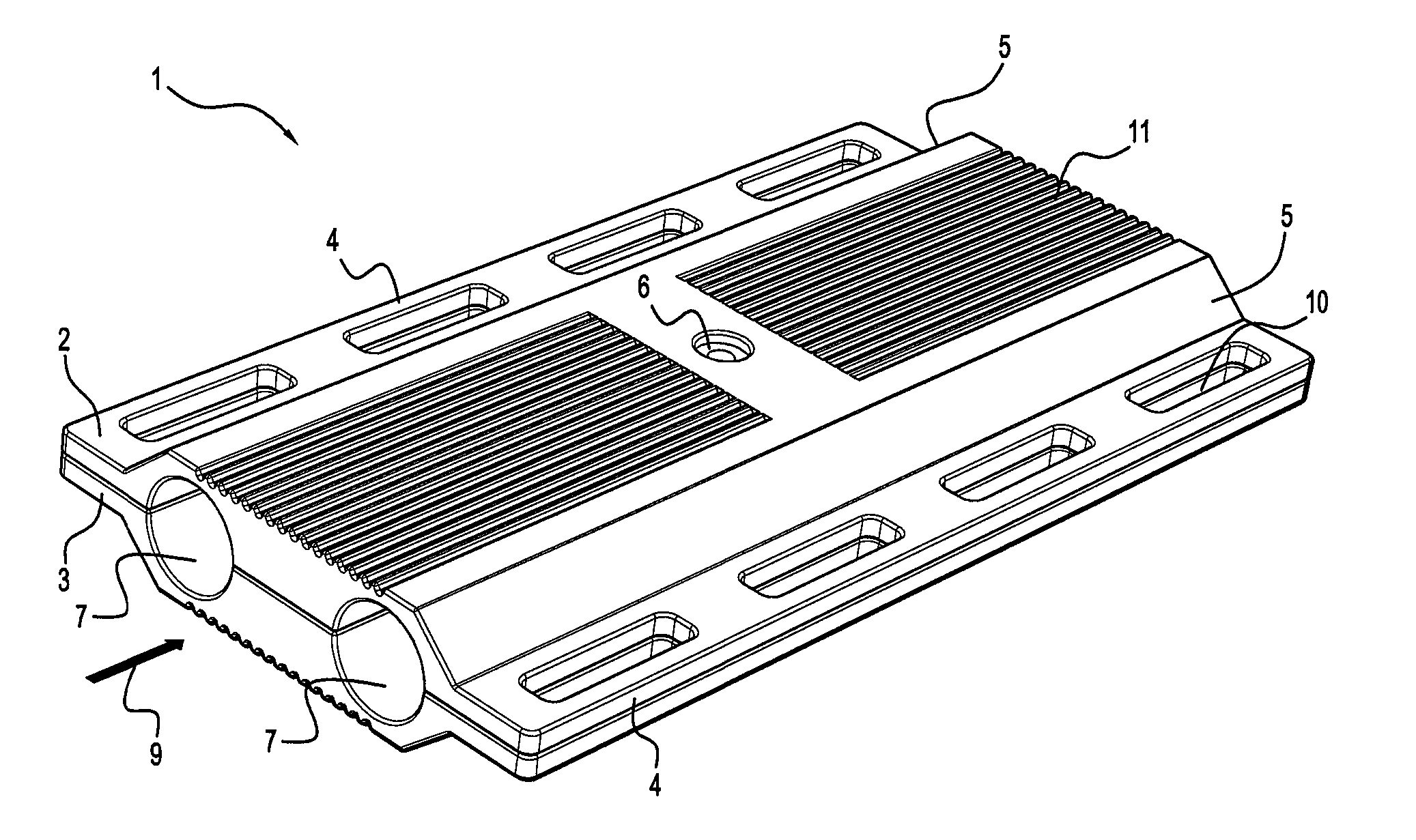
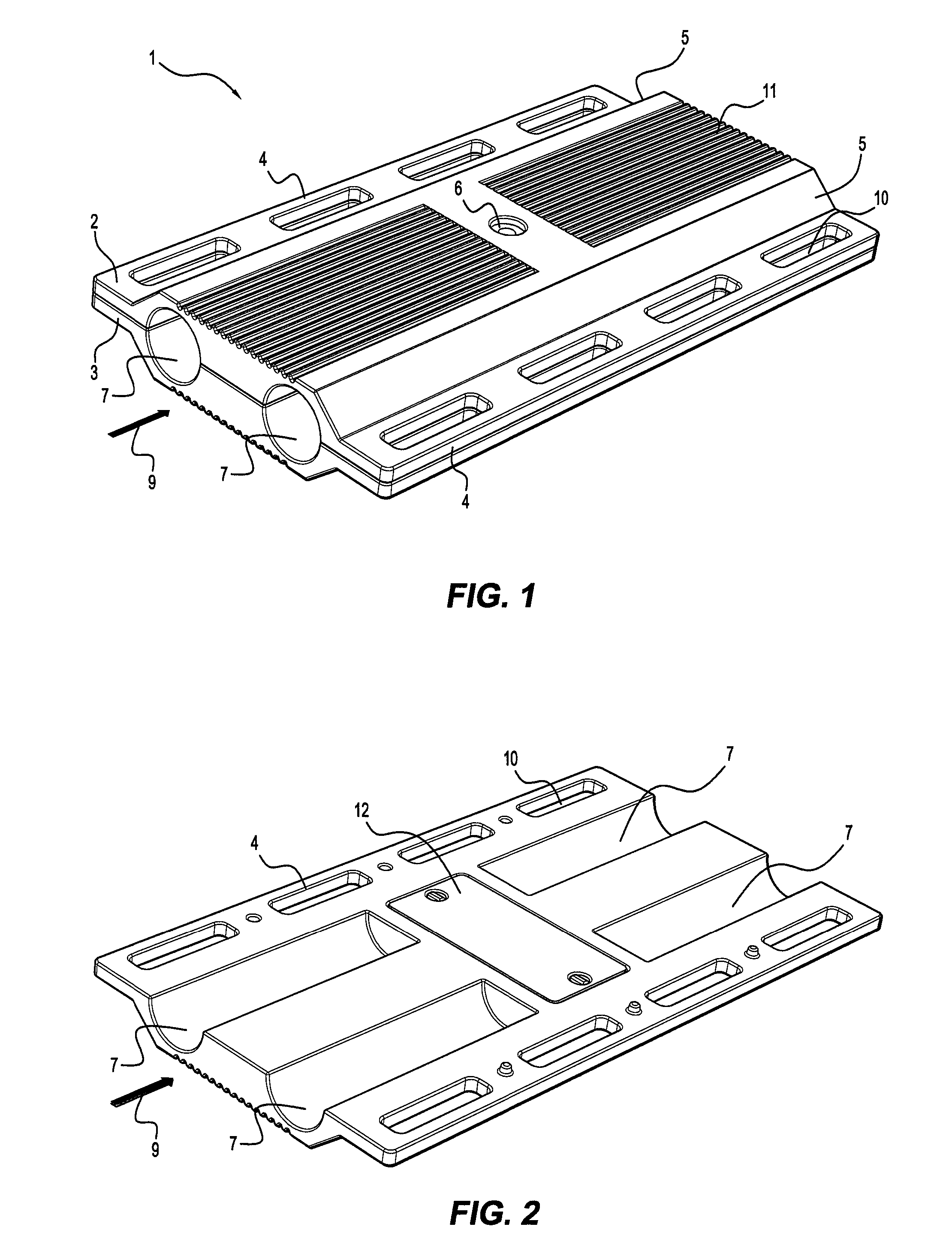
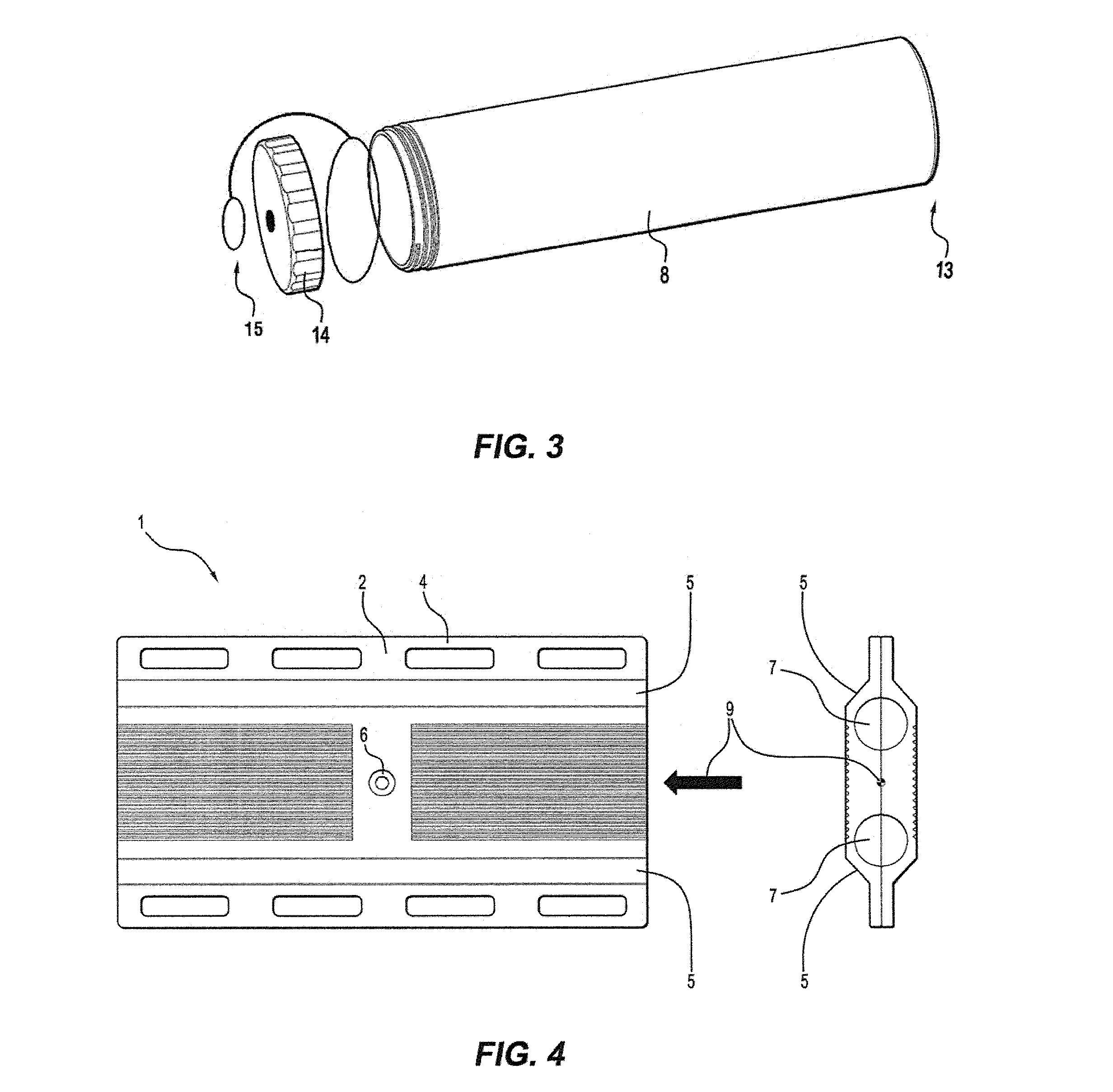
[0029]Referring to the figures and legend, the invention will be described with reference to one particularly preferred embodiment where the marine or freshwater survival pod of the invention includes a floatation body 1 preferable made up of a first half 2 and second half 3 of substantially identical configuration adapted to nest and locate by suitable locking pins together so as to form a unitary floatation body 1 of generally flat and elongate planar configuration being adapted to support a plurality of persons seeking buoyancy or floatation assistance after escape from a stricken vessel.
[0030]The generally elongate configuration of the floatation body includes a centrally positioned longitudinal axis 9 about which the pod will preferably rotate if subjected to sufficient wave or turbulence forces. The central positioning of the longitudinal axis of rotation allows the pod to adopt a functional position in the water including access to lashing points, access to survival equipment...
PUM
 Login to View More
 Abstract
Description
Claims
Application Information
 Login to View More