Compositions and methods for use in treating silicosis and lung cancer
a technology of silicosis and lung cancer, applied in the field of inflammation-promoting lung cancer and lung inflammatory disorders, can solve the problems of no established model system to study mechanisms, lung cancer, exposure to air-borne particulates such as crystalline silica (cs) is a major global occupational health hazard, etc., and achieves the effect of reducing or eliminating inflammation
- Summary
- Abstract
- Description
- Claims
- Application Information
AI Technical Summary
Benefits of technology
Problems solved by technology
Method used
Image

Examples
example 1
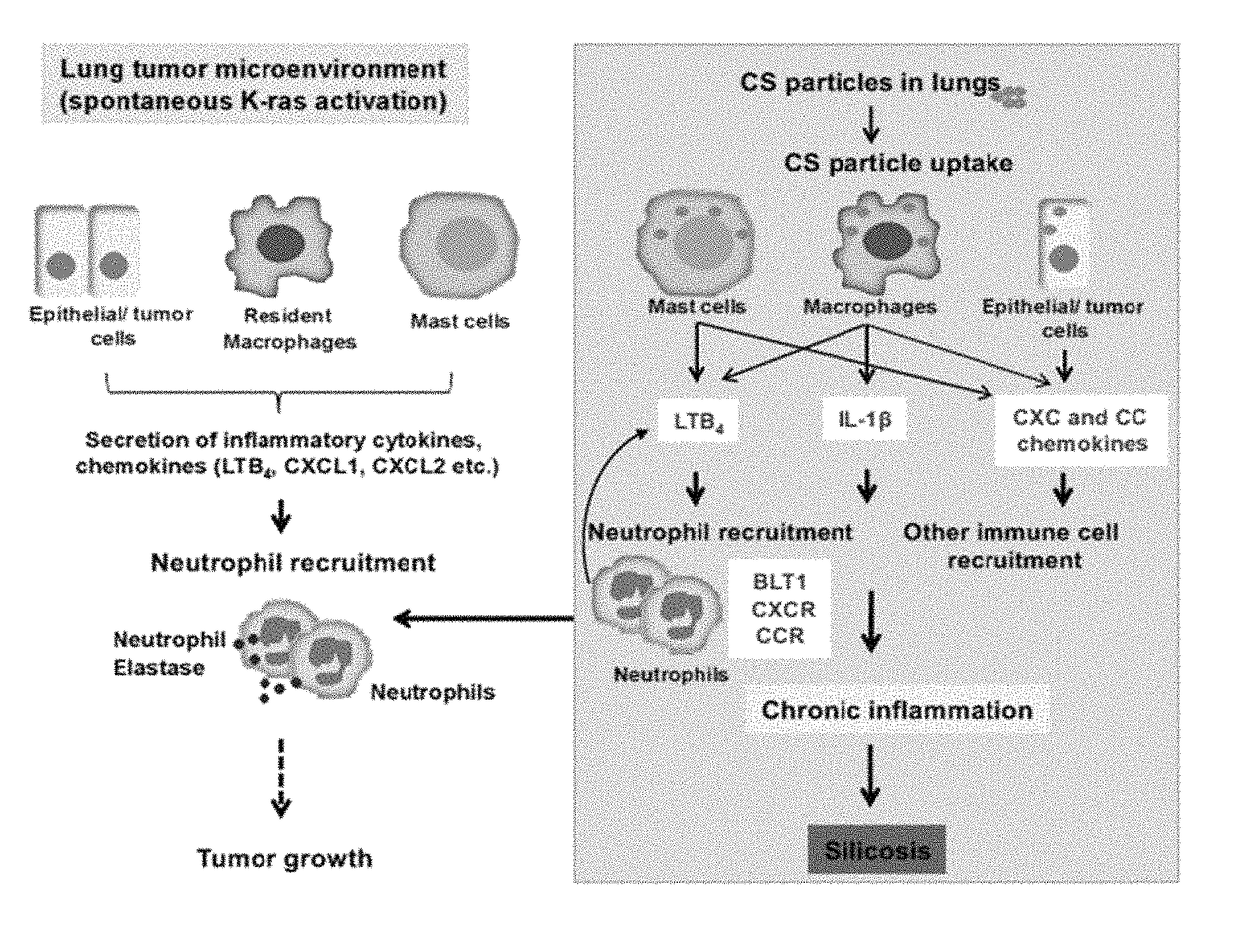
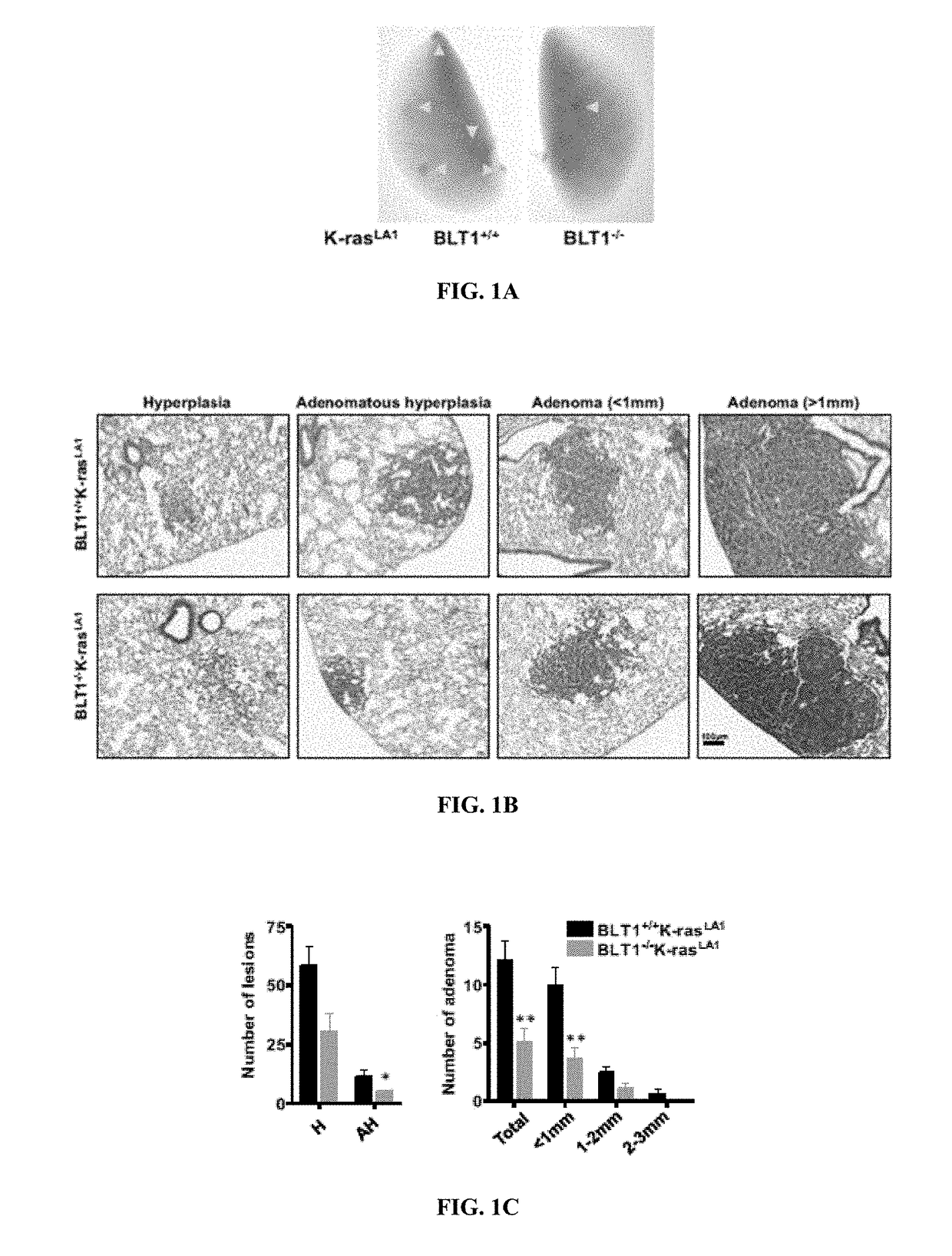
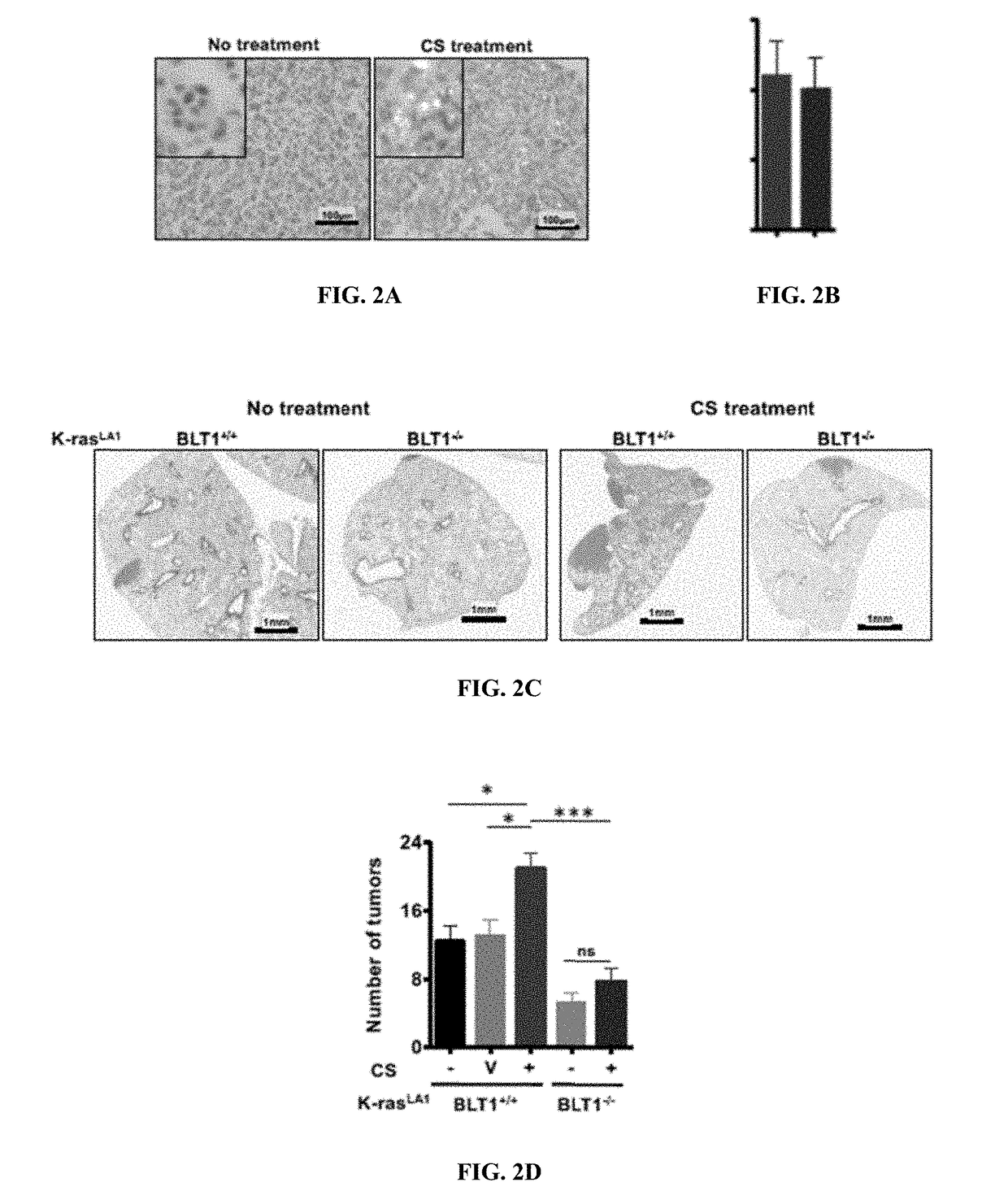
[0123]In the studies described in this Example, using the K-rasLA1 mice that develop spontaneous lung tumors [21], the present inventors established a link between CS-induced chronic inflammation and lung tumor progression. CS exposure led to increased incidence of lung tumors and this process was attenuated in the absence of BLT1. The CS induced pulmonary inflammation and in particular, neutrophil recruitment was abrogated in BLT1− / − mice. Furthermore, CS exposure enhanced the growth of implantable lung tumors leading to reduced survival. Since neutrophils are known to promote lung cancer [22, 23], the present inventors investigated the cellular and molecular mechanisms involved in CS-mediated neutrophil recruitment to lungs. The results suggest an intricate interplay of mast cell, macrophage and epithelial cells derived lipid chemoattractant (LTB4), cytokine (IL-1β) and neutrophil-active chemokines in coordinating CS-induced neutrophil migration. BLT1-mediated recruitment of neutr...
example 2
[0181]This Example identifies how chemoattractants control leukocyte migration and inflammation with particular emphasis on leukotriene B4 and its receptors BLT1 and BLT2. Mouse models were developed and novel reagents were generated to examine the function and regulation of BLT1 and BLT2. These models facilitated the identification that BLT1 is a critical mediator of inflammatory diseases including asthma (FIG. 17), atherosclerosis, arthritis and other autoimmune diseases as well as sleep apnea promoted atherogenesis (FIG. 18) and insulin resistance during diet induced obesity. BLT1 is also an important mediator of host response to infection and immune surveillance of intestinal cancers. Additionally, it is believed that absence of BLT1 reshapes the gut microbiome to promote colon cancer development (FIGS. 20-24). A diverse variety of cell types mediate these BLT1 effects, including, but not limited to, neutrophils (e.g., arthritis), macrophages (e.g., atherosclerosis, sleep apnea,...
PUM
| Property | Measurement | Unit |
|---|---|---|
| size | aaaaa | aaaaa |
| affinity | aaaaa | aaaaa |
| sizes | aaaaa | aaaaa |
Abstract
Description
Claims
Application Information
 Login to View More
 - R&D
- Intellectual Property
- Life Sciences
- Materials
- Tech Scout
- Unparalleled Data Quality
- Higher Quality Content
- 60% Fewer Hallucinations
Browse by: Latest US Patents, China's latest patents, Technical Efficacy Thesaurus, Application Domain, Technology Topic, Popular Technical Reports.
© 2025 PatSnap. All rights reserved.Legal|Privacy policy|Modern Slavery Act Transparency Statement|Sitemap|About US| Contact US: help@patsnap.com