
Spontaneous nucleation growth method for thallium bromide single-crystal
A thallium bromide single crystal technology, applied in the field of thallium bromide single crystal growth, can solve problems such as expensive equipment, affecting crystal quality, lattice deformation, etc., to reduce thermal stress, simplify process, and save mechanical transmission The effect of the device
Patent Information
- Authority / Receiving Office
- CN · China
- Patent Type
- Applications(China)
- Current Assignee / Owner
- Publication Date
- 2008-09-10
- Estimated Expiration
- Not applicable · inactive patent
Smart Images
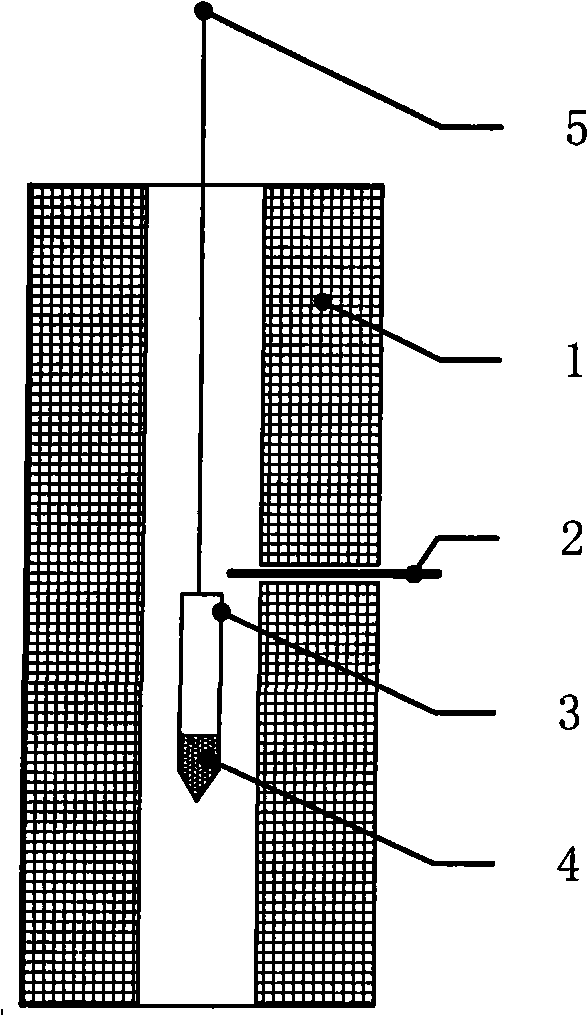
Figure 1 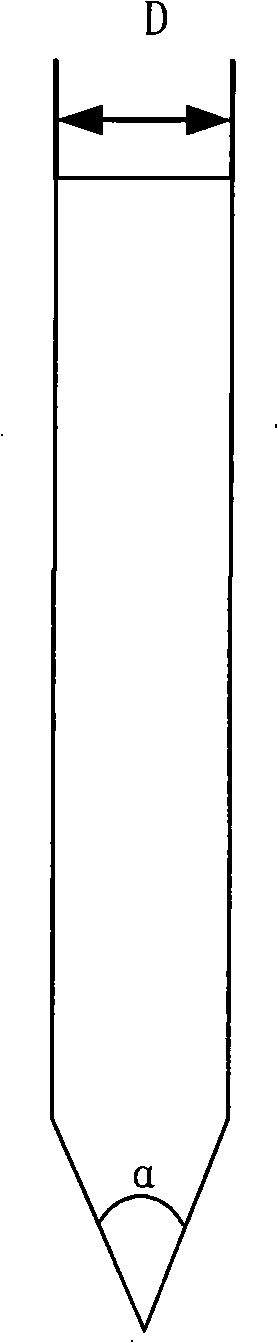
Figure 2 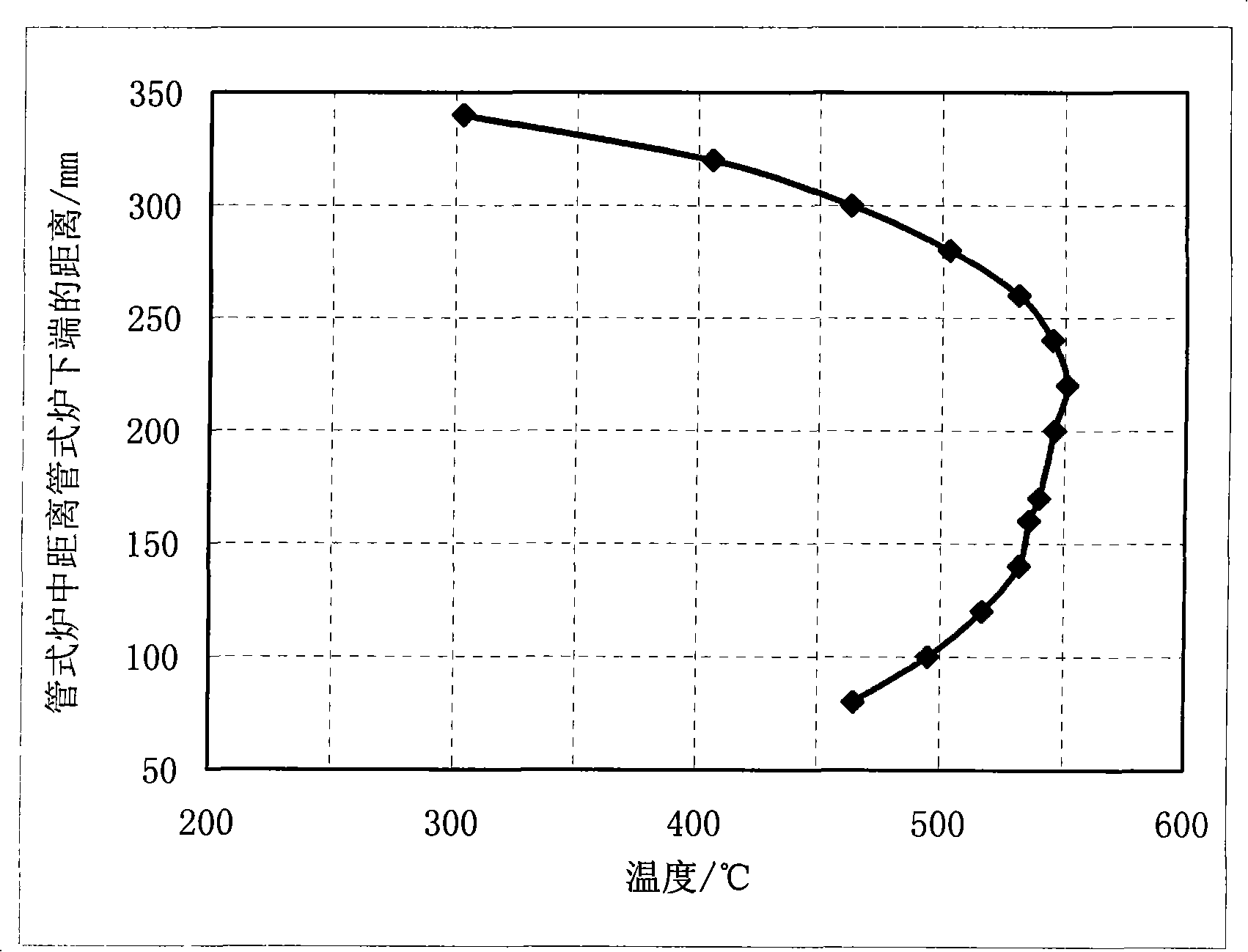
Figure 3
Abstract
Description
technical field
[0001] The invention belongs to the technical field of single crystal growth, and in particular relates to a growth method of thallium bromide single crystal. Background technique
[0002] High-energy X-ray and gamma-ray detection is one of the core technologies in the field of space science and technology. Semiconductor materials such as Ge and Si commonly used in classical detectors must work at low temperature (about 70K), which adds many difficulties and costs to the use in space. Although semiconductor materials such as CdZnTe and CdTe developed in recent years have excellent characteristics at around -30°C, their hole transport ability is limited in the frequency range above hard X-rays, making it difficult to meet the detection requirements of high-energy X-rays and γ-rays. . Thallium bromide material has higher atomic number (Tl: 81, Br: 35), higher density (7.5g / cm 3 ), large band gap (2.68ev) and large electron-hole mobility, so it is a promising...
Examples
Embodiment 1
[0027] Put about 5 g of thallium bromide raw material into a quartz ampoule, vacuumize and seal the quartz ampoule. The dimensions of the quartz ampoule are as follows: wall thickness 1 mm, overall length 120 mm, upper cylindrical inner diameter 8 mm, lower conical part taper 28°. Fix the quartz ampoule in the vertical tube furnace with copper wire, so that the conical portion of the quartz ampoule is 90mm away from the lower end of the vertical tube furnace. Raise the temperature from room temperature to 500°C at a rate of 250°C / h, and keep the temperature for 15 hours. Depend on Figure 4 It can be seen that the lowest temperature at the position where the quartz ampoule is located at this time is 476°C, and the axial temperature gradient in the region from 80mm to 130mm upward from the lower end of the vertical tube furnace satisfies 1.0-1.5°C / mm. Depend on Figure 5 It can be seen that as the temperature of the vertical tube furnace decreases, the position of the 460°C ...
Embodiment 2
[0029]Put about 6 g of thallium bromide raw material into a quartz ampoule, vacuumize and seal the quartz ampoule. The dimensions of the quartz ampoule are as follows: wall thickness 1 mm, overall length 120 mm, upper cylindrical inner diameter 10 mm, lower conical part taper 19°. The quartz ampoule is fixed in the vertical tube furnace by steel wire, so that the bottom of the quartz ampoule is 80mm away from the lower end of the vertical tube furnace. Raise the temperature from room temperature to 520°C at a rate of 250°C / h, and keep it warm for 5 hours. image 3 It can be seen that the lowest temperature at the position of the quartz ampoule is 475°C at this time, and the axial temperature gradient in the area from 80mm to 130mm from the lower end of the vertical tube furnace satisfies 1.0-1.5°C / mm, and by Figure 5 It can be seen that as the temperature of the vertical tube furnace decreases, the position of the 460°C isotherm moves upward. Then the temperature was lowere...
Embodiment 3
[0031] Put about 10 g of thallium bromide raw material into a quartz ampoule, vacuumize and seal the quartz ampoule. The dimensions of the quartz ampoule are as follows: wall thickness 1 mm, overall length 120 mm, upper cylindrical inner diameter 15 mm, lower conical part taper 35°. Fix the quartz ampoule in the vertical tube furnace with nickel wire, so that the bottom of the quartz ampoule is 80 mm from the lower end of the vertical tube furnace. With a heating rate of 300°C / h, the temperature of the thermocouple in the vertical tube furnace is raised from room temperature to 520°C, and the temperature is kept for 10 hours. image 3 It can be seen that the lowest temperature at the position where the quartz ampoule is located at this time is 475°C, and the axial temperature gradient in the region from 80mm to 130mm from the lower end of the vertical tube furnace satisfies 1.0-1.5°C / mm. Then the temperature was lowered to 450° C. at a cooling rate of 5° C. / h to complete the ...