
Productive technology of vanlillin by glyoxylic acid method
A production process, glyoxylic acid method technology, applied in chemical instruments and methods, preparation of organic compounds, separation/purification of carbonyl compounds, etc., to achieve the effect of improving fractionation efficiency, reducing raw material consumption, and avoiding by-products
Patent Information
- Authority / Receiving Office
- CN · China
- Patent Type
- Applications(China)
- Current Assignee / Owner
- Publication Date
- 2011-04-13
Smart Images
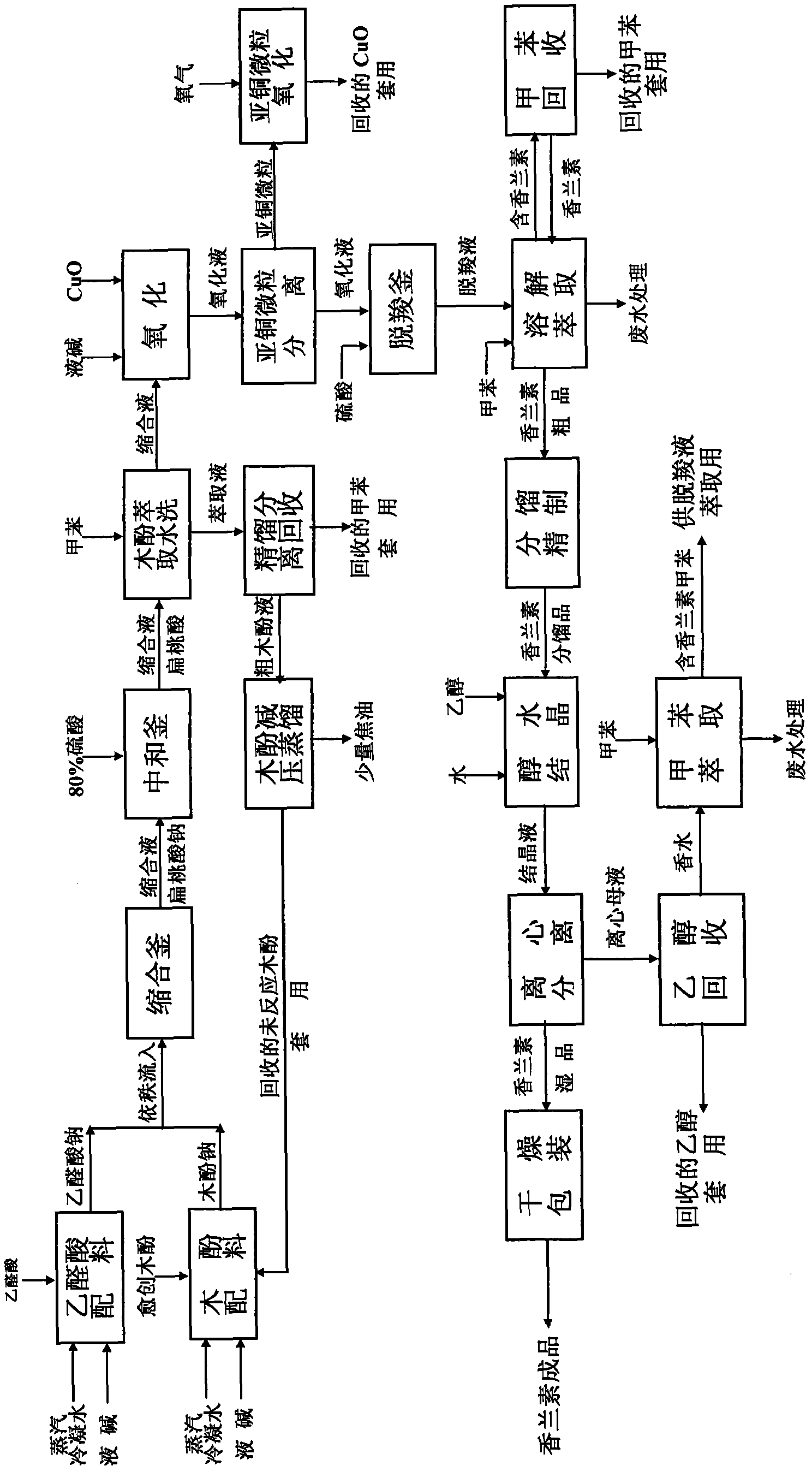
Figure 1 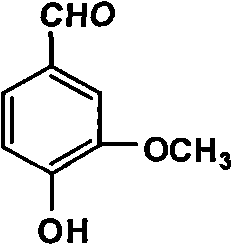
Figure 2 
Figure 3
Abstract
Description
technical field
[0001] The invention relates to a production process of vanillin, in particular to a glyoxylic acid production process of vanillin. Background technique
[0002] The vanillin molecule contains three functional groups: hydroxyl, methoxy and aldehyde, so it is named 4-hydroxy-3-methoxybenzaldehyde. Its structural formula is:
[0003]
[0004] Due to the hydroxyl group contained in the vanillin molecule, it is weakly acidic in aqueous solution. Vanillin is easily soluble in ethanol, ether, chloroform, glacial acetic acid and hot volatile oil, slightly soluble in water.
[0005] Vanillin has sweet, milky and vanilla aroma, and is one of the most important food spices. It is widely used in four aspects: food additives, pharmaceutical intermediates, feed additives and others (such as electroplating brighteners and biochemical reagents, etc.). Additives about 20% and other uses about 10%. In recent years, the application in the field of medicine has been con...
Examples
Embodiment 1
[0059] A glyoxylic acid production process of vanillin, which is characterized in that it includes the synthesis steps of condensation, oxidation and decarboxylation of guaiacol and glyoxylic acid; fractionation of crude vanillin and purification of alcohol water crystals process; in the synthesis process, it also involves the recycling process of recovering unreacted guaiacol, cuprous oxide and toluene.
[0060] The synthesis processes of condensation, oxidation and decarboxylation of the guaiacol and glyoxylic acid, etc.; also involve the recycling process of recovering unreacted guaiacol, cuprous oxide and toluene, including:
[0061] Add 30% liquid caustic soda to the batching kettle to convert guaiacol and glyoxylic acid into sodium salt respectively according to the feeding molar ratio of 1:0.77. Due to the exothermic reaction, the reaction temperature is required to be controlled at 14°C; then, the guaiacol Sodium lignophenate and sodium glyoxylate successively enter th...