
Compression hemostat applied to esophagus and fundus ventriculi
A technology of compression hemostasis and hemostatic device, applied in the field of medical devices, can solve the problems of high risk, limited popularization and application, failure of endoscopic treatment, etc., and achieves the effect of simple operation and convenient use.
Patent Information
- Authority / Receiving Office
- CN · China
- Patent Type
- Applications(China)
- Current Assignee / Owner
- Publication Date
- 2012-05-16
- Estimated Expiration
- Not applicable · inactive patent
Smart Images
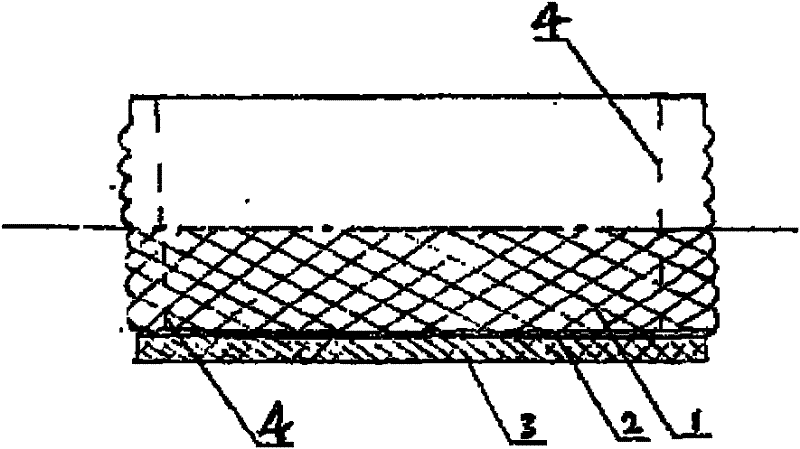
Figure 1 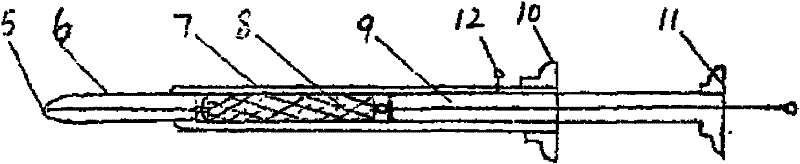
Figure 2 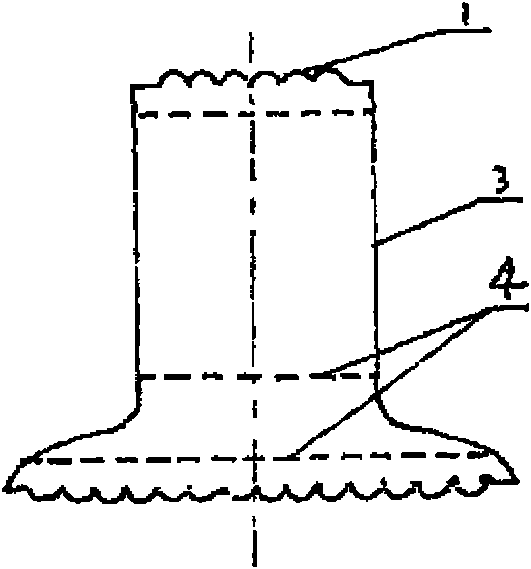
Figure 3
Abstract
Description
Technical field
[0001] The invention relates to a medical device, in particular to a compression hemostatic device used for the esophagus and the fundus of the stomach. Background technique
[0002] Liver cirrhosis and portal hypertension are common and frequently-occurring diseases that seriously affect people’s health. Rupture and bleeding of esophagus and gastric varices is one of its most serious complications. Its first bleeding mortality rate is as high as 50%, and the incidence of repeated bleeding 80%, how to effectively control major bleeding is an urgent problem to be solved. In the past, surgical treatment was mostly used for the disease. Due to the large surgical trauma, strict indications, postoperative complications and other reasons, currently, emergency surgical treatment is not recommended. In the past 20 years, endoscopic sclerosing agent injection therapy and endoscopic band ligation therapy have been used, but due to high surgical requirements. The high risk...
Examples
Embodiment 2
[0024] The structure of this embodiment is image 3 Shown is a compression hemostatic device used when bleeding from the esophagus and stomach fundus. This embodiment is composed of a stent 1, a hemostatic dressing 3 outside the stent 1, and a hemostatic dressing fixing thread 4 for fixing the hemostatic dressing. One end of the bracket is cylindrical, and the other end is umbrella-shaped. It can support the esophagus and the fundus of the stomach. The other structure and usage are basically the same as in Example 1.
Embodiment 3
[0026] The structure of this embodiment is Figure 4 Shown. The stent 1 of this embodiment is made of an airbag. The shape of the air sac is a small pear-shaped upper part and a lower part, which can be used for hemostasis of the esophagus and the fundus of the stomach. The hemostatic dressing 3 is adhered to the outside of the airbag. When in use, after the stent made of the airbag is placed in the hemostatic site, the airbag is inflated to inflate the airbag, and the hemostatic site is compressed by the hemostatic dressing to achieve the purpose of hemostasis. After hemostasis is completed, the airbag is deflated, the airbag and the hemostatic dressing are separated, the airbag is taken out of the body, and the hemostatic dressing can be absorbed or discharged from the body by itself.